Prologue
From Anglo-Saxon origins, the Welsh
Marches and Norman Halls to Georgian architecture, Cestrian agriculture, Staffordian pottery and Enigma Variations
An introduction to the story of the
Bakers of Cheshire
|
Return to the Home Page of the Bakers Family part of the website |
The Bakers of Highfields Story
The Story of the Dods and Bakers and of Highfields,
Fenton House and Hasfield Court. A journey through the history of Cheshire
and Staffordshire, an Anglo-Saxon nobleman who retained his lands after the
Conquest, pottery at Stoke on Trent, an encounter with Elgar, and the history
of an Elizabethan manor house at Audlem |
The family tree of the Bakers of Highfields |
The Family Tree of the Dods, predecessors to the
Bakers of Highfields |
The Bakers of
Fenton House and Hasfield Court
The Family Tree of the pottery Bakers of Stoke on Trent |
The Family Tree of the Bellyse Family |
The main part
of this website tells the story of the Farndale family from Yorkshire Descendants of Arthur Baker, the story of the
Farndale ancestry is told through the main part of this website You can also return to the Farndale
website home page |
The genealogy of the family of James Hall, linked to
the Baker family through marriage to Arthur Baker |
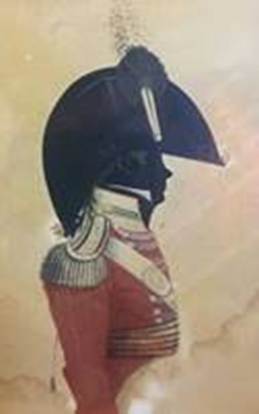
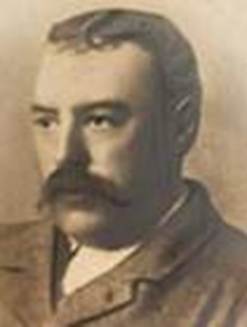
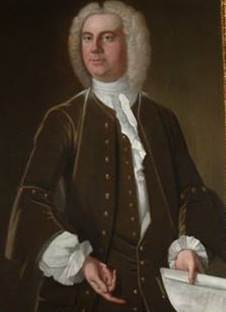
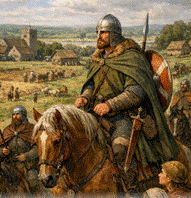
The Stage for our Story
Our first task,
before telling the Baker Story, is to set the scene, to stimulate your
imagination to fill the gaps in its telling. 'tis your thoughts that now
must deck our story and carry them here and there[1].
|
Some
inspiration to help fine tune your imagination as you start to read the Baker
Story. |
The Baker Story is set primarily in Cheshire, the
county of the significant Roman fort of Deva Vitrix
at Chester, lying in the borderlands, or the Marches,
with Wales. The story wanders into the surrounding counties and the Fenton and Hasfield Branch of the family made their fortune through the Potteries of Stoke-on-Trent.
The Baker story began with the Anglo-Saxon Dot of Huyton. Huyton
is a place to the north, near modern Liverpool. In the twelfth century, the Dod
family became associated, through marriage, with Edge Hall, and in the
fifteenth century with Cloverley, near Calverhall. The Bakers meantime, before the family united
with the Dods, were merchants of London, Coventry, and Leominster.
The first map provides general orientation, and you
will find it helpful to note some of these locations. The boxes show three further
maps, which we will consider shortly. Note the Rivers Dee and Severn, which
flow through these lands. Notice too, the proximity of this region to the Welsh
border.
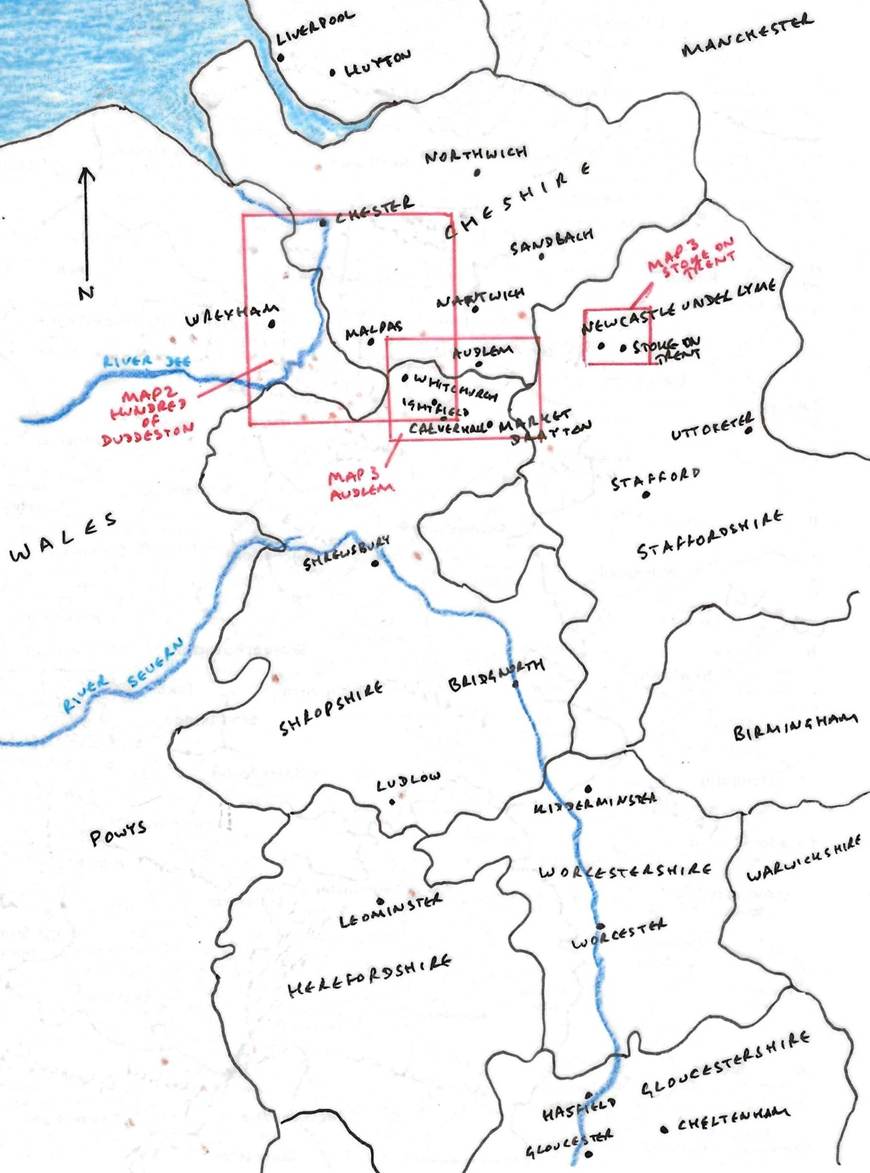
Map 1, Cheshire and surrounding counties, with some key
locations in the Baker Story
The story begins not with the Bakers, but with the
Dods, and particularly the Anglo-Saxon Dot of Huyton, who we
have noted was associated with a settlement near modern Liverpool, and Edwin of
Poulton, Lord of Edge. Both these men held lands before the Conquest primarily
in the Hundred
of Duddeston, a region within, and south of, modern Chester. Dot would be
deprived of his lands after the Conquest, but Edwin, unusually, retained many
of his lands. After a generation, a marriage would bring Edwin’s lands back
into the family of Dot, which in time became Dod.
The second map shows the Hundred
of Duddeston and the settlements of which it comprised. Note particularly
the settlement of Edge, the seat of Edwin, and the heart of the Dod story for
the following generations.
The settlements in blue are those which comprise
the Hundred
of Duddeston. The settlements and features in black are other places of importance
in the early history of this place. The purple roads are the Roman roads which
traversed these lands from Antiquity. Again the proximity to Wales is of note;
indeed, some of the Duddeston settlements are in modern Wales.
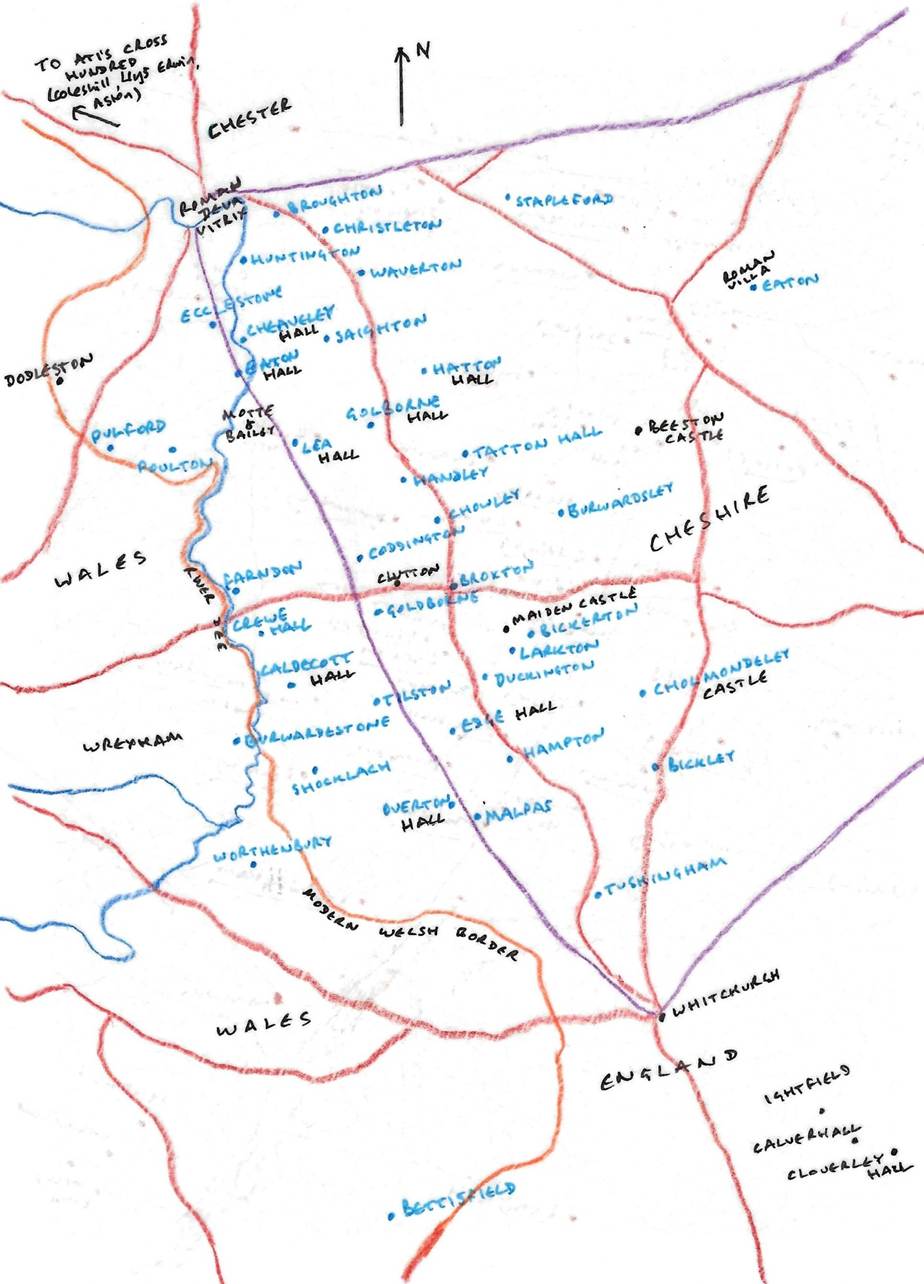
Map 2A, the Hundred of Duddeston, where it all began
This is a remarkably flat landscape, dominated by a
single central ridge of high ground with the medieval Beeston Castle on the
northern heights and the Iron Age Maiden Castle on the southern heights.
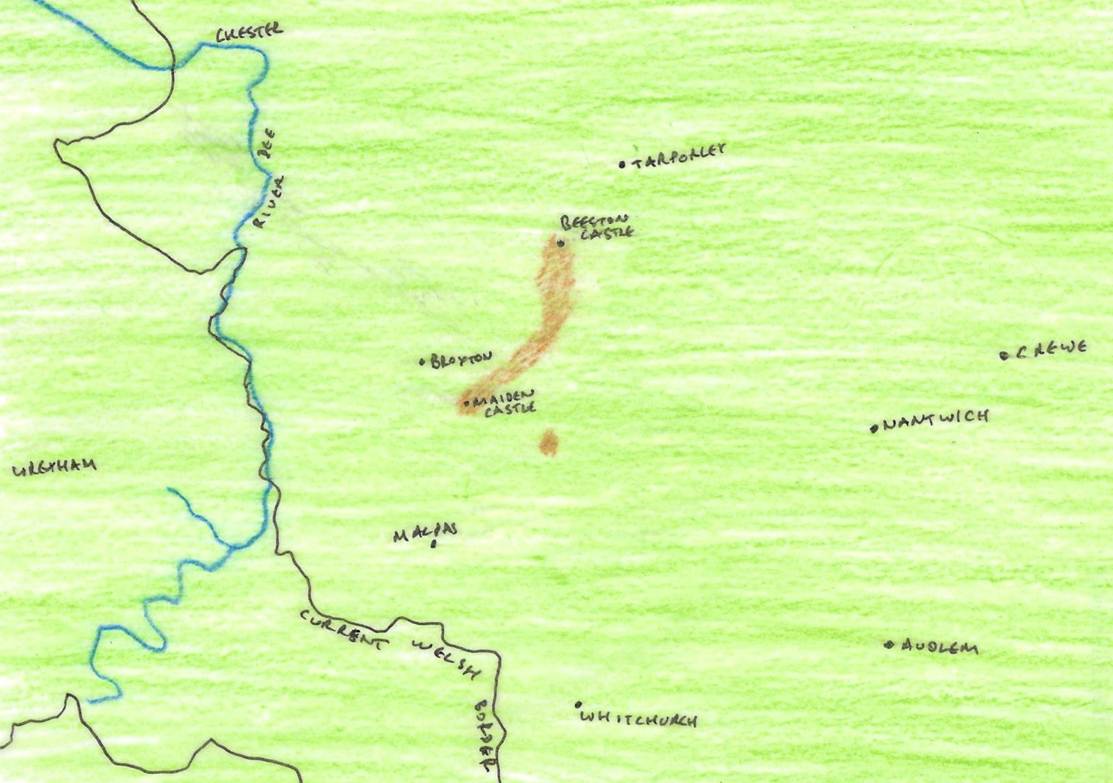
Map 2B, the flat lands of Cheshire with the high ground
of the Besston to Maiden ridge in the centre
Now we travel to the heart of our story, to Audlem, and to Highfields, a short distance
to the southeast of the town. There is a close association with nearby Buerton
and Buerton Hall. The original lands acquired by Hugh Chester and later William Dod
comprised 500 acres bounded by Woodhouse Lane, and which also included Maer
Houses, probably at Mere farm. Chester and Dod also held lands at Newstreet Lane
which connects Calverhall and Market Drayton. Indeed the earlier Dods were
associated, as we have noted, with Cloverley Hall,
near Calverhall, in this same area.
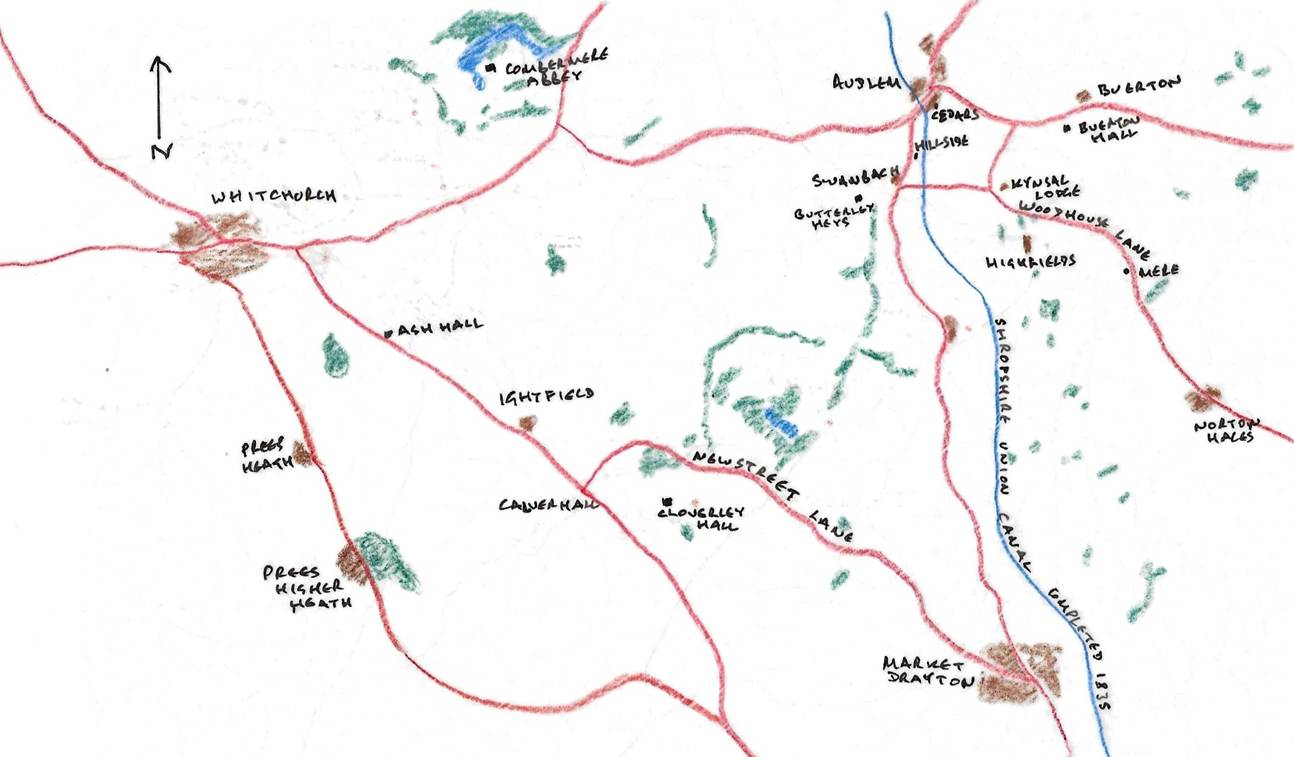
Map 3, Audlem, Highfields and the vicinity
The cadet branch of the Bakers of Highfields made their
own new story through the burgeoning pottery industry
of the six pottery towns of Stoke on Trent. The fourth map locates the six
towns of Fenton (with which the family were
primaily associated), Tunstall, Burslem, Hanley, Longton and Stoke, which
became modern Stoke-on-Trent. Reverting briefly to the first of our maps,
showing the wider area, Hasfield Court
appears at the bottom, in Gloucestershire, and features in their story.
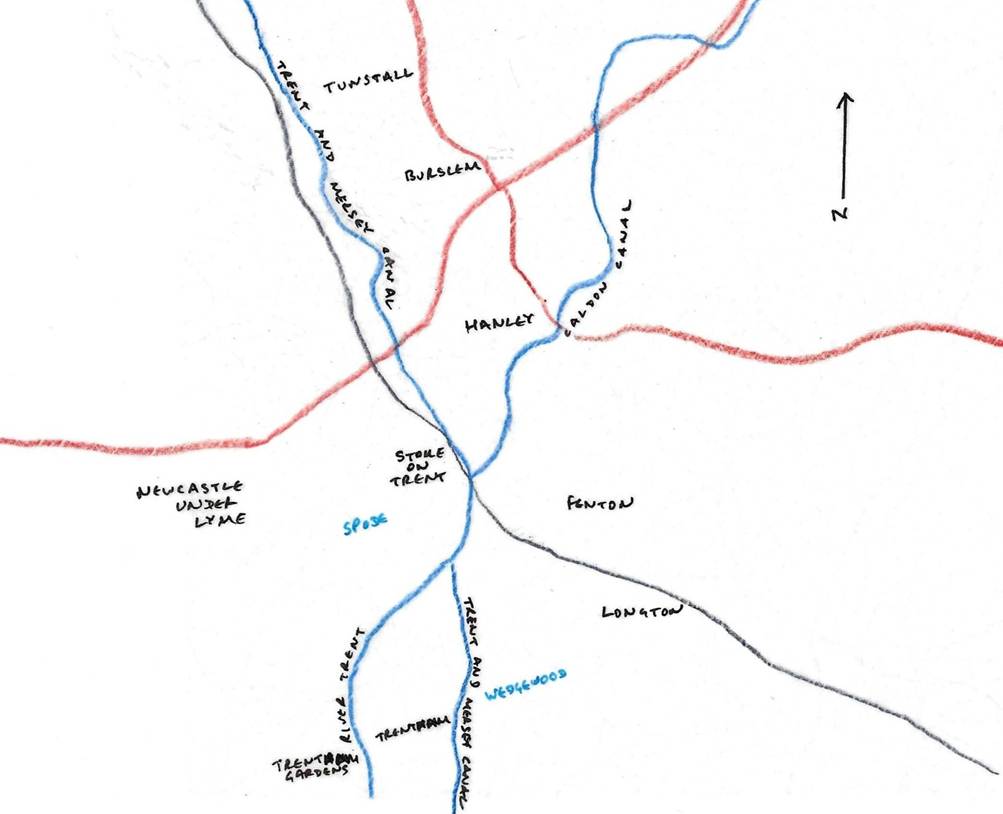
Map 4, The Potteries of Stoke-on-Trent, at the heart
of the story of the Bakers of Fenton House and Hasfield
Court
The Stage is thus set, for the telling of the Baker
story.
Meeting the Bakers
Baker is an occupational name, which
originated before the eighth century CE, in use during the Anglo-Saxon period.
The surname Baker originates from the Old English word bæcere,
derived from bacan, meaning ‘to bake’. It was
an occupational surname given to people who made and sold bread in medieval
towns and villages. Most manors had a communal
oven. The local baker ran this oven for the lord and local villagers. Both men
and women worked as bakers and the female form was often Baxter.
The surname has also been adopted
in Wales, Scotland and Ireland. The Gaelic form of Baker in Scotland and
Ireland is Mac a' Bhacstair. Some people with
the surname have used DNA to trace their origins to Celtic countries, including
the Baxter sept of the Clan MacMillan in Scotland.
By the twelfth century, occupational
surnames like Baker began to become more embedded, but remained fluid,
descriptive tags. They then transitioned into fixed, hereditary family names
between the thirteenth and fourteenth centuries as populations grew and tax
records like the Poll Tax made permanent names essential[2].
First written, administrative
appearances of the name emerged in the twelfth century, such as William le Bakere in the 1177 Norfolk Pipe Rolls. The name was used
locally as a clear identifying trade descriptor, such as Robert Bakere
in 1246 and Walter le Backere in 1280. Fixed
hereditary usage spread widely during the fourteenth century. By the 1381 Poll
Tax, most common English families relied on permanent family surnames. Bakers
formed strong trade groups, or guilds, to control the price and weight of
bread.
Of course there were many families
derived from Bakers, who became badged by that name. There are countless Baker families,
with no relationship to each other. In later centuries, distinct Baker families
established themselves in various locations.
The Baker family of Sissinghurst
was a prominent Tudor and Stuart landowner family in Kent. Rising to power
through Sir John Baker (1488–1558), a powerful Privy Councillor and Speaker of
the House of Commons, the family built the remarkable mansion and gatehouse at
Sissinghurst Castle, hosted Tudor monarchs, and held the estate until the male
line died out in 1661.
Another prominent Baker family
(who may, or may not, have some distant connection to the Sissinghurst Bakers,
which will be explored in the website) was the Baker family of Highfields in Audlem, Cheshire. The eighteenth
century architect William
Baker, originally from London, Leominster and Shropshire, married into the Cheshire
based Dod family
and inherited the Highfields
estate, anchoring a significant branch of the surname in southern Cheshire.
The Cheshire Baker Story
Before following the story in more
detail in the Acts which follow, a summary will help to provide orientation.
Dot of Huyton
and Edwin,
Lord of Edge were Saxon landowners, mentioned in
the Domesday Book. They both held lands across the Hundred
of Duddeston, and in other places and Dot seems to have
been primarily associated with Huyton, near modern Liverpool, and Edwin with Edge, near Malpas. Dot was deprived of
his lands after the Norman Conquest, but very unusually Edwin retained
many of his lands. It is very rare to find Anglo-Saxon landowners who retained their
lands from the Normans after 1066. It seems likely that the proximity to the
Welsh border meant it was advantageous to the Normans to retain an Anglo-Saxon
landowner, with a historical connection to these lands, to maintain control in
difficult regions.
After a generation, the daughter of Edwin married
the granddaughter of Dot,
and the lands became associated with the Dod family thereafter. Because the
Dods were significant landowners, we can trace their history. This is
remarkable. Because so few Anglo-Saxon landowners retained their land, it is
almost unheard of for any family, other than with royal connections, to be able
to trace their ancestry directly back to a known Anglo-Saxon family. The
deprivation of land from the Anglo-Saxon landowners inevitably meant that their
ancestry was not recorded and therefore lost. Yet the Dod family can trace
their lineage directly back to two Anglo-Saxon families of Cheshire – the Dots
and the Lords of Edge. This family story therefore begins with an extraordinary
depth of vision, providing direct connection to the pre-Norman period.
The Dod family carved their path through the political challenges of the
medieval period and continued to be associated with Edge
until the early fourteenth century. At that stage, the senior branch of the
family continued the Edge story (which follows
its own path to the modern Wolley-Dod family), but the Dods in who we are
interested, were another cadet or junior branch, who soon married into a family
of Cloverley Hall, near Calverhall. Their story continued into the sixteenth
century.
In 1530 William Dod
married Anne Chester,
whose father, Hugh
Chester, owned lands in the vicinity of Audlem. It was on these lands that his son, another William
Dod, built Highfields. Supporters of the royalists during the English Civil War, Highfields may have
been the location of Prince
Rupert’s camp in his march to York in
1644.
The Dod family continued to weave
a colourful path through the seventeenth and eighteenth century until George Dod,
predeceased by his son another George Dod,
died in 1727, leaving only his granddaughter, Jane Dod
to inherit Highfields. The young
Jane met a young architect, William
Baker, descended from a family of merchants and surgeons from Leominster and
London, and the story of Highfields
continued through the Baker family.
William
Baker devolved the running of Highfields to his
daughter Charity
Baker, the stern Madame Barrow. His elder son Dick
Baker inherited Highfields,
but focused his attention on architecture like his father. The wealthy
architect also provided for his younger son, another William
Baker, for whom he bought the manor of Fenton
Court in Stoke-on-Trent.
The Stoke-on-Trent
family married into the family of Thomas Bagnall. William
Baker II of Fenton died at the age of forty, and his wife, Sarah re-married
to the entrepreneurial Ralph Bourne. Ralph Bourne and his stepson, William
Baker III of Fenton, went into partnership in the burgeoning pottery business
and their business thrived until the 1930s. In 1863, William
Baker IV bought Hasfield Court estate in
Gloucestershire and the family story was associated with the bustling Fenton and the tranquil Hasfield over the following generations. When William
Meath Baker inherited the estates, he became a close friend of the young Edward Elgar, husband to a close friend of his
sister, Mary
Frances Baker, and a friend too of Letitia
Jane Dorothea Baker, and her husband Richard Baxter Townshend. Mary
married Canon Alfred Penny, and his daughter Dora Penny joined the close
circle. In 1899, Edward Elgar wrote the Enigma Variations, dedicated to his
friends. The fourth
Variation depicted his friend William
Meath Baker, WMB; the third Variation brought
to life Letitia
Baker’s husband, Richard Baxter Townshend, RBT; and the delightful tenth Variation, was
composed for Mary’s
step-daughter, Dora Penny, known by Elgar as Dorabella. The Baker family
were thus immortalised in the composition at the zenith of English classical
music.
The story
of Highfields
passed through William
Baker the Elder, William
Baker the Younger to Jack
Bellyse Baker. Their story included an elopement, connecting the family for
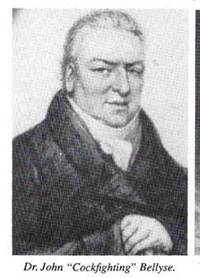
generations with the colourful family of Dr John
‘Cockfighting’ Bellyse; education at Brasenose College, Oxford; death on a voyage
on return from India; and three colourful Victorian spinster aunts. The
Agricultural Depression of the 1870s forced the sale of Highfields in 1884 and a
family emigration to New Zealand. However within a generation, Bellyse
Baker bought Highfields
back into the Baker family, with whom it remains.
Arthur
Baker was the younger brother of Jack
Bellyse Baker, who had sold Highfields. He married Marianne
Hall descended from the Hall family who
were particularly associated with Newcastle-under-Lyme and Uttoxeter. Arthur
and Marianne had two daughters and a son. Their second daughter, Margaret
(‘Peggy’), Louisa Baker, later Farndale, was my granny. The Farndales
have their own story to tell, in another section of this website.
The Players
|
Some
inspiration before we begin our tale |
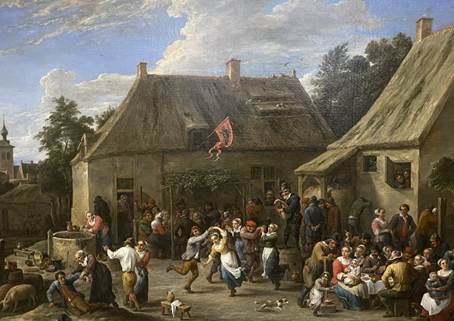
A genealogy
is the assembly of a multiplicity of related stories, of struggle, initiative,
tragedy, achievement, ambition, of following calls to battle, taming lands, and
travelling to new ones. The Baker Story tells of all those things.
All the
world’s a stage, and all the men and women merely players. They have their
exits and their entrances and one man in his time plays many parts. His acts
being seven ages.[3]
At first the infant, mewling and puking in the nurse’s arms. The Baker story will tell of infancy.
And then the whining school-boy, with his satchel and shining morning face, creeping like snail unwillingly to school. The Baker story will tell of schoolboys and university students.
And then
the lover, sighing like furnace, with a woeful ballad made to his mistress’
eyebrow. The Baker story
will tell of lovers.
Then a
soldier, full of strange oaths, and bearded like the pard, jealous in honour,
sudden and quick in quarrel, seeking the bubble reputation even in the cannon’s
mouth. The Baker
story will tell of soldiers
and sailors.
And then the justice, in fair round belly with good capon lin’d, with eyes severe and beard of formal cut, full of wise saws and modern instances and so he plays his part. The Baker story will tell of lawyers and justices.
The sixth age shifts into the lean and slipper’d pantaloon, with spectacles on nose and pouch on side; his youthful hose, well sav’d, a world too wide for his shrunk shank; and his big manly voice, turning again toward childish treble, pipes and whistles in his sound. The Baker story will tell of sexagenarians.
Last
scene of all, that ends this strange eventful history, is second childishness
and mere oblivion; sans teeth, sans eyes, sans taste, sans everything. The Baker story will continue to the final scenes of
each of our actors.
The Baker Story is a time machine to transport you to
multiple stops in time through the story of one family. If you allow it, you
will encounter the emotions, experiences, ambitions and passions of those who
you meet. The matrix
is your portal into these multiple and ancient worlds, though many of these
worlds of different times might not be so very different to our own.
Glossary
As you start
exploring our history, the website glossary might help if you
encounter some medieval language or words from time to time with which you need
some assistance.