Dr John Cockfighting Bellyse
1738 to 19 July 1828
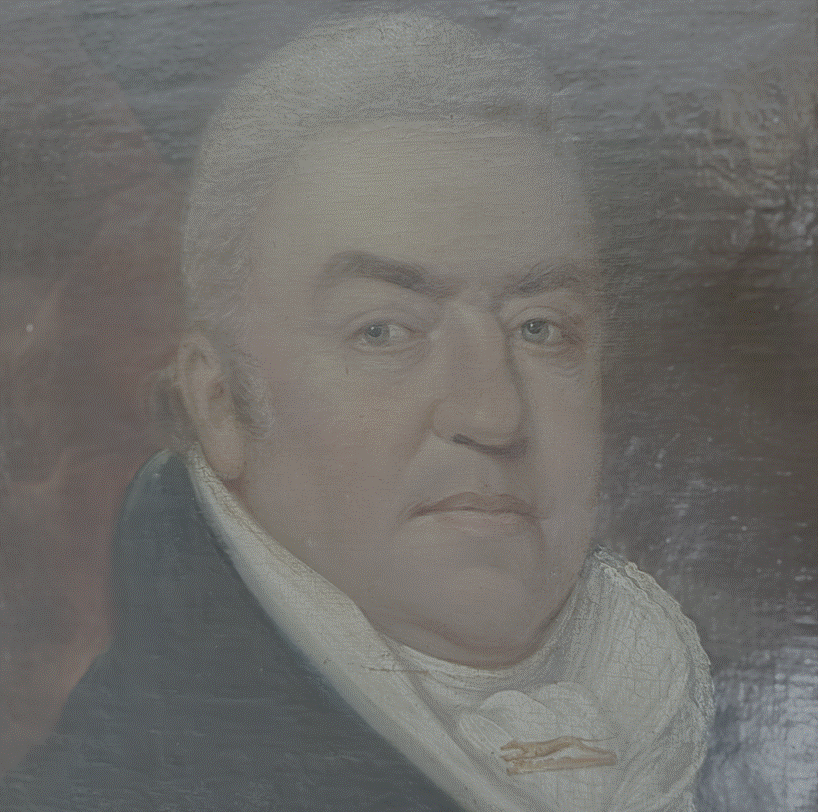
BEL00002
|
Return to the Home Page of the Bakers Family part of the website |
The Bakers of Highfields Story
The Story of the Dods and Bakers and of Highfields,
Fenton House and Hasfield Court. A journey through the history of Cheshire and
Staffordshire, an Anglo-Saxon nobleman who retained his lands after the
Conquest, pottery at Stoke on Trent, an encounter with Elgar, and the history
of an Elizabethan manor house at Audlem |
The family tree of the Bakers of Highfields |
The Family Tree of the Dods, predecessors to the
Bakers of Highfields |
The Bakers of Fenton House and Hasfield Court
The Family Tree of the pottery Bakers of Stoke on Trent |
The Family Tree of the Bellyse Family |
The main part
of this website tells the story of the Farndale family from Yorkshire Descendants of Arthur Baker, the story of the
Farndale ancestry is told through the main part of this website You can also return to the Farndale
website home page |
The genealogy of the family of James Hall, linked to
the Baker family through marriage to Arthur Baker |
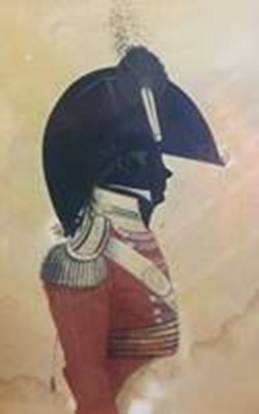
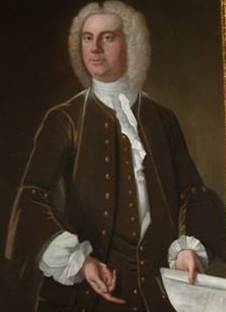
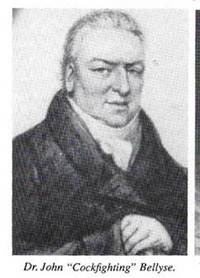
Surgeon, known as ‘Cock-fighting’ Bellyse, Founder of the Waterloo Cup for
coursing, who lived at The Lymes, Woore Road,
Woodhouse, Audlem
Dr John Bellyse, of Frodsham, later of Audlem,
Cheshire, joint owner, with Jane, Mrs Oldaker, of the Woodhouse estate, Audlem (see BAK00103),
celebrated Cockfighting Bellyse, born 1738, died 1828, leaving issue (Burke, John and Burke,
Sir Bernard (1836)(Eighteenth Edition, 1972), Bellyse Baker of Highfields
in Burke’s Landed Gentry, Volume 3, pages
35 to 38).
There have been Bellyses of Audlem for nearly two hundred years.
Dr Richard Bellyse has already been mentioned. His grandfather, Dr John Belyse,
King of Cheshire’s cock fighting fraternity, was born in 1738 and lived to be
ninety. His home was the 16th century house now known as the Lymes.
(Nineteenth Century Audlem by Marjorie Burton, 1873).
1738
John Bellyse was born in or about 1738.
1778
John Bellyse married Mary Bayley
(1747 to 1784) on 24 May 1778 at St Chad, Wybunbury,
Cheshire.


1779
John and Mary had a son, Edward
Bellyse, born in or about 1779.
1784
Dr John Cockfighting Bellyse was a
native of Frodsham, Cheshire (Burke, John and Burke, Sir
Bernard (1836)(Eighteenth Edition, 1972), Bellyse
Baker of Highfields in Burke’s Landed Gentry, Volume 3, pages
35 to 38).
At about this time a new doctor
came to the village, Dr John Bellyse, better known as “Cockfighting Bellyse”.
So much has been written about this colourful, if rather questionable,
character that it will suffice to say that he was Cheshire 's most successful
cockfighter at a time when it was, along with horse racing and fox hunting,
England’s national sport. (Baker, J Bellyse
(1982), Highfields,
Audlem: Sixteenth Century Home of the Dod and Baker Families, Audlem
District History Society, page 19).
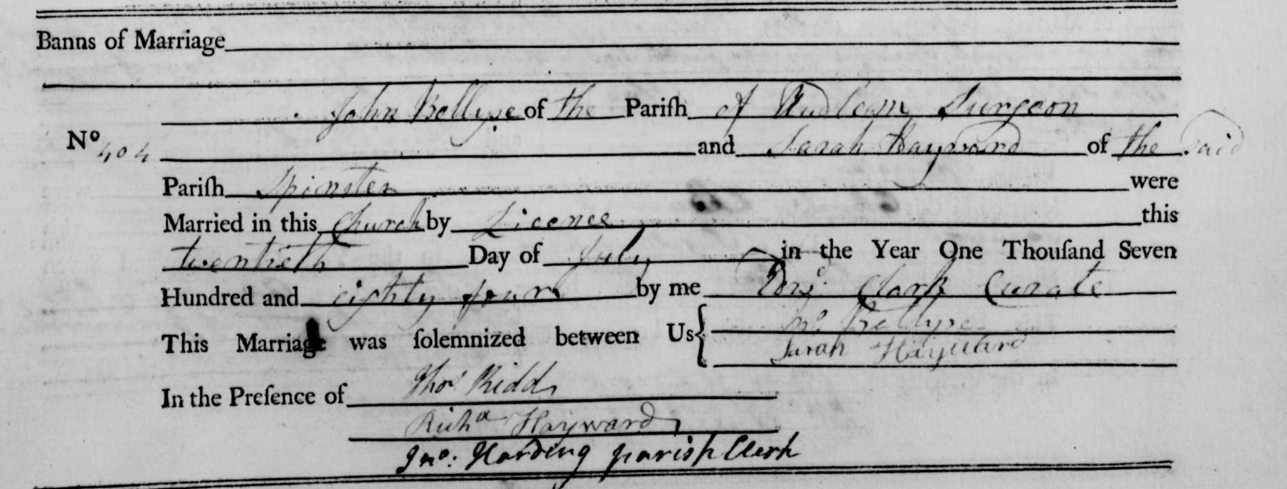
John Bellyse married Sarah Hayward
(d 1803) on 20 July 1784 at Audlem (Audlem
Parish Records).

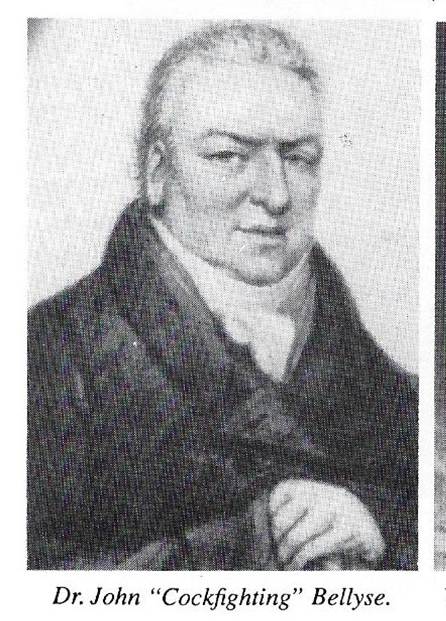
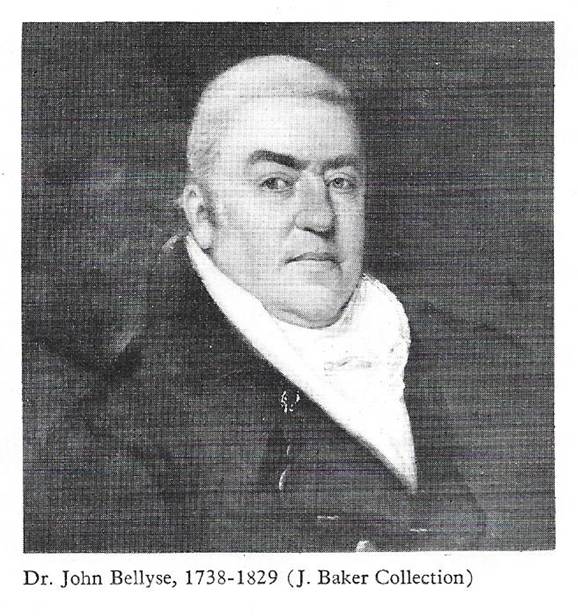
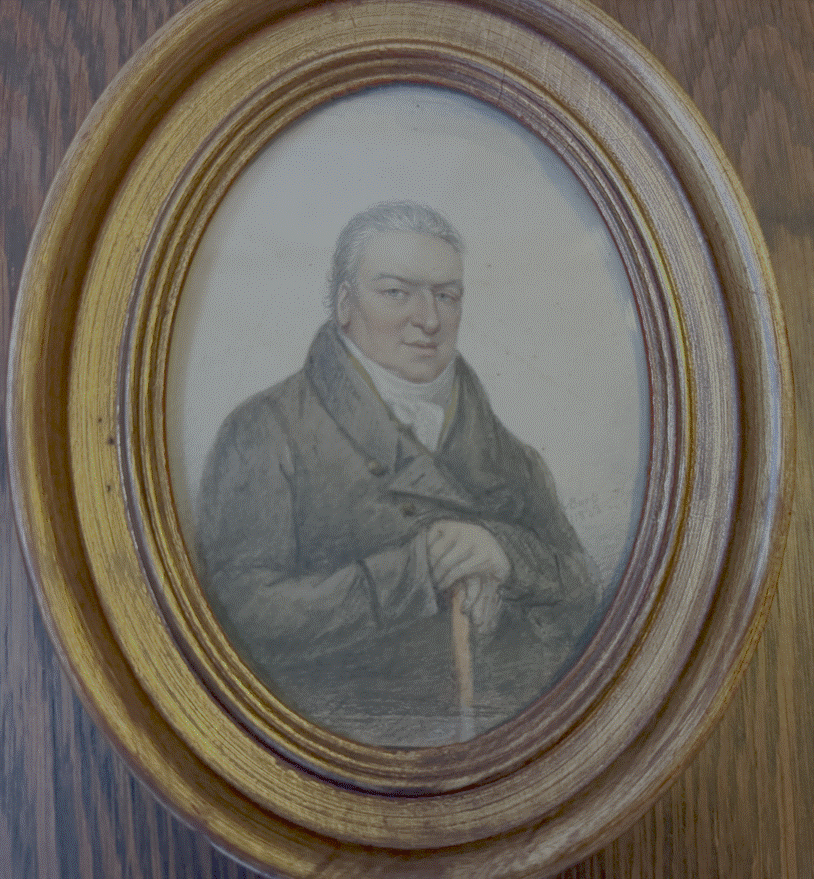
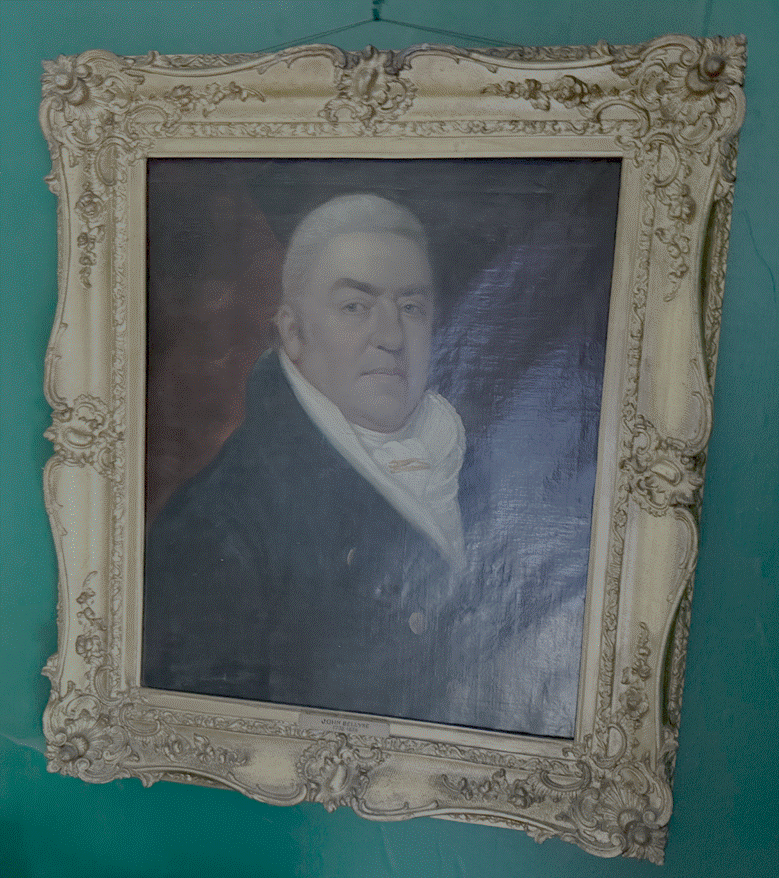
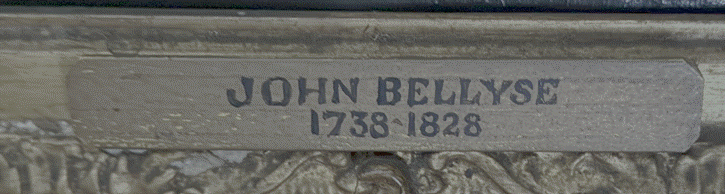
Miniature of John Bellyse (Baker collection) Portrait
of John Bellyse (Baker collection)
1798
Assessed for land tax in 1798 in
Audlem (UK Land Tax Redemption):


There are a very large number of
such assessments.
1804
John Bellyse, a surgeon of Audlem,
married Margaret Tremlow (d 1810) on 3 May 1804 (Register of Marriages, Chester).

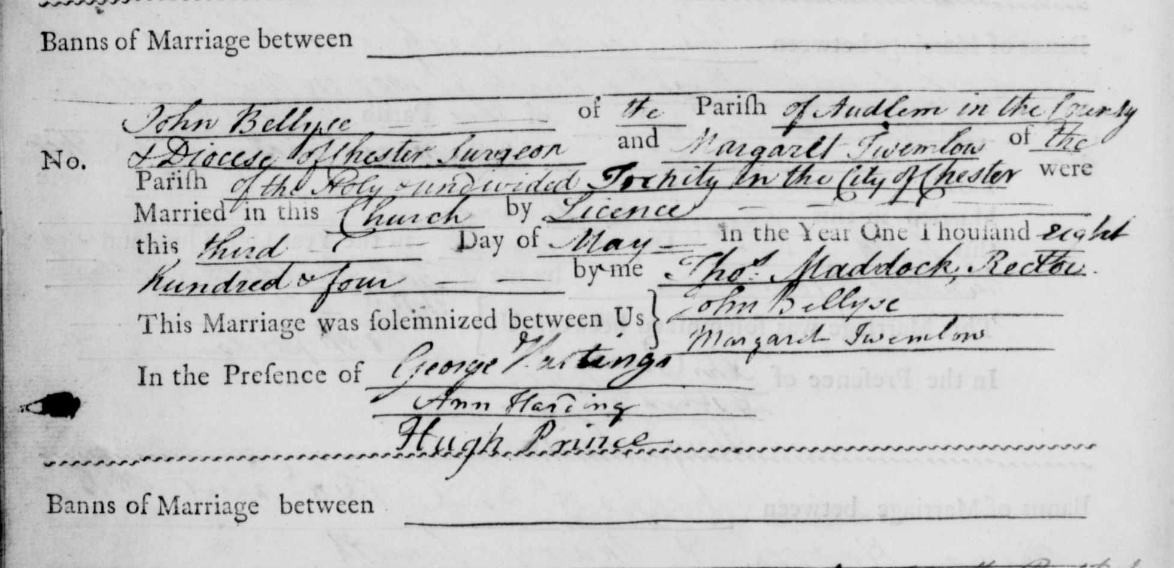
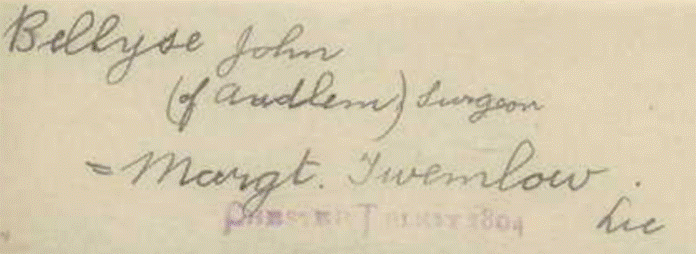
(Pallot’s Marriage Index)
1820
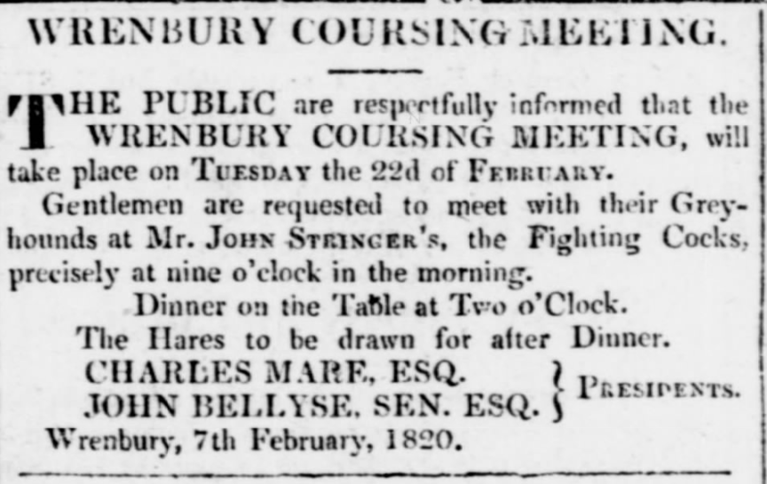
(Chester Chronicle and Cheshire and North Wa.es General
Advertiser, 18 February 1820)
Dr John 'Cockfighting' Bellyse became the
joint owner with Jane Baker (BAK00103), of Woodhouse, Audlem, which they purchased in 1820 from the Trustees of Mrs. Barrow's
Charity and sold in 1849 to Lord Kilmorey.
1823
John Bellyse married Ann Brown
(who died in 1847) on 4 December 1823 at St James the Great, Audlem.
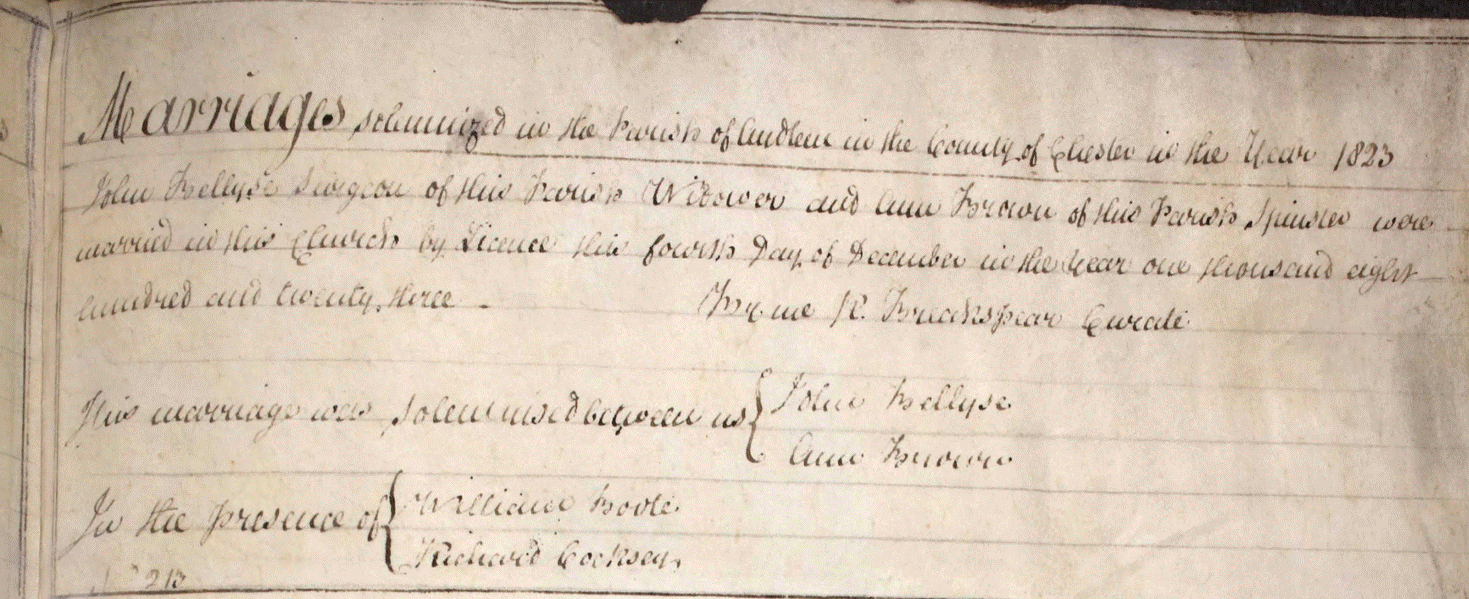
1826
Once the home of Cockfighting
Bellyse, the
Lymes stands on Woore Road, Audlem. The Lymes was the home of the Dr.
John Bellyse (1738 - 1828), who began an eminent local medical dynasty. His
son, Dr John
Bellyse also became a Doctor as did his grandson Dr. Richard Baker Bellyse.
Dr Richard Baker Bellyse has a memorial monument in Audlem Village Square.
The Lymes occupies a prominent
position 600 yards from Audlem village centre.
His home was the sixteenth century
house now known as the Lymes (Burton, Marjorie (1973), Nineteenth
Century Audlem, Audlem District Amenities Society, Johnson & Son
Nantwich Limited).
John Bellyse was noted for his
distinctive personality and attire. Silk and Scarlet portrayed him in a
blue dress‑coat with gilt buttons, light
kerseys, gaiters, a buff waistcoat, and a pig‑tail beneath a conical hat. He
wore a golden greyhound gifted by Lord Combermere. (Scott, George
Ryley (1957), The
History of Cockfighting, page 106).
No keener critic than the great
Dr. Dr. Beiiyse, of Bellyse of Audlem rode behind the slipper that day. A blue dress-coat
with gilt buttons, light coloured kerseys and gaiters, a buff waistcoat, and a pig-tail just peeping from beneath a conical low-crowned
hat, completed his attire; while a golden greyhound, the gift of his friend
Lord Combermere, lent a tasteful finish to his snowy frill. Never in his life
had he seen either Derby or St. Leger, but his eyelids knew no rest in the long
night of suspense which followed them. He was a walking polyglot on race-horse
pedigrees, from the Godolphin Arabian to Memnon. The Grafton blood in the
South, and Mr. Garforth's in the North, were both especially dear to
him ; but he would invariably toast
General Mina when he won, and troll forth with double emphasis, on that
evening, all his lodge lays of "a Free and Accepted Mason," or his
famous matrimonial ballad —
We scold and fight, and both
repent
That ding-dong went the bell.
Pre-eminent and assiduous as he was
in his profession, his patients had to show a clean bill of health during the
Chester race week, or give up all hope of having him.
The Stationers' Almanack was not truer to the year than his yellow gig with his
fourteen-one Brown Tommy to the Hop Pole yard at Chester, on that Saturday
afternoon. On the Monday he sallied forth to the Hotel Row,
and received a hearty annual welcome from all the lovers of "the
Turf and the Sod", to whom, from his quiet worth, and his wonderful memory
and information on every point, he had become so endeared. Years wrought no
change in the dress or figure of this old Cheshire worthy, or
quenched his love for either science. The cock-pit
began at eleven, and the in-go ended soon after one; and then before a Grand Stand arose, he was always to be seen, stationed on
Tommy, in the middle of the Roodee, to watch what
horses were doing all round, and armed with a gigantic umbrella. He held the
belief that there were "always so many fools on a race-course,"
and hence he kept it to shoot out in self-defence, in the faces of the young
blades as they galloped recklessly across him from the cords to the river
rails.
The Chester Cocking
Cocking was then the chosen
amusement of the race mornings, and no one on this point was so great an
authority as the Doctor. He spoke, too, out of the fulness of his strange
experience, as he had the privilege of all the walks on the
Combermere, Shavington,
Adderley, Doddington, Peckforton, Beeston, Oulton, and
divers other estates in Cheshire, Shropshire, and Wales. In some seasons he
sent out a thousand chickens, of which barely one third would be reared, or fit
to produce at an important main. After dinner, on the Saturday of his arrival
at Chester, he gave an audience to his feeder, to sound him as to the condition
of his cocks, and learn his opinion of the forthcoming
main ; and not unfrequently that functionary would
arrive with a couple of bags slung over his
shoulder, and the pets of his fancy remonstrating inside. During the week, he
would over and over again slip away from those who wanted to talk to him about weights, and watch his brown-red champions busy in their
pens, scratching at a fresh-cut sod, or a spadeful of the purest gravel, fresh
from the bottom of the Dee. Any feeder who did not furnish these stimulants, at
least every
third day, would have held his
place on a very frail tenure. He would have a hundred cocks taken up from their
walks for Chester, in order that his feeder might select the best, and put them
in training from the Thursday week to the Monday, when the smaller cocks led
off in the five days' main. Two years old was the favourite period for
selection, as they became greasy at three, and far beyond the 41b. 10 oz.
standard; and eggs, sugar-candy water, hot bread and
milk, barley, rue, butter, and
rhubarb formed the chief part of that dainty diet, which few were fated to
taste more than once in their lives.
Different Breeds of Game Cocks. He
inaugurated his career on the sod with the original white piles, which carried
such a wonderful spur that " The Cheshire drop," which would
occasionally come out in a long battle, when the odds were twenty to one, was
considered as fatal as the " Chifney rush."
These were the cocks with which the Cholmondeleys,
the Egertons, the Warburtons, the Cottons, and the Raylances fought all the great county mains
; sometimes against each other, but more frequently against the Mexborough
and Meynell families. The Doctor, however, convinced himself that their
constitutions would not stand the discipline of modern feeders, and at last, by
judicious crossing, made his brown and black-reds
carry as good a spur, and bear the most punishing preparation to boot. They
were chiefly bred " from his old cut-combed hen," whose descendants
were crossed with his brown " crow alleys," two of Gilliver's black
reds, and the Westgarth cock. Six pullets
to one cock, and the eggs as closely bred in as he could get them, were two of
his leading tenets ; the greater part of his chickens
were also hatched in April and May, and he used the same stud-birds for about
three seasons.
(Robinson, James (The Druid), Silk
and Scarlet, pages 89
to 90).
An article, titled This Cheshire
community had character (The Crewe chronicle, 10
January 1974), appeared in a Bookshelf
column and discussed the colourful personalities of Audlem, a Cheshire village.
It draws on anecdotes from a booklet called Nineteenth Century Audlem by
Marjorie Burton, which collected stories from local residents.
Several vivid characters are highlighted. Dr. Poggi was a local doctor known
for keeping goats, joking with villagers, and having a mischievous sense of
humour. Dr. John Belysye was remembered for his enthusiasm for cock‑fighting, a pastime that once had
strong local support. The article mentions the Shropshire Union Canal and the
lively social world around it, including boatmen, traders, and local customs.
Burton’s booklet preserves tales of unusual habits, memorable incidents, and
the distinctive charm of Audlem’s residents in the 19th century. The overall
tone celebrates the rich character and individuality of rural Cheshire life,
suggesting that the village’s history is full of humour, quirks, and strong
personalities.
Dr Bellyse, who died in 1828 at
the age of 90 made a point of never missing Chester Races. Since he was an
expert on racing form, his two interests dovetailed neatly, for cockfighting
was the traditional pastime on the mornings of racedays.
In another article, written in
1859:
In times long past Cockfighting
was particularly popular in the parish. For this purpose
cocks were prepared in various ways with special diets (largely of wheat meal
bread) and sweating to get rid of surplus fat. When full blown cockerels they
were ‘dubbed’, with the cutting off of the comb close
to the head, and the clipping of tail feathers; there thus being less for the
enemy’s beak. The claws were sharpened and spurs of steel fitted. The fights
took place in a ring, made with chairs, tree trunks etc and measuring about
five yards square. The two cocks were first weighed in ‘cock bags’ and
introduced about a yard apart. A fight lasted approximately fifteen minutes and
there were usually fourteen of these a day. A “Main of Cocks” sometimes lasted
a week and invariably one was killed in each fight. Cockfighting usually took
place at the Wakes and frequently at race meetings.
Perhaps the most colourful Audlem
character was the first Doctor John Bellyse, well known throughout the country
as “Cockfighting Bellyse”. Born in 1738 (he died at the Age of 90 in 1829), he
came from an old Yorkshire family of which Lord Fauconberg
was the head. His father had moved to Frodsham and, before coming to Audlem,
the doctor lived at Stretton, near Malpas.
He was preeminent in Cheshire and
was noted for his famous strain of Brown-Red fighting cocks which he bred on a
large scale. He once had one of his game cocks stolen and the case was sent for
trial;. His bird was produced in court
and he was asked to identify it. Directly it saw the doctor, and after he had
stroked it, it became perfectly quiet and stood beside him while he gave his
evidence. The judge remarked that this was proof enough, the man was convicted
and Dr Bellyse returned to Audlem with the bird in triumph. On his arrival the
bells of St James rang out in honour of the event.
He was also something of a
personality, particularly regarding his dress; this apparent from a description
of him taken from the pages of “Silk and Scarlet” on the
occasion of Chester Races.
“He wore a blue dress-coat with gilt
buttons, light coloured kerseys and gaiters, a buff waistcoat, and a pig tail,
just peeing from beneath a conical low-crowned hat, completed his attire; while
a golden greyhound, a gift of his friend Lord Combermere, lent a tasteful
finish to his snowy frill. He was a walking polyglot on race-horse pedigrees,
from the Godolphin Arabian to Memnon. Pre-eminent and assiduous as he was in
his profession, his patients had to show a clean bill of health during the
Chester race week, or give up the hope of having him.
The Stationers Almanac was not truer to the year than
his yellow gig with his fourteen-one “Brown Tommy” to the Hop yard at Chester,
on the Saturday afternoon.
On the Monday he sallied forth to
the Hotel Row, and received a hearty annual welcome
from all the lovers of ‘the Turf and the Sod’, to whom, from his quiet worth,
and his wonderful memory and information on every point, he had become so
endeared. Years wrought no change in the dress. The cockpit began at eleven,
and the in-go ended after one; and then before a Grand Stand
arose, he was always to be seen stationed on Tommy, in the middle of the Roodee, to watch what horses were doing all round, and
armed with a gigantic umbrella. He held the belief that there were “always so
many fools on a race course” and hence he kept the
umbrella to shoot it our in self
defence., in the faces of the young blades as they galloped recklessly
across him from the river rails.”
(Latham, Frank (1997), Audlem:
The History of a Cheshire Parish and its seventeen townships, page 109 to
110, HH Dixon (The Druid) Writing in
1859)
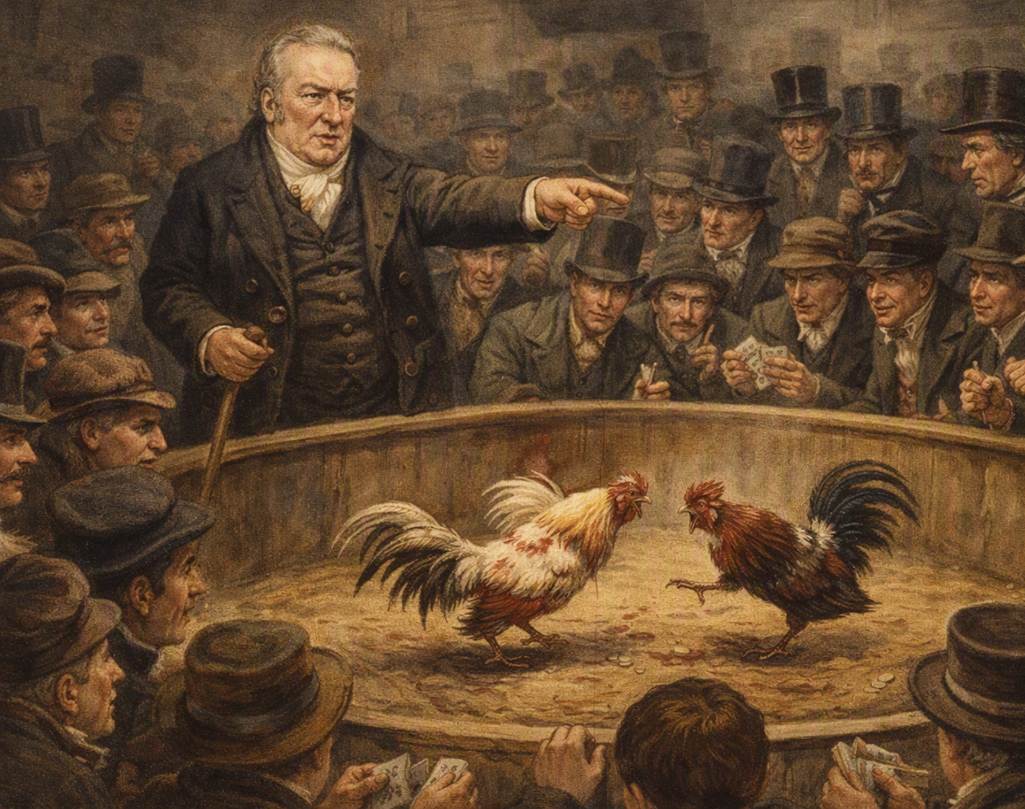
John Bellyse’s pastime reimagined
using artificial intelligence
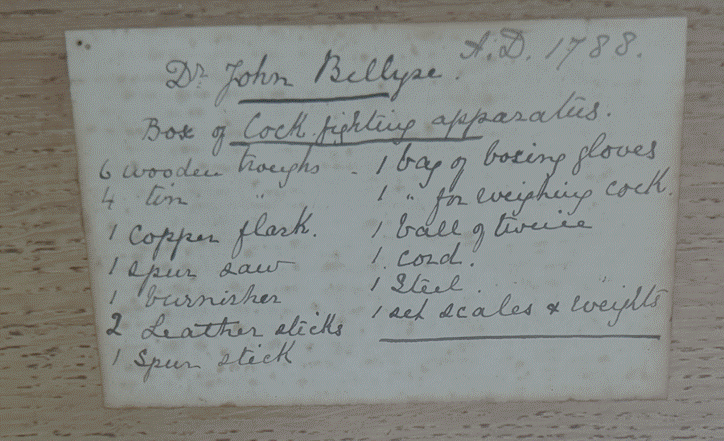
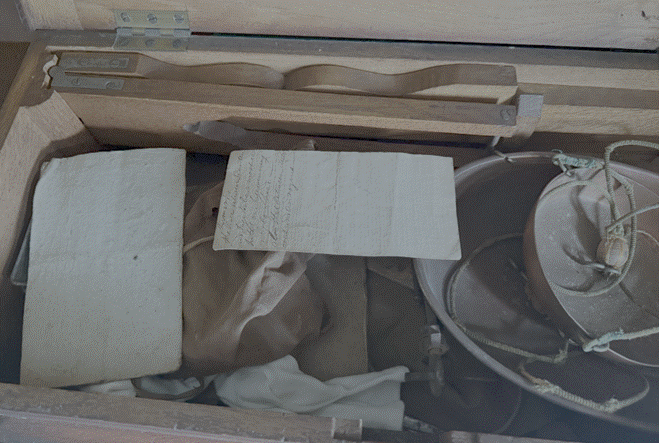
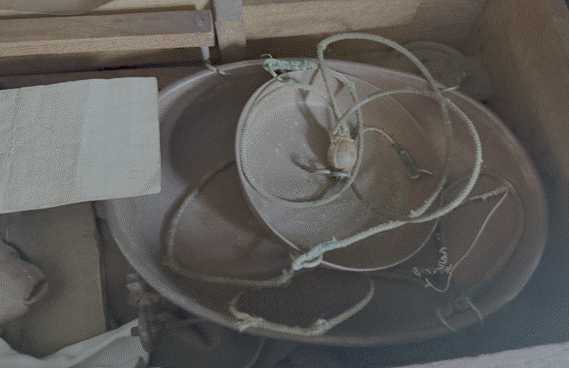
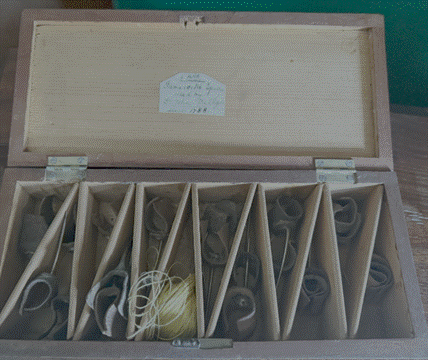
Dr. Bellyse of Audlem was a well‑known cocker and breeder of Brown‑Red fighting‑cocks. Although he never attended
the Derby or St Leger, he was deeply knowledgeable about race‑horse pedigrees, especially the
Grafton and Garforth bloodlines. He was fond of toasting General Minna and
singing lodge songs or his humorous ballad.
Breeders debated fiercely whether
colour determined a bird’s endurance or fighting ability. Early authorities
like Markham favoured certain pyle and red varieties,
while others dismissed white and dun birds. Later writers disagreed, with
Ferguson praising the dun and John Harris arguing that dark‑coloured birds were tougher, while
lighter birds compensated with sharper heels and more cautious fighting. Harris
ultimately concluded that the best results came from blending both extremes,
and he cited the Holford, Bellyse, Lowther, and Derby strains as proof. These
families, including the Bellyse strain, were celebrated precisely because they
combined dark and light bloodlines, producing birds that balanced stamina with
deadly precision. In other words, Bellyse’s birds stood as a key example of how
cross‑colour breeding could
outperform rigid colour preferences.
The practice of holding cockfights
and horseraces contemporaneously became popular and by the end of the
eighteenth and early nineteenth century, cockfights were regularly held at
races. A competitive cockfighting event was held in Liverpool in which Dr.
Bellyse (with feeder Davies) and Captain Hawkins (with feeder Hines) matched
their birds for 10 sovereigns per battle and 200 sovereigns for the main. The
contest consisted of twenty‑five
mains and eight byes, indicating a large, formalised series of fights typical
of the cockfighting culture of this time. A main
was the formal, high‑stakes series of matches
between two cock‑owners, while a bye
was an extra, non‑counting fight run
alongside the main. A feeder was responsible for conditioning the birds
and reporting on their health and readiness.
Dr. Bellyse was reputed as a
skilled and meticulous breeder and trainer of fighting cocks. He maintained
estates across Cheshire, Shropshire, and Wales, where he bred prized strains
such as White Piles, Cheshire drop, and Chifney rush.
His birds were valued for their strength, speed, and reliability, and he was
known for carefully crossing different lines to produce superior fighters.
Intense attention was given to breeding schedules, hatching times, and the
selection of stock birds. Eggs and sitting hens were considered extremely
valuable, so much so that Dr. Bellyse once refused an offer of fifty pounds for
a single hen. Prominent families like the Cholmondeleys,
Egertons, Warburtons, Cottons, and Raylances participated in these cockfighting circles. Dr.
Bellyse’s expertise, combined with the skill of his feeder, made his birds
renowned in the sport.
(Scott, George
Ryley (1957), The
History of Cockfighting, pages 23,
106,
109
to 111).
Eggs, sugar candy, water, hot
bread and milk, barley, rice and rhubarb comprised the diet of Dr John
Bellyse’s fighting cocks, we are told by Miss Burton in this fascinating
picture of the Audlem of a century and more ago. (Nantwich Chronicle, 9 December 1982).
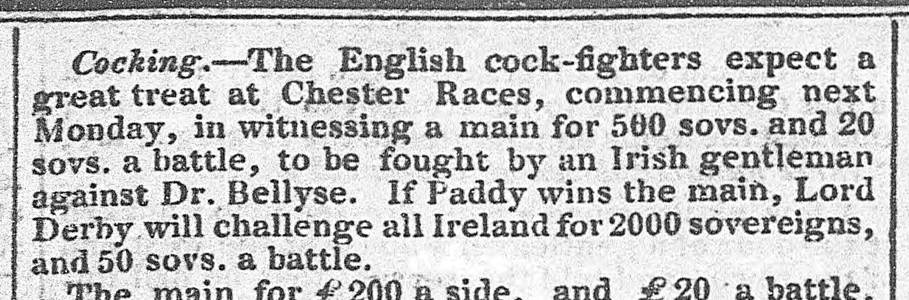
(The Hampshire Chronicle, 1 May 1826)
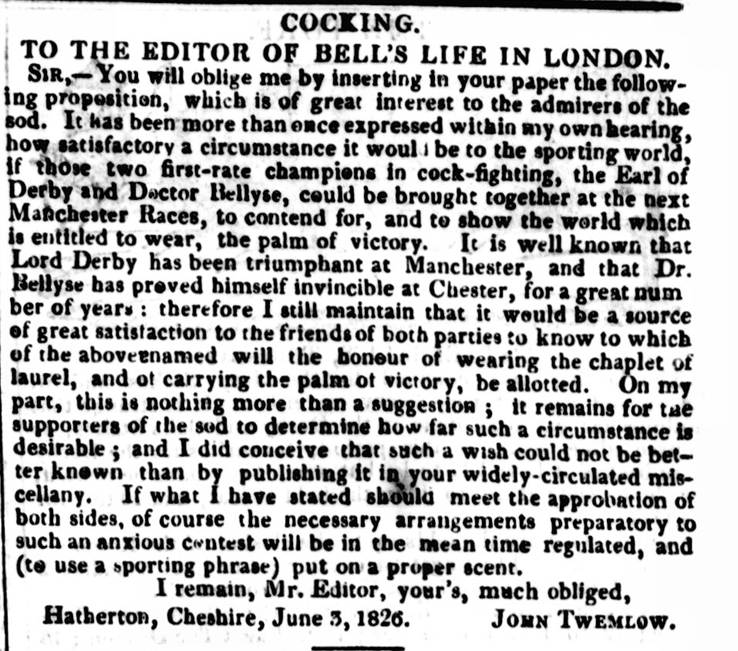
(Bell's Life in London and Sporting Chronicle, 2 July
1826)
His knowledge of racing was
confirmed by that great writer Nimrod (Charles James Apperley, born 1778) in an
article in the Sporting Magazine regarding the effects of weight. Taking as an
example a race at Newcastle under Lyme where four horses, owned by Sir John
Egerton, Mr Mytton, Sir William Wynne and Sir Thomas Stanley, resulted in it being
impossible to declare a winner in several heats. Nimrod had high praise for the
handicapper, ‘the celebrated Dr Bellyse’, for his ‘thorough knowledge of the
horses, their ages, and their public running.’ (see Nimrod
(1837), The Chace, The Road and the Turf, page
168).
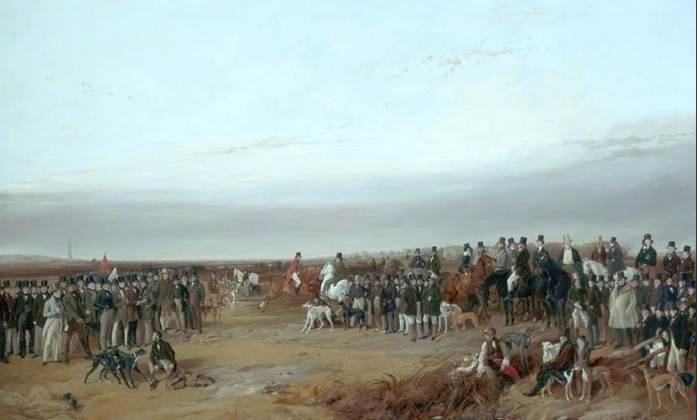
Apart from his love of
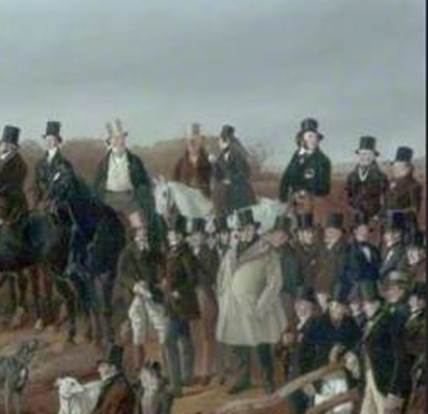
cockfighting and horses Bellyse was also fond of Coursing. In the well known print “The Waterloo Coursing
Meeting” he can be seen on horseback on the extreme right; to be allowed to
ride was considered a special favour in those days.
From Nineteenth
Century Audlem by Marjorie Burton, 1873:
Cocking was then the chosen
amusement of the race mornings, and no one on this point was so great an
authority as Dr Bellyse. He spoke, too, out of the fullness of his strange
experience, as he had the privilege of all the walks on the Combermere,
Shavington, Adderley, Dodington, Peckforton,
Beeston, Oulton and divers other estates in Cheshire, Shropshire and Wales. In
some seasons he set up a thousand chickens, of which barely one third would be
reared or fit to produce at an important main. After dinner on the Saturday of
his arrival at Chester, he gave an audience to his feeder, to sound him as to
the conditions of his cocks, and learn his opinion of the forthcoming main, and
not infrequently that functionality would arrive with a couple of bags slung over
his shoulder, and the pets of his fancy inside.,
During the week he would slip away
over and over again from those who wanted to talk to him about weights and
watch his own brown-red champions busy in the pens, scratching at a fresh cut
sod, or a spadeful of the finest gravel fresh from the bottom of the Dee. He
would have a hundred cocks taken up from their walks for Chester, in order that
his feeder might select the best and put them in for training from the Thursday
week to the Monday when the smaller cocks led off in the five
day main. His cocks were mainly duck wings, but latterly he fought more
reds, all of them selected from an enormous number of birds, and always of the
finest form and daintiest feather.
Eggs, sugar, candy water, hot
bread and milk, barley, rice and rhubarb constituted the chief part of the
dainty fare upon which Dr Bellyse’s game cocks were regaled when About to do battle for, as it proved in many cases, the last
time in their lives. Dr Belyse died in January 1829, so did not live to see the
battles royal put to an end by Act of Parliament. (HH Dixon (the Druid) writing in 1859)
Owners such as the 12th Earl of
Derby (d.1834) or medical doctor John Bellyse of Audlem (d, 1829) bred hundreds
of cocks annually, often of a favourite breed of gamecock (Edward Yates ed., Time: A
Monthly Miscellany Vol II (London: Robson, 1880), 549; Animal-Human Relations: Fighting
Cocks and Their Professional Cock-Feeders in England in the Long Eighteenth
Century: The Secret World of Cockfight Preparation, Mike Huggins, The
International Journal of the History of Sport, 2026)
(see also Burton, Marjorie (1973), Nineteenth
Century Audlem, Audlem District Amenities Society, Johnson & Son
Nantwich Limited page 7 to 8).
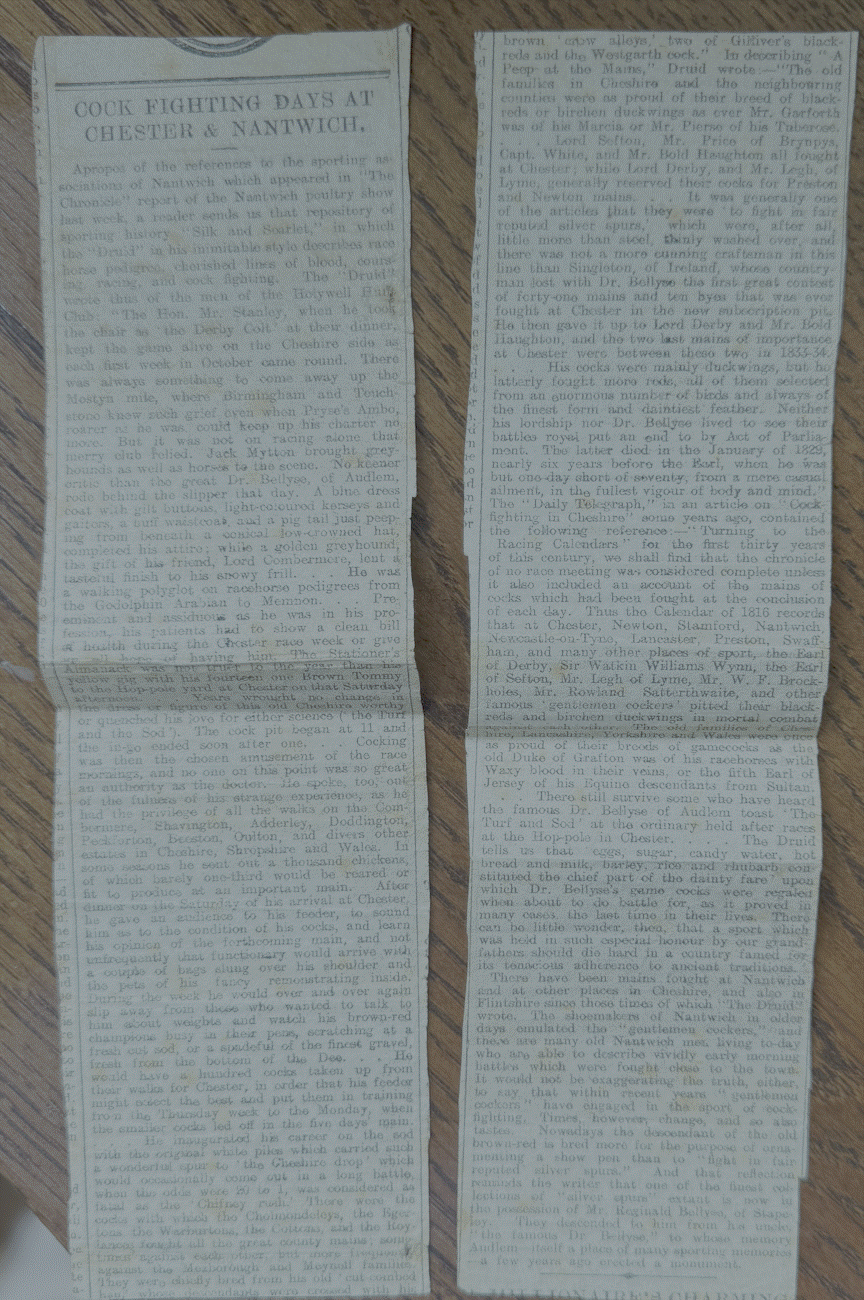
(Newspaper cutting regarding cockfighting and Dr Bellyse,
undated, perhaps about 1900, Baker Records, 77)
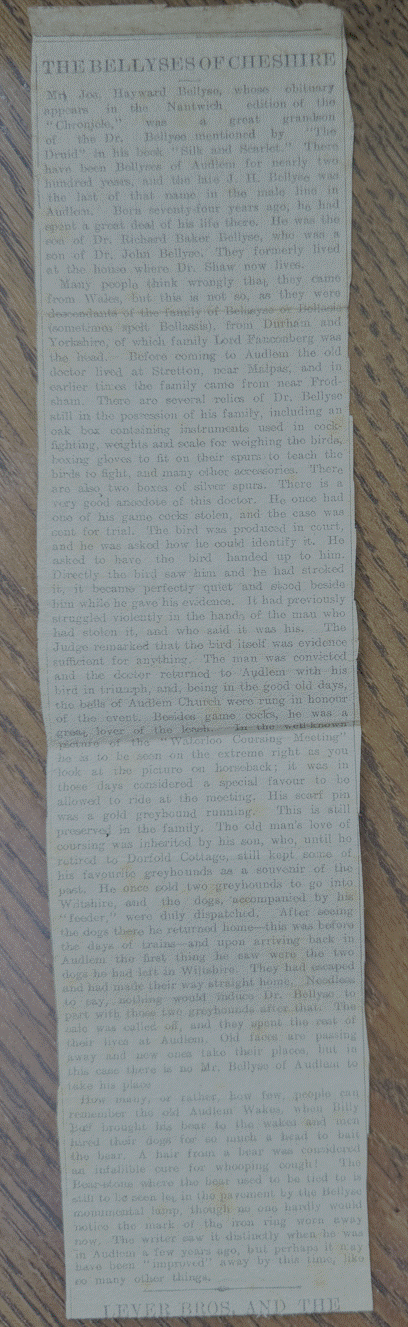
(Newspaper Cutting, The Bellyses
of Cheshire, 1911, Baker Records, 78)
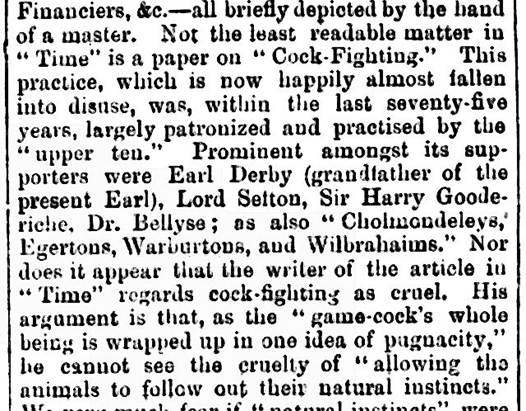
(The Newry Reporter, 31 January 1880)
1829
John Bellyse died on 19 July 1828
(Will, see below).
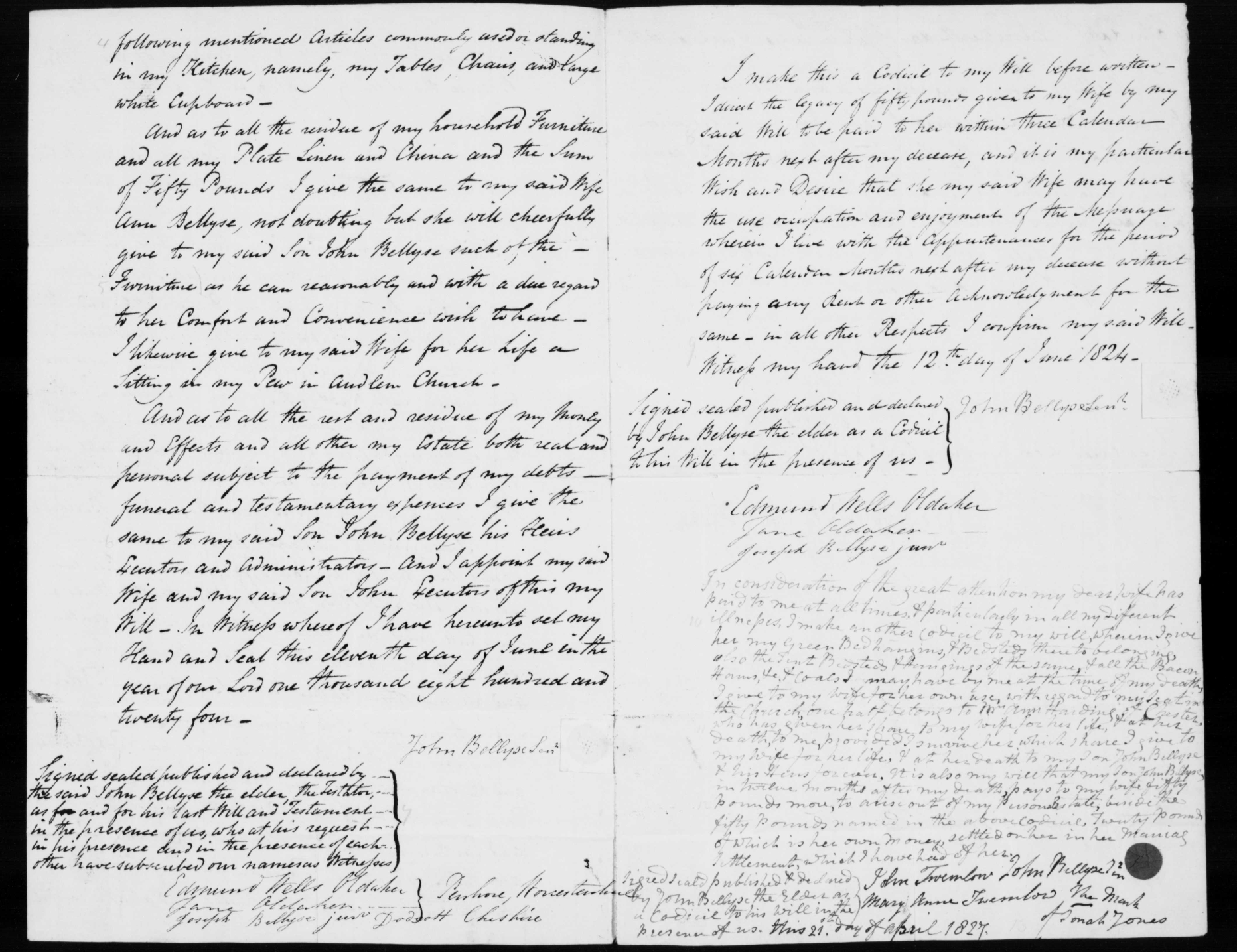
This is the last Will &
Testament of me John Bellyse the elder of Audlem in the County of Chester
Surgeon.
I give to my Son Edward Bellyse
all my Clothes and wearing Apparel except my blue Cloak and my green great Coat
which I give to my son John Bellyse.
I also give to my said Son John
Bellyse my Watch and Seals all my Books my Surgical Instruments and the Case
thereof and all my Drug Bottles and other Articles and Things whatsoever used
in or appertaining to my Business of a Surgeon and Apothecary also one full
equal half part of the Stock of Cheese Spirituous Liquors Ale and Beer which I
may have at the time of my death and also all my Wines (except one dozen
bottles of Port Wine and the like quantity of white Wine which I give to my dear
Wife Ann Bellyse).
I also give to my said Wife the
remaining equal half part of my said Stock of Cheese Spirituous Liquors Ale and
Beer and such two Feather Beds as she shall select and choose from my stock of
Feather Beds with the Bolsters and Pillows thereto belonging and all my other
Feather Beds Bolsters and Pillows I give to my said Son John Bellyse – and I
also give to my said Son John Bellyse my best four Post Bedstead and the Hangings
thereto and the Bureau or writing Desk in my bed Chamber and all the Glasses
Shelf and Furniture in the Closet of the same Room also the Sofa in my Parlour
also my Clock and all my Tin Covers and Water Plates and also the several
following mentioned Articles commonly used or standing in my Kitchen, namely,
my Tables, Chairs and large white Cupboard.
And as to all the residue of my
household Furniture and all my Plate Linen and China and the Sum of Fifty Pounds
I give the same to my said Wife Ann Bellyse, not doubting but she will
cheerfully give to my said Son John Bellyse such of the Furniture as he can
reasonably and with a due regard to her Comfort and Convenience wish to have.
I likewise give to my said Wife
for her life a Sitting at my Pew in Audlem Church.
And as to all the rest and residue
of my Money and Effects and all other my Estate both real and personal subject
to the payment of my debts, funeral and testamentary expenses I give the same to
my said Son John Bellyse his Heirs Executors and Administrators. And I appoint
my said Wife and my said Son John Executors of this my Will. In Witness whereof
I have hereunto set my Hand and Seal this eleventh day of June in the year of
our Lord one thousand eight hundred and twenty four.
Signed sealed published and
declared by the said John Kellogg the elder the Testator as for and for his
last Will and Testament in the presence of us, who at his request in his presence
and in the presence of each other have subscribed our names as Witnesses.
I make this a Codicil to my Will
before written. I direct the legacy of fifty pounds given to my Wife by my said
Will to be paid to her within three Calendar Months next after my decease, and
it is my particular Wish and Desire that she my said Wife may have the use
occupation and enjoyment of the Messuage wherein I live with the Appurtenances
for the period of six Calendar Months next after my decease without paying any Rent
or other Acknowledgment for the same in all other Respects I confirm my said
Will. Witness my hand the 12th day of June 1824.
Signed sealed published and
declared by John Bellyse the elder as a Codicil to his Will in the presence of
us, Edmund Wells Oldaker, Jane Oldaker, Joseph Bellyse junr,
John Bellyse Senr.
In consideration of the great
attention my dear wife has paid to me at all times, & particularly in all
my different illnesses, I make another codicil to my will wherein I give her my
green bed & hangings, Bedstead, & furniture, and also at East Bourton,
my plate, linen, & all the bacon, ham, &c I also may have by me at the
time of my death, I give to my wife for her own use, with regard to my stock of
truck, &c, I give to her for her life, & after her death to my poor Ed,
& moreover her which I have, I give to my wife for her life, & at her
death to my son Bellyse’s wife & children, & it also my will that my
wife’s fifty pounds more to arise out of my personal estate besides fifty pounds
named in the former codicil, twenty pounds of which is her own money settled on
her in her marriage settlement which I have had & enjoy.
Settlement, which I have here set
my hand and published & declared by John Bellyse the elder as a codicil to
his will in the presence of us this 21st day of April 1827. John Townsend, John
Bellyse jun, Mary Anne Townsend, The mark of Sarah
Jones.
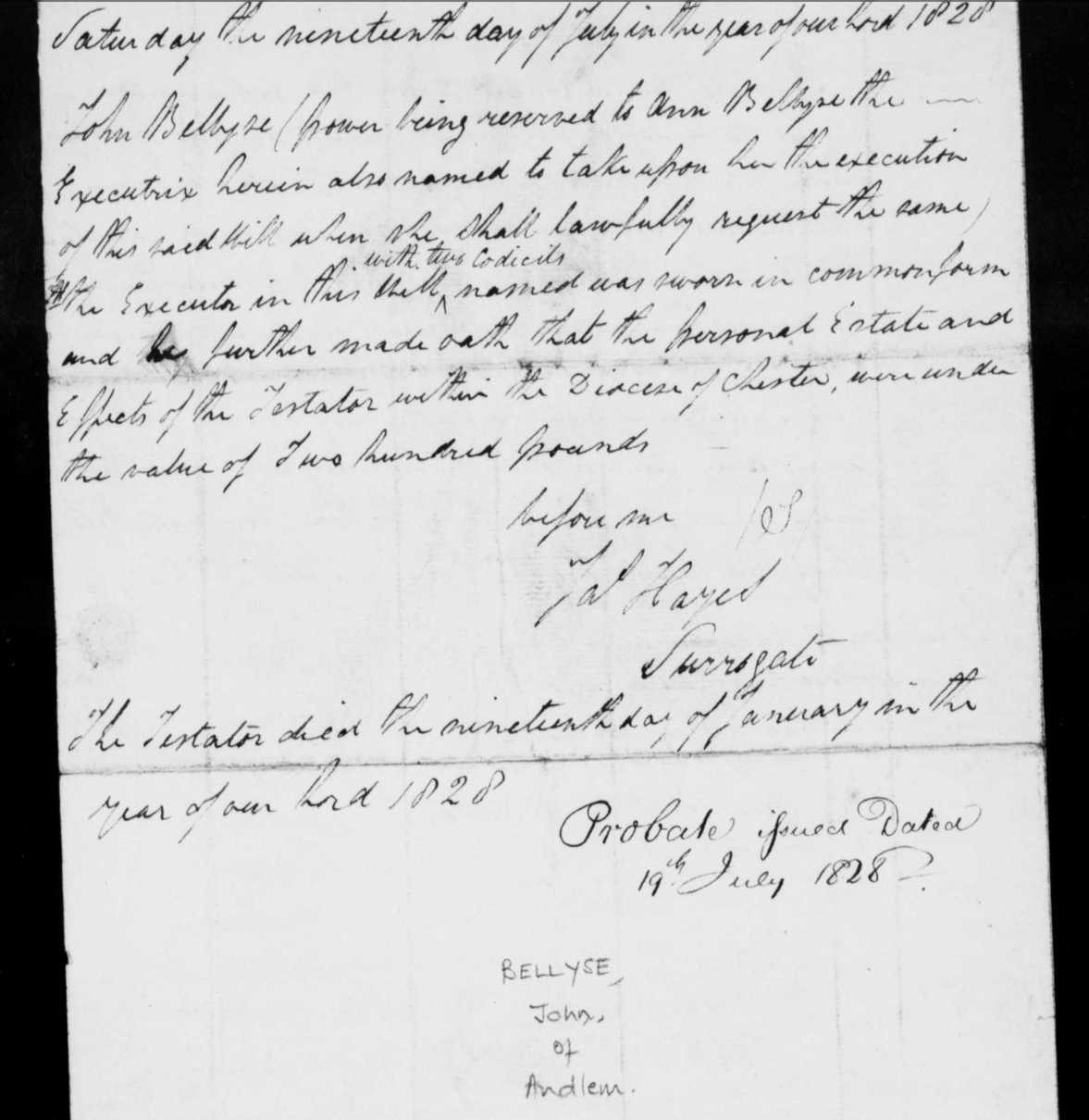
Saturday the nineteenth day of
July in the year of our Lord 1828. John Bellyse being removed to Ann Bellyse the
executrix herein also named to take upon her the execution of this said will
when she shall lawfully request the same (with this codicil). The Executor in
this will named was sworn in common form and he
further made oath that the personal estate and effects of the testator within
the Diocese of Chester were under the value of Two hundred pounds.
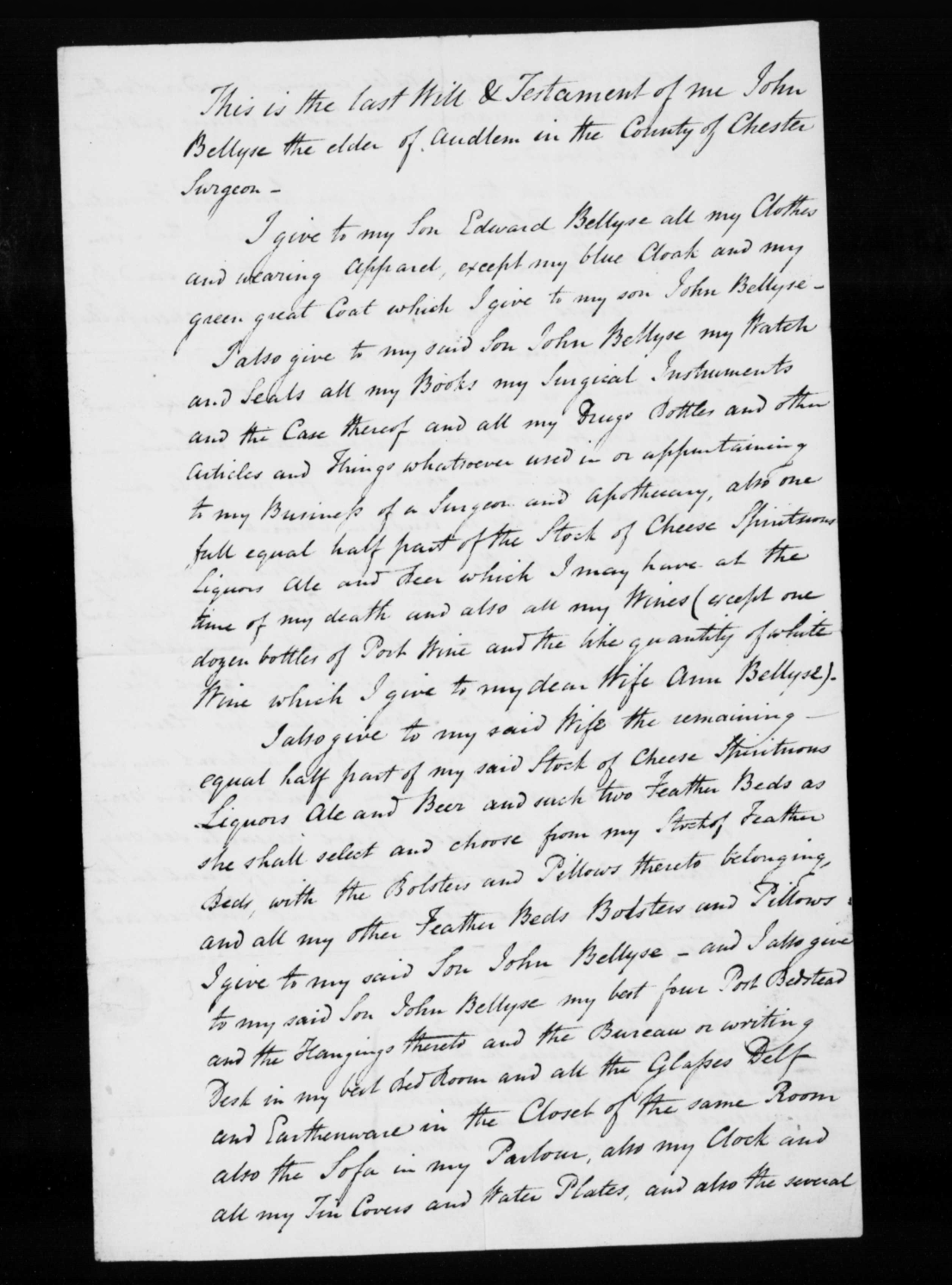
(Cheshire Wills and Probate)