William Baker The Younger
3 September 1816 to 19 May 1876
BAK00121
|
Return to the Home Page of the Bakers Family part of the website |
The Bakers of Highfields Story
The Story of the Dods and Bakers and of Highfields,
Fenton House and Hasfield Court. A journey through the history of Cheshire and
Staffordshire, an Anglo-Saxon nobleman who retained his lands after the
Conquest, pottery at Stoke on Trent, an encounter with Elgar, and the history
of an Elizabethan manor house at Audlem |
The family tree of the Bakers of Highfields |
The Family Tree of the Dods, predecessors to the
Bakers of Highfields |
The Bakers of Fenton House and Hasfield
Court
The Family Tree of the pottery Bakers of Stoke on Trent |
The Family Tree of the Bellyse Family |
The main part
of this website tells the story of the Farndale family from Yorkshire Descendants of Arthur Baker, the story of the
Farndale ancestry is told through the main part of this website You can also return to the Farndale
website home page |
The genealogy of the family of James Hall, linked to
the Baker family through marriage to Arthur Baker |
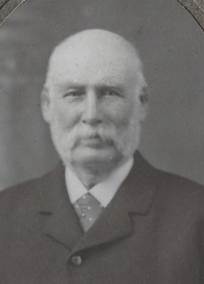
Headlines of
William Baker The Younger’s life are in brown.
Dates are in red.
Hyperlinks to
other pages are in dark
blue.
References and
citations are in turquoise.
Context and local
history are in purple.
1816
William Baker was the second, but
eldest surviving, son of William and Ann (nee Hough) Baker (BAK00102).
He was born on 3
September 1816 at Buerton, Cheshire. He
was baptised at Audlem on 5 December 1816.


William Baker, of Highfields, and
of Kynsal House, Audlem, JP (1859) Cheshire, Master of Foxhounds Albrighton Hunt
1856, born 3 September 1816, married firstly Prudence (dsp), widow of John
Baker, of Fenton Culvert, and daughter of * Eastwood. He married secondly his
cousin, Henrietta Louisa, third daughter and heiress in her issue of Dr John
Bellyse, of Dorfield Cottage, Nantwich (Burke, John and Burke, Sir Bernard (1836)(Eighteenth Edition, 1972), Bellyse Baker of
Highfields in Burke’s Landed Gentry, Volume 3, pages
35 to 38).
1838
William married Prudence (nee
Cliffe) Baker (1813 to 1840) the
daughter of William Cliffe and widow of John Baker (1806-37), a distant cousin
who she had married in Liverpool in 1836 (BAK00304)
of Fenton Culvert, Staffordshire on 18 June 1838 at St Nicholas, Liverpool.
William and Prudence married at Liverpool on 18 June 1838 (St Nicholas, Liverpool Parish
Records).
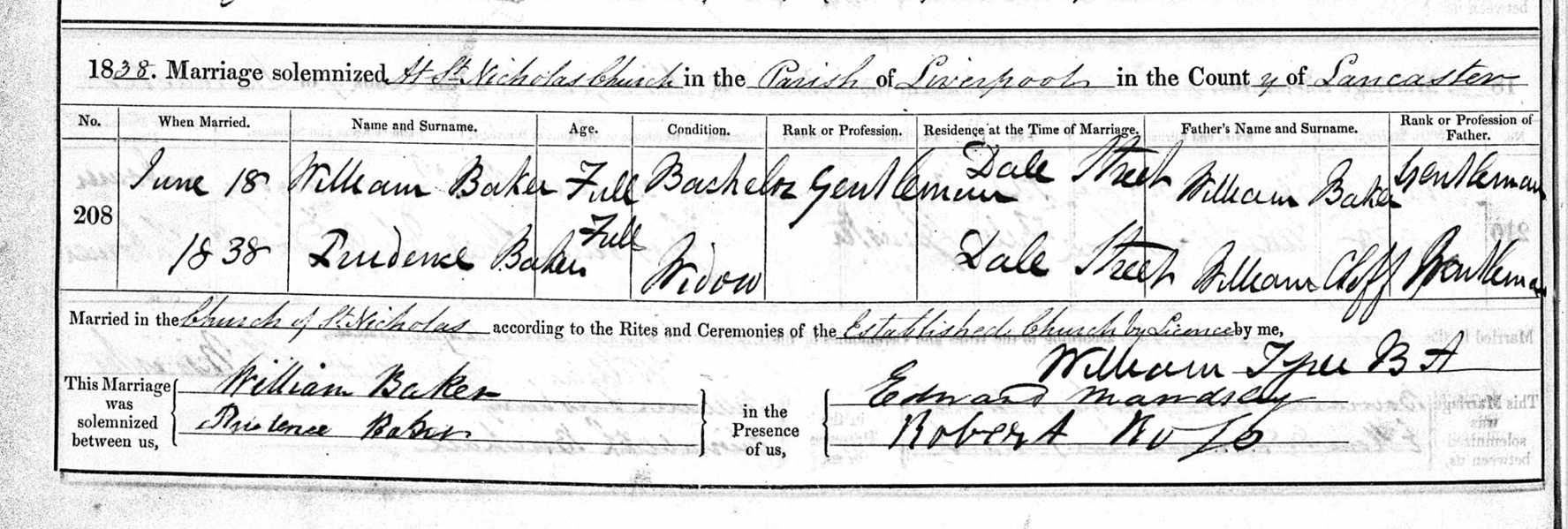
William married Prudence, the
widow of a distant cousin John
Baker, Lord of the Manor of Fenton Culvert, a wealthy Potter. Tradition has
it that John had left her a considerable fortune “on condition that she did not
change her name.” By marrying William, she satisfied all parties. They were
both keen riders to hounds, no doubt often hunting with William’s younger
brother, John,
who at different times was Master of the Wickland, Shropshire, Albrighton and
North Warwickshire. They had only been married a few months when her horse
fell, breaking her neck. (Baker, J Bellyse
(1982), Highfields,
Audlem: Sixteenth Century Home of the Dod and Baker Families, Audlem
District History Society, page 28).
1840
Prudence died in or about 1840
aged 27, and was buried on 3 November 1840 at St Peter ad Vincula, Stoke on Trent (St
Peter ad Vincula, Stoke on Trent Parish Records). She may be the person of that name who died at
Stoke-on-Trent in the last Quarter of 1840.
1841
1841 Census, Highfields, Buerton
William Baker, 50
Ann Baker, 45
Richard Baker, 25
William Baker, 20
Sarah Baker, 20
Ann Baker, 20
John Baker , 15
Mary Baker, 15
Jane Baker, 15
George Baker, 13
Thomas Baker, 4
Charlotte Baker, 9
Charity Baker, 7
1844
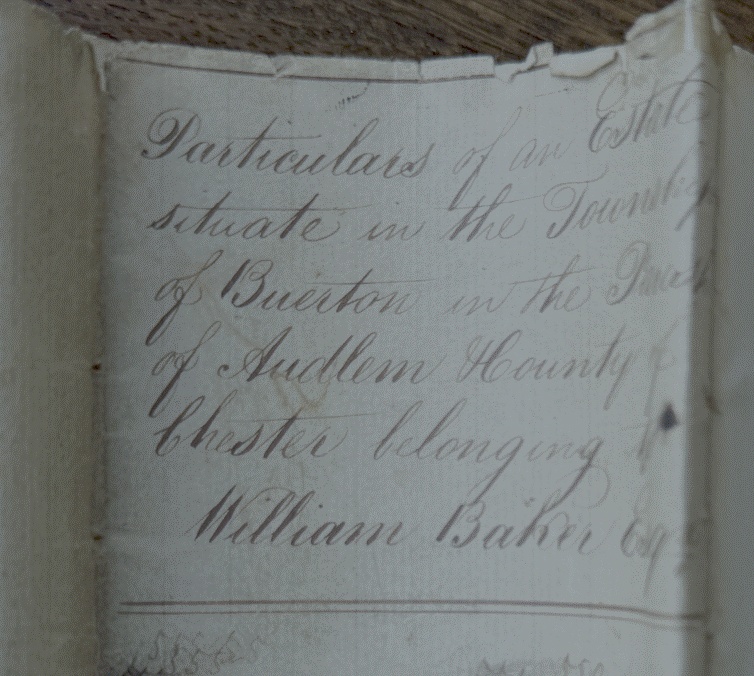
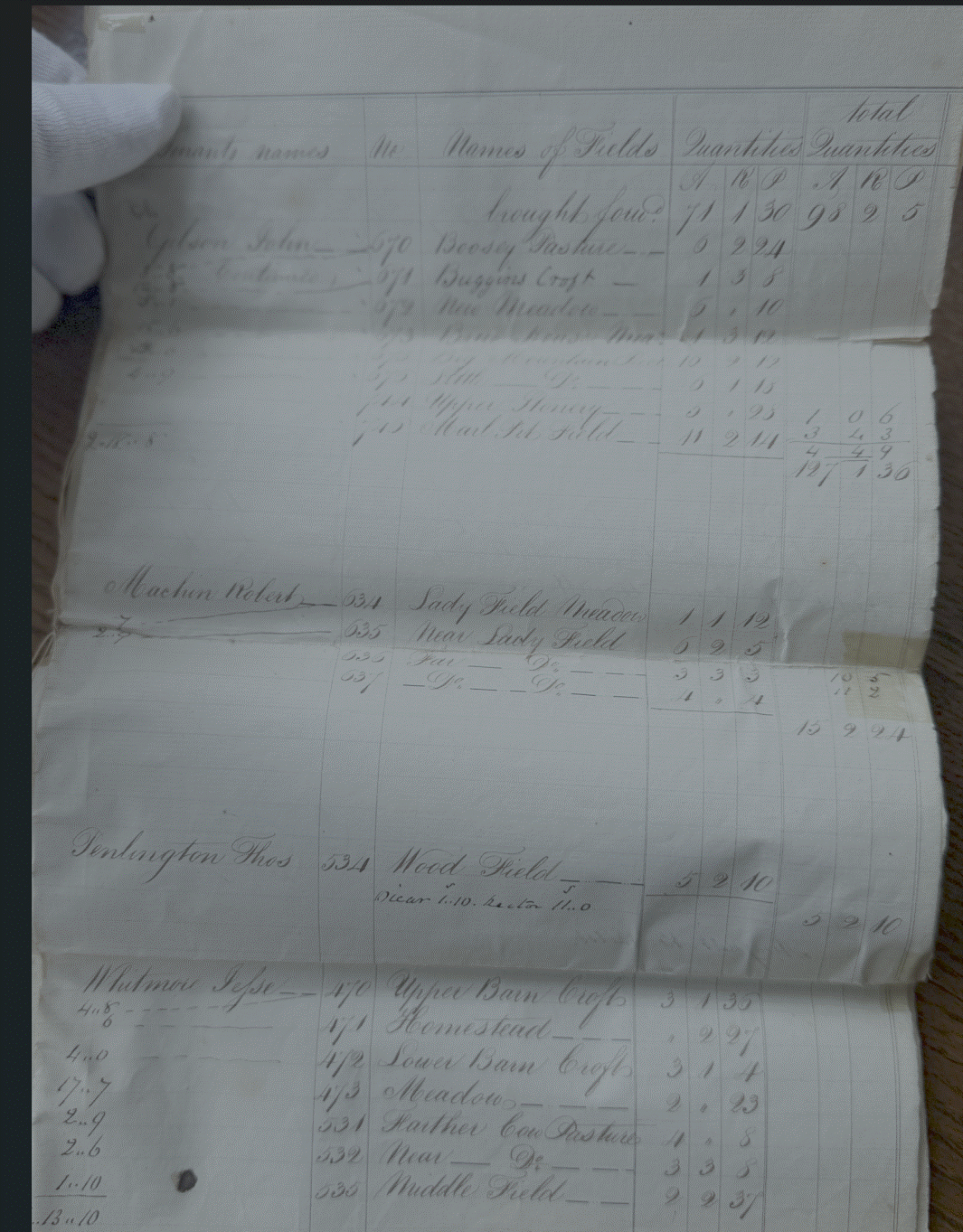
(Particulars of Highfields Estate belonging to
William Baker Esq, 1844, Baker Records 33)
1849
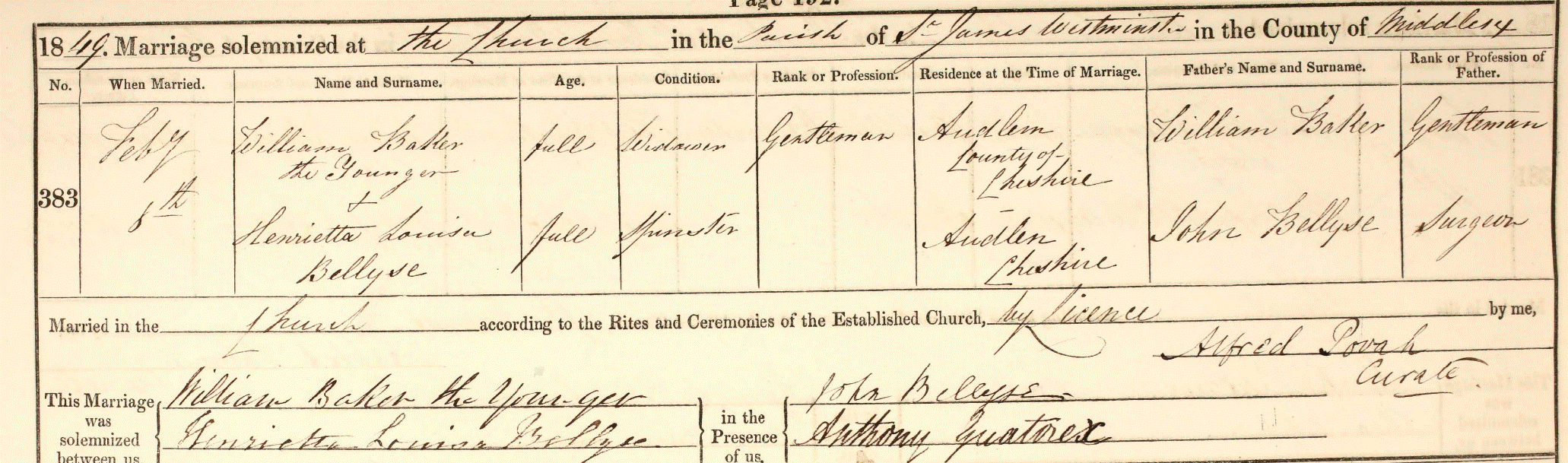
William married his cousin
Henrietta Louisa Bellyse (1830-80)(BEL00006), the
daughter and heiress in her issue of Dr. John Bellyse of Dorfold
Cottage, Nantwich, who was a surgeon, at St James, Piccadilly on 6 February
1849 (St James, Piccadilly
Parish Records).
William later married his cousin,
Louisa Bellyse, daughter of Dr John Bellyse and his wife Hannah
Baker. Shortly after their marriage they built Kynsal lodge, the architect being
William’s younger brother, Thomas.
They had nine children, three boys and six girls With
the coming of the railway an annual holiday to the seaside became possible and
the family often spent some weeks winding down through central Wales on the old
Cambrian railways. The eldest son, John,
usually stayed at home to manage the estate, receiving regular instructions
from his father by letter. (Baker, J Bellyse
(1982), Highfields,
Audlem: Sixteenth Century Home of the Dod and Baker Families, Audlem
District History Society, page 28).
On 13 March 1849,
when their first daughter Henrietta was born, they were living at Craven
Street, Westminster.
From a booklet on Audlem from the late twentieth century
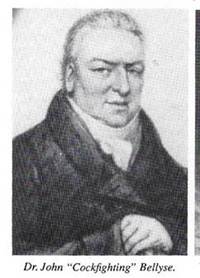
There have been Bellyses of Audlem for nearly two hundred years. Dr Richard
Bellyse’s grandfather, Dr John Bellyse, king of Cheshire’s cock fighting
fraternity, was born in 1738 and lived to be ninety. His home was the 16th
century house now known as the Lymes.
William and Henrietta had eight
children
1850
John (“Jack”) Bellyse Baker (1850
to 1932)(BAK00151)
who later married Richmal Mangnall was born in 1850.
The Chester Chronicle and Cheshire and North Wales General
Advertiser, 9 February 1850: SALES BY MR LAKIN. Eligible freeholds
dairy farming Cheshire. To be sold by auction, by Mr Lakin, at the crown inn,
in Audlem, Cheshire, on Tuesday 21st February 1850, at four o’clock in the
afternoon, subject to conditions. An excellent farmhouse and buildings with the
yard, garden, plantations and 21 pieces of good sound land, situate in Buerton,
in the parish of Audlem, called “Woodhouse Lane Farm,” held by Mr. John
Sandbach, and containing 156s 3r 11p, statute measure, be the same more or less. The above property is an unusually
desirable one, is occupied by an active and most respectable talent; adjoins
the lands of Earl Kilmory, Sir H D Broughton, Bart J E Wilson, Esquire, William
Baker Esquire etc and is about 7 miles from the Madeley station on the London
and North western railway....
1851
1851 Census – Woodhouse Lane,
Buerton, Nantwich, Cheshire
William Baker, 34, born 1817,
fund holder
Henrietta Louisa Baker, 26, born 1825
Henrietta Baker, 2, born 1849
John Bellyse Baker, 0, born 1850
Margaret Green, 28, nurse
Ann Maria Austin, 19, nurse
1852
William Baker the Younger (1816 to 1876) (BAK00121)
built Kynsal Lodge in
1852, a medium sized house of character, which was designed
by Thomas Baker (BAK00128), the third and last
of the Baker architects. Thomas built a number of country
houses in the area, including Hillside, Green Lane (later the
home of Arthur Baker (BAK00155) and his family) and the Cedars (later the home of the
three rather eccentric sisters, Poppy (BAK00150), Totty (BAK00157) and Emily (BAK00158) and the bachelor Richard Dod
Baker (BAK00154).
Mary Louisa Baker (1852 to 1860)(BAK00152)
who died aged only 8 was born in 1852.
1853
Jane Ellen Baker (1853 to 1865)(BAK00153)
who died aged only 12 was born in 1853.
The Chester Chronicle and Cheshire and North Wales General
Advertiser, 26 November 1853: BIRTH DAY
OF THE RIGHT HONORUABLE VISCOUNT COMBERMERE. Monday the 14th inst, being the 83rd birthday of his lordship, the numerous
tenantry on the estate as well as other gentleman in
the neighbourhood, celebrated the gratifying occasioned by a banquet at the Combermere Arms, Barleydam. The
duties of the chair were most ably discharged by Captain Poole, and precisely
in such a way as might be expected from one who has rendered good service in
his country. William Baker, Esquire, occupied the vice chair. The chairman was
supported on his right by the distinguished guests of the evening the right
honourable Viscount Combermere, the honourable Major
Wellington Cotton, son and heir of the venerable and noble Lord, and the
Reverend Roger Kent; on his left by Captain Cotton, Captain Harry Cotton, and S
Sproston, Esquire. Among the company were Perry Jones Esquire, J G Etches,
Esquire, W Kent Esquire, F Bellyse Esquire, W Machin Esquire, J Heath Esquire
et cetera et cetera. Besides the tenantry, there were many gentlemen from
Whitchurch, Nantwich, Audlem etc, whose names we regret to save did not transpire.
The guests, amounting to nearly one hundred, were entertained in Mr Witherley’s large room, which was most tastefully and
ornamentally decorated with flowers, laurel, evergreens and banners, displaying
appropriate mottos. Ample justice having been done to the edibles, the loyal
and patriotic toasts were proposed and responded to in a most able and
enthusiastic manner. The toast of the evening being the noble Viscount, the chairman
in a brief, neat and very appropriate speech alluded to some of the many good
qualities of his lordship; also to the noble and
gallant manner in which he has served his country as a
solicitor ...
Chester
Courant and Advertiser for North Wales, 19 January 1853: CHESHIRE
JANUARY SESSIONS. Before Trafford Trafford Esquire,
Chairman. The only appeal tried at the recent sessions was that of Richard
Morrey, against a conviction for night poaching, on the 24th
October last, on lands in the occupation of Richard Simcock, in the Township of
Buerton, near Audlem, in the county of Chester, which the right honourable
Viscount Combermere and William Baker Esquire, two of
her majesty's justices for this county, where respondents. An alibi was set up
for the appellant. His brother, John Murray, supported by the evidence of five
other witnesses, swearing that it was him, and not Richard Murray, who
committed the alleged offence on the night in question. The evidence for the
conviction was unshaken, whilst the witnesses for the appellant contradicted
each other in all minor details upon which their evidence had to be tested. The
conviction was unhesitatingly affirmed by the court, with costs, the chairman
remarking that the conviction was very proper one. Mr McIntyre and Mr Morgan
Lloyd were counsel for the appellant, and Mr Davidson, instructed by Mr Machin,
for the respondents.
1854
Eddowes's
Journal, and General Advertiser for Shropshire, and the Principality of Wales,
27 September 1854: WELLINGTON AND CREWE RAILWAY JUNCTION. Capital, £200,000 in
10,000 shares of £20 each; deposit £2 2s per share; provisionally registered.
PROVISIONAL COMMITTEE: Algernon Charles Heber Percy Esquire, hot net whole,
Shropshire; Major the Hon Wellington Cotton, Combermere
Abbey, Cheshire; William Baker Esquire, the Highfields, Cheshire …
ENGINEER … SOLICITOR … BANKERS … The design of this project is to effect a short and direct communication between the vast and
important mineral, manufacturing and agricultural districts of Shropshire and
the markets of Manchester and the manufacturing districts of the north. It will
commence it Admaston near Wellington, where several
railways now unite, and proceed by way of Crudgington, Waters Upton and Cold
Hatton, to the town of Hodnet and thence, leaving Ternhill on its right, will pass near to Market Drayton,
thence it will proceed near Adderley and the town of Audlem to Barton's Cross,
near Nantwich, where it will run into the projected line from Shrewsbury to
Crewe. This line will not exceed 27 miles in length, and it will afford railway
accommodation to a numerous population in the several towns and villages on the
route, of which accommodation they are now totally destitute. In consequence of
the gentle undulations of the country along which it will pass, and very easy
gradients, the committee can confidently assert that this railway will be
executed at a cost as small, if not smaller, than that of any other of equal
length in the United Kingdom. It is proposed, in the first instance, to lay
down a single line of rails, and to avoid scrupulously all unnecessary expenses
in the construction of ornamental station houses and other buildings, attending
most strictly to that point of special importance, the formation of an
efficient and secure line. The railway, from the vast mineral and goods traffic
independently of that of passengers, which it must command, cannot fail to be a
remunerating undertaking. Applications for prospectuses, maps and shares may be
addressed to the solicitor and the following share brokers:...
1856
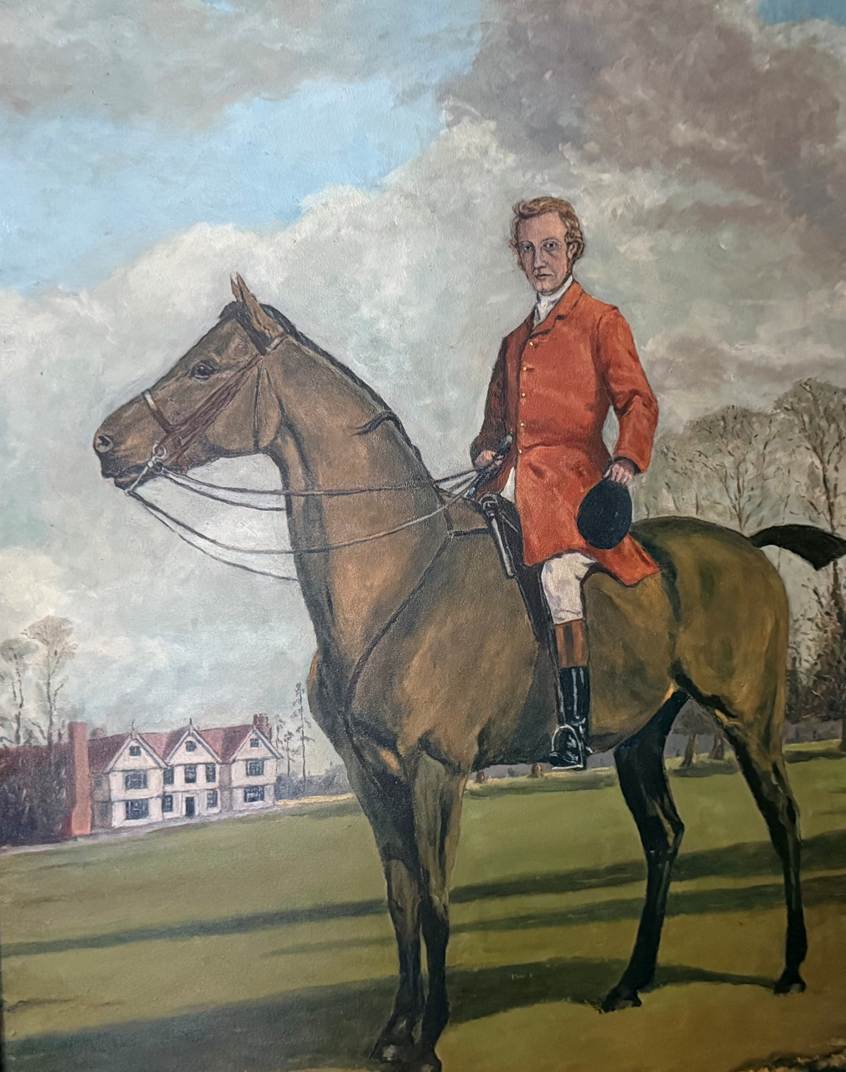
In 1856, William was Master
of Fox Hounds on the Albrighton Hunt.
Richard Dod Baker (1856 to 1902)(BAK00154)
who was unmarried was born in 1856.
Research
by Nicholas Kingsley: William's eldest son, another William Baker (1816-76),
inherited Highfields from his father, and seems to have been a conventional
country gentleman, interested in field sports and farming; indeed, he may have
been primarily interested in field sports since he was Master of the Albrighton
Foxhounds in 1856. By his second wife, Henrietta Louisa, the daughter of Dr.
John Bellyse of Nantwich, surgeon, he produced nine children.
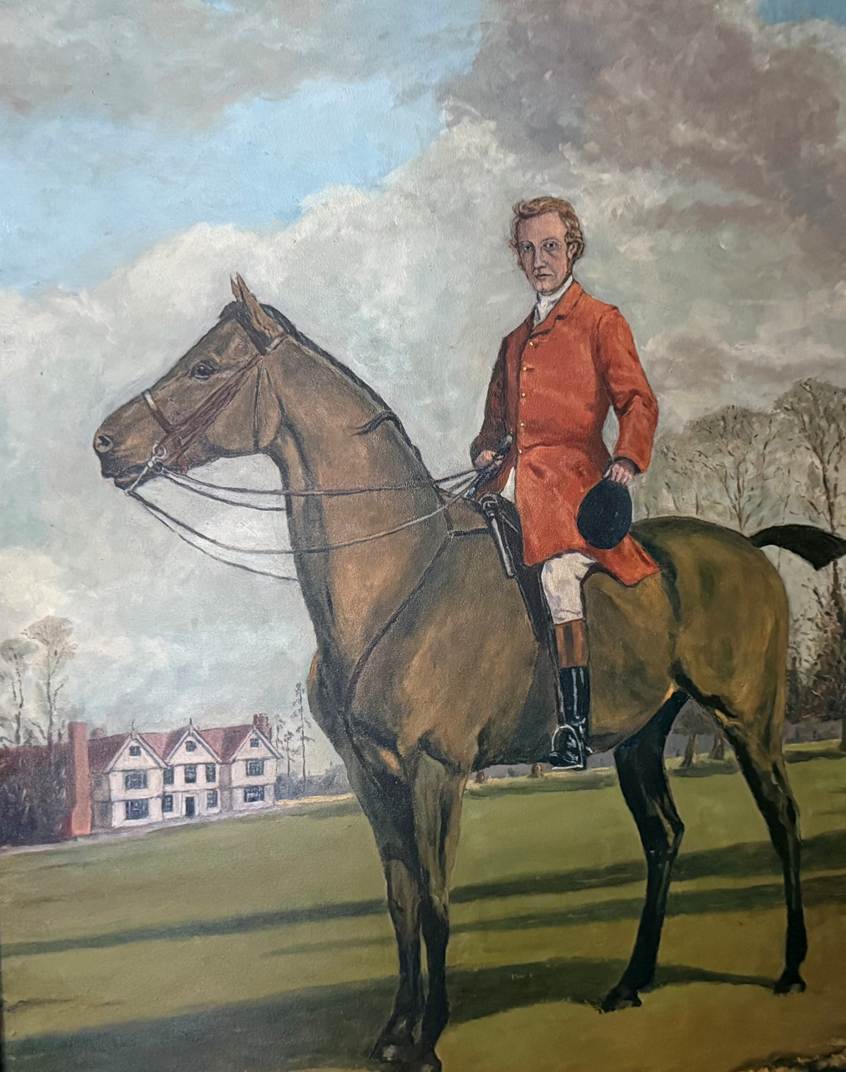
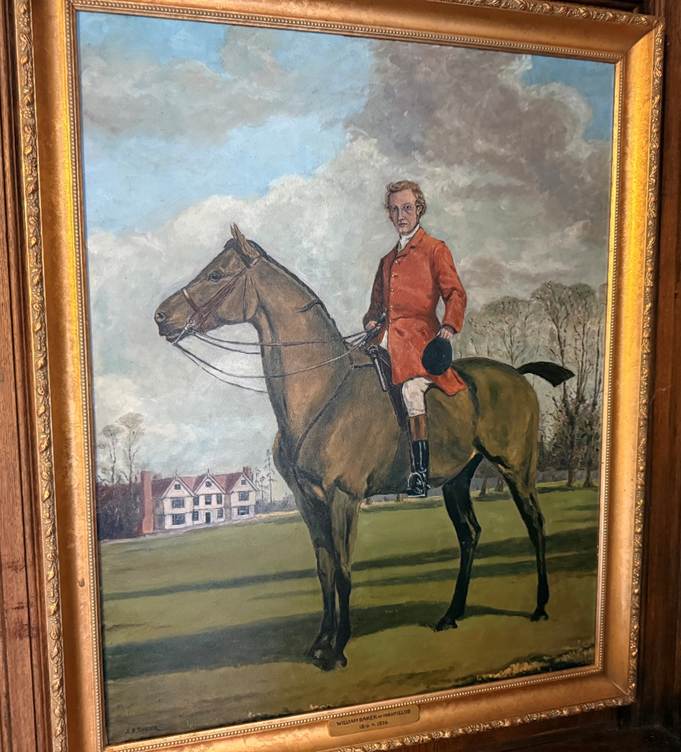
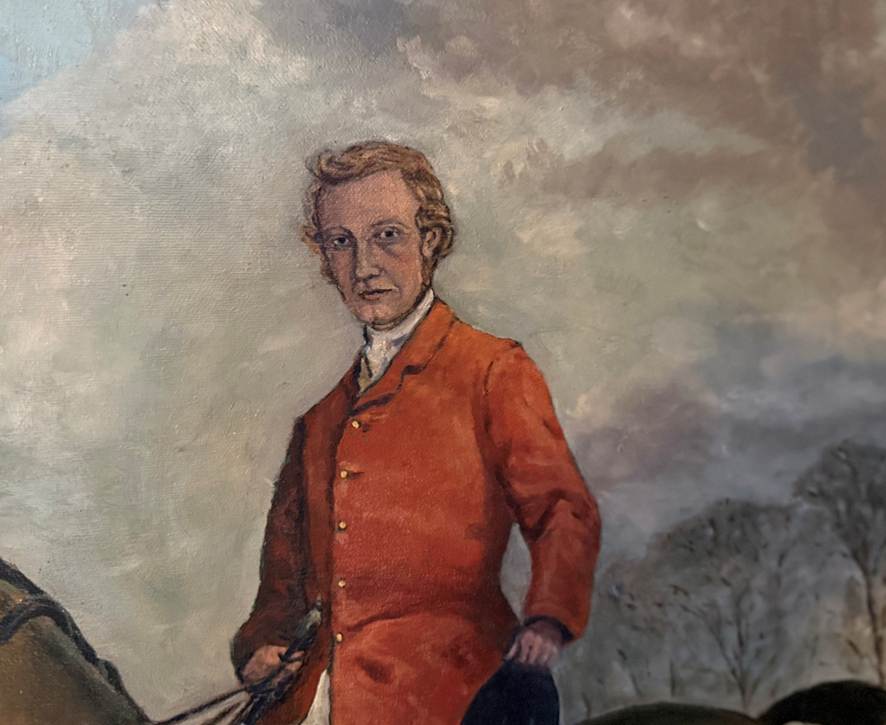
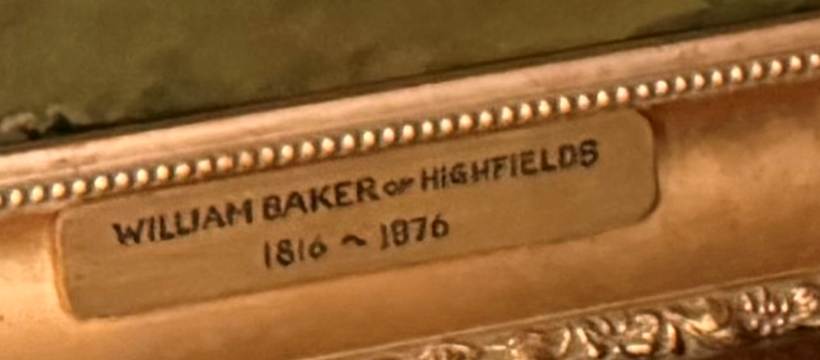
Portrait of
William Baker (Highfields)
1857
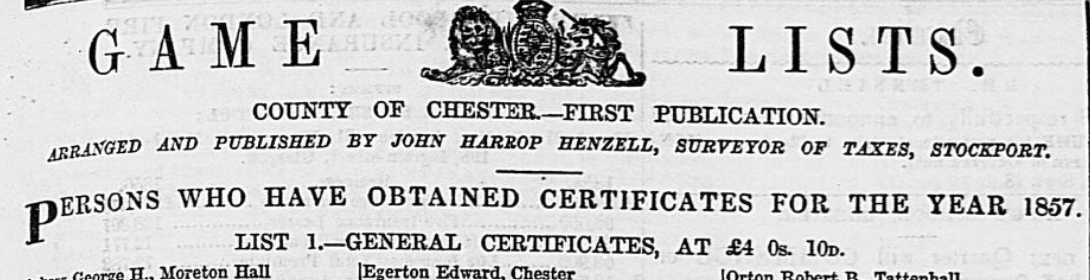
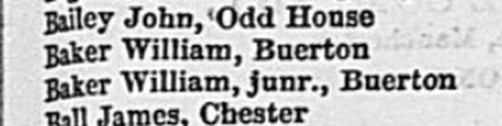
(Chester Chronicle 26 September 1857)
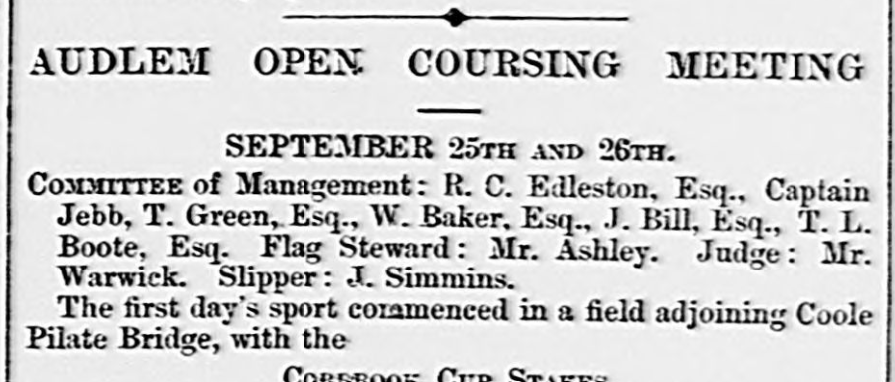
(Chester Chronicle, 29 September 1866)
1858
The Staffordshire Advertiser, 30 October 1858 reported that W Baker Esq of Highfields had sold six short horn
calves and W Baker Junior of Kynsal had sold 8 promising heifers at Market
Drayton.
1859
In 1859, William was a JP for
Cheshire.
1860
The Cheshire Observer, 28 January 1860 announced the death of the young
Mary Louisa Baker (aged 8), second daughter of William Baker Junior Esq, of
Kynsal, Audlem.
Arthur Baker (1860 to 1916)(BAK00155)
who later married Marianne Hall was born in 1860.
In 1860 … a notorious character
called Joby Buckley lived in Audlem, working as a casual labourer with a gang of
poachers who spent most of their free time in the public houses. A shoot was
held at Highfields, and Mr Baker asked Joby if he would take a brace of hares
to Mr Cartlich at Woore. On arrival he knocked on the
door, which was opened by Mr Cartlich. “Mr Baker’s sent thee these ‘ere ‘ares” Joby said. “That’s not the way to bring a present
from one gentleman to another”, was the reply, “you step inside and I’ll show
you how it should be done.” Mr Cartlich knocked and
Joby thereupon opened the door. “With Mr Baker’s compliments and will Mr Cartlich kindly accept these hares.” Joby, quick thinking
and not to be outdone, “Oh yes, come inside and sit yersel
down, ‘ave something to eat and drink, and ‘eres two ‘alf crowns for thee. (Burton, Marjorie (1973),
Nineteenth Century Audlem, Audlem District Amenities Society, Johnson
& Son Nantwich Limited page 5).
1861
1861
census – Kinsey Heath, Buerton, Audlem, Cheshire
William Baker, 43, head,
landed proprietor
Henrietta Baker,
his wife 36
John Bellyse
Baker, 10
Arthur Baker, 1
Elizabeth
Daniels, 18, unmarried, governess
Three servants
1862
Charity Baker (1862 to 1881)(BAK00156)
who died aged only 19 was born in 1862.
On 29 October 1863, the family were still living at Kynsal, Audlem. The family lived at Kynsal House, Audlem,
until William inherited Highfields, Audlem, from his father in 1863.
William
Baker the Elder died in 1863
to be succeeded by his eldest surviving son, also William. (Baker, J Bellyse
(1982), Highfields,
Audlem: Sixteenth Century Home of the Dod and Baker Families, Audlem
District History Society, page 28).
When William died, the estate passed to his
eldest surviving son, William who, after his marriage to his cousin, Louisa
Bellyse, built Kynsal Lodge (Betty Goodwin) in 1854, a medium sized house of
some character designed by his younger brother Thomas; third and last Baker
architect. Thomas built a number of country houses in the district, including
Hillside (Lamont family) in Green Lane, occupied by his nephew Arthur Baker, and
The Cedars (Latchford family), lived in by the latter's bachelor brother
Richard and his three charming but rather eccentric sisters, "Poppy",
"Totty" and Emily. (Latham, Frank (1997), Audlem:
The History of a Cheshire Parish and its seventeen townships, page 124).
1866
Charlotte (“Tottie”) Louisa Baker
(1866 to 1918)(BAK00157)
who was unmarried was born in 1866.
1867
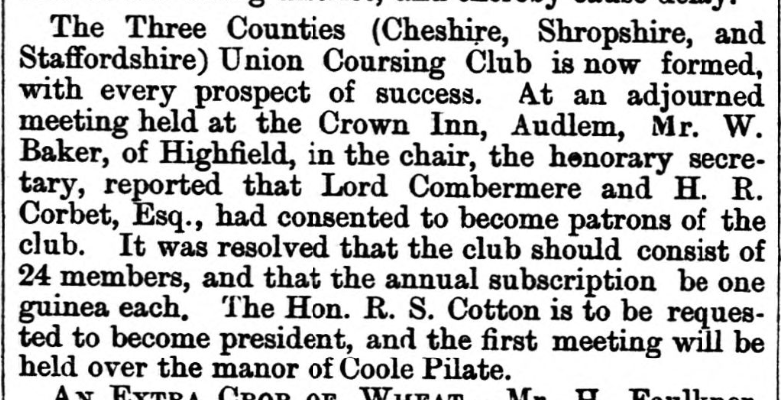
(Cheshire Observer, 31 August 1867)
1868
Emily Jane Baker (1868 to 1941) (BAK00158)
who was unmarried was born in 1868.
(Montague Thorley to his cousin, probably William
Baker of Highfields, 1868, Baker Records 52)
1869
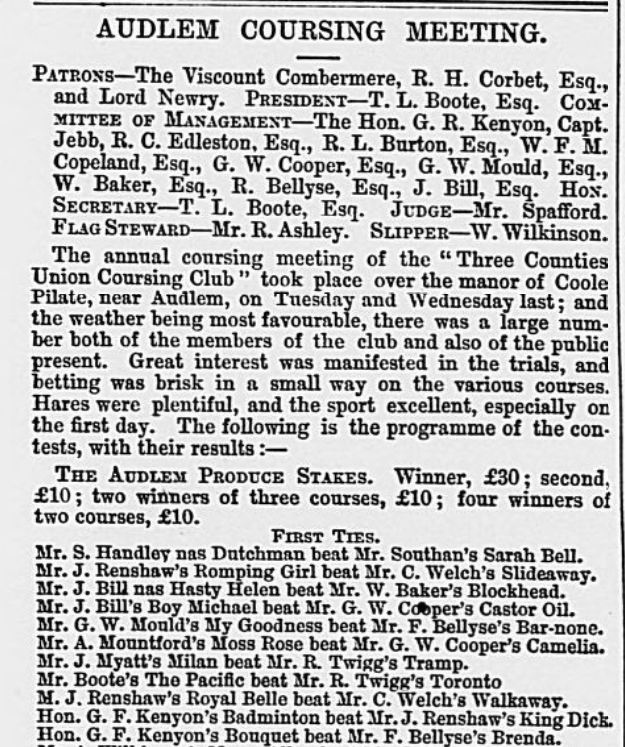
(Chester Chronicle, 25 September 1869)
1870
(William Baker of Highfields to his son John Bellyse Baker,
undated, about 1870, Baker Records 55 and 56 and 57)
1871
1871
census –
High Fields, Buerton, Audlem, Cheshire
William Baker, 54, head, land owner
Henrietta Baker,
his wife 46
Henrietta Baker,
22
John Bellyse
Baker, 20
Richard Dod
Baker, 14
Arthur Baker, 11
Charity Baker, 8
Charlotte L
Baker, 4
Emily J Baker, 2
Two visitors,
including John Percy, their agent
Three servants
1872
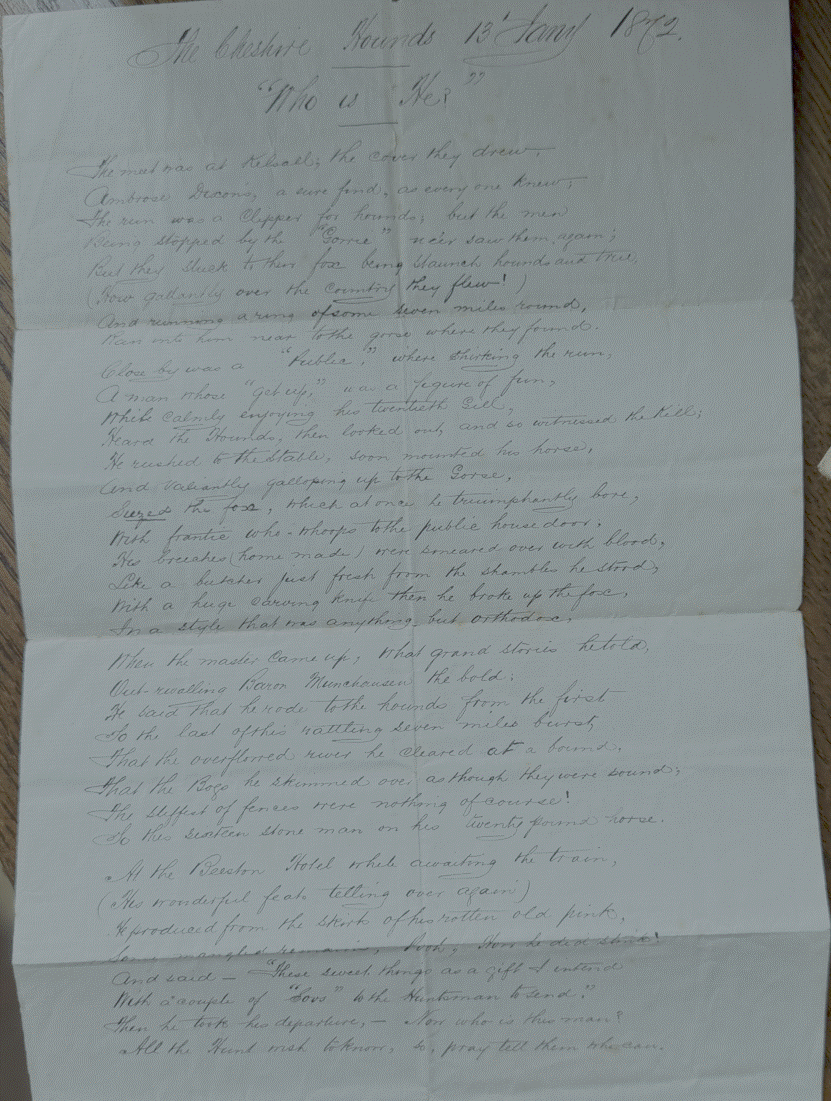
(“Who
is he?”, a Cheshire Hunt poem, 1872, in the hand of William Baker of Highfields,
born 1816, Baker Records 104)
1873
William was a Justice of the Peace
for Shropshire and for Cheshire from 1873.
1876
William died on 19 May 1876. He was buried on 24 May 1876 (St James the Great, Audlem
Parish Records). His will was proved on
21 July 1876 (Probate Index).


One of the stained
glass windows at Audlem church has the inscription:
To the glory of God, and in memory
of William Baker who died AD 1863, and of William Baker his son, who died 1876,
both of Highfields in this parish, justices of the Peace, this window is
dedicated.
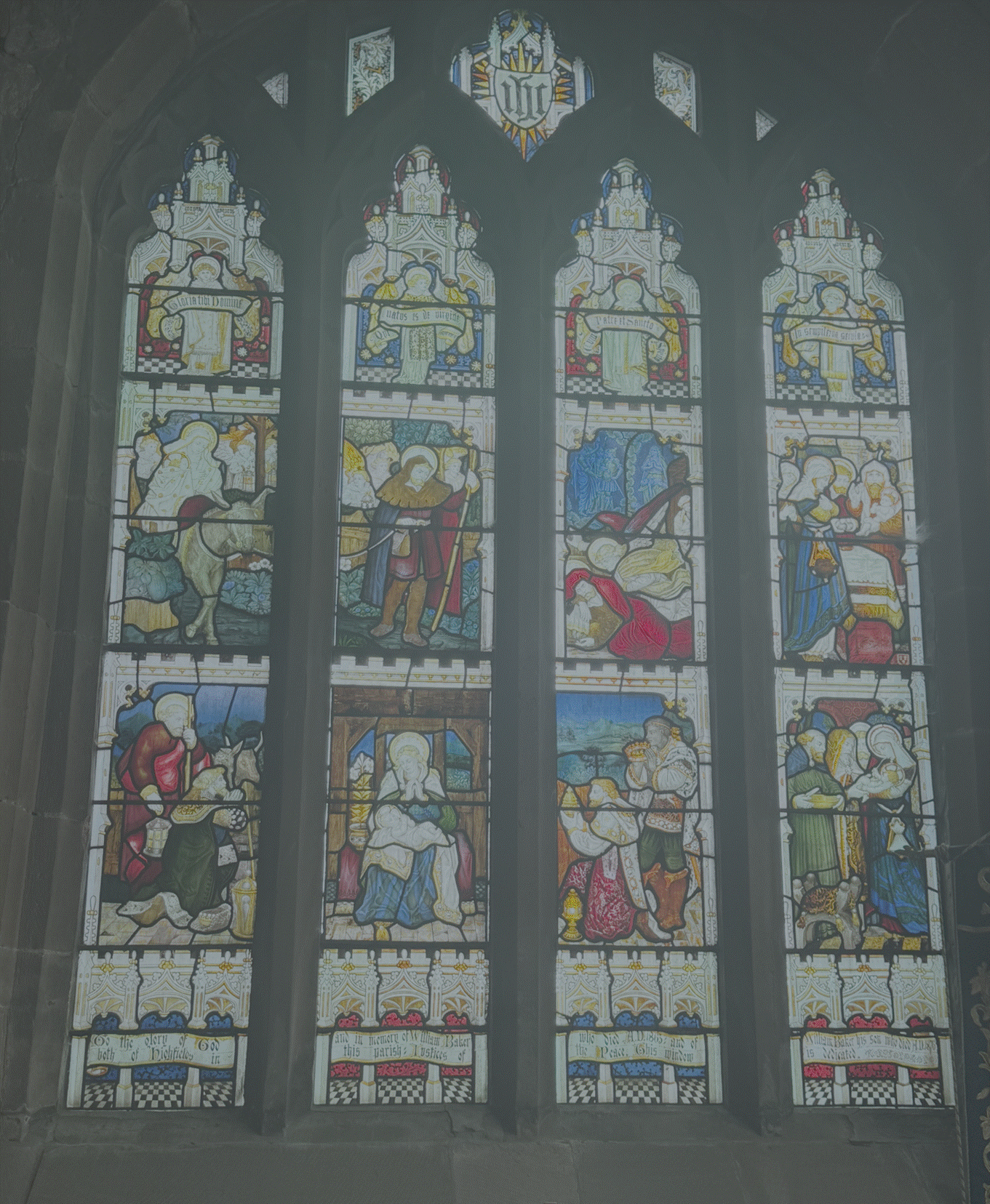
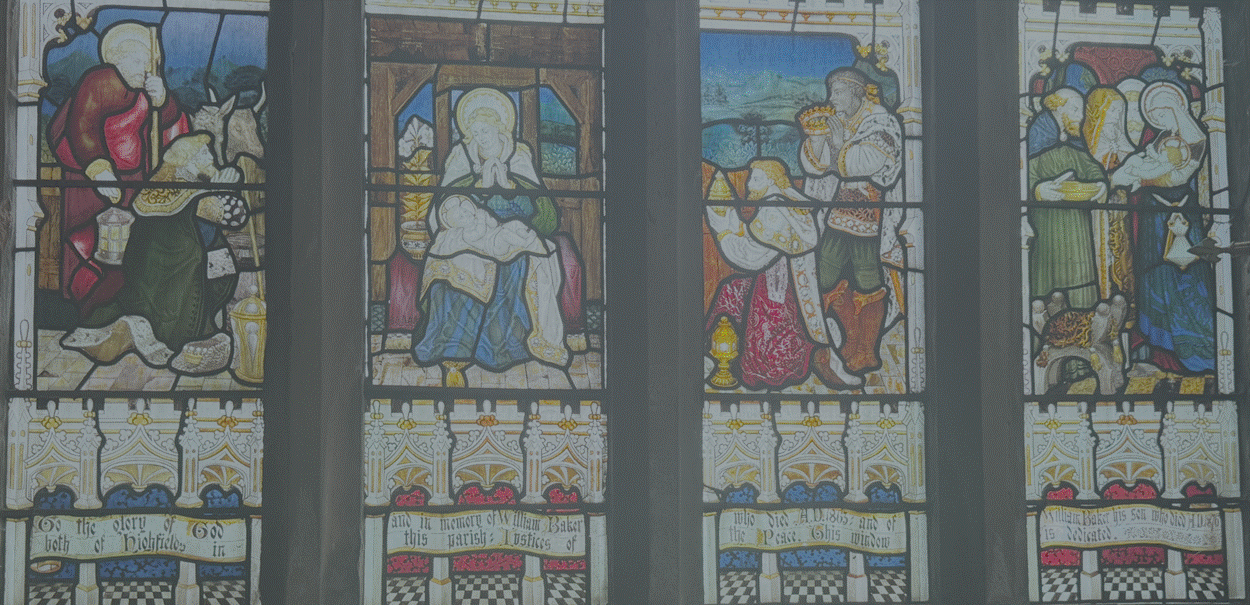
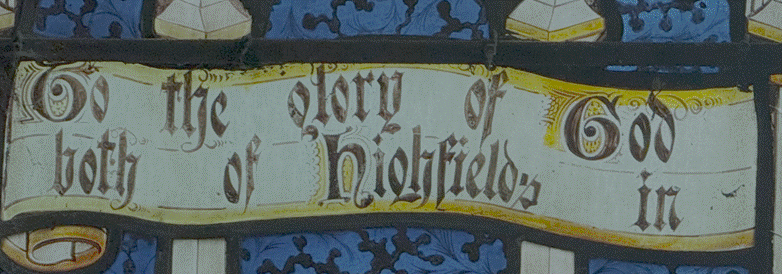
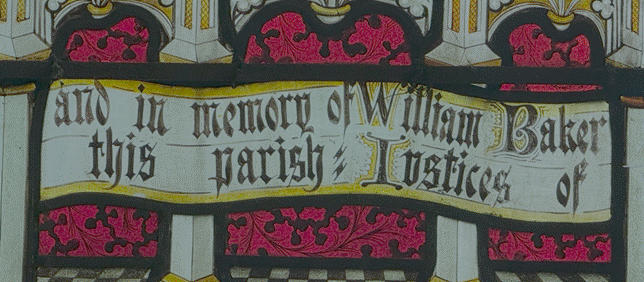
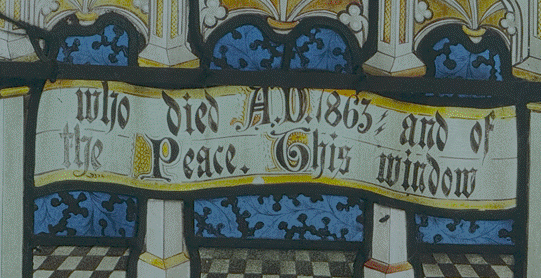
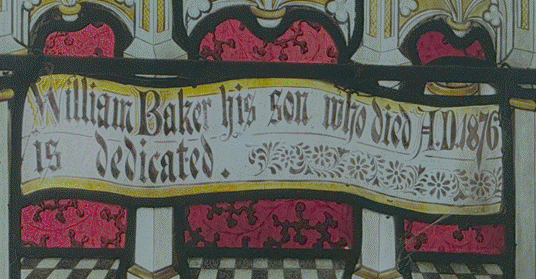
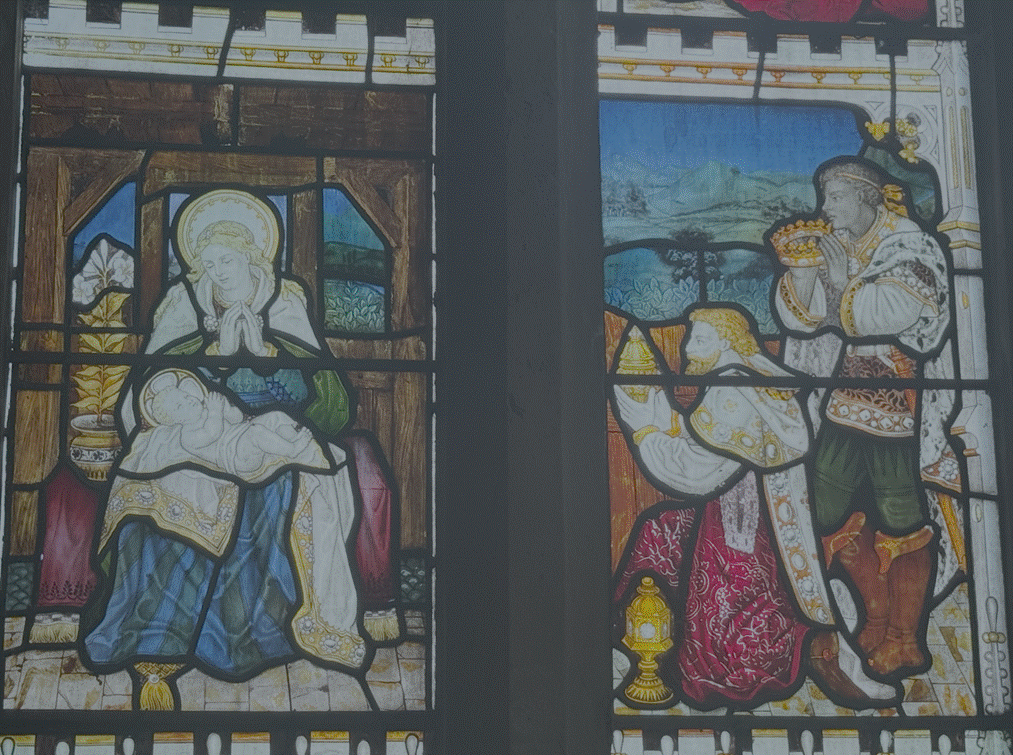
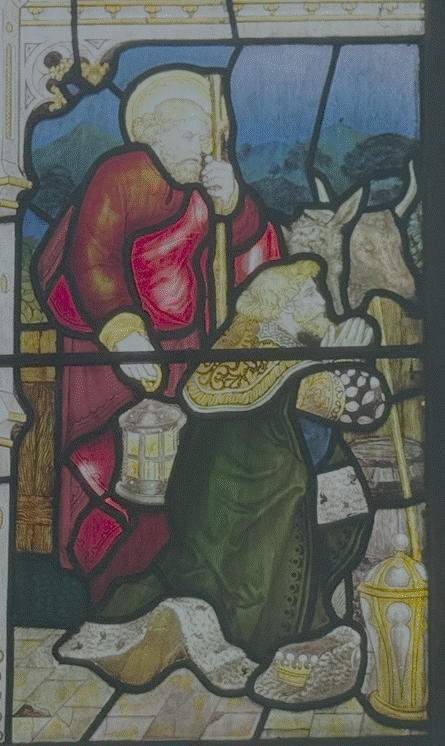
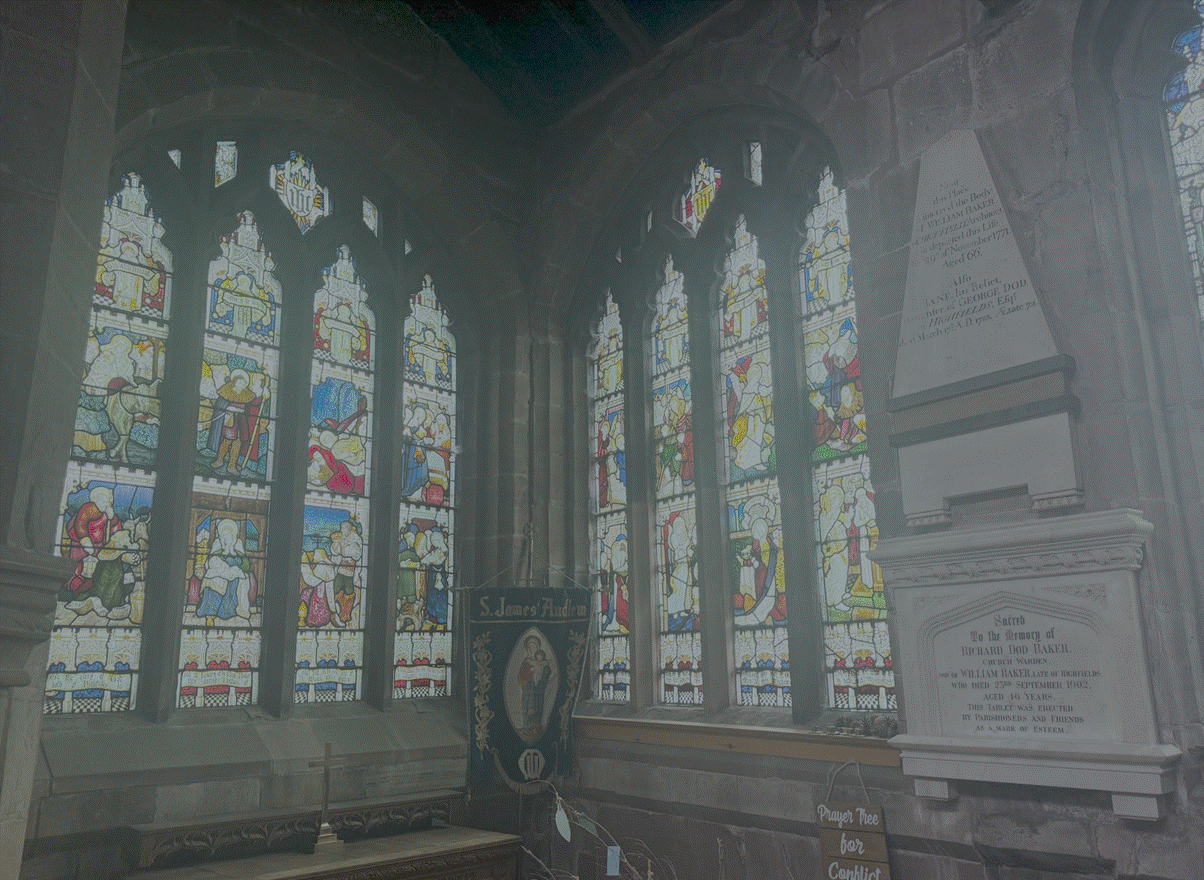
These windows, again by Kempe,
commemorate members of the Baker family of Highfields and
also the Atkinson family. One window, was
unveiled on Christmas Day 1880, and is inscribed “To the glory of God, and in
memory of William Baker, who died AD 1863, and of William Baker his son, who
died 1876, both of Highfields in this parish, Justices of the Peace, this
window is dedicated”.
The south wall also houses three
large stone memorials. The first is to “Richard Dod Baker, CW, son of William
Baker, died 23 September 1902, aged 46 years”. … The third and westernmost:
“Hannah Hall, 66 died 7th January 1764. Joseph Hall, 83, died 20
July 1800 …”
(Latham,
Frank (1997), Audlem: The History of a Cheshire Parish and its seventeen
townships, page 75).
Charles Eamer Kempe (29 June 1837
– 29 April 1907) was a British Victorian era designer and manufacturer of
stained glass. His studios produced over 4,000 windows and
also designs for altars and altar frontals, furniture and furnishings,
lychgates and memorials that helped to define a later nineteenth-century
Anglican style. The list of English cathedrals containing examples of his work
includes Chester, Gloucester, Hereford, Lichfield, Wells, Winchester and York.
Kempe's networks of patrons and influence stretched from the Royal Family and
the Church of England hierarchy to the literary and artistic beau monde.
1880
Henrietta died between in the
second Quarter of 1880, aged 55.