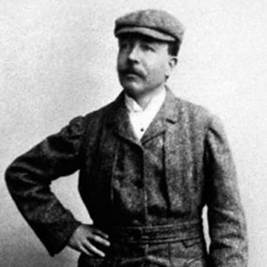
Sir Edward Elgar
Sir
Edward Elgar and the Baker Family
|
Return to the Home Page of the Bakers Family part of the website |
The Bakers of Highfields Story
The Story of the Dods and Bakers and of Highfields,
Fenton House and Hasfield Court. A journey through the history of Cheshire
and Staffordshire, an Anglo-Saxon nobleman who retained his lands after the
Conquest, pottery at Stoke on Trent, an encounter with Elgar, and the history
of an Elizabethan manor house at Audlem |
The family tree of the Bakers of Highfields |
The Family Tree of the Dods, predecessors to the
Bakers of Highfields |
The Bakers of
Fenton House and Hasfield Court
The Family Tree of the pottery Bakers of Stoke on Trent |
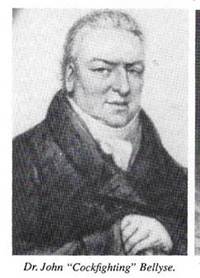
The Family Tree of the Bellyse Family |
The main part
of this website tells the story of the Farndale family from Yorkshire Descendants of Arthur Baker, the story of the Farndale
ancestry is told through the main part of this website You can also return to the Farndale
website home page |
The genealogy of the family of James Hall, linked to
the Baker family through marriage to Arthur Baker |
Headlines of are
in brown.
Dates are in red.
Hyperlinks to
other pages are in dark
blue.
References and
citations are in turquoise.
Context and local
history are in purple.
Friends
William
Meath Baker was a close friend of the composer, Sir Edward Elgar, and was
one of the friends portrayed in Elgar's Enigma
Variations of 1899. He had been acquainted with the family of Edward
Elgar’s future wife and thus became acquainted with Edward Elgar himself. WMB’s
mansion at Hasfield Court was about ten
miles from a village called Redmarley d’Abitot where a friend of WMB’s sister, Mary
Frances ‘Minnie’ Baker lived. The friend was Caroline Alice Roberts,
daughter of the late Major General Sir Henry Gee Roberts of Indian Mutiny and
Sikh Wars fame. Mary and Alice studied geology together with the local rector
who was known as the Professor and they would
often go fossil hunting on the Severn.
1874
Mrs Richard Powell, the author of this book,
was born Dora Mary Penny on 8th February 1874. Her father, Alfred Penny, was
then vicar of Swindon, Staffordshire; Her mother, Dora Mary Heale, was one of
the seven daughters of Henry Newton Hill of Highgate, Hemel Hempstead, where
Alfred had been curate from 1869 to 1873. Shortly after the birth Dora's mother
contracted scarlet fever and she died a few days later. The child escaped
infection. The family said that a doctor had come straight from a scarlet fever
case to attend the confinement. Profoundly affected by his loss, Alfred Penny
offered his services to the newly formed Melanesian mission and was to remain
abroad, on Norfolk island and in the Solomons group
for next 12 years. During that time, and until Dora reached 20, she was looked
after by her widowed grandmother, Mrs Heale, and her aunts at Highfield. Mrs Heale,
formerly Anne Judith Key, came from a family of nine. Her several brothers had
widely varying careers; two were naval officers, one of whom also became a
militant Plymouth Brother and the other a Lord of the Admiralty, Admiral Sir
Astley Cooper Key. Judith Heale had a great charm of manner
but she ruled her family with a proverbial rod of iron. Dora was not given to
talking about herself and I know all too little about her upbringing at
Highfield or her education. Someone evidently helped to instil or encourage in
her a love and understanding of music, a strong feel for words and an interest
in many different aspects of the world around her. As might be expected, she
was brought up, and behaved throughout her life, as a true Christian, never
failing to apply to her own conduct the restraints and self-discipline she
looked for in others. (Powell, R
(1937), Edward Elgar, Memories of a Variation, page 1).
1886
On 6 October 1886, Alice Roberts started to take music lessons
from an Edward Elgar who taught the violin at Worcester High School. Despite a
lack of talent, she tried hard at her lessons and the
reason soon became apparent.
Caroline Alice Roberts, daughter of general
Sir Henry Gee Roberts, KCB, was one of a group of girlfriends who studied
geology with the reverend William Samuel Symonds, rector of Pendock,
Worcestershire. They used to go fossil hunting on the banks of the Severn, and
my stepmother tells of the delightful times they had and what an amusing and
dear friend Mr Symonds was to all of them. They called him the Professor. Later
on Alice Roberts, who lived with her mother at Redmarley, took accompaniment lessons from a Mr Elgar who
was teacher of the violin at Worcester school when Miss Ottley was his was
headmistress. (Powell, R
(1937), Edward Elgar, Memories of a Variation, page 10).
1888
In September 1888, Alice became engaged to Edward Elgar. Alice
Robert’s family, including two rather severe aunts were horrified at the idea
that Alice wanted to marry a music teacher and she was cut off from various wills
and ostracised. Of course, the snobbery was misplaced since Sir Edward Elgar
would become one of the country’s most famous composers.
Miss
Roberts started to take accompaniment lessons from Elgar who taught the violin
at Worcester High School and, apparently to the great surprise of her friends,
she began to work tremendously hard at it. Her friends knew she would never
make a fine player, but later the mystery was solved. Alice became engaged to
Edward Elgar. They both visited Miss Baker at Hasfield and Elgar was said to be
terribly shy and quiet. Unfortunately various
relatives, including two aunts, were outraged at the idea of her marrying a
music teacher, a tradesman almost 9 years younger than herself and above all a
Roman Catholic. Wills were altered and the couple were cut off and ostracised
by the family. It is ironic that very few people would have heard of the
Roberts had not their daughter's husband become Sir Edward Elgar Bt. O.M. - one
of Britain's most famous composers. (Dodd, F (1987), The Baker Family and Fenton,
Presidential Address in Transactions 1986 to 1987, The North
Staffordshire Field Club page 18).
After the death
of Lady Roberts, Alice went abroad for a time and then settled down as a little
house in Malvern Link called Ripple Lodge. There she went on with her
accompaniment lessons, and before long the mystery was solved, she and Mr Elgar
became engaged to be married. They came over to see Miss Baker at Hasfield and he was terribly shy and quiet! (Powell, R (1937), Edward Elgar, Memories of a
Variation, page 10).
1889
They were married in 1889 and went to live in
London, in Marloes Rd. Miss Baker stayed with them there. (Powell, R (1937), Edward Elgar, Memories of a
Variation, page 10).
Edward Elgar married Alice Roberts on 8 May 1889.They were married
in a Catholic ceremony at Church of the Immaculate Conception on Farm Street in
Mayfair, London. Despite strong objections from Alice's wealthy family, who
disapproved of Elgar's lower social standing, lack of steady income, and
Catholic faith, the couple remained devotedly married until Alice's death in
1920.
Edward Elgar met Richard Baxter Townshend shortly after 1889
through family connections. Townshend was connected to Elgar’s wife, Caroline
Alice Elgar, via a close friend of her sister. Townshend was a
classicist and tutor at Oxford University with an incredibly colourful
background. He had spent a decade in the American West working as a cattle
rancher and gold prospector, even crossing paths with Billy the Kid. On 28 July
1881, Townshend had married William
Meath Baker’s other sister, Letitia
Jane Dorothea Baker.
Alfred Penny returned from the Far East in
1889, becoming curate of Stoke-on-Trent and later vicar of Tunstall,
Staffordshire. In 1895 he was appointed rector and rural Dean of Wolverhampton
and Dora went to live with him there. In more than one sense Alfred was a big
man. Inclined to be domineering, he had a great sense of purpose
and his Christianity did not extend to suffering of fools gladly. He enjoyed
his involvement with a thriving industrial community, whose leaders respected
him not least for his business-like qualities. In his pastoral work he was much
liked, he took great interest in the 27 parishes that formed the rural Deanery,
and he did valuable work in the training of candidates for ordination. Dora was
fond of her father, but they did not always see eye to eye. Although Dora
attended St Peter's almost every day, her own inclination lay towards the High
Anglican form of worship; his did not. (Powell,
R (1937), Edward Elgar, Memories of a Variation, page 2).
1891
Two years after the birth of their daughter Carice,
now Mrs Elgar-Blake, they stayed with Miss Baker at Hasfield. It was summertime
and very hot. He used to bring in hedgehogs from the woods and feed them in the
house. He sat in the strawberry bed and wished that someone would bring him
champagne in a bedroom jug. As he was deep in ideas for the Black Knight this
is not surprising. Edward Elgar always spoke of the theme at scene 4, letter G,
as the ‘Perrier Jouet’ theme. (Powell,
R (1937), Edward Elgar, Memories of a Variation, page 11).
1892
In 1892 Miss
Baker then took them to Bayreuth. They heard Parsifal, Tannhauser, Die
Meistersinger; and Parsifal for a second time the night before they left. He
was wild with enthusiasm and delight. From Bayreuth they went to Heidelberg and
then on to the Bavarian Highlands. (Powell, R
(1937), Edward Elgar, Memories of a Variation, page 11).
Mary
Baker took Edward and Alice on holiday to Germany in 1892 and they visited
Bayreuth, Heildelberg and the Bavarian Highlands. In the
summer of 1892, an influential German tour was arranged and hosted for the
young, provincial Edward Elgar and his wife Alice by their friend Mary
Baker. The trip included stops in Bonn, the Wagner festival at Bayreuth,
Munich, Oberstdorf in the Bavarian Alps, and
Heidelberg, setting a lifelong Germanophile tone for Elgar's artistic life. The
group visited Beethoven’s birthplace in Bonn and sailed up the Rhine to Mainz.
Elgar
experienced major Wagner performances, including two stagings of Parsifal,
plus Tristan und Isolde and Die Meistersinger. After traveling
through Nuremberg and Munich, they journeyed into the rural landscapes of Upper
Bavaria and stayed in Oberstdorf. They
arrived in Heidelberg on 11 August 1892, where Elgar wrote home about
witnessing a boisterous student torchlight procession and duelling guild
parades.
The 1892 expedition through rural southern Germany and subsequent trips
back to Bavaria directly inspired Elgar's popular choral suite From the
Bavarian Highlands (Opus 27) and the Three Bavarian Dances.
When Alice and Edward Elgar visited Hasfield
Court, Mary
Baker from Christmas 1892, found Edward rather shy. It was during this
inaugural holiday visit that Elgar famously played golf for the very first time,
under the instruction of fellow guest Richard Baxter Townshend. Hasfield
Court quickly became a frequent retreat for the composer.
WMB and Mary continued to welcome the Elgars and their friends to Hasfield Court.
Mary
Baker described how Edward Elgar would bring in hedgehogs from the woods at
Hasfield Court and feed them in the house.
There is a story of him sitting in a strawberry bed and wishing that someone
would bring him champagne in a bedroom jug. Mary described how, during a very hot summer
visit, Elgar would wander into the Hasfield woods, gather up wild hedgehogs,
and carry them right into the main house. Much to the amusement, or perhaps
dismay, of the household, he would casually feed them inside the residence. On
the same trip, Elgar was found escaping the heat by sitting directly in the
estate's garden strawberry bed. As he lounged among the fruit, he lazily wished
aloud that someone would bring him champagne served in a large bedroom jug to
help him cool down.
On one occasion there was a call for someone to play the part of
an old man. WMB’s brother in law, Richard Baxter
Townshend, Letitia Baker’s husband was persuaded to take the part. His voice
was too high falsetto and soft for the role and he attempted a deeper voice but
was unable to keep it up and the audience were in tears with laughter.
Townshend had been a cattle rancher and gold prospector and was a good shot. He
had a weather-beaten face and was known to ride about Oxford on a tricyle. As he was somewhat deaf, he invented a bicycle
bell that sounded continuously.
Mr. Brown's article comments that with typical
generosity W.M.B. and his sister continued their long friendship and welcomed
the Elgars and their friends to Hasfield. Miss Mary Baker took them on a
holiday to Germany in 1892 when they visited Bayreuth, Heidelberg and the
Bavarian Highlands. In 1896, Miss Baker married the Rev. Alfred Penny, who had
been Vicar of Christchurch, Tunstall from 1890-1895 and then moved to
Wolverhampton. By his first marriage he had a daughter Dora who later wrote a
book - "Memories of a Variation" which contains many references to
life at Hasfield Court where, of course, she was often a visitor after her
father's marriage to Mary Baker. She became a great friend of the Elgars and the composer sometimes visited her parents home at Wolverhampton. She
describes how Elgar, on a visit to Hasfield during a long hot summer would
bring in hedgehogs from the woods and feed them in the house. He also sat in a
strawberry bed and wished that someone would bring him champagne in a bedroom
jug. According to Dora, W.M.B. was "a small wiry man, very quick and
energetic". He had an incisive way of speaking - and of laying down the
law sometimes. He was an excellent host and the Elgars called him "the
Squire". He was always well turned out, but often
wore his hunt coat and knee breeches at dinner when there was a house party -
he used to say it was a good way of wearing the coats out! He was a capital
companion for a days outing
and she spent many a jolly day climbing with him in Switzerland or on the Welsh
hills. He was also a great admirer of Wagner - he told Dora no other operas
were worth listening to! Dora also wrote that W.M.B.'s wife was a lovely
amateur singer and pianist and was a most charming and understanding friend to
her.
There were regular house parties at Hasfield
and Dora refers to one in particular when the guests
were in the library after breakfast and a quick step was heard coming along the
hall. "There's Bill - Now we shall get our orders for the day"
someone said. He came in, shut the door sharply behind him and stood against it
to explain the arrangements to get everyone to a Point to
Point meeting, then disappeared as suddenly as he had come, pulling the
door to behind him with a loud bang.
Evening entertainment was sometimes provided
by amateur theatricals and Dora describes one particular occasion when someone was needed to play an old
man's part. They persuaded W.M.B.'s brother-in-law, Richard Baxter Townshend
(he had married Letitia Baker) to take the part, much against his will. He had
a high falsetto, rather soft, voice but for the old man's part he tried to do a
deep bass voice but could not keep it up and his lapses into falsetto convulsed
the audience. He was a classical scholar at Cambridge, a first
class rifle shot who had been a cattle rancher and gold prospector. He
was rather eccentric looking with a brick-red weatherbeaten face and a shock of
grey hair, and rode about Oxford on a tricycle. Being
slightly deaf he invented the idea of a bicycle bell which could be set to ring
continuously like an alarm clock.
R. B. Townshend, Dora Penny and W.M.B. were to
achieve immortality as a consequence of Elgar's visits
to Hasfield. One evening in October 1898 Elgar was extemporising at the piano
and his wife liked a new theme and asked what it was. He replied "nothing;
but something might be made of it. Powell would have done it like this".
He played another snatch and asked "Who is that
like?" Alice said "it is exactly like the
way W.M.B. goes out of the room" and she added "surely you are doing
something that has never been done before".
(Dodd, F
(1987), The Baker Family and Fenton, Presidential Address in Transactions
1986 to 1987, The North Staffordshire Field Club page 18 to 19).
1895
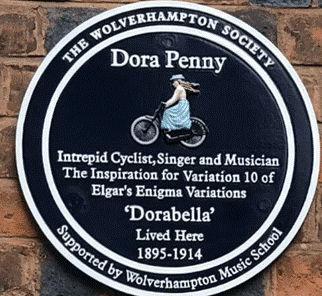
Dora Penny (1874–1964), who inspired Variation X in Edward Elgar’s
Enigma Variations was given a moniker by Elgar from a young, flirtatious
character in Mozart’s opera Così fan tutte.
Dora was the daughter of Alfred Penny, the Rector of Wolverhampton who later
married Mary
Baker and a step-niece of William
Meath Baker. She met Elgar in 1895 when he visited her family home. Dora
who later wrote Powell, Mrs Richard (1949), Edward
Elgar: Memories of a Variation, Methuen which includes many
stories about life at Hasfield Court.
Soon after Dora joined her father in
Wolverhampton, he married Mary Frances Baker, known to the family as ‘Min’, the
daughter of the Reverend Ralph Bourne Baker of Hasfield Court near Gloucester.
Dora and her stepmother became firm friends and they
lost no time, it seems, in gently ganging up on the rector as occasion
demanded. Dora later wrote “she was unfailingly good to me from the outset.
Kind and sympathetic, she was often torn between the two of us for the settling
of things, and her quick wit, tact and good nature smoothed matters time and
again”. Min was a charmer, with a hint of the Irish in her voice. She was my
favourite elderly relative beyond any question, notwithstanding the sharp
ticking off she once gave me for trying to balance on some monumental masonry
outside the cathedral. She used to let me join her in a small room off the south
aisle where she prepared flowers. There she would talk of the cathedral and its
history, particularly in the civil war. There was no doubt where her sympathies
lay and it was from her that I learned about the local hero of that time, Dumb Dyott,
a deaf mute marksman who helped to repel the
roundheads from his perch high on the nave. Since their girlhood Mary Baker had
been a friend of Caroline Alice Roberts whom Elgar married in 1889. She
occupies a special place in the background to the Variations, which portray
three of her relatives, her step her stepdaughter Dora, her brother William
Meath Baker and her brother-in-law Richard Baxter Townshend. She was a close
friend of Isabelle Fitton and she may well have known
other variants as well, of course, as the Elgar’s. (Powell, R (1937), Edward Elgar, Memories of a
Variation, page 3).
I first met Edward Elgar on 6 December 1895.
He and Mrs Elgar came to Wolverhampton at the invitation of my stepmother. They
came to luncheon, spent the afternoon and had tea. My father had been made
rector of Wolverhampton in the spring of that year and in the following August
he married Miss Mary Frances Baker, of Hasfield near Gloucester. With Miss
Baker came a very substantial addition in the furniture line to our large
rectory, and the connection with her brought us a host of most delightful new
friends. (Powell, R (1937), Edward
Elgar, Memories of a Variation, page 10).
1896
In 1896 Mary Baker married Rev Alfred Penny
and then moved to Wolverhampton.
When Edward Elgar visited the potteries
in October 1896, the first performance of Edward Elgar’s oratorio, King Olaf
was performed at the Victoria Hall, Hanley. The work had been commissioned for
the Hanley Festival. It was conducted by Elgar himself. After the performance,
Elgar wrote If ever I may come to the Potteries again I may come among
friends. WMB was in the audience and had already been a friend of Edward
Elgar for many years.
1897
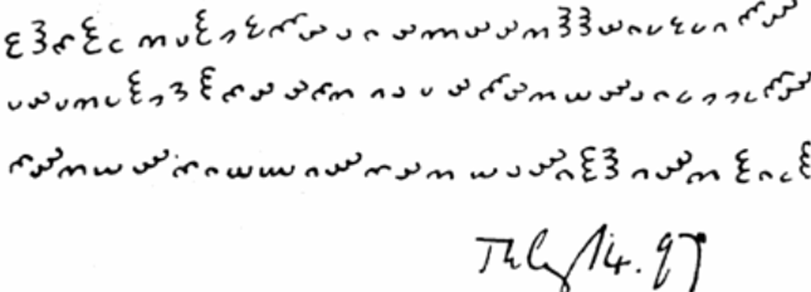
The Dorabella Cipher is an enciphered text written by Edward Elgar
to Dora Penny, which accompanied a plaintext letter dated 14 July 1897. Dora
Penny never deciphered it and its meaning remains unknown. The cipher,
consisting of 87 characters spread over 3 lines, appears to be made up from 24
symbols, each symbol consisting of 1, 2, or 3 approximate semicircles oriented
in one of 8 directions. The orientation of several characters is ambiguous. A
small dot appears after the fifth character on the third line. (Sams, Eric, 1970, Elgar’s Cipher Letter to Dorabella
in The Musical Times, Volume 111, Number 1524, pages 151 to 154).
The Dorabella Cipher
Blue plaque unveiled in 2024
1898
Edward Elgar first played the tune that became the Enigma
Variations on the evening of 21 October 1898. After a long, exhausting day of teaching
violin lessons, Elgar sat down at the piano in his cottage near Great Malvern
to unwind and lit a cigar. He began idly improvising a haunting melody. His
wife, Alice, overheard it and interrupted him, saying, Edward, that’s a good
tune… play it again, I like that tune. To amuse her, Elgar started playing
the theme again, but this time spontaneously altering the melody to mimic the
personalities and quirks of their closest friends, such as how they walked,
spoke, or laughed. Alice replied that it is exactly the way WMB goes out of
the room. She added surely you are doing something that has never been
done before. What started out that evening as a light-hearted parlour trick
quickly grew into the framework for his breakthrough orchestral masterpiece,
the Enigma Variations.
During part of September
we were all the way from home and my stepmother had
met the Elgars at Hasfield Court, where there was a party for the Gloucester Festival.
He took her in to dinner and one of the first things
he said was “How is my sweet Dorabella?” “Oh! So it
has got to that, has it?” said my stepmother. “That's a quotation from Mozart's
Cosi fan tutte, don't you know it?” This piece of information was retailed to
me in a letter from my stepmother, and a few days afterwards I had a letter
from the EE with the musical quotation from Cosi on the back of the envelope.
He wrote “We missed you at Hasfield very much and I could have made you useful
as well as … ah! I didn't write the other word. Well, Caractacus is to be
rehearsed at St James's Hall on Thursday at about 11 and my fate sealed at two o’c. I hope your croquet will be good and that you will
have the tea service, it is sure to be that, for your very own, and then come
Sunday at Wolverhampton you can give us tea and fire eggs at me as of yore.
Believe me amicably, Edward Elgar, 24 September 1898. Ever afterwards I was Dorabella. (Powell, R (1937), Edward Elgar, Memories of a
Variation, page 21).
Dorabella is a leading female character, the fiancée of Ferrando,
and the sister of Fiordiligi in Wolfgang Amadeus Mozart's comic opera Così fan tutte. She
is deeply in love with the soldier Ferrando at the start of the story. She is
more easily swayed and quick to yield to temptation than her sister,
Fiordiligi. When their fiancés disguise themselves as "Albanians" as
part of a cynical wager by Don Alfonso, Dorabella is the first sister to fall
for the new suitor, who is actually Guglielmo in
disguise. Dorabella’s notable arias include the grieving Act I aria Smanie implacabili
and the playful Act II aria È amore un ladroncello,
Love is a little thief.
1899
Edward Elgar completed the original score of the Enigma Variations
on 10 February 1899. He orchestrated the entire piece in a frantic burst of
creativity between 5 February and 19 February of that year. However, the version
audiences recognise today wasn't truly finished until a few months later.
The work was first performed at St. James's Hall in London on 19
June 1899, conducted by Hans Richter. Several friends, including his close
advisor Augustus Jaeger (immortalized as "Nimrod"), felt the original
ending was too abrupt. Elgar listened to their advice and added a longer, much
more triumphant 100-bar coda to the finale.
The programme notes for the Richter concert
which took place at St James's Hall, 19 June 1899, when the Variations were
produced, contained the following: On being asked for some elucidation of the
composer's intention, Mr Elgar replied: it is true that I have sketched for
their amusement and mind, the idiosyncrasies of fourteen of my friends, not
necessarily musicians; but this is a personal matter and need not have been
mentioned publicly. (Powell, R
(1937), Edward Elgar, Memories of a Variation, page 121).
That September it was Worcester’s turn for the
Three Choirs Festival, and the Variations were down for the Wednesday concert
in the public hall: the second performance after the production at St James's Hall,
in June, under Richter. There were several of us there and my stepmother came
down for it too. As she had three relations (brother, brother-in-law and
stepdaughter), “Variants”, and at least three friends besides, it is no wonder
she wished to be present. I sat with WMB and I'm afraid we did not behave very
well; it was not easy to do so sitting next to him as he always saw the fun in
everything. He was immensely interested and amused by RBT, obviously seeing the
likeness but quite at a loss, as we all were at first, to know how the likeness
had been contrived. At the end of it he burst out with “Well I'm damned!” When
the finale was over he remarked “well, you're the best
of the bunch anyway!” He did not understand his own Variation, that was clear,
nor did the rest of the party. I shall never forget the gauntlet that I always
had to run afterwards, at the Star Hotel, Worcester, where we were all staying
for the concert. He wanted to know what each Variation meant including his own,
and I was put in a very awkward position, with my father and stepmother, WMB’s
sister, there as I could not possibly have told what I knew about them, they
would not have understood. (Powell, R (1937), Edward Elgar, Memories of a
Variation, page 31).
People are curious; but there was one person
in our house party there that evening who understood, and she and I looked at
one another. That was Mrs W M Baker, a lovely amateur singer and pianist and a
most charming friend to me. I was rather on edge that evening, as might be
imagined, and she saved me by her understanding and sympathy. (Powell, R (1937), Edward Elgar, Memories of a
Variation, page 32).
1909
On 25 November I went to Oxford to stay with
Mr and Mrs R B Townsend. There was an orchestral concert at which the Variations
were to be done and RBT wanted to go to it with me. Poor thing! I'm afraid he
was rather bored, he was entirely unmusical, but he was entertained by what I
could tell him of the other Variations and amused by my explanatory notes on the subject of his brother-in-law, WMB. “EE called you
the delight maker, didn't he?” “Yes that was after
those theatricals when I did the old man. Those were the days!” He wanted to
know why WMB was amused and why he said what he did at Worcester after the RBT Variation,
and in what way I thought it was like him. This was a little awkward for me as
I could not very well tell him how wickedly like him it was, with all his funny
little eccentricities and ways of speaking. However I
told him what I could. “That's no end interesting”, he said, “but I wish I
could see it just as you do!” (Powell,
R (1937), Edward Elgar, Memories of a Variation, page 108).
Bibliography
Dodd, F (1987), The Baker Family and Fenton, Presidential Address
in Transactions 1986 to 1987, The North Staffordshire Field Club, pages 8 to
20.
Kennedy, Michael (1987), Portrait
of Elgar, Oxford: Oxford University Press, pages 25,
54,
69,
94
(Mary Frances Baker), 25,
54,
69,
77,
82,
91,
94,
99,
120
(William Meath Baker) 94
(Dora Penny).
Powell, R (1937), Edward Elgar, Memories of a Variation.