The Pathfinders
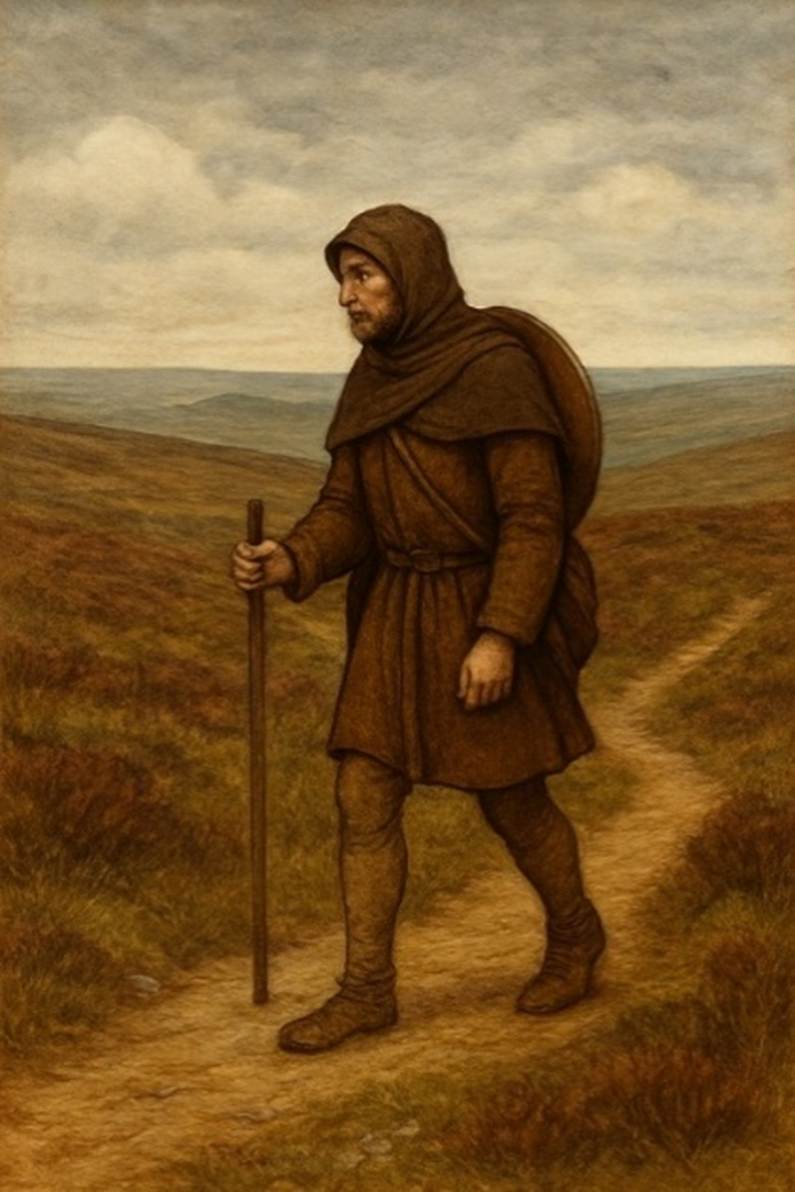
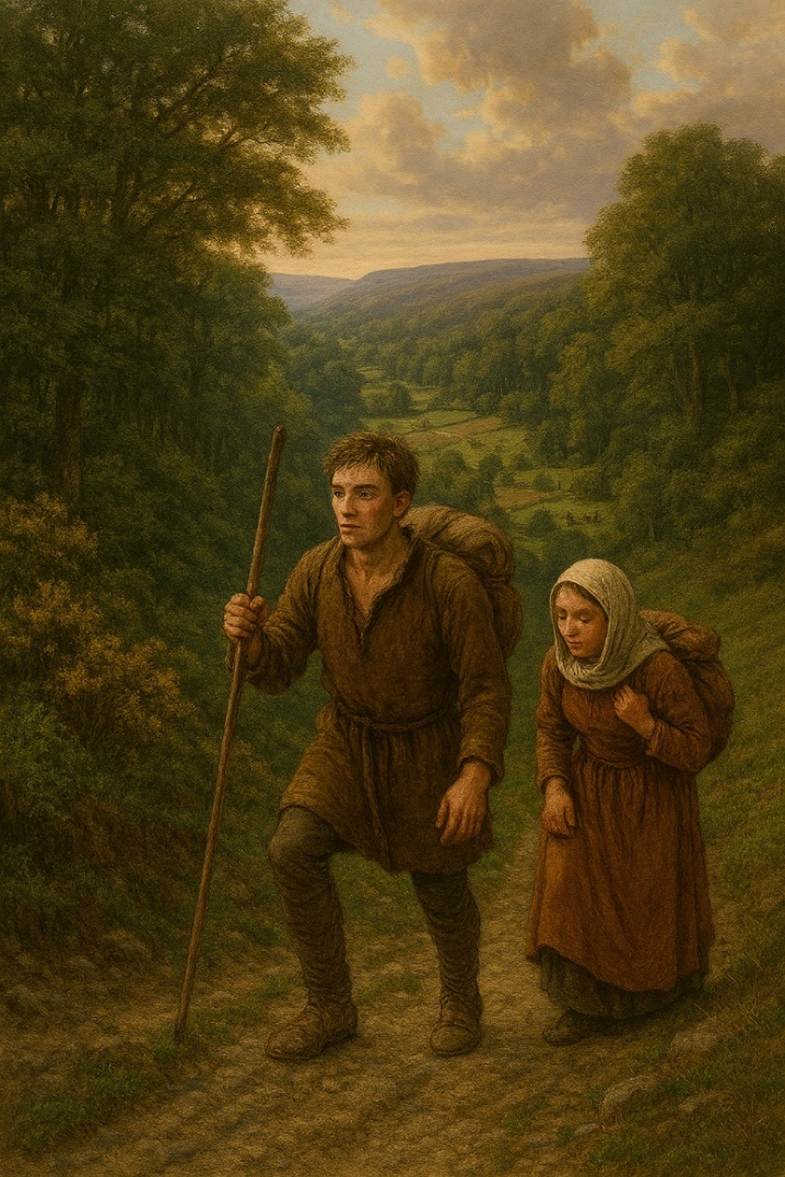
Our Pioneer ancestors who left
Farndale but took its name to settle in new places
The family
story continues as individuals left the dale called Farndale, but kept its
name, and founded the modern family.
Scene 1 - New Lands
By 1301 the
inhabitants who stayed in Farndale
were no longer calling themselves by the name of the dale. The community
had grown by then and they were all inhabitants of Farndale, so if they all called
themselves after that place, conversation would have been confused. The 1301
Subsidy for Farndale therefore listed no one who was called Farndale by
name, but rather the folk there took their names from more specific locations
within the dale, or by their occupation.
It was the
individuals who left Farndale,
and settled in new places, who took the name Farndale with them, to define
themselves as individuals.
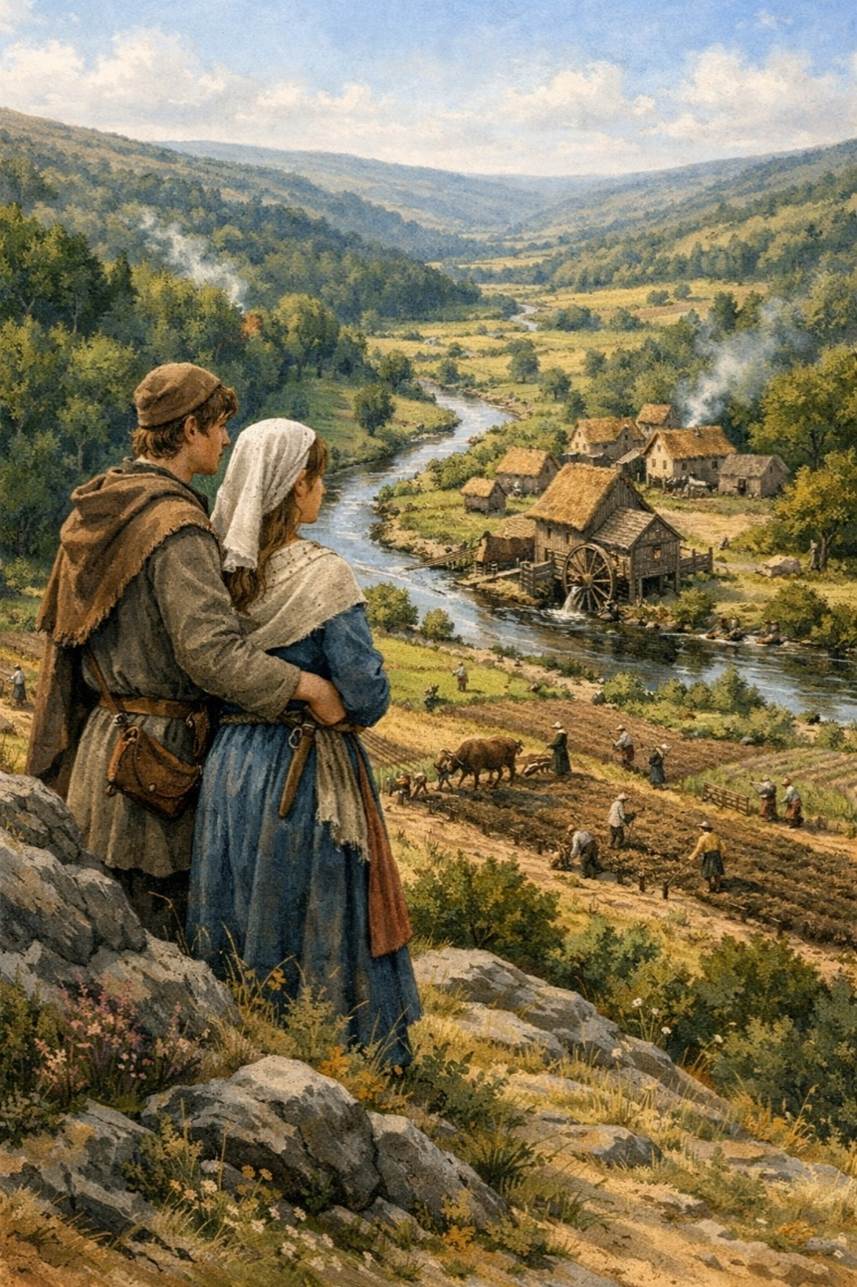
Farewell to
the dale
Simon
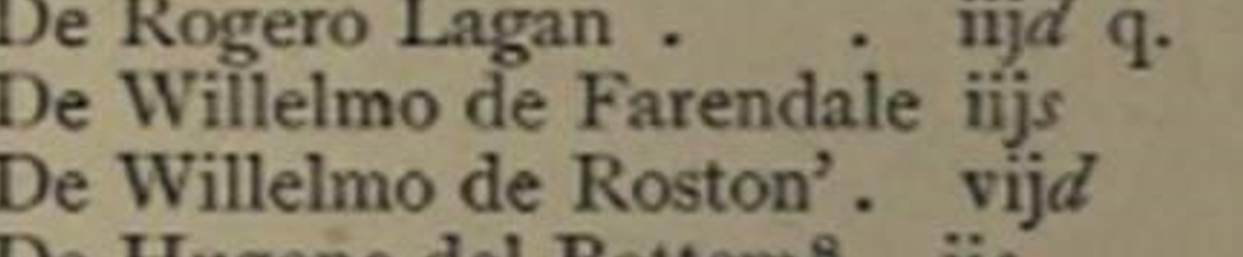
the Miller of Farndale had a son, John and it was probably he, Johanne de
Farendale, who had crossed the moors to Egton by 1301, where he paid 22d in
Edward I’s subsidy[1]. At about the same time Willelmo
de Farendale had moved to Danby in the Wapentake of Langbaugh where he
paid 3s[2]. These were a new generation of pioneers who
left the dale to seek new opportunities taking the name of the dale to define
themselves. When William
appeared in the same 1301 Subsidy but in Danby, he was the one to call himself
William of Farndale and John similarly took the Farndale name to Egton.

So it was that, at about the turn of
the fourteenth century, John Farndale, who was almost certainly on the direct
line of the modern Farndale family, left Farndale for the last time and
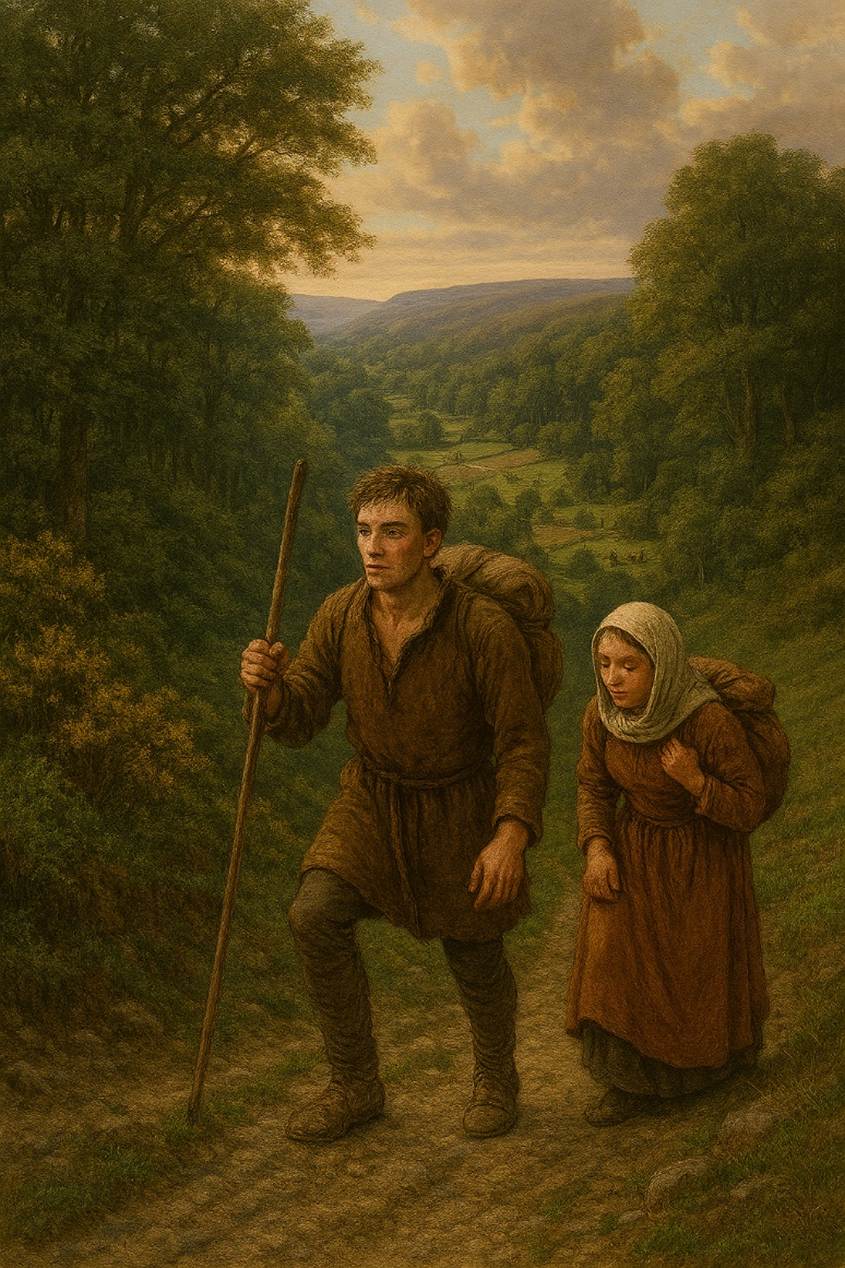
travelled north to settle first at Egton. As he climbed out of the dale with
his young wife, although he didn’t know it, he took the name of the dale for
his descendants, but the family were never to return.
The
pioneer left Farndale for Egton
|
c 1279 to c 1340
A tenant in Danby in 1301 |
|
Danby
at the turn of the fourteenth century |
|
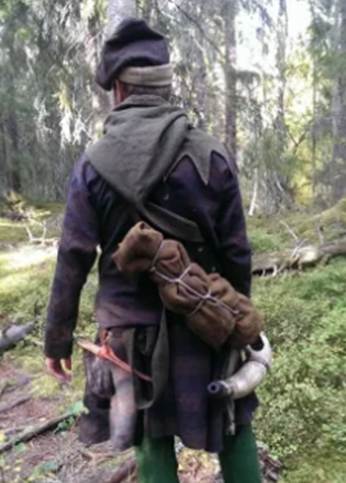
The ancient routes across the
moors
Exploring
the ancient tracks and roads across the moors around Farndale |
By
1314, John de Farndale was a sub tenant of Thomas Wake in Rosedale, the dale
adjacent to Farndale. John held 6 acres of land near the vill
of Cropton. He grew five acres with oats, which had been grown every year
between about 1314 and 1334 and one acre was wasteland[3]. Cropton is at the head of Rosedale, but from
later records, it is apparent that John’s land may have been at Hartoft, near
Rosedale Abbey. Johanne de Farndale, paid taxes at Cropton de Arthoft of 2s 1d in the Lay Subsidy of 1327[4] and 2s in the same place in the 1333 subsidy[5].
Three
years later, John de Farndale of Hovingham in the Wapentake of Ryedale was a
debtor to Thomas de Wrelton, a chaplain of Yorkshire in the sum of £8 and the
transaction was recorded by Henry de Belton, Mayor of York and William Gra,
clerk taken on 16 April 1336. The first term of the loan was to last until 19
May 1336. The writ was endorsed by Ebor' Coram Justic' de Banco[6].
|
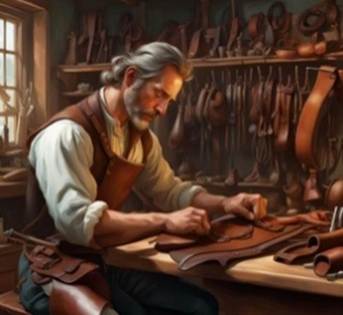
John de Farndale “The Saddler” c 1278 to 1372
John left Farndale
and settled in Egton for a while, before returning via Farndale to live in
Rosedale for many years, where he farmed 6 acres In 1336 he took a
loan of £8 and perhaps shortly afterwards set up a business as a saddler in
York, of which city he later became a freeman |
|
The
history of Egton |
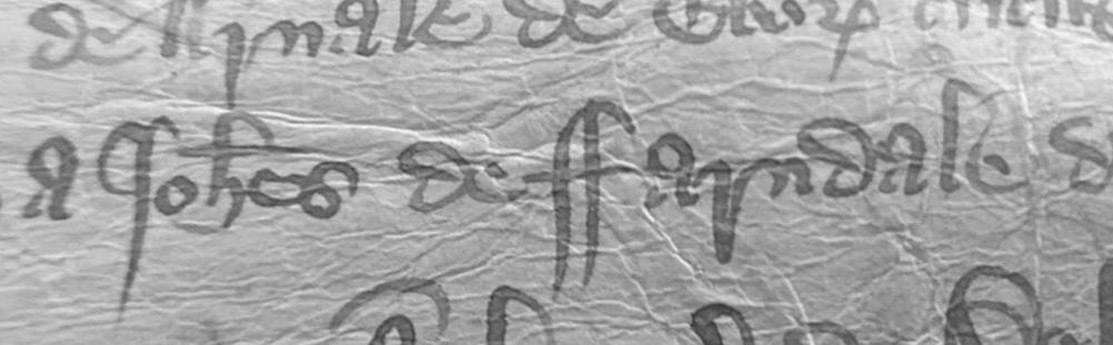
John Farndale’s loan,
1336, held by the National Archives (C 241/115/94)
It may have been by about
1338, having taken a loan at Hovingham, that John set up a new business as a
saddler in York. In 1363, Johannes de Farnedale was
admitted as a freeman of York as a sadler[7].
It was those
pioneers who had left Farndale for other places, who would first adopt its name
to describe themselves.
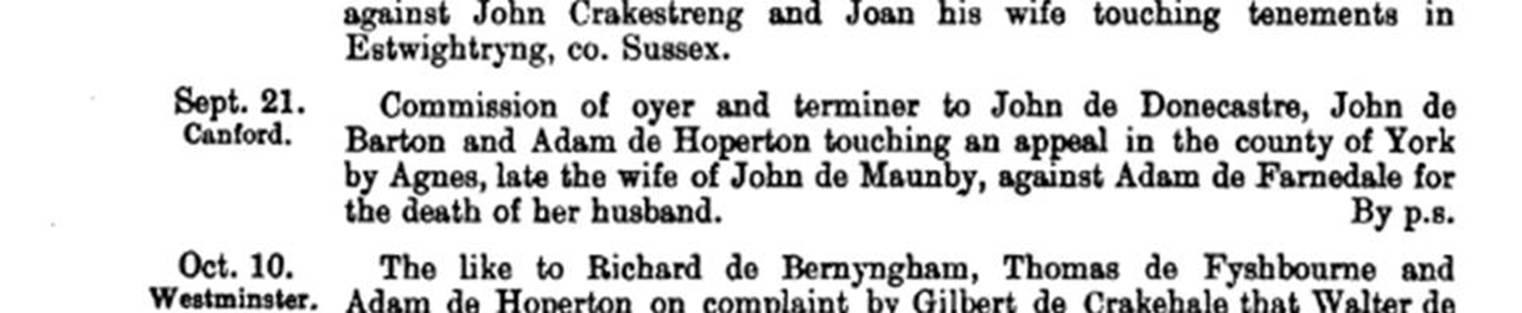
On 21
September 1320 Commission of Oyer and Terminer was ordered to John de
Doncastre, John de Barton and Adam de Hoperton touching on appeal in the County
of York by Agnes, late wife of John de Maunby against Adam de Farndale for the
death of her husband. Maunby is a village south
of Northallerton and this might suggest Adam,
the son of the relatively wealthy Simon the miller of
Farndale, had interests well outside Farndale, though he was in the
midst of the poaching
crowd by about 1323.
On 24 May
1328 a pardon was granted at York to Hugh de
Faulkes of Lebreston on condition he join an
expedition against the Scots for the death of Walter
de Farndale of Cayton.

Walter de
Farndale had settled in Cayton, where he was murdered or killed in some
encounter, in 1328. This was a time when Yorkshire was being ravaged by the
Scots after their success at Bannockburn in 1314. The north of England was
relatively defenceless and faced raids from Scotland and destruction of crops
and seizing of animals. Edward II’s military failures against France and
Scotland marked his unhappy reign. There was discontent, which focused on his
close relationship with Piers Gaveston, a Gascon knight, who he made Earl of
Cornwall. The Great Famine followed bad weather and poor harvests. There was
widespread unrest, crime and infanticide. Robert
Bruce, a descendant of the Yorkshire nobility, rode through Yarm and nearly
captured Edward II at Byland
Abbey. Rievaulx abbey was
damaged. The long wars with the Scots, involving the people of Yorkshire, ended
with an invasion by David II of Scotland in 1346, encouraged by the French.
David II reached York, but failed to take the
city. Archbishop de la Zouche rallied Yorkshiremen to resist the invasion and a
crushing defeat was inflicted at Neville's
Cross. David was imprisoned.
These were
chaotic times.
|
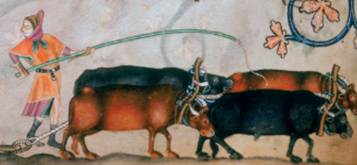
Walter de Farndale “The Murder Victim” c 1277 to 1327
His oxen strayed
in Pickering Forest in 1310, for which he was fined He later moved to
Cayton near Scarborough, where he was murdered |
It is
possible that Walter was another of the younger sons of Nicholas de
Farndale. Perhaps he had set off from Farndale with his brothers William
and John
sometime before 1301, dispersing to find new opportunities.
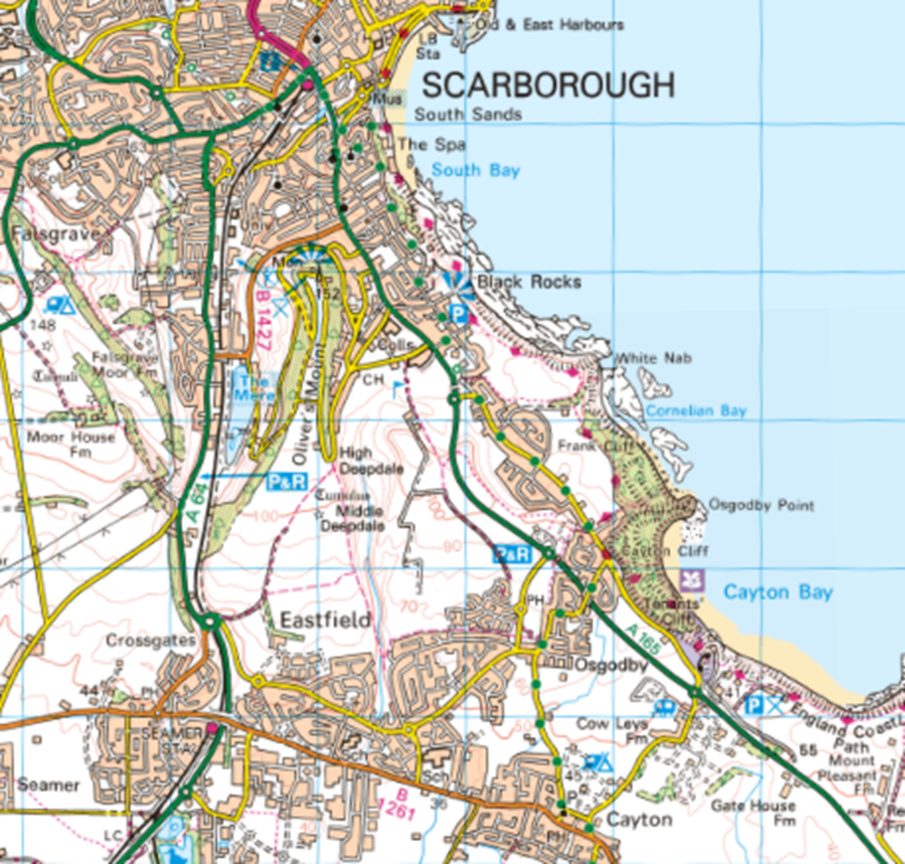
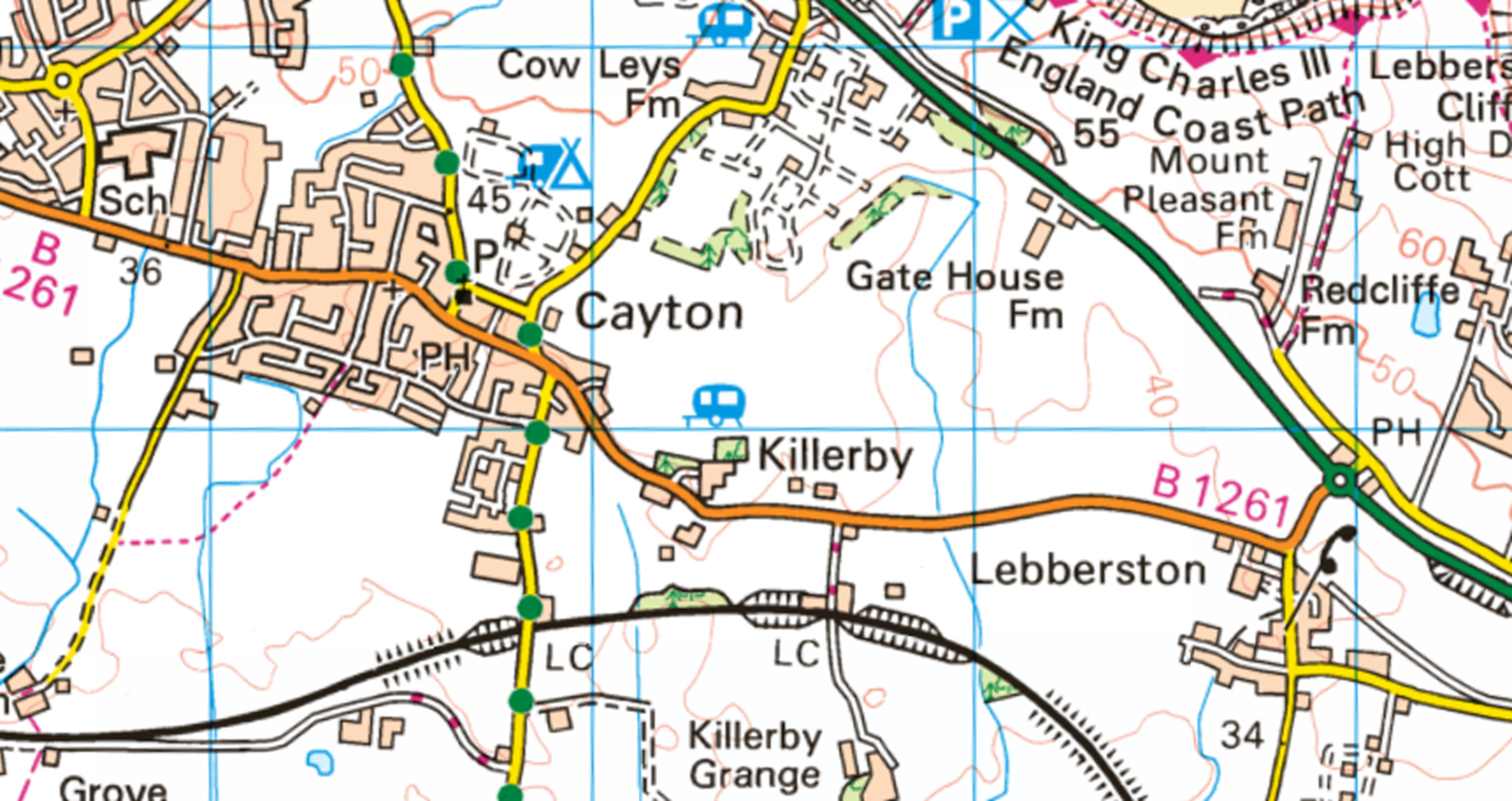
Cayton and Lebberston are two villages only two kilometres apart just
south of Scarborough.
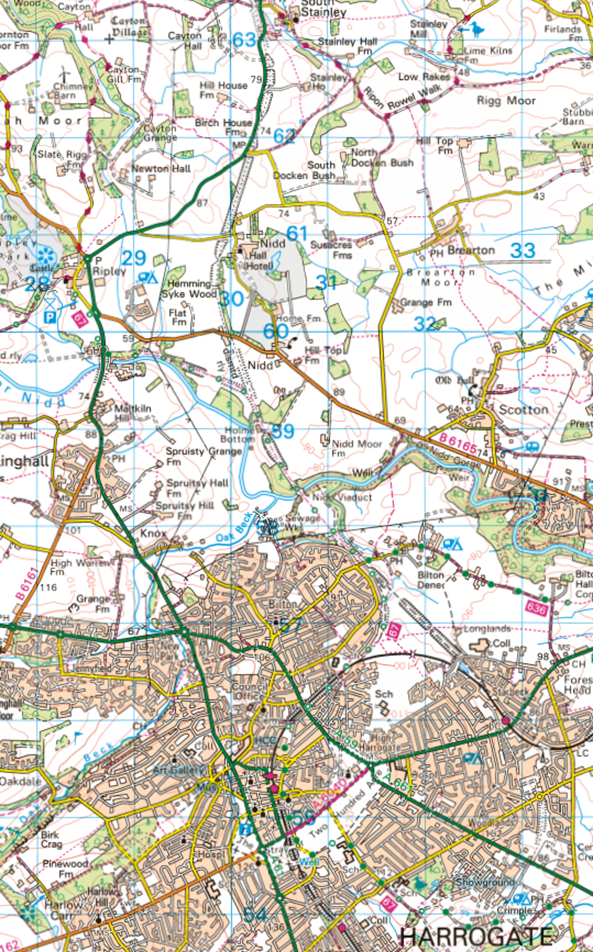
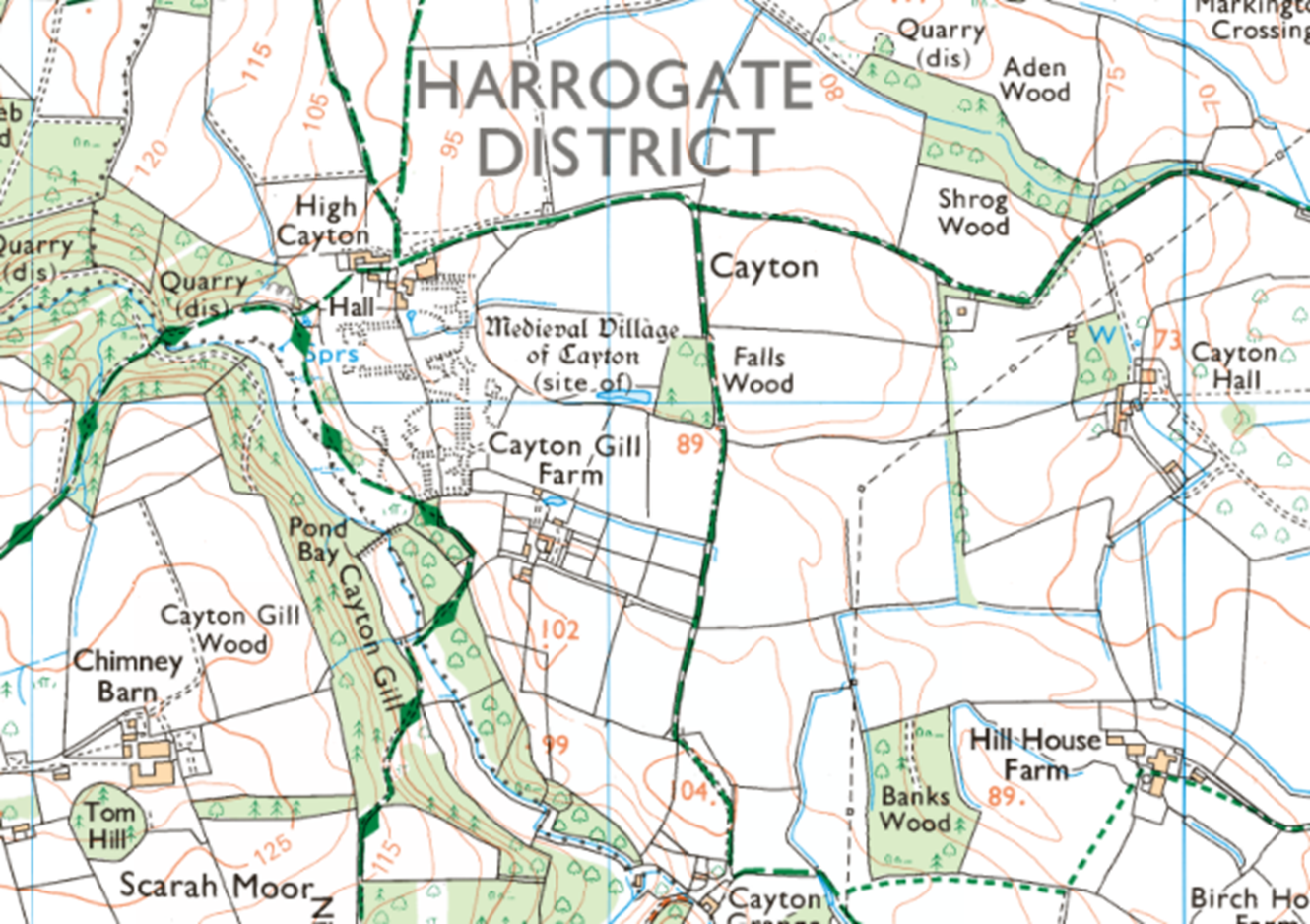
However there is also another place called Cayton, where there was a medieval
village, about ten kilometres north of Harrogate. The proximity of Cayton
and Lebberston, south of Scarborough suggests that this is where
Walter had settled. However Walter’s probable grandson became associated with a
number of locations around the Harrogate area, so it may be that the murdered
Walter came from the medieval village of Cayton, north of Harrogate.
Walter might
have been the father of another Walter
de Farndale, born in about 1300. He might also have been the father of Nicholas de
Farndale and John de Farndale,
both referred to in the records as sons of Walter.
Scene 2 - The Ecclesiastical
Wanderings of Walter de Farndale the Younger
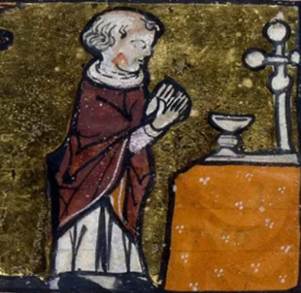
By 1338 Walter
de Farndale the Younger was a vicar at Haltwhistle, near Hexham, Persons
admitted to Holy Orders in 1334-1340; Walter of Farnedale,
vicar of Hautwesile. Unlike his uncles Richard
and Thomas, or his cousin John, who were
excommunicated from the church, Walter seems to have joined the church, and
with it came a different means for adventure and opportunities for travel.
|
Walter de Farndale “The Itinerant
Priest” c 1300 to c 1370
Vicar of Haltwhistle, Lazonby, Illisahaghe hospital, Upmeadon,
Chelmsford |
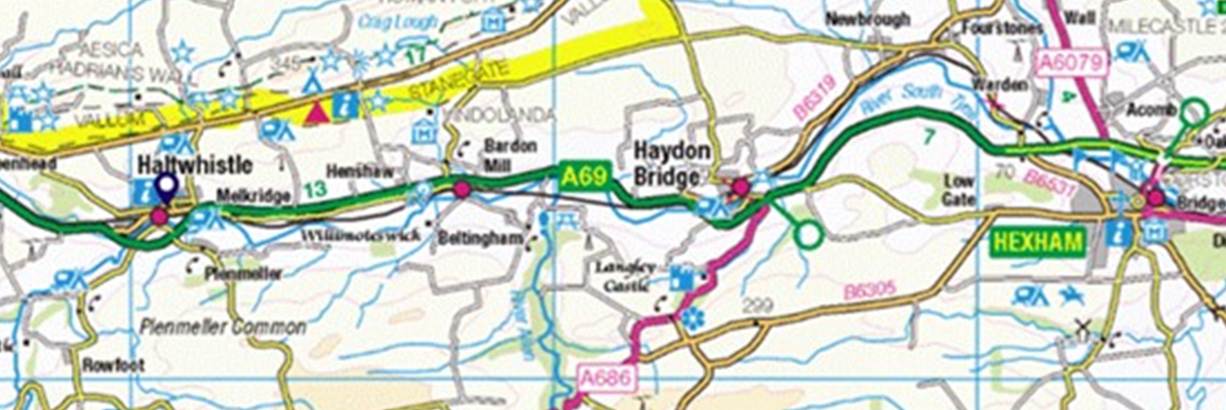
In 1340 it
is recorded that Collation of Walter of Farnedale
to Leysyngby (Leysonby)
Wardship. Layzonby is a place about eight kilometres southeast of
Carlisle. In 1341 he was promoted, Collation of Walter de Farndale to be
Master to the Chapel and manor of Leysingby. Layzonby was held by the Stutevilles in the twelfth
century, so may have had associations with the family homeland. The church of Lazonby was given by Sir Hugh Morvill to the Priory of Lanercost, and in 1272 appropriated to that monastery. Lanercost Priory is about five kilometres northeast of
Carlisle. Thomas de Hexham was the Prior of Lanercost
from 2 December 1354, until he died in July 1355, so there may also have been
some link between Hexham and Lanercost. Thomas of Hexham’s predecessor as prior was
John de Bewcastle, elected in 1338, who resigned with a pension in 1354, so he
must have been prior at the time of Walter de Farndale. Lanercost and Lazenby were subjected to regular raiding
in the early fourteenth century. Robert the Bruce set up his headquarters with
a large army at Lanercost in August 1311, and David
II had ransacked Lanercost in 1346. One of the priors
was taken prisoner by the Scots in 1386, and set at ransom at a fixed sum of
money and four score quarters of corn of divers kinds. This was unlikely
to have been a restful posting.
In 1342 came
the appointment of Walter Farnedale as Master of Illis-haghe
Hospital. It is not clear where that was.
Walter
appeared again in the records of Bishop Bury’s Visitation on 1 June 1344. And
the rest of the monks of the same church and cells, who had been guarded and
summoned, but did not appear at all, waited until the next day to do and
receive in the same business according to the force and effect of the summons
made to them in this part before, each and every one remaining in the same
state in which they were, on the aforesaid Thursday, to the venerable and
discreet men present there, Master John de Aton and the master William de
Hemyngton aforesaid, and Master William Legat, Chancellor of the said Lord
Bishop, and Walter de Farnedale, clerical witnesses specially called to the
premises and when asked. But the same day the morrow viz. On the twentieth day of
February aforesaid, between the first and third hours of the same day, in the
year of the aforesaid consecration and pontificate, the same Lord Bishop was
personally appointed in the very house of the Chapter, with John de Aton,
William the legate, and brother John de Butterwyk, and I, Simon de Cherryngge,
the undersigned public notary, whom he had with him. , the said Lord Bishop, in
the act of the aforesaid visitation, objected to the prior aforesaid certain
things found and discovered in the visitation mentioned against him, and having
regard to the same answers of the aforesaid Lord Bishop, the aforesaid Lord
Bishop continued the same day and made corrections of this kind, and extended
it again and again until the next day after the next day, which with the
continuation and by prolonging the subsequent days until the final campaign of
corrections of this kind, the aforesaid prior and all the other monks then
gathered there, appointed and assigned that they should appear before him in
the said chapter-house on the morrow to be made and received further in the
said business of corrections as justice suggested, and that they should have
done and received in this part on the twentieth day of the month of February
aforesaid. Whatever monks of the aforesaid church and cells were absent at that
time, and having the aforesaid twentieth day from the continuation or
prefixation of this kind, he waited until the aforesaid day to
morrow to do and receive in business of this kind that was right.
On 7
February 1347, At Eltham. Walter de Farendale, parson of Upmeadon
Church acknowledges that he owes Richard de Levetun
of Tykhill £8; to be levied in default of payment of
his lands and chattels and ecclesiastical goods in the County of Sussex. So
by 1347 he had moved to the south of England. Eltham is a suburb to the
southeast of modern London.
On 9 April
1349, at Langley, there was a presentation of Walter de Farndale as Warden
of St Margaret’s, Chelmerford in the Diocese of
London to the mediety of the Church of Turvey in the Diocese of Lincoln in the
King’s Gift by reason of the Priory of St Neots being in his hands on account
of the war with France on the exchange of benefices with Thomas de Dersyngton.
Chelmsford is northeast of London. St Margaret’s is a Grade II listed building in Margaretting, Essex in the district of Chelmsford. It was
almost completely rebuilt in the fifteenth century. Turvey is now in
Bedfordshire. Turvey's Parish Church is called All Saints and has Saxon
origins. It is the largest church in the deanery of Sharnbrook and was in the
Diocese of Lincoln until it was transferred to the Diocese of Ely in 1837. St Neots Priory replaced a small Anglo-Saxon
monastery at Eynesbury in which were housed the bones of Saint Neot, a revered
Cornish monk who died around 877 CE. St Neots Priory became a Benedictine
monastery founded in about 974 CE by Earl Aelric and
his wife Aelfleda. Because it was dependant on a French mother-house, it
suffered whenever there were hostilities between France and England, and
particularly during the Hundred Years' War. Its property was continually seized
for this reason, until like certain other alien priories it was eventually
given its independence from Bec in 1409. The prior of St Neots in 1349 was
William de Beaumont who was elected that year.
In August
1354, To Thomas de Clopton, priest, Rehabilitation on account of his having,
when in his twenty-second year, obtained the church of Wickham, in the
diocese of London, and after holding it for seven weeks, obtained a sinecure
chapel in the bishop's palace in the city of London, which he exchanged with
Walter de Farndale for the church of Blendeworth,
which is to be resigned. Wickham is in Hampshire, northwest of Portsmouth. Blendworth is north of Portsmouth. This was confirmed in
another record, Villeneuve by Avignon, To the archdeacons of Winchester and
Colchester, and the chancellor of Salisbury. Mandate to induct Thomas de
Clopton, priest, of the diocese of Worcester, into the church of Blendeworth, in the diocese of Winchester, which he
has held for five years, he having first resigned the same, which he obtained
by way of exchange, when in his twenty-second year, with Walter de Farndale
for a chapel in the episcopal palace in the city of London, which he
obtained after resigning that of Wickham, in the diocese of London,
which he, in ignorance of the law, had obtained and held for seven weeks,
taking no fruits therefrom.
Walter might
have lived to about 1370. We can’t be
sure that Walter was from the same family as our family’s ancestors, but it
seems possible that he was the son of the murdered Walter of Cayton.
It seems to
be a possibility that he was the father of William
Farndale, born about 1332, a few years before the recorded ecclesiastical
wanderings of Walter, who would become the founder of a line of the family who
settled in Sheriff
Hutton.
Ordinary
folk were starting to use descriptions beyond Christian names by the early
thirteenth century. However these names tended to fluctuate until about the
fourteenth century. If for instance William of
Farndale moved from Danby to York, he might have
started to call himself William of Danby. However by the fourteenth century,
such names started to become fixed, and to be passed down as hereditary names.
We can see this happening in the Farndale history. From about 1310, we see the
‘de’, ‘of’ starting to being dropped. This tends to suggest folk no longer
defining themselves as ‘of’ a place, but using a name, with more permanency.
As you drive
south from the North York Moors to the York ring road and on to Doncaster, the
land is flat and richly agricultural, albeit with rivers and floodplains. Doncaster was previously the
Roman city of Danum, at the crossing on the Rover Don. So it’s not
surprising the find the Farndales of the thirteenth and fourteenth centuries
drawn in the direction of York
and Doncaster. Although our
history from 1500 will be firmly rooted in Cleveland, to the north of the
moors, at this stage the dominant evidence of a significant number of Farndale
ancestors to be found in the medieval records, evidences that it was to this
southern agricultural region that the family generally first moved.
As
individuals who started to use the name Farndale, and to appear outside the
dale, it becomes obvious from the records that there are some geographical
groupings of Farndales in the thirteenth and fourteenth centuries around Sheriff Hutton. which would become the territory of
the Nevilles, during the Wars of the Roses; at York, the metropolitan centre from its
origin as Roman Eboracum; and at Doncaster,
another Roman centre of Danum. Perhaps there is some interrelationship
between these three families. Those who settled in Doncaster by 1335 might have
been linked to the York
family. And it seems that these families who left Farndale by the early
fourteenth century but used its name, were middle class folk of some wealth.
Scene 3 - The Farndales of Sheriff
Hutton
So it may be
that William,
born in about 1332, was the son of Walter,
the vicar who travelled across England. Walter’s
father, also Walter, was murdered or killed in 1327 and
we have already debated whether the elder Walter
had lived in Cayton near Scarborough or
the
medieval village of Cayton, near Harrogate. The Harrogate Cayton was a
monastic grange, with a speciality in fish farming. In common with much of the north of England,
the grange was devastated by attacks by the Scots in the early part of the
fourteenth century. By 1363 Cayton was still in a parlous state and the abbey
decided to convert it, along with eight other granges, into a secular vill and rent it out to lay tenants.
On 15
October 1358, a pardon was given by the Sergeant at Arms to William Attwode
for having enfeoffed John de Banaby and William
Farndale, chaplains of the Manor of Derleye, held
in chief, and then re-entered into the Manor, which they quitclaimed to him
without the King’s licence and grant that he shall retain the same fee.
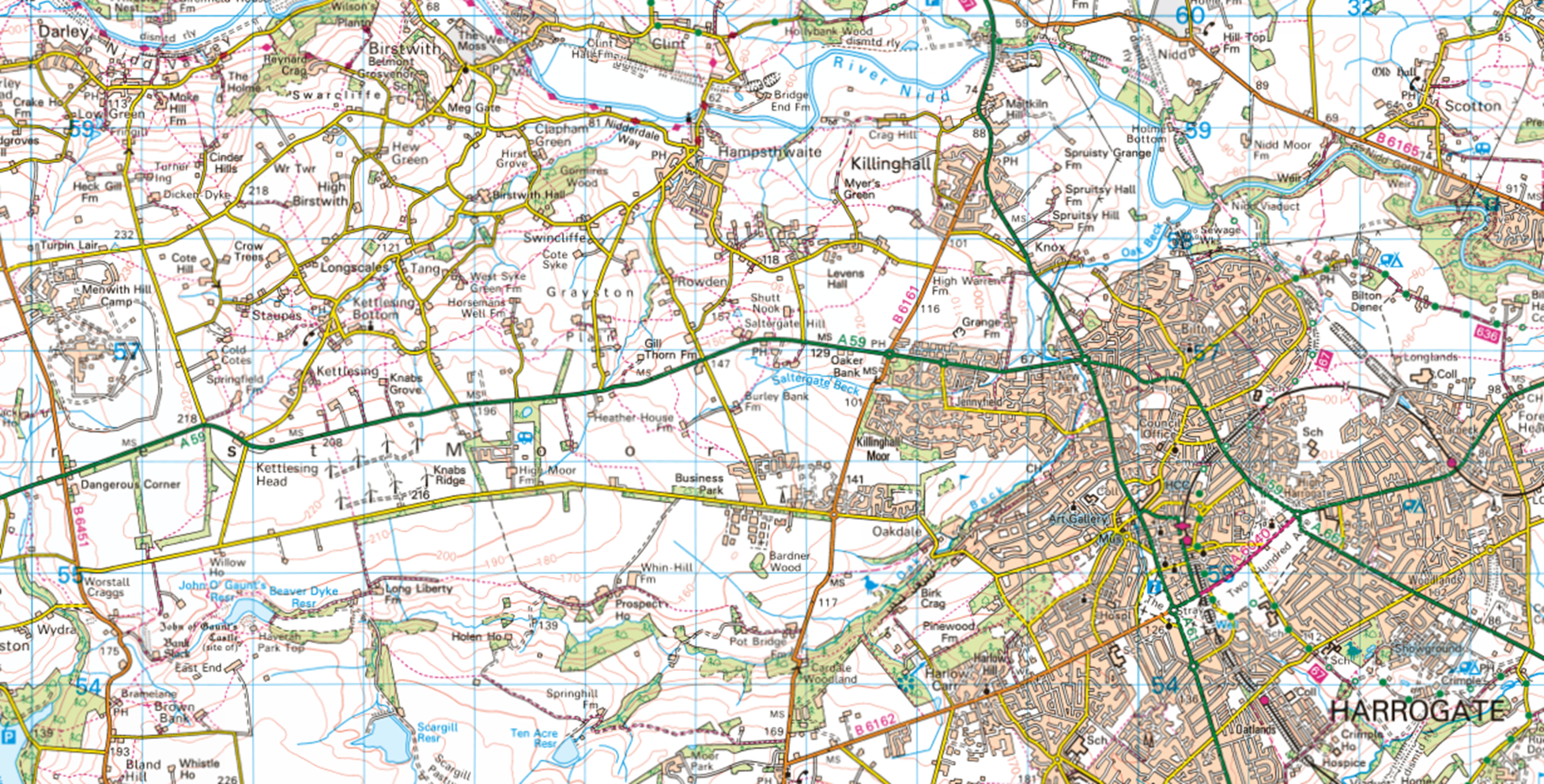
So William
Farndale was chaplain of Derleye by 1358. Derleye is probably a reference to Darley, which is
a place about ten kilometres northwest of Harrogate, not so far from Cayton.
There are no other places which are similarly named to Derleye
in Yorkshire.

So if William
was Walter,
the vicar’s son, who by 1358 was a vicar in the south of England, it is not
unlikely that William, the chaplain of Darley, was his son. If his grandfather
was the murdered Walter
of Cayton, it would make more sense if this was a reference to the
Harrogate Cayton.
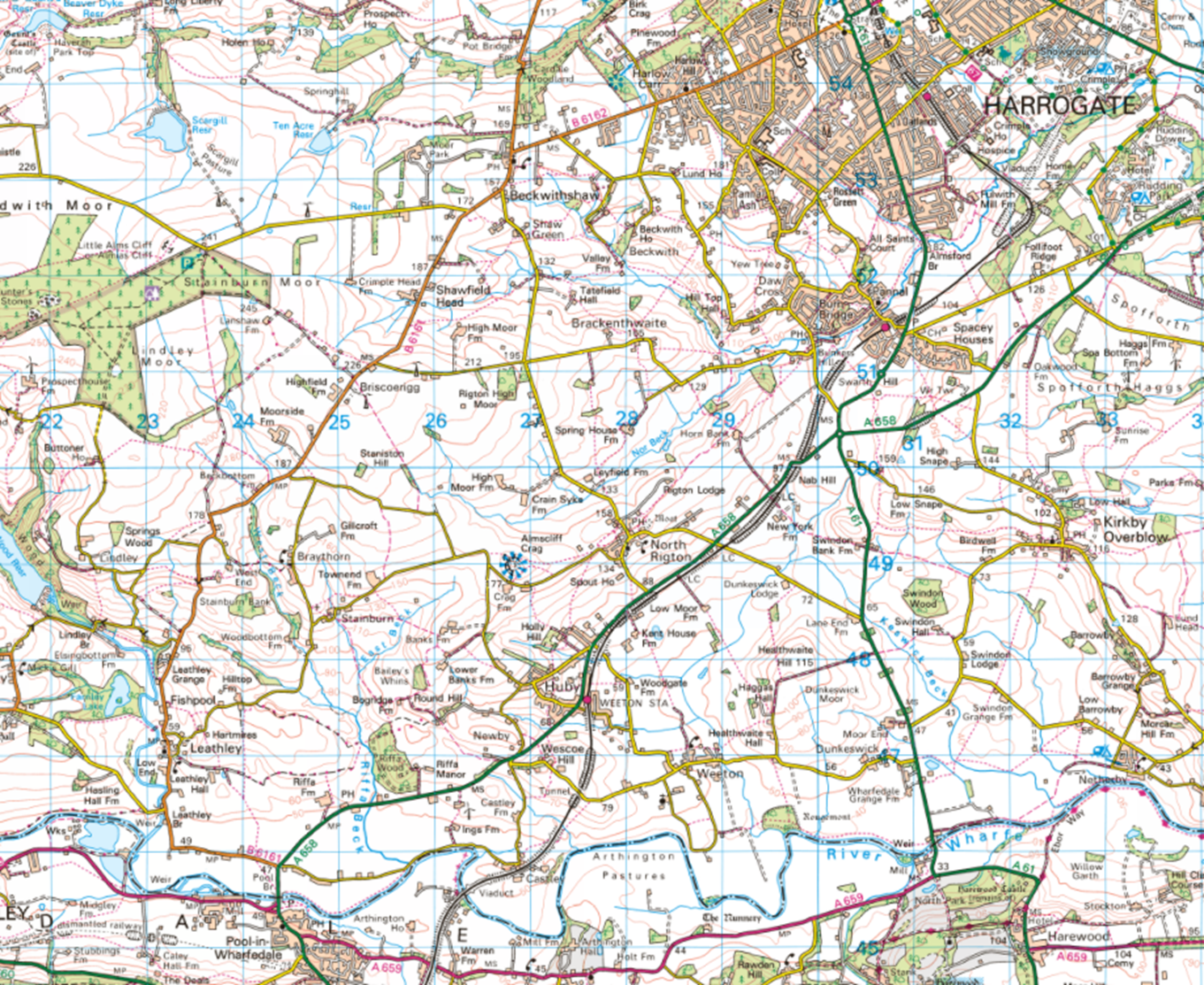
On 7 May
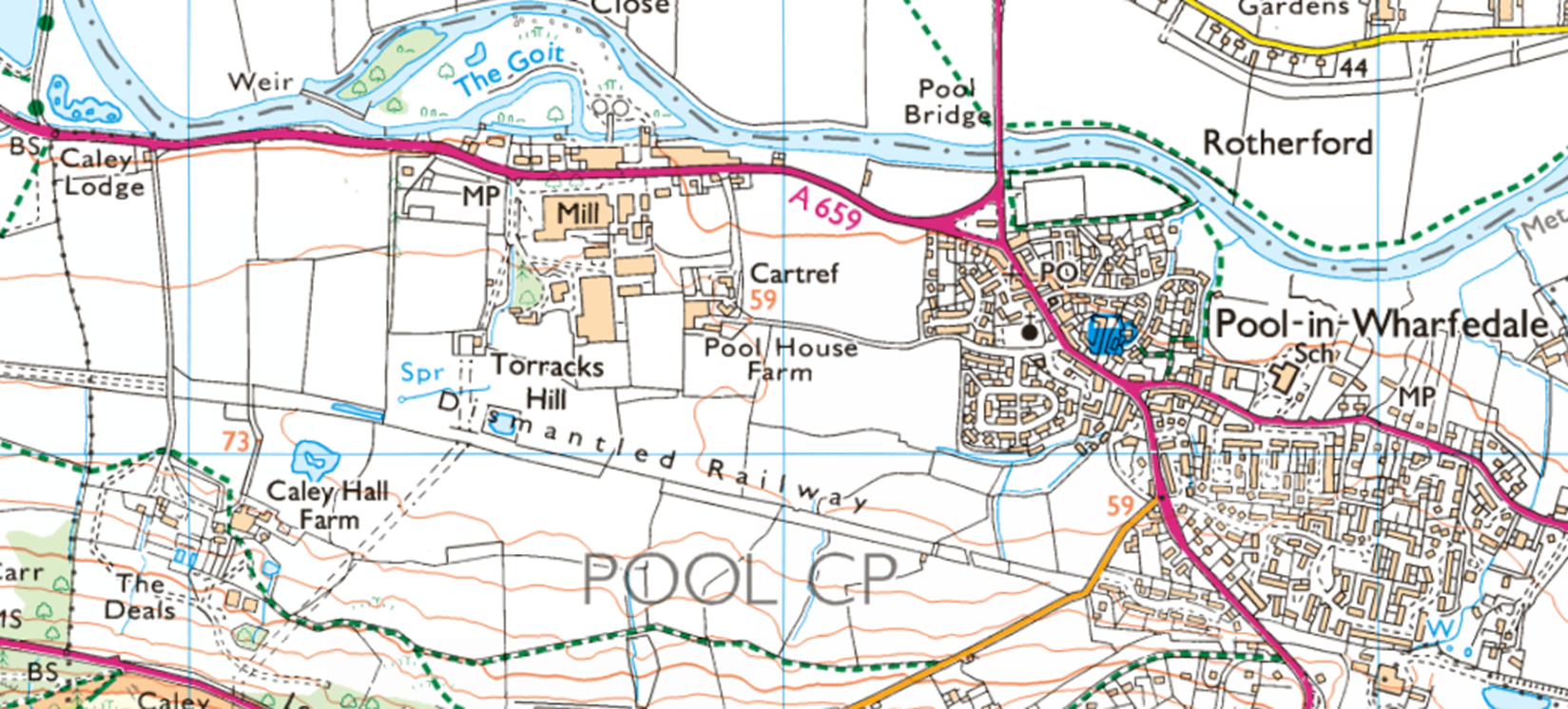
1370, a pardon was granted to William Farndale of the King’s suite at Caleys for the death of John de Spaldyngton
whereof he is indicted of any consequent outlawry. Spaldington
is a place about twenty kilometres southeast of York. Caleys
is more difficult to identify, but there is a location, about ten kilometres
southwest of Harrogate, called Caley Hall. Since this is in the vicinity of
both Cayton and Darley, this seems quite likely to be another reference to William.

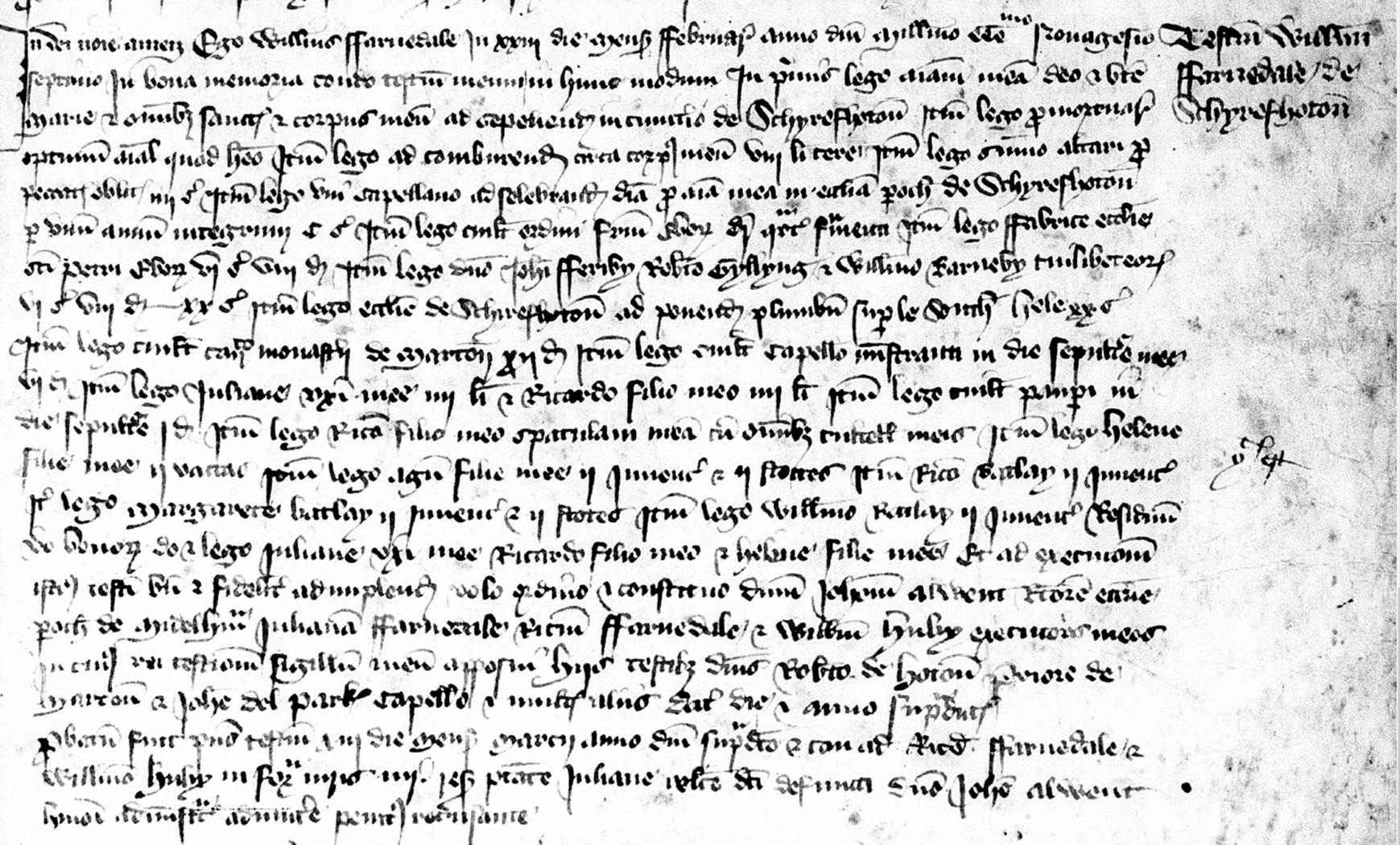
The next we
hear of William
is a lengthy will of 1397 from Sheriff Hutton. In
the name of God Amen. I, William Farnedale, on 23 February 1398, in good
memory, make my testament in this manner. Firstly, I bequeath my soul to God
and the Blessed Mary and all the Saints, and my body to be buried in the
Churchyard at Schyrefhoton. Item, I bequeath as
mortuary payment, the best animal I have. I bequeath to be burned around my
body, as candles, 8lbs of wax. Item, I bequeath to the High Altar for sins
forgiven, 4s. Item, I bequeath to a Chaplain to celebrate divine services for
my soul in the Parish Church of Schyrefhoton for a
whole year, 100s. Item, I bequeath to the fabric of St Peter’s York, 6s 8d.
Item, I bequeath to Sir John Ferriby, Robert Gyllyng and William Barneby, 6s 8d
each (20s). I bequeath to the Church of Schirefhoton
for putting lead on the south roof, 20s. Item, I bequeath to each Canon of the
Monastery of Marton 12d. I bequeath to every Chaplain ministering on the day of
my funeral, 6d. Item, I bequeath to my wife Juliana, 4li and to my son Richard,
4li. Item, I bequeath to every poor person on the day of my burial 1d. Item, I
bequeath to my son Richard my small sword with all my knives. Item, I bequeath
to my daughter Helen, two cows. Item, I bequeath to my daughter, Agnes 2
bullocks and two plough beasts. Item, I bequeath to Richard Batlay 2 bullocks,
Item, I bequeath to Margaret Batlay 2 bullocks and 2 plough beasts. I bequeath
the rest of my goods to my wife Juliana, my son Richard and my daughter Helen.
And I appoint Sir John Alwent, Rector of the Parish Church of Midelham, Juliana Farndale, Richard Farndale and William
Huby, my executors. In witness whereof I have set my seal. Witnesses: Sir
Robert de Hoton, Prior of Marton and Sir John de Park, Chaplain and many
others, date as above.
William
was clearly a wealthy man by his death in 1397. And we know a lot about him.
His wife, was Juliana and he had a son, Richard, and two
daughters, Helen
and Agnes.
There was another William
of Huton who held three bovates of land at Gowthorpe, about twenty kilometres southeast of Sheriff
Hutton in 1428 and he was probably another son of William, though not mentioned
in his will, perhaps because he had set up for himself somewhere else.
We are
therefore able to build a picture of the son of a vicar, William,
who became a chaplain near Harrogate by 1358, was pardoned when living at Caleys for the death of John of Spaldington
in 1370, just as the killer of his grandfather Walter
had been pardoned in 1327 at Cayton, who settled in Sheriff Hutton after
1370, in the heart of the Neville lands, where he seems to have become wealthy.
We know more
about this family since his son Richard, also left a will when he died on 20
December 1435. Richard
was a veteran soldier who fought
in France and in Scotland with the armies of Richard II and Henry V, and we
shall meet him soon in Act 10.
Richard himself had three daughters, Margorie,
Agnes
and Alice,
who lived in the lands
of the Nevilles through the Wars of the Roses.
We are
therefore able to compile a family tree with some accuracy of the Farndale line of Sheriff
Hutton. This line were not ancestors of the modern Farndale family, but
they were a part of the family’s medieval history.
|
William Farndale of Sheriff Hutton c1332 to c 1397
A chaplain of Darley near Harrogate, pardoned for the death of
John de Spaldington, he later moved to Sheriff Hutton where his family found
themselves in Neville lands during the Hundred Years War and the Wars of the
Roses |
|
The
History of Sheriff Hutton to 1500
A history of Sheriff Hutton
which will take you to the lands of the Nevilles and Richard III during the
Wars of the Roses |
|
c 1357 to 20 December 1435
A veteran soldier of the armies of Richard II, Henry IV and Henry
V who fought in the French and Scottish Wars |
|
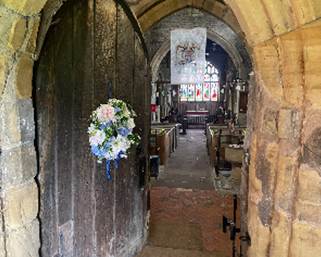
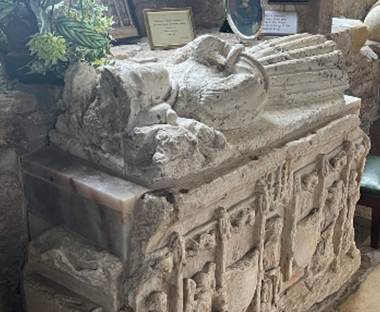
The
Church of St Helen and the Holy Cross and the Chapel of St Nicholas, the
heart of the Neville lands, and place of the alabaster effigy of the young
son of Richard III |
Scene 4 – Wider Wanderings
The
Merchants of York
It was
probably the descendants of Johanne de
Farndale of Egton and Rosedale, who we
have already met, who settled in York. His son, Johannis
became a saddler and was made freeman of York in 1363. His grandson’s William and Nicholaus
moved further south to Doncaster, while his third grandson Johannis
stayed in York where he inherited his father’s freemanship
of that city. His great grandsons through the York family were probably three
brothers, John,
Henry and William, who
were archers in the Scottish Wars.
His great great grandson was John Fernedill, a
butcher who became freeman of York in 1408, who probably traded in the Shambles, the
medieval street where butchers operated. The Farndale Merchants of York traded there in the
fourteenth and fifteenth centuries and were the York Line of Farndales. This line
too were not ancestors of the modern Farndale family, but their brothers who
moved on to Doncaster,
probably were.
We will
return to the merchants of York in Act 9.
The
Farndales of Doncaster
William and Nicholaus
may have been sons of Johannis, the
saddler of York, and
they moved further south to Doncaster,
a medieval melting pot in the place of Roman Danum where the Roman road
north had crossed the river Don over a millennium previously. William became
chaplain and then vicar of Doncaster
Parish Church and a person of influence there. He survived the Black Death and held lands at Loversall, south of Doncaster. His
brother, Nicholas, paid the 4d Poll Tax of 1379 which sparked the middle class
Peasant’s Revolt. The story of the Doncaster Farndales,
to whom we shall turn our attention in Act 11, leads to the
story of the modern Farndales. Two centuries after William and Nicholaus,
a family emerged at Campsall, north of
Doncaster, in the heart of Barnsdale where the Robin Hood legends grew, and that
family moved north of the North York Moors into Cleveland, where the modern
family became established.
The Early
Pioneers
So those who
first described themselves as de Farndale, were those adventurous and
pioneering soles, who ventured out from Farndale to new places. As we are
introduced to our later pioneer ancestors, who ventured to Australia, Ontario, Newfoundland, Alberta, USA and New Zealand from the nineteenth
century, we might reflect that we come from a stock of pioneers and adventurers
from the Middle Ages. It must have been just as bold a move for the thirteenth
and fourteenth century Farndales to venture across the Vale of York, as for the
nineteenth century Farndales, who later emigrated across the world.
Go Straight to Act 9 - Merchants
or
|
This
is a new experiment. Using Google’s Notebook LM, listen to an AI powered
podcast summarising this page. This should only be treated as an
introduction, and the AI generation sometimes gets the nuance a bit wrong.
However it does provide an introduction to the themes of this page, which are
dealt with in more depth below. |
|