Act 11
The Vicar of Doncaster
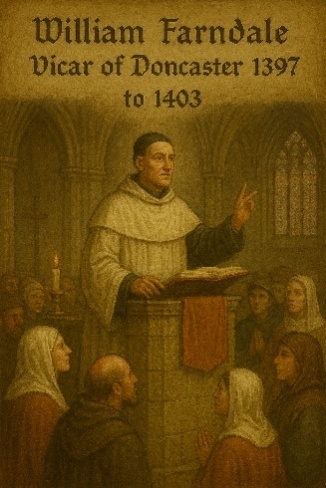
The story of the Family of William
Farndale, the Fourteenth Century Vicar of Doncaster
Having left
Farndale and crossed the Vale of York to York and Sheriff Hutton, our family
next found themselves in medieval Doncaster. For two centuries the direct
ancestors of the modern family seem to have lived there, shifting their centre
of gravity a little north into Barnsdale Forest and Campsall, a place with deep
historical links to the legend of Robin Hood.
Scene 1 – The Vicar of Doncaster
Medieval
Doncaster
Modern
Doncaster is strongly characterised by its industrial past. However the
Doncaster to which we now turn our attention was a very different place. It was
the place of the significant Roman Fort of Danum. After the Norman
Conquest, Nigel Fossard had built a Norman Castle[1]. By the thirteenth century,
Doncaster was a busy town. In 1194 Richard I had given the town recognition by
bestowing a town charter[2]. There was a disastrous fire in 1204
from which the town slowly recovered.
In 1248, a
charter was granted for Doncaster Market to be held in the area surrounding the
Church of St Mary Magdalene, which had been built in Norman times. But over
time the parish church was transferred to the church of the old Norman castle,
the castle which by then was in ruin. The new parish church was the original
Castle Church of St George.
During the
14th century, large numbers of friars arrived in Doncaster who contrasted to
the settled monks by their itinerant lifestyles. In 1307 the Franciscan friars
or Greyfriars arrived, followed by Carmelites or Whitefriars.
|
The
History of Doncaster to 1500 The History of pre industrial
Doncaster from its Roman inception as Danum to the end of the
sixteenth century |
|
Medieval Doncaster and its minster
The
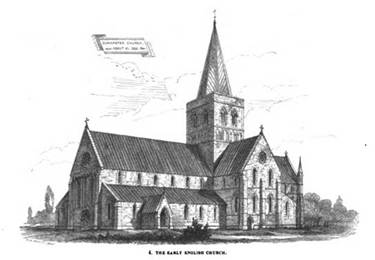
Victorian Parish church (later Minster) of Doncaster rebuilt in 1853, but on
the site of the earlier Parish church of which William Farndale was chaplain
and later vicar in the years after the Black Death |
William
Farndale
It is in
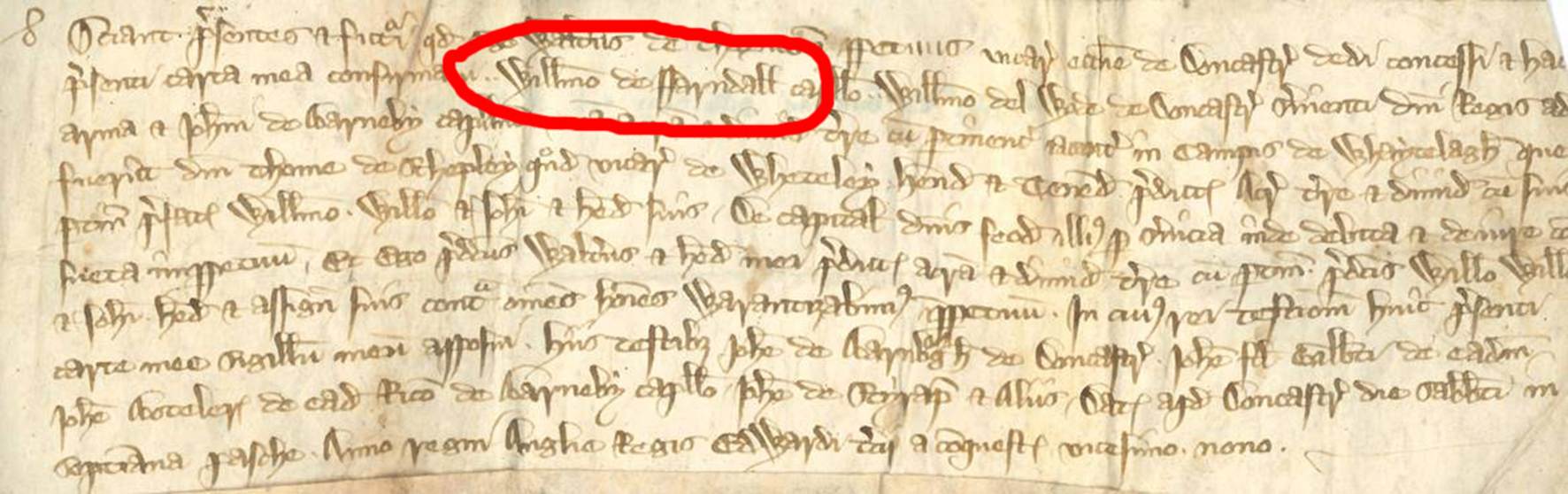
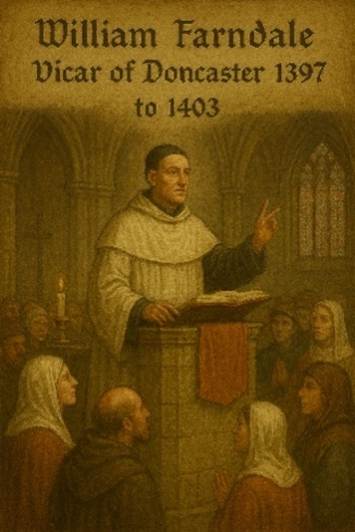
this setting that we meet William Farndale. We first see his name in a grant of
land in Latin by Walter de Thornton, the vicar of Doncaster, and William de
Farndell, his chaplain on 11 April 1355[3]. The text translated from Latin
reads Grant. 1) Walter de Thornton, vicar of Doncaster. 2) Wm. de Farndall, chaplain. Wm. del Wode
of Doncaster, King's serjeant at arms. John de Barneby, chaplain. (1) to (2)
1½a. late belonging to Sir Thos. de Schepley, late vicar of Whaytelagh,
in Whaytelagh. Witn.: John
de Barnburgh of Doncaster, John Boteler, etc. At Doncaster, Sat. in Easter
week, 29 Edw. III. Seal.

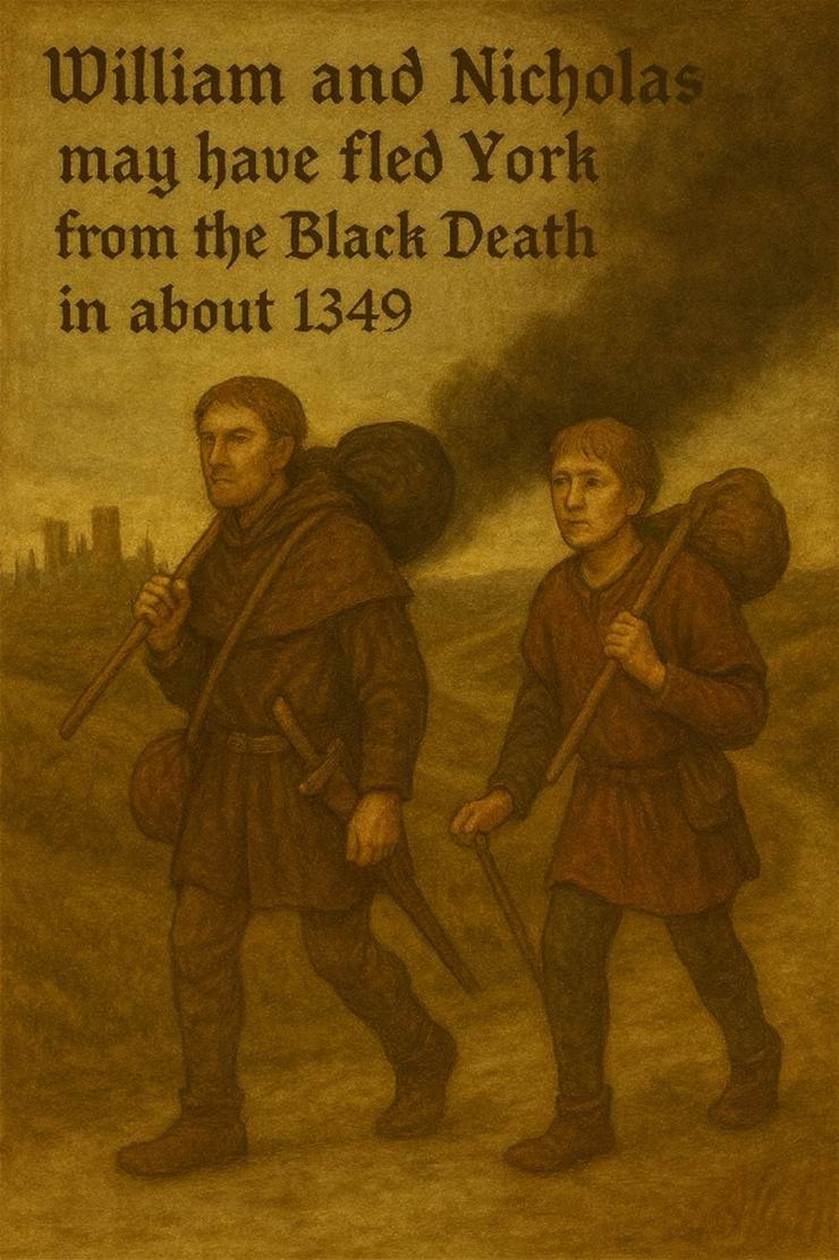
Perhaps William may have been about twenty then, so perhaps he
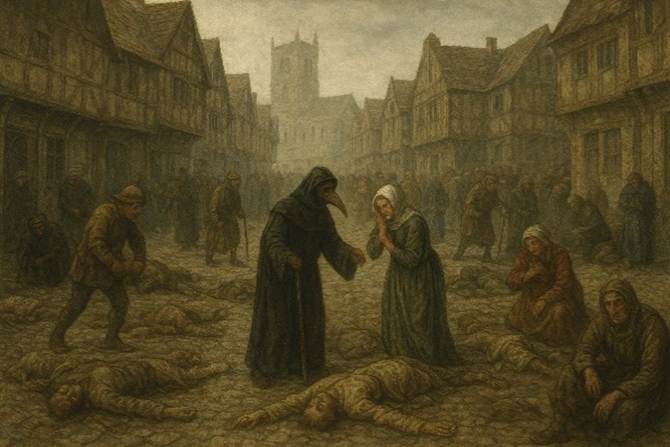
was born in about 1335. The Black Death
had ravaged Doncaster from about 1349, and its population had been reduced to
about 1,500. So William must have survived the Black Death. Perhaps it was his
survival of those horrors that was his path to the church.
|
c 1330 to c1415
The Chaplain and Vicar of Doncaster, who held lands at Loversall,
of whom we have significant records |
|
|
We then spot
William of Doncaster again in the patent
rolls of 7 December 1368, when Robert Ripers transferred five acres of land
at Loversall, just south of Doncaster,
to Sir William Farndale, still a chaplain[4]. The term sire was used as an
address to religious men such as priests. It doesn’t denote a knight in the
context it was used.
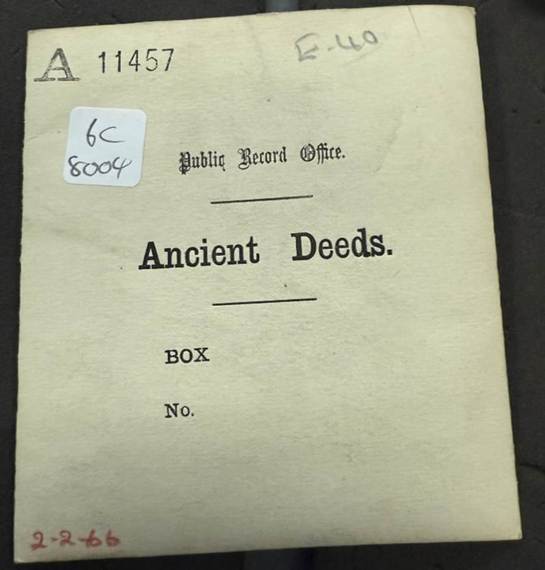
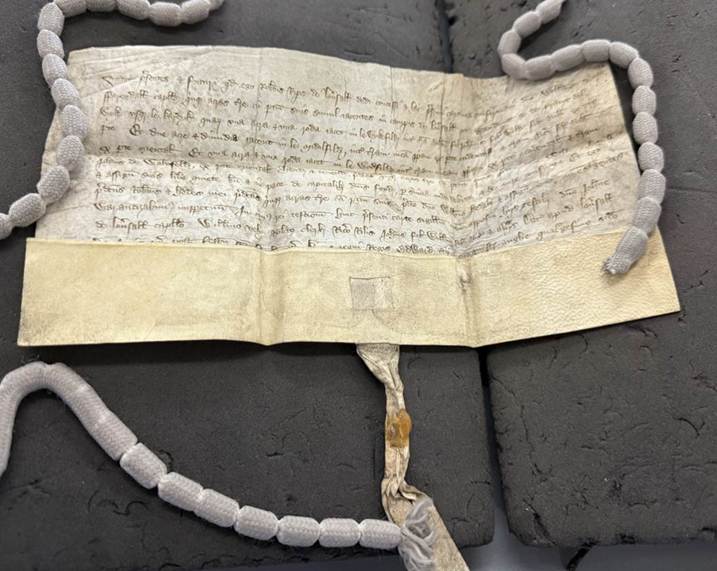
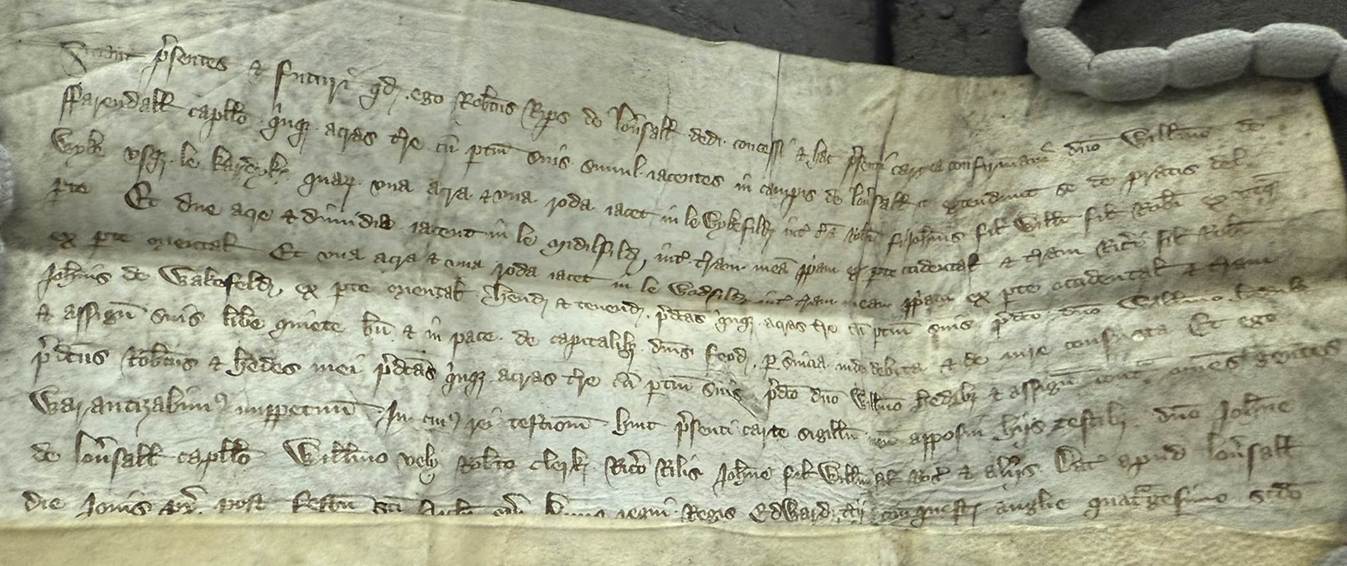
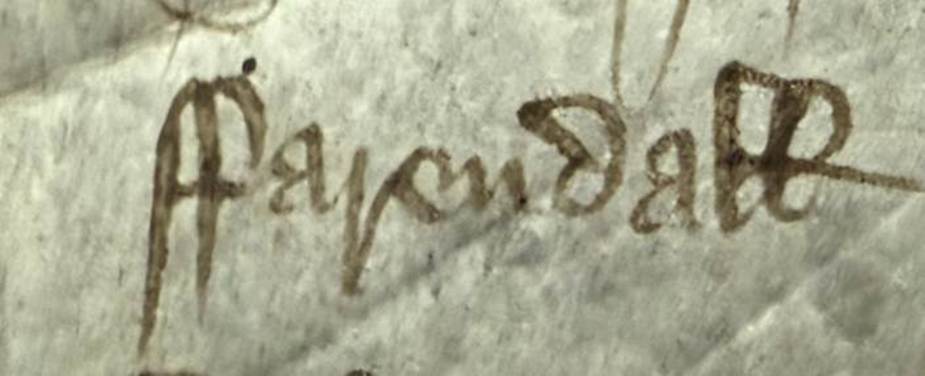
The Deeds
reads Transfer of land; ‘Know men present and to come that I Robert Ripers
of Loversall have given, granted, and by this my present charter confirmed to
Sir William Farndale, chaplain, 5 acres of land with appurtenances lying in the
fields of Loversall, extending from the meadows of the Wyke to the Kardyke, of which 1 acre 1 rood lie in Wykefield
between the land of Robert son of John son of William, son of Robert on both
sides. And 2 1/2 acres lying in the Midelfild between
my own land on the west and the land of Richard son of Robert on the east. And
1 rood lying in Wodfild between my own land on the
west and the land of John of Wakefield on the east. To have and to hold the
said 5 acres of land with appurtenances to the said William and his heirs and
assigns, freely, quietly, well and in peace, from the chief lords of the free
by the services then owed and customary by right. And I, said Robert, and my
heirs, will warrant the said 5 acres with appurtenances to the said Sir
William, his heirs and assigns against all men for ever. In witness whereof I
have affixed my seal to this present charter. These being in witness; Sir John
of Loversall, Chaplain; William Vely, Robert Clerk, Richard Rilis, John son of
William son of Roger and others. Given at Loversall on Thursday after the Feast
of St Nicholas, 42 Edward III. (7 Dec 1368).
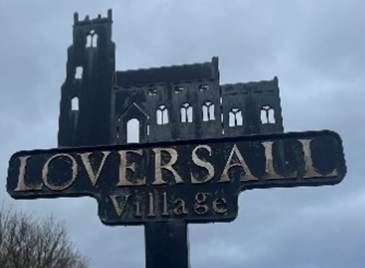
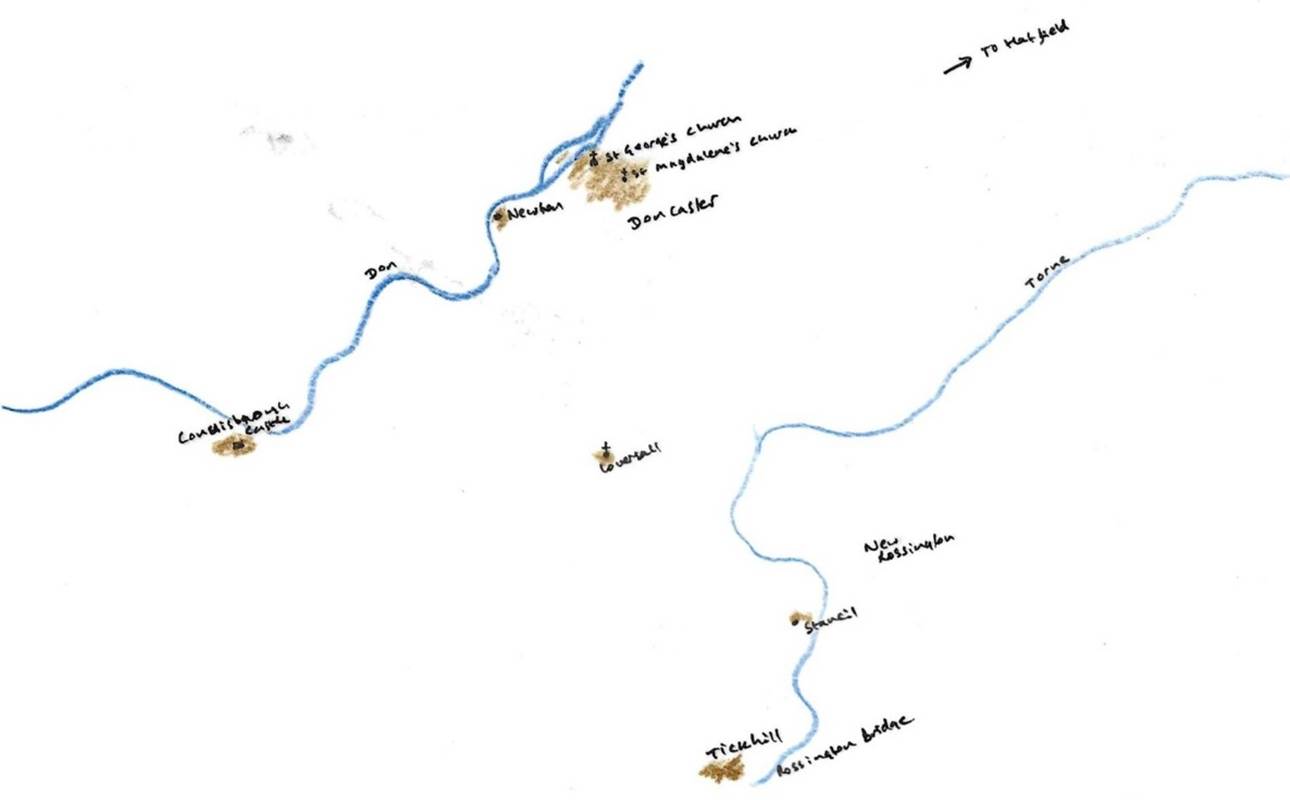
Loversall is
a parish two kilometres south of Doncaster.
|
The history of a small village
and church just south of Doncaster, where William Farndale held land |
|
|
Sir William
de Farndale received a share in a messauage and
land, with goods and chattels, at Waytelagh,
Doncaster (presumably Wheatley a district in north Doncaster) from a grant
made on 14 January 1370 by Joan, widow of Thomas Cote. In the same year he
received another grant of an acre and a half at Longneuton
(presumably Newton in west Doncaster). Deed No 20, AD 1370, Thursday after
St Agnes, V & M. Grant by Robert Denias and Richard de Barneby chaplain to
Sir William de Farendall, chaplain, of one acre and a half in Longneuton.[5]
William then
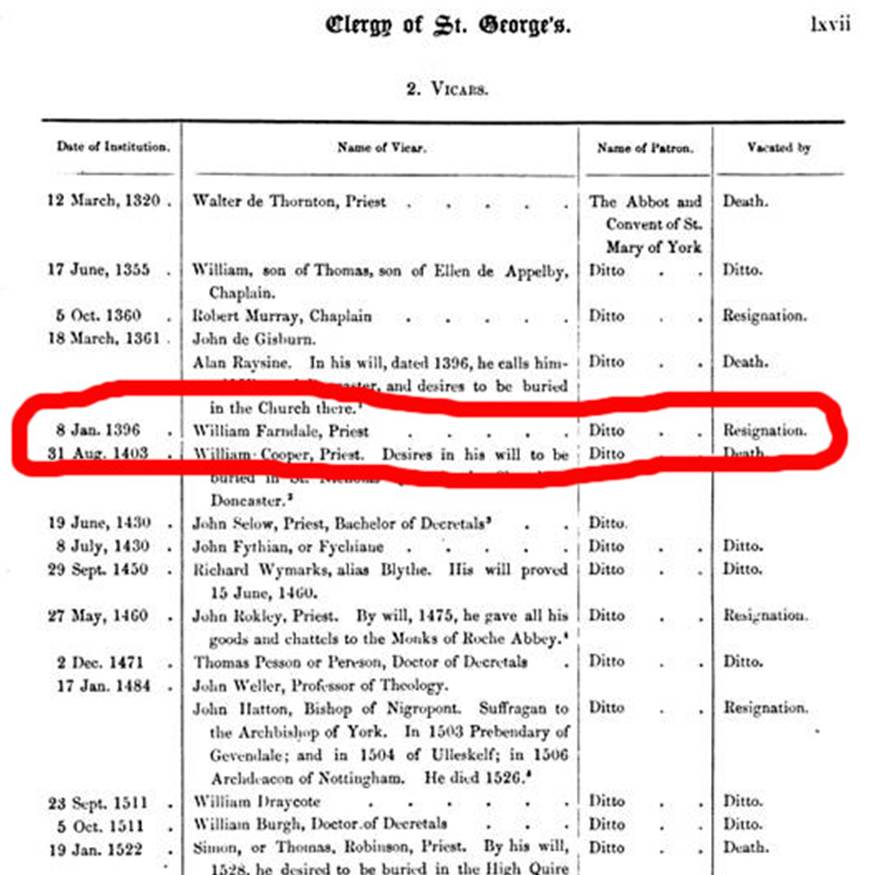
became the Vicar of Doncaster from 8 January 1397, aged about 61, to 31 August
1403, aged about 68, when he resigned[6].

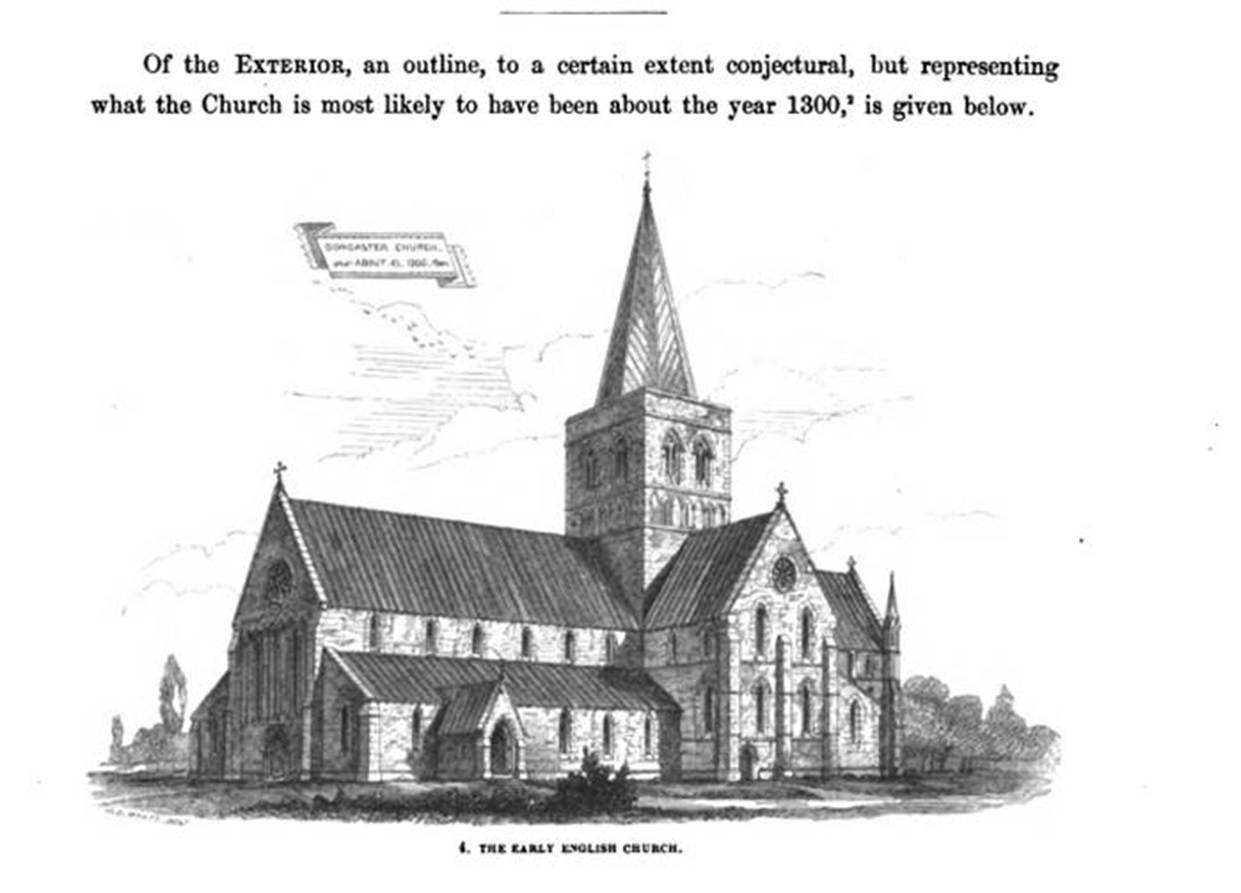
So William
was the vicar of the early Church of St George’s at the end of the fourteenth
century. Whilst not yet of the stature of the impressive Doncaster Minster of
St George’s, which was rebuilt on the site after a fire destroyed the early
church in 1853 and which was given Minster status in 2004, it was even by then
an impressive church.
William
transferred his land at Loversall to John Burton in 1402. Know men present
and to come that I, William Farndalle, Vicar of the Church of Doncastre, have given, granted and by this present charter
confirmed to John Burton of Waddeworth, his heirs and
assigns 5 acres of land with appurtenances lying in the fields of Loversall.
Viz, those 5 acres of land which I had as gift and feoffment of Robert Ryppes
of Loversalle and which extend from the meadows of
the Wyke to the Kardyke as the charter drawn up for
me by Robert Ryppes more fully sets out. To have and to hold the said 5 acres
of land with appurtenances to the said John Burton, his heirs and assigns from
the chief of the lords of the fee by the services thence owed and customary by
right. And I William Farndalle and my heirs will warrant the said 5 acres of
land with appurtenances to the said John Burton, his heirs and assigns against
all men for ever. In witness whereof I have affixed my seal to this present
charter. These being witnesses; John Yorke of Loversalle,
Robert Oxenford of Loversalle, William Ryppes of the
same, John Millotte of the same, William Clerk of the same and many others.
Given at Loversalle 6 April 3 Henry IV. (6 April
1402). [7]
In 1403 we
see the installation of William Couper as the vicar of Doncaster, on William
Farndale’s resignation[8].
Scene 2 – The Vicar’s Brother
Peasants
Revolt
At about
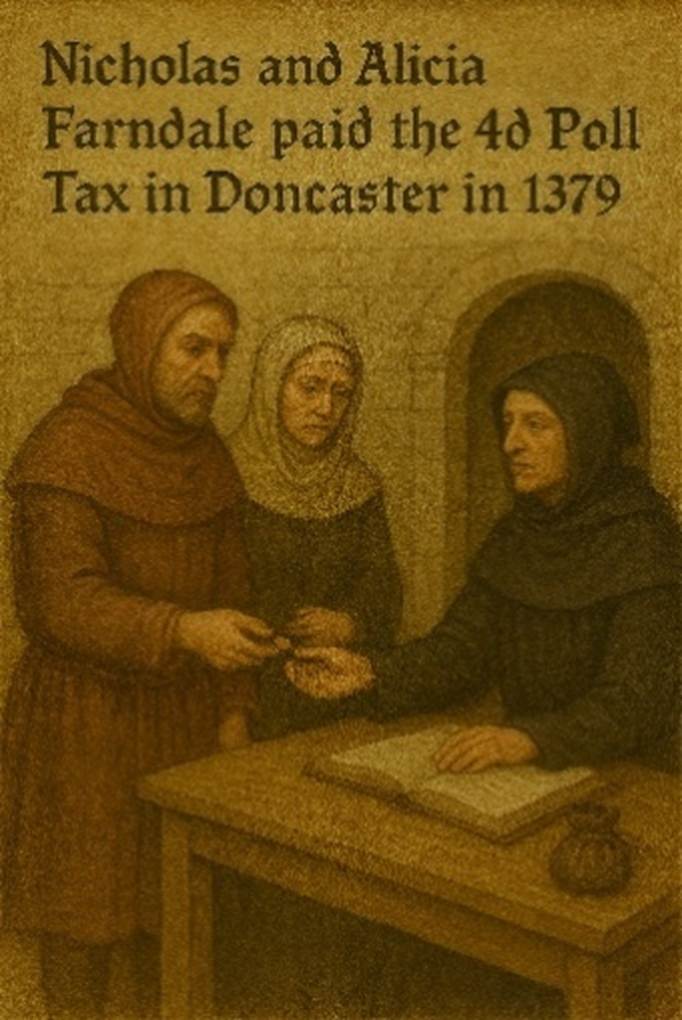
this time, Nicolaus de ffarndale, whose wife was
Alicia, paid 4d in the second of three impositions of a poll tax in 1379 at Doncaster[9].
|
1332 To 1400
Nicholas paid the 4d Poll Tax of 1379 which led to the Peasant’s
Revolt |
It seems
likely that Nicolaus
was William’s
brother.
It was these
three poll taxes imposed in the early reign of Richard II, the son of Joan the Fair Maid of Kent of Stuteville descent, and the Black
Prince, that led to the Peasants’ Revolt in Kent and Brentford in 1381. In
reality this was the revolt of a new middle class disgruntled at barriers to
their aspirations.

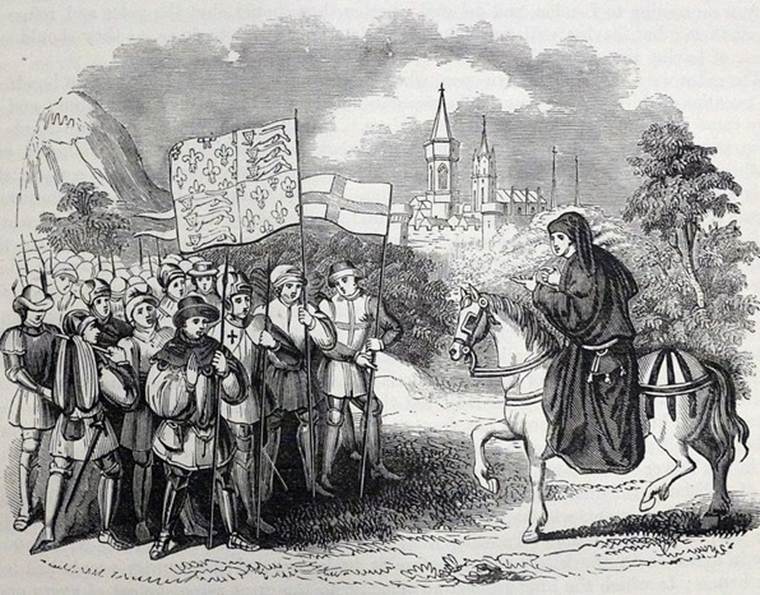
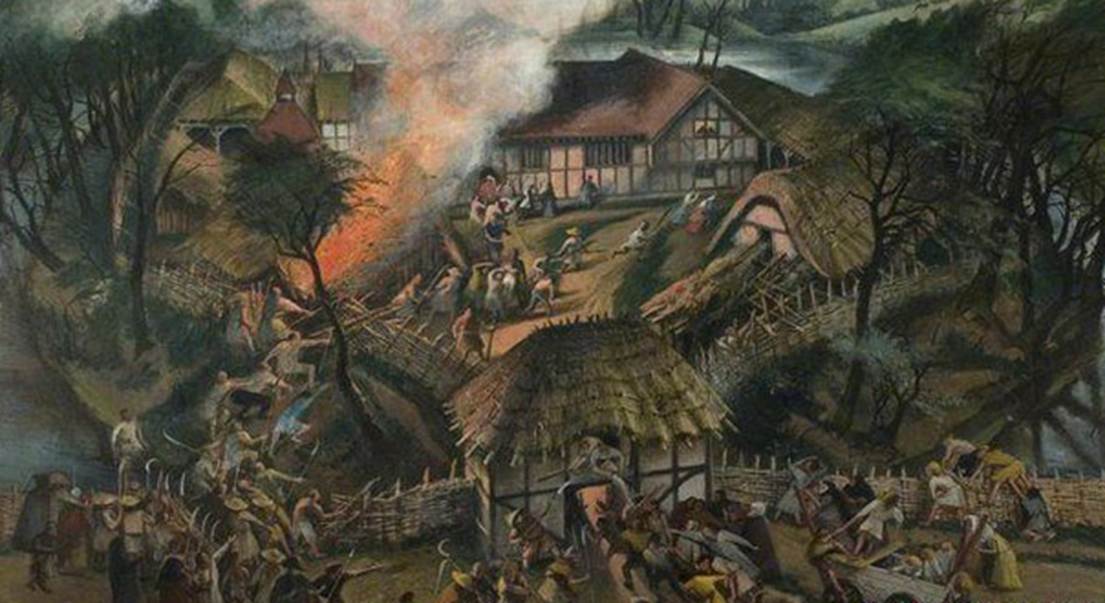
The
Peasants' Revolt of 1381 manifested in Yorkshire as a series of urban
disturbances and riots against the ruling elite and royal tax officials in
towns like York, Beverley, Scarborough, and Pontefract. In Beverley, for
example, riots arose from anger among the lesser sort, craftsmen and
traders, such as butchers, towards the richer merchants. In York, the
mayor, John de Gisborne, was removed from office. In Scarborough, local
government members were deposed, and a tax collector nearly lynched. The unrest
was partly a reaction against the power of John of Gaunt, Duke of Lancaster and
the king's uncle who was an unpopular figure blamed for government corruption
and military failures. His Spanish wife, Constanza of Castile, had to seek
refuge at his Yorkshire castle of Knaresborough for safety during the upheaval.
Shortly after meeting the protestors in London, by 22 June
1381 Richard II was showing no sympathy for the rebels. You wretches detestable on
land and sea, you who seek equality with lords are unworthy to live. Give this
message to your colleagues: rustics you were, and
rustics you are still; you will remain in bondage, not as before, but
incomparably harsher. For as long as we live we will strive to
suppress you, and your misery will be an example in the eyes of posterity.
However, we will spare your lives if you remain faithful and loyal. Choose now
which course you want to follow.
The
emergence of the Robin Hood legends
at about this time was likely to have been inspired in part by the
contemporaneous grievances of the new aspiring middle class which led to the
peasant’s revolt; in part by memories of long standing injustice. The Farndales
were after all descendants of the poachers of
Pickering Forest. They may not have taken kindly to being told, rustics
you were, and rustics you are still.
The record
in Doncaster then goes
silent until 1564, and there is more research to be done in Doncaster local
records.
Scene 3 – Barnsdale Forest
Campsall
Our radar
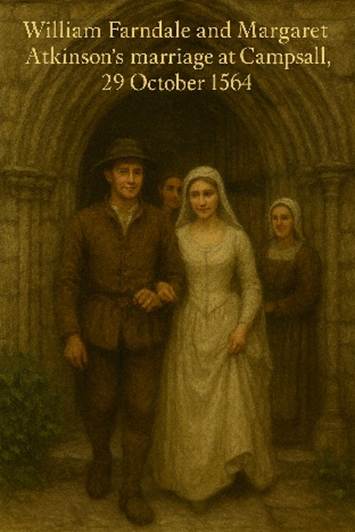
warms up again on 29 October 1564 when a wedding took place between a William Farndell and a Margaret Atkinson in the Church
of St Magdalene in the village of Campsall[10], which is only a few miles north of Doncaster.
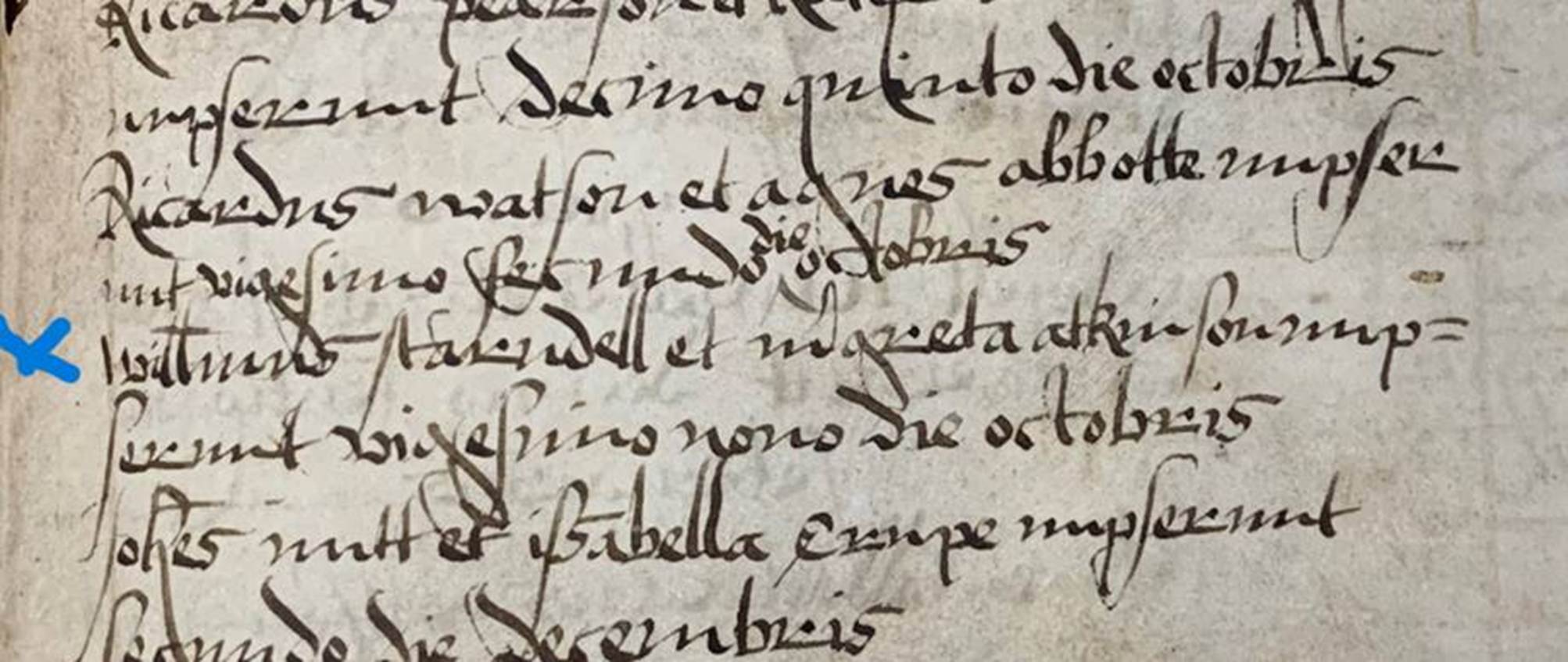
It seems
very likely that William Farndell who married in 1564 just north of Doncaster came
from the same line of Farndales as William Farndale, the vicar of Doncaster two
hundred years earlier. There must have been a generation or two between them.
It seems quite likely that William the Younger was descended from William the
Elder’s brother, Nicholaus de ffarnedale.
|
William and
Margaret (nee Atkinson) Farndale c 1539 to 24 January 1606
The couple who married at St Mary Magdalene Church in Campsall
north of Doncaster, and who emigrated to Cleveland and were buried in
Skelton. |
So it seems
reasonable to suppose that there was a family of modern Farndales’ ancestors
living around Doncaster
back to William the Vicar’s time, whose centre of gravity moved a little north
of Doncaster to Campsall
or its environs by the sixteenth century.
We see the
names William and Nicholas continue to be used by the main family line from the
sixteenth century. William was a well used name, but
the continuity with the environs of Doncaster and the continued use of the
names Nicholas and William adds to the evidence that it was from this Doncastrian family that modern Farndales descend.
Campsall is
a town which was then dominated to the west by the inaccessible and waterlogged
marches of the Humber levels and to the west, by Barnsdale Forest, an area
closely associated with the legend of Robin
Hood.
|
The history of the village of
Campsall north of Doncaster, where we find our ancestors in the sixteenth
century |
|
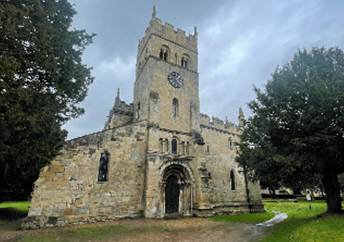
St Mary Magdalene Church, Campsall
The
church in Barnsdale forest of which the literary character of the Middle
Ages, Robin Hood, wrote I made a chapel in Bernysdale,
That seemly is to se, It is of Mary Magdaleyne, And
therto would I be. Nearby
sites associated with Robin Hood including Robin Hood’s Well at the side of
the A1 |
By the fifteenth century the villagers
at Campsall north of Doncaster, had formed a fraternity, and hired
their own priest to pray for the parishioners living and the souls departed.
Over time the Church dedicated to St Mary
Magdalene at Campsall came to resemble a collegiate church. Alongside the
vicar and deacon were also chantry priests in the vicinity who sang masses for
the repose of the souls of individuals who left endowments to the church. The
chantry priests were extras to the parish clergy and may have
been involved in teaching. It has been suggested that the first
floor chamber above the vaulted west bay of the south aisle at St Mary
Magdalene, dating from the late thirteenth century, might have been a space
used for such a purpose.
The
emergence of the theologian Richard of Campsall (c 1280 to c 1350) suggests
a well established tradition of teaching in Campsall. Richard of
Campsall, or Ricardus de Campsalle, was a
secular theologian and scholastic philosopher at the University of Oxford.
Richard of Campsall’s surviving works include his Quaestiones
super librum Priorum analeticorum, “Questions about the book Prior
Analytic”; the Contra ponentes naturam,
“Against Nature”; On Universals, a short treatise on form and matter; Utrum materia possit esse sine forma, “whether matter can
exist without form”, and Notabilia de contingencia et presciencia Det, “Remarks on contingency and presceience”, all probably written about in about 1317 or
1318. In the Questions on the Prior Analytics Richard of
Campsall proposed that training in logic was the basis for all other sciences.
He discussed the concepts of syllogism, consequences, and conversion. He argued
that the crux of logical thinking was the syllogism and knowledge of consequences
and conversion was necessary for the study of syllogism, especially for
converting imperfect syllogisms into perfect syllogisms. In
supposition theory, Campsall proposed views usually first attributed to Ockham,
including his distinction between simple and other types of supposition.
This
was deep stuff. Campsall must have been the crucible of some serious
intellectual debate to have produced a person such as Richard.
Most
English writers of the fifteenth century had at least some association with the
Church. Those who captured the rymes of Robehod into
the written word were therefore likely to have had some ecclesiastical
background.
The
earliest references to Robin Hood are more associated with Barnsdale Forest than
Sherwood. Many of the names given to geographical locations in Sherwood Forest
were given in the nineteenth century. Some names though are much older, such as
Barnsdale’s Stone of Robin Hood, about 500m north of Robin Hood’s Well, which
was mentioned as a boundary marker in about 1540
by John Leland, in his Itinery in or about the years 1535-1543.
This is
where we remind ourselves of our more distant ancestors who were outlaws in Pickering
Forest, reminiscent at least of the
Robin Hood stories. Robin Hood is largely a creature of ballads composed
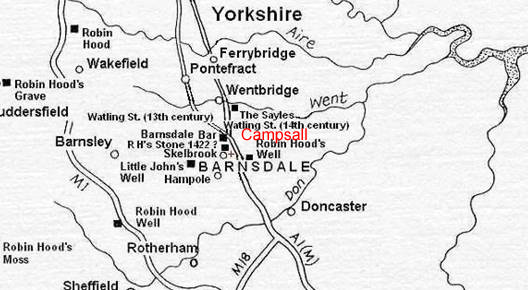
from the fourteenth century at the time of William Farndale, the vicar. A map
showing the geographical locations associated with Robin Hood reveals that Campsall is in its heart. Campsall was a centre of teaching from the
thirteenth century and quite likely to have been associated with the recording
of traditional stories.
The famous
fifteenth century ballad A Gest of Robyn Hode suggests that Robin Hood
built a chapel in Barnsdale that he dedicated to Mary Magdalene.
I made a
chapel in Bernysdale, That seemly is to se, It is of Mary Magdaleyne, And thereto wolde I be.
Given the
location of the Church of St Mary Magdalene at Campsall, this church has long
been associated with the church of Robin Hood repute, and it was here in 1564,
that William Farndell married Margaret Atkinson.
|
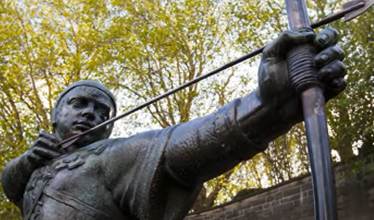
The legend of Robin Hood explored
for its Yorkshire roots, and the Farndale connection with the legends, first
as the class of poachers who gave rise to the inspiration, and later their
fifteenth century descendants who lived in the place where the stories
emerged |
So the
Farndale family found itself at the place associated with the fourteenth
century ballads which told of the exploits of Robin Hood, which must have been
strongly influenced by the tales such as those of our own Farndale ancestors,
who outmanoeuvred the sheriffs of Yorkshire in the forest of Pickering. There
have been many suggestions that the legend of Robin Hood may have its real
roots in Yorkshire.
Our family
story finds associations both with those who must have inspired the Robin Hood
stories, and those who started to tell those stories from the fourteenth
century.
|
How do William Farndale, Nicholaus de ffarnedale and his wife Alicia relate to the modern
family? It is not possible to be accurate about the early family tree, before the recording
of births, marriages and deaths in parish records, but we do have a lot of
medieval material including important clues on relationships between
individuals. The matrix of the family before about 1550 is the most probable
structure based on the available evidence. If it is accurate, the Doncastrian
Farndales were related to the thirteenth century ancestors of the modern
Farndale family, and might have been related to the York Line. Nicholaus’
own family settled in Doncaster, with his brother William Farndale the Vicar of Doncaster, and
he and his wife Alicia might be on the direct ancestral line of the modern Farndales. |
Go Straight to Act 12 – Arrival
in Cleveland
or
|
This
is a new experiment. Using Google’s Notebook LM, listen to an AI powered
podcast summarising this page. This should only be treated as an
introduction, and the AI generation sometimes gets the nuance a bit wrong.
However it does provide an introduction to the themes of this page, which are
dealt with in more depth below. |
|