The Farndale Family
Website
The Story of the Farndale
family
Farmers,
pioneers
and soldiers
One Family's Journey through
Two Thousand Years of British History
|
Return to the Home Page
of the Farndale Family Website |
The story of one family s
journey through two thousand years of British History |
The 84 family lines into
which the family is divided. Meet the historical
family and how the wider family is related |
Members of the historical
family ordered by date of birth |
Links to other pages with
historical research and related material |
The story of the Bakers
of Highfields, the Chapmans, and other related
families |
The Time
Traveller s Journey through North Yorkshire
The
History of the North York Moors, Ryedale, York,
Cleveland and beyond |
Welcome to the
website of the
history of the Farndale family
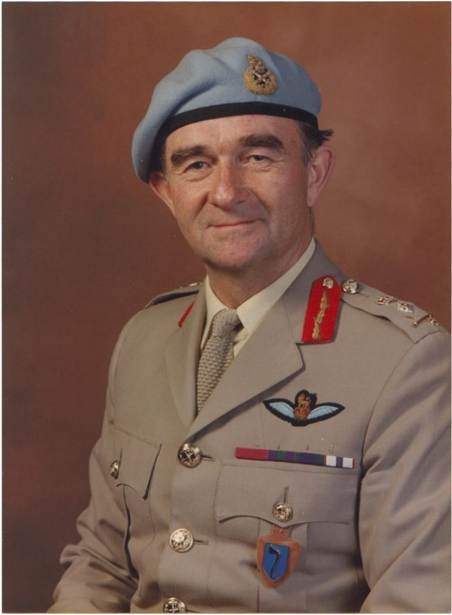
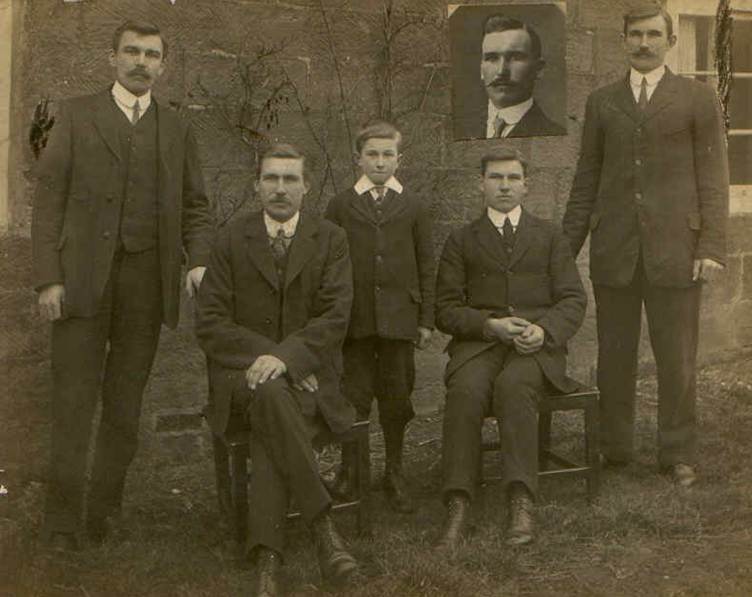
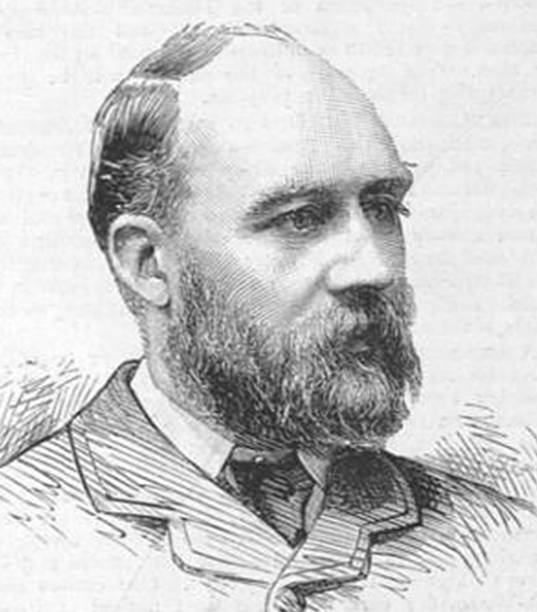
Martin
Farndale
The Farndales of Tidkinhow
1910
Joseph
Farndale 1842 to
1901, Chief
Constable of Birmingham
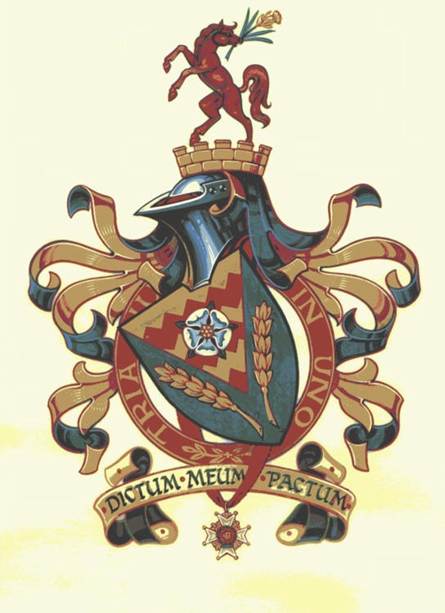
The Coat of Arms of General
Sir
Martin Farndale KCB
The Pioneer of the Farndale Genealogy John,
James,
Alfred,
William,
George,
Martin
(inset) Dictum
meum pactum ( His word is
his bond )
This
website tells the story of one family who travelled the path
of their nation's
history over two thousand years. We will meet individual
members of the family
from the mid thirteenth century and trace backwards through
the history of the
place from where they came, to the Roman and
Anglo-Saxon-Scandinavian ages. We
will meet poachers in Pickering Forest, inspirers of the Robin
Hood legends,
medieval soldiers, merchants of fourteenth century York and
the vicar of
fourteenth century Doncaster. We will meet mariners in Whitby,
travel to the
Spanish Main, and encounter the smugglers of Old Saltburn. We
will travel into
industrial Cleveland and through the heart of the dark satanic
mills of the
nineteenth century. You will be introduced to two influential
Victorian Chief
Constables, one of whom unearthed a dynamite conspiracy. We
will follow our
family emigrations to Australia, Ontario, Newfoundland,
Alberta, USA and New
Zealand. We will meet soldiers including many who served in
the First and
Second World Wars.
The
website
will guide you through a family story but will also provide
first hand individual
histories of folk who travelled through the national story. It
will tell the
histories of many places, particularly in North Yorkshire.
| The story of one family's
journey through two thousand years of British History. The
place to start |
|
The
84 family lines into which the family is divided. Meet
the historical family and how the wider family is
related. The place to find the family trees |
|
Members of the historical
family ordered by date of birth. The place to find
an individual |
|
There is now a branch of
this website which explores the history of the Baker
families of Highfields, Fenton and Hasfield, and the
Dods of Cheshire, connected through the marriage of
Peggy Baker and Alfred Farndale. The place to
explore the Baker family history |
Three
Purposes
of this Website
A
Family
Story. For Farndales and Descendants of
Farndales. The first
purpose of this web site is to make available genealogical and
historical
information about the Farndale Family to descendants of the
family, whether or
not they still adopt the surname.
A
Historical Journey. For Historians, Local Historians,
and those with an
interest in Yorkshire and its History. This is also the
story of one large
extended family and its footsteps through the history of
Britain, focused on
its Yorkshire origins, over two millennia. It invites you to
follow in the
footsteps of a related group of individual lives which tells
the story of
Yorkshire and of Britain through time.
A
Genealogical Journey. For Genealogists. This is
also a genealogical
journey which
pushes
the boundaries of genealogical research, to provide the whole
story of a
single family, reaching into medieval records. It provides
breadth and depth,
exploring how genealogy can tell the detailed story of a
family, brought alive
by stories through time.
Three
Ways
to access the information
The
Farndale Story. The
Farndale Story
is a hub which will provide orientation and guide you through
the story of the
family. This is the best way to absorb the story.
The
Family
Branches. The detailed research is provided through
individual pages
providing the detailed chronology of the Farndale family
divided into 84
family lines,
each of which has its own Family Tree. This will help you to
understand the
extent of the whole family.
The
Farndale Directory. The genealogical material was
originally structured by
Martin Farndale using the Farndale
Directory, a list of each individual in chronological
order by date of
birth. This is still available and is an easier way to find
individual members
of the historic family if you know when they were born.
Related
Families
and Records
The
Baker
Story. The website also tells the story of the
Baker Families of
Highfields, and of Fenton
Culvert and Hasfield
Court. This includes material about the
Hall Family of
Staffordshire, the Bellyse
of Staffordshire and the Dods
of Highfields.
The
Taylor
and Andrew families. You will find a genealogy of the Taylor and
Andrew families, for
a taste of our smuggler ancestry.
The
Lindsay
Family. You will find a genealogy of the
Lindsay family of
Alnwick.
The
Chapman
Family. There is also a simpler genealogical
exploration of the Chapman
Family
of Walter Chapman.
The
Coutts
Family. You will find a genealogy of a
maternal
line and paternal
line of the Coutts family.
The
Gordon
Family. You will find a genealogy of the Gordons
of Birkenburn.
The
Scott
Family. You will find a genealogy of a branch of the Scott
family.
The
Burnett
family. You will find a genealogy of the
Burnett family.
Regimental
Records. The material collected by Martin Farndale
also provides a
unique history of First
Regiment
Royal Horse Artillery 1950 to 1971 and the early years
of the Royal
Military
Academy Sandhurst.
The
History
of the Website
This
website is the culmination of work started by Martin
Farndale in 1956 and
continued by his son
Richard since 2000.
General
Sir
Martin Farndale KCB died in
May 2000.
During his lifetime, he carried out extensive research into
the Farndale family
history. This website has been compiled by his son, Richard
Farndale and
continues this research which is made available to anyone
who may be
interested. The site was first published on 6 November 2001,
and after a few
years off line, was re-published from March 2019.
After
nearly
75 years of work over two generations, the genealogy is
aspiring to be a
uniquely thorough genealogy of a non-aristocratic British
family, tracing the
family origins back to the Norman Conquest and beyond and
comprising a historical
record of a single wider family. Work continues but the site
already provides
significant depth and detail. What makes this record unique is
the thorough
research by Martin and collation of a wide breadth of direct
family records and
recollections, which can now be enhanced by twenty first
century search
methods. The Farndales descend from the folk
who made up the
engine room of British history. For the bulk of such
families, it is generally very
difficult to go back in time much beyond the sixteenth
century. However the
Farndales are privileged to have a locative name, which is
rooted to a place.
What is more that place is a relatively small, rural valley
in North Yorkshire,
which provides a uniqueness which helps research of early
medieval records. The
name therefore provides a unique beacon which makes
navigating the medieval
sources a possibility. This has made it possible to find
significant records of
individuals back to the thirteenth century. The history of
the place where we
know our ancestors made their home, enables us to take their
story further back
in time to Scandinavian, Anglo-Saxon, and Roman times. We
are extraordinarily
privileged to be able to see back that far.
Martin
Farndale
s historical research began: 1956
Site
First
Published by Richard Farndale (at www.farndale.info): 6
November 2001
Site
Second
Published by Richard Farndale (at
www.farndalefamily.co.uk): 6 December
2014
Site
Third
Published by Richard Farndale (at
www.farndalefamily.co.uk): 16 March 2019
Site
Last
Updated: 28 September 2026
Website
Philosophy
Our
forebears tend to be fondly remembered for a generation or two
and then
disappear from memory, except for slabs of stone that mark the
place of their
burial. However each of our ancestors, and their close
relatives were
individuals with their own rich stories. It is through their
stories, and the
history of their lives, that their memories can be preserved
within families
and communities of which they were once a part. Their stories
also provide us
today with a direct route into our own past and our
inheritance. Each
individual in the Farndale lines has their own separate
webpage. Stories are
not told about living members of the families, who simply have
a page as a
marker to find their way into their historic story. The
stories of historic
ancestors are fully narrated, to preserve the rich lives each
of them led. The
website is carefully researched from primary
and secondary sources with full referencing, to vouch
the narrative and
provide a means for further research.
Contact
Me
You
can
contact me at rcfarndale@hotmail.com.
Please
pass
on details of the site to Farndale relatives, those interested
in Yorkshire history,
historians and genealogists. It is free to use and intended as
a source of
material for all those who can benefit from it.
The
best
way to view this site
I
suggest that you read the Farndale Story on a PC or tablet. If
you can read the
story on a larger screen, that will be the best approach. An
iPhone will work,
but the text may not always align properly.
The
more
detailed research pages are primarily intended for use on a
PC. This is because
the site is intended for the provision of detailed
information, more suited to
the larger format of a PC. However, it does work quite well on
a tablet, such
as an iPad. On an iPhone it may sometimes tend to be distorted
with text not
always aligning, though otherwise it still works ok.
Personal
Information
I do
not
wish to record detailed information about living Farndales
unless I know that
you are happy for me to do so. This site is about historic
Farndales who are no
longer alive. As a rule, I only record the most basic publicly
available
information about living Farndales, primarily their year of
birth. This is so
that anyone who wishes, can find themselves in the directory
or in family
trees, and then use this site to explore their ancestry.
Where
I am
aware of public information about living Farndales, on their
own websites, or
public entries on the web which is available already, I have
sometimes included
that information on personal pages of living Farndales.
If
you find
your own entry on this website and would like me to include
more information
about your part of the family, please let me know. Please don
t provide me with
any information you would not wish to be publicly available.
I think it is very unlikely that I have recorded any
information on the site
which people would prefer to keep private, but if there is any
information on
this site which you would prefer not to appear, please email
me at rcfarndale@hotmail.com, and I will remove it.
About
the
Author
Richard
Farndale
BA (Hons), LLB (Dist), LLM (Dist), FRGS is a former artillery
officer and lawyer. He
was Chairman of the Chartered Institute of Arbitrators in
Scotland and
practiced dispute resolution in the Scottish courts and
arbitral tribunals. He
is a member of the Royal Historical Society, the Yorkshire
Archaeological and
Historical Society, the Cleveland & Teeside
Local
History Society and the Helmsley Archaeological and Historical
Society. In
retirement he is a passionate amateur historian and
genealogist who applies his
professional understanding of the legal rules of evidence to
the exploration of
his own family story, and Yorkshire's history, with an
interest in the Baker
family of Cheshire as well. Richard's father, the late General
Sir Martin
Farndale KCB, started to research the history of the Farndale
family in the 1950s
and Richard has continued that research since Martin died in
2000. The work is
a two-generation endeavour.
Published
articles
by the Author
Farndale,
Ricard,
(2024), Farndale and its Medieval Beginnings in Medieval
Yorkshire, the journal of the Medieval Section of the
Yorkshire
Archaeological and Historical Society, Issue 11, 2024. See pages
25
to 47 and pages
48
to 69.
Farndale,
Richard,
(2026), England's 1100th: Deira and the Idea of
Anglo-Saxon
Unification in Yorkshire Archaeological Journal,
1"6. https://doi.org/10.1080/00844276.2026.2692264.
Richard
is
currently working on a two-part series on the history of
Kilton, North
Yorkshire, home to the Farndales for 250 years, for Cleveland
History.
Peering back
into our deep
history
The village in fact was like a
deep-running cave
still linked to its antic past, a cave whose shadows were
cluttered by spirits
and by laws still vaguely ancestral. This cave that we
inhabited looked
backwards through chambers that led to our ghostly
beginnings; and had not, as
yet, been tidied up, or scrubbed clean by electric light, or
suburbanised by a
Victorian church, or papered by cinema screens.
It was something we just had time
to inherit, to
inherit and dimly know " the blood and beliefs of
generations who had been in
this valley since the Stone Age.
That continuous contact has at
last been broken, the
deeper caves sealed off for ever. But arriving, as I did, at
the end of that age,
I caught whiffs of something old as the glaciers. There were
ghosts in the
stones, in the trees, and the walls, and each field and hill
had several.
The elder people knew about these
things and would
refer to them in personal terms, and there were certain
landmarks about the
valley " tree-clumps, corners in woods " that bore separate,
antique,
half-muttered names that were certainly older than
Christian. When I sat at
home among my talking sisters, or with an old woman sucking
her jaws, and heard
the long details, I would look through the windows and see
the wet walls
streaming, the black trees bend in the wind, and I saw these
things happening
as natural convulsions of our landscape, and though
dry-mouthed, I was never
astonished.
(Lee, Laurie (1959), Cider
with
Rosie, Chapter 6, pages
104
to 105).
The past is a foreign country,
they do things
different there.
(Hartley, L P (1954), The
Go-Between,
Prologue, page
1).