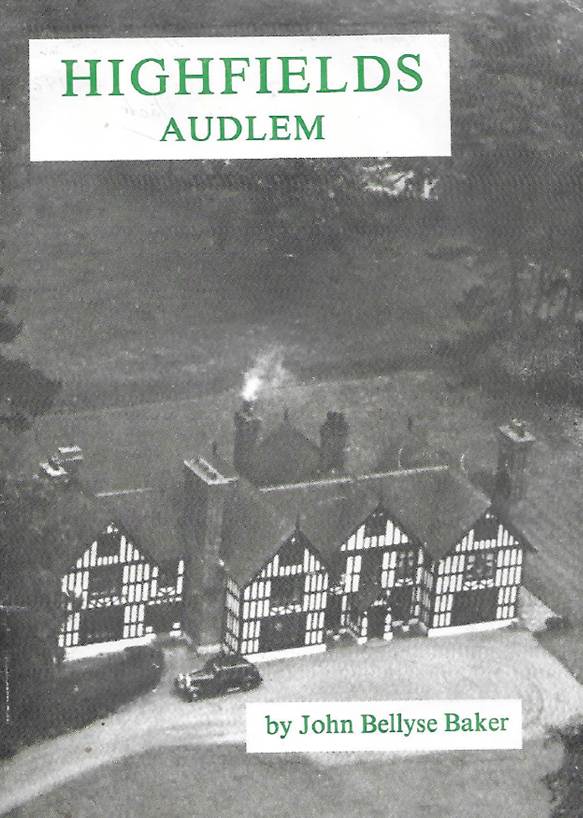
Highfields, Audlem, 16th
century home of the Dod and Baker families
1982 (out of print but reproduced
here)
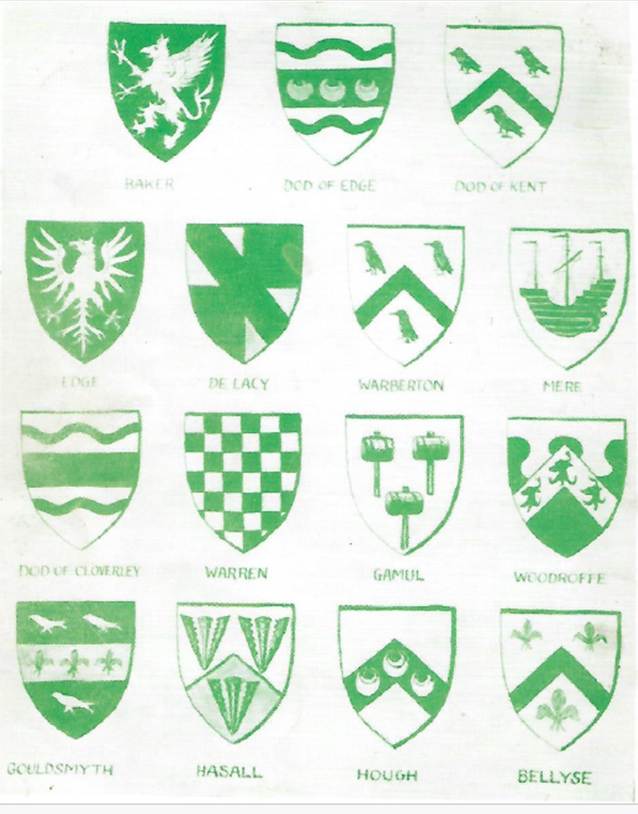
BAK00512
|
Return to the Home Page of the Bakers Family part of the website |
The Bakers of Highfields Story
The Story of the Dods and Bakers and of Highfields,
Fenton House and Hasfield Court. A journey through the history of Cheshire
and Staffordshire, an Anglo-Saxon nobleman who retained his lands after the Conquest,
pottery at Stoke on Trent, an encounter with Elgar, and the history of an
Elizabethan manor house at Audlem |
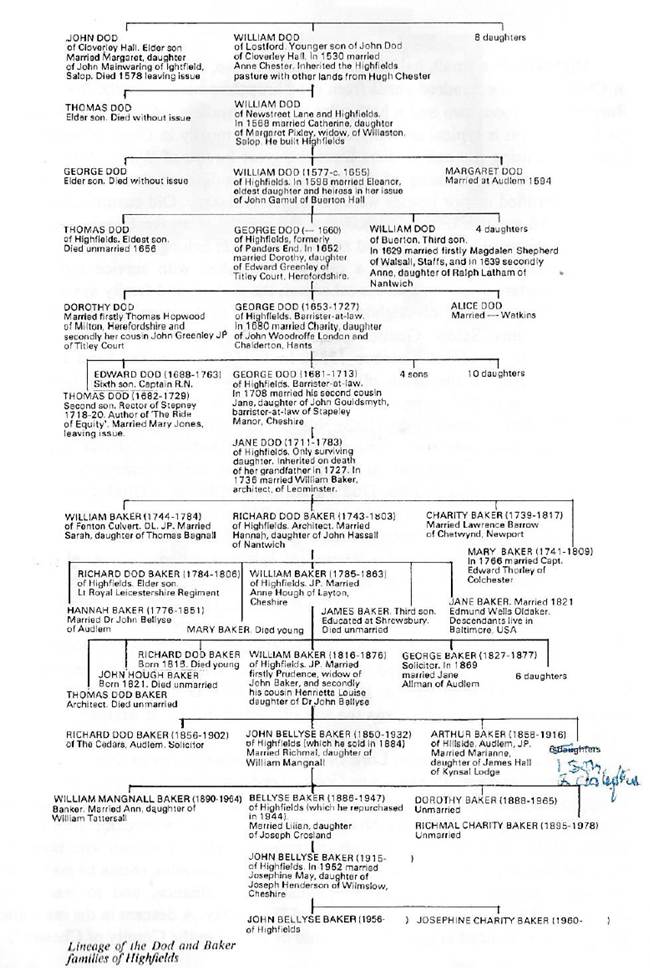
The family tree of the Bakers of Highfields |
The Family Tree of the Dods, predecessors to the
Bakers of Highfields |
The Bakers of Fenton House and Hasfield
Court
The Family Tree of the pottery Bakers of Stoke on Trent |
The Family Tree of the Bellyse Family |
The main part
of this website tells the story of the Farndale family from Yorkshire Descendants of Arthur Baker, the story of the
Farndale ancestry is told through the main part of this website You can also return to the Farndale
website home page |
The genealogy of the family of James Hall, linked to
the Baker family through marriage to Arthur Baker |
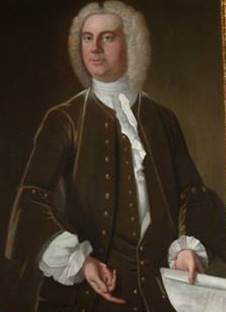
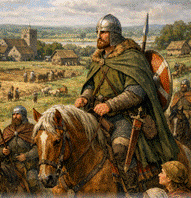
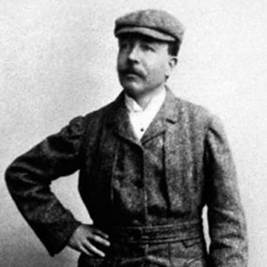
Highfields is a small, half timbered manor house, situated in the southern tip of Cheshire,
a few hundred yards from the Shropshire border. In the Township of Buerton, it
is about 2 ½ miles South of Audlem, off Woodhouse Lane. Its construction is
typical of many that were built, mostly in Cheshire and South Lancashire, using
the oak timber from the great forests of Wirral, Macclesfield and Delamere. The
coming of the Tudors had brought an end to centuries of fighting; fortified
manor houses were no longer necessary. Old customs, however, die hard. All the
half-timbered houses of the country, even the Elizabethan ones, are
elaborations of a structure and aesthetic that still belonged to the Middle
Ages. All adopt the medieval plan of a central dining hall with service rooms
and servants quarters at one end; at the other end,
the parlour and family apartments.
The first mention of Highfields is
in the deed between William Dod of Losford, County
Salop, Gentleman and Hugh Chester of Newstrete Lane,
County Salop, dated 1st October 1553. In this deed, William “and his heirs
forever”, inherit, on the death of Hugh and his wife Alice, various lands
and properties, some 500 acres in all. These include the pastures situated in
Woodhouse Lane known as the Highfields and Marestalls.
William Dod was the youngest son
of John Dod, Lord of the Manor of Cloverley. Cloverley Hall was, at that time, an early moated manor
house, built round an open courtyard. John Dodd’s great grandfather was Hugh
Dod who, in 1418, married Agnes, daughter and heiress of Roger de Cloverley,
from whom he inherited the estate of Cloverley.
Hugh's father, John, had married Johanna, the daughter and co-heiress of John
Warren of Ightfield, inheriting through her the
adjoining Calverhall lands. The Ightfield
estate went to William Mainwaring of Peover who had
married Johanna’s sister, Margaret. This John Dod, referred to in old documents
as John Dod of Calverhall, was the great grandson of
Roger Dod of Edge, near Malpas (the Edge Hall estate is still owned by the
Wolley Dod family). The Dods had obtained the Edge property when Hova Dod married the daughter and heiress of Edwin, Lord of
Edge. Hova Dod (or Dot as the name appears in some
documents) was the son of Cadwgan Dot of Malpas. To quote from A Genealogical
and Heraldic History of the Commoners of Great Britain and Ireland: “Dot,
the Saxon Lord of sixteen manors, either exclusively, or of a considerable
portion thereof was joint Lord of Cholmondeley, Hampton, Grappenhall and two
thirds of the Bickerton with this very Edwin. Dot was ejected from all his
manors (after the Norman conquest), and the circumstance of the heiress of the
relics of Edwin 's lands matching herself with a man who bore the name of one
so closely connected with her apparent ancestor seems to make this marriage the
results of an old family friendship and alliance, and to lead to a deduction of
Cadwgan Dot from the Dot of Domesday. A descent in the male line from a Saxon,
noticed in that record, would be unique in the county of Chester.”
To return to Highfields. As
already mentioned, William Dod of Losford (presumably
Lostford, near Tern Hill) inherited various lands
including the pastures known as Highfields and the Marestalls
from the Chester family in 1553. This deed is a recognition of right in which
William Dot received five hundred acres including a house in Woodhouse Lane.
There is no payment involved, so one can only assume that William’s wife, whom
we know in deeds as “Anne”, was the daughter and heiress of Hugh and Alice
Chester. As the Highfields is referred to as a “pasture or close”, it
seems that the house did not then occupy the site. In Camden 's Britannia
of 1695, Highfields is marked, also Maer Houses, where Mere farm now stands in
Woodhouse Lane. Could this be the Marestalls referred
to in the document?
Four years later, in 1557, William
made the estate over to his son, William Dod of Newstrete
Lane “in consideration of £3”. The son, William, would appear to be living with
his grandfather, Hugh Chester (his grandmother had died) perhaps helping him to
manage the estate. The next document to survive is a marriage settlement of
1568, between William Dod of Newstrete Lane and
Margaret Pixley, of Willaston, Shropshire, Widow. In
return for making over various parcels of land to his future wife, Catherine
and any children of the marriage in the event of his death, William received a
dowry “£56.13.4 by installments, to be completed
at the feast of Saint Michael 1569”. At the time of their marriage, he
further received “one bed” and “such decent apparel as shall be
thought decent, meet and convenient for the set Katharin.”
Hugh Chester was still living in Newstreet Lane. It seems probable that William and Katharin
moved to Woodhouse Lane after their marriage. Later, probably in 1585, they
built Highfields on “the Highfields pasture”. Certainly
their elder son, William, was baptised at Audlem and, in 1598, married Eleanor,
the daughter of John Gamul, of Buerton Hall, Lord of that manor. The following
year William’s father died and the young couple
settled at Highfields. They added the oak panelling in the best parlour and the
very fine carved fireplace, with the initials and date, WD 1615.
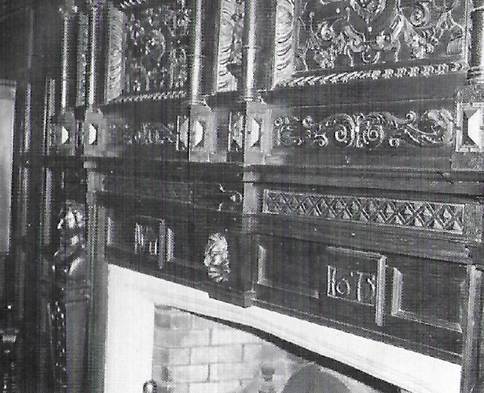
Part of the beautiful carved oak
mantelpiece in the oak room, bearing William Dod’s initials and the year 1615
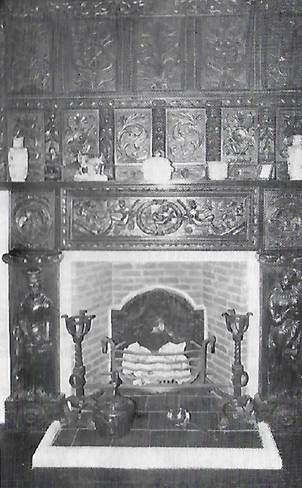
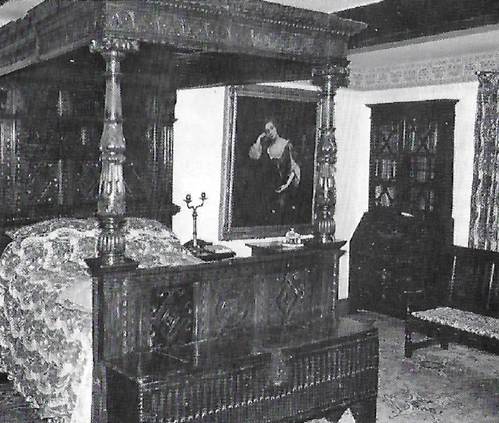
Fireplace in the main bedroom, The
magnificent four poster in the main bedroom
In which Prince Rupert, of Civil
War fame, is reputed to have slept
The coming of the civil war
brought great tragedy in the district. In 1641, William, now over 60, was one
of the principal collectors of a subsidy for the use of King Charles I. Persons
whose land or goods exceeded £1 in value were assessed at 8s in the £.
William’s elder son was Thomas, who
made his will in 1652. In this will he, being unmarried, left Highfields to his
brother, George of Penders End, Buerton, on condition that his father shall
continue to live there. William had sold his Buerton estate to George for £200,
in 1643 and George presumably built Penders End, which is not mentioned in that
document. It seems likely that William made Highfield over to Thomas at about
the same time.
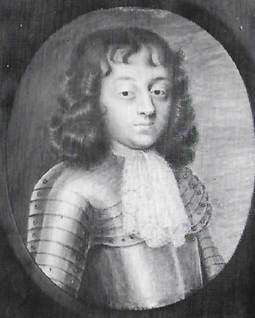
A miniature of George Dod
(1653-1727) in armour, which is still preserved
The year before Thomas Gamul died;
citizen and grocer of London, brother of William Gamul of Buerton Hall and
brother-in-law of William Dod. In his will he
entrusted £500 to William Dod, with his neighbours, Captain William Massie of
Moss Hall and Hugh Hassall, both of Audlem, “where” says Thomas Gamul “I
was born”. The money was to be used to build “a convenient schoolhouse
and a dwelling house for a schoolmaster in the town of Audlem.” This was to
be Audlem Grammar School. The executives of the will were Randle Wilbraham, of
Nantwich and Francis (later Sir Francis) Gamul, the Royalist commander at
Chester and nephew of the late Thomas. His home, Gamul House in Watergate, has
been restored in recent years. The year following the proving of the will a
petition was presented to the House of Commons by the children of William Dod:
Thomas, George, William junior and sister Alice, all beneficiaries under the
will, stating that Randle Wilbraham, one of Thomas Gamul’s two executives had
died and that his (Randle’s) executors, Richard Wilbraham, Gregory Markham and
Ralph Bolton, refused to deal with Gamul’s estate (presumably on account of his
nephew’s Royalist activities). The petitioners had exhibited a bill of
complaint in Chancery for the recovery of Gamul’s bequests,
but were hindered by the fact that Francis Gamul still survived as
executive. They sought remedy, pleading that they “have been imprisoned and
suffered very much in their liberties and estates for adhering to the
Parliament.” The House granted their request. This is a quite extraordinary
document, considering that their father, two years earlier, had been a
principal collector for money for the use of Charles I! Subsequently, after the
Restoration in 1660, George Dodd, mentioned in the petition and now of
Highfields, was Head Constable of Nantwich, collecting a subsidy for Charles
II. The Dods of this period appear to have displayed many of the characteristics
of the Vicar of Bray!
In 1648 William Dod was appointed
overseer for the building at the school and a plot of land was marked out of
the Barn Croft, adjoining Audlem Green near Vicarage Bank. However, perhaps
because of the difficulties of collecting Gamal's legacy, work stopped for four
years, to be resumed in the summer of 1652. It was not ready for occupation
until the end of 1655 when the final accounts are drawn up by William Massey and
George Dod, acting for his father, for Gamal 's legacy, now worth £802. There
is also mention of a legacy of £30 from his late brother, Thomas Dod. George
did not outlive his father; the estate passed to his only son, also George, who
was to own Highfields for the next 67 years. George matriculated from
Brasenose, Oxford in 1670, aged 17. He was admitted to the Middle Temple, June
26, 1672 and called to the bar, May 30, 1679. During
this time Highfields appears to have been managed by his cousin, William Dod,
son of his father's younger brother who, in a document dated 1662, dealing with
the estate of his late father, is referred to as “now resident at Highfields.”
In 1680 George married Charity,
the daughter of John Woodroffe of London and Chalderton
and niece of Sir George Woodroffe of Poyle and Alvington
Court in Gloucestershire. Her father had died when she was four and her estate
was administered by the two executors, her grand father
and uncle, John Gouldsmyth of Stapeley Manor, near
Nantwich. They kept accounts of money dispersed during John's illness and after
his death on 1st July, 1664, thus:
|
|
£ |
s |
d |
|
April 1 1664
- Lent to my daughter, Mrs Lettice Woodrooff (Charity’s mother) |
2 |
0 |
0 |
|
For doctor
Cox his phisisian, by order from my sonne |
|
10 |
0 |
|
June 1664 - Lent him in mon ‘eyes whilst hee lay sicke att Endfield |
19 |
0 |
0 |
|
Lent Susannah Hulbert his mayde servant for and towards family expenses att London, when my sonne lay sicke att Endfield |
1 |
5 |
0 |
|
July 2nd 1664
- Pd for a Coffine for my sonne |
1 |
10 |
0 |
|
Pd for funerall
charges for the Church and the Minister for his sermon |
4 |
14 |
4 |
|
Paid the six barerers
which carried him to Church |
|
15 |
0 |
|
Pad two wach
men wch wached the Corpes three nights and daies |
|
12 |
6 |
|
Paid for a velvet paull |
|
15 |
0 |
|
19th, Pd Mr. John Gay in full
for wine for the funerall |
2 |
11 |
0 |
|
20th, Pd Mr. James Walcott for
54 mourneinge ringes and
fashion of them |
16 |
18 |
0 |
|
25th, Pd Mr Francis Stokes in
full for physic |
6 |
0 |
0 |
|
27th, Pd Mr Robt pearson for sugar and sweete meates for the funerall |
4 |
1 |
6 |
|
Aug 10th, Pd the Collectors for
Chimney money (“much clamour against the Chimney money; and the people say,
they will not pary it without force”, Pepys’s
diary, 30 June 1662) |
|
18 |
0 |
|
Then follow various sums
dispersed by Mr. John Goulsmyth “for my neece Mrs
Charitie Woodrooff in Cheshire 1678” (although referred to as ‘Mrs’ was at
that time unmarried). She was presumably staying at Stapeley
Manor. |
|
|
|
|
July 6th-30th, Pd for
comings to Lichfeild in Lichfeild
coach |
1 |
10 |
0 |
|
Pd a sadler
in Namptwich for Coveringe
a sadle for you wch you rid on in the Cuntry |
|
4 |
0 |
|
Pd for hire of a Nagg to carry
you to Shrewsberry |
|
5 |
0 |
|
Pd more when you went to Mr Dods
|
|
2 |
6 |
|
for yr Journey to Lichfeild and for a man to bring the horse backe (when you went Backe to London) |
|
5 |
6 |
|
And finally; |
|
|
|
|
Jan 9th 1678
- Sent you to pay what Debts you owed and towards byinge
yor wedinge Apparrell |
40 |
0 |
0 |
|
June 7th 1680
- Sent you more for the same uses |
12 |
11 |
6 |
George and Charity lived at
Highfields for the next forty seven years, having no
fewer than seventeen children, seven boys and ten girls. Their second son,
Thomas, left Oxford in 1707 to become Rector of Stepney. Edward, born in 1688,
was a captain in the Royal Navy. During the earlier part of his service, he was
Lieutenant of HMS Dragon. Later he was given command of the Blandford.
In Charnock’s Biographia Navalis there is the
following report:
“His majesty's ship the
Blandford of 20 guns, Captain Dod commander has had the misfortune to fall in
with a French squadron of seven sail between Lisbon and Gibraltar and was sent
to Brest. The Captain was threatened with being hanged
if he did not discover to the Commodore whether there was any English squadron
at sea. This he very bravely refused to comply with.” There is a portrait of
him, by Kneller, pointing, rather smugly, to a naval battle in the background.
The oldest son, George, born in 1681, married his cousin Jane Gouldsmyth of Stapeley Manor. Both their fathers were barristers of the
Middle Temple and George had gone to Brasenose with Jane's brother, John. In
1711 they had a daughter, Jane: the following year her mother died in
childbirth. A year later her father died, leaving Jane to be brought up by her
grandparents. Often she would stay with her Aunt Diana
Dod a who lived at Bridgnorth and it was here that she met a young architect,
William Baker. She was staying at Bridgnorth with her grandmother in 1736 when
the latter died. Jane and William were married the same year and, as her
grandfather had died some years earlier, they returned to Highfields.
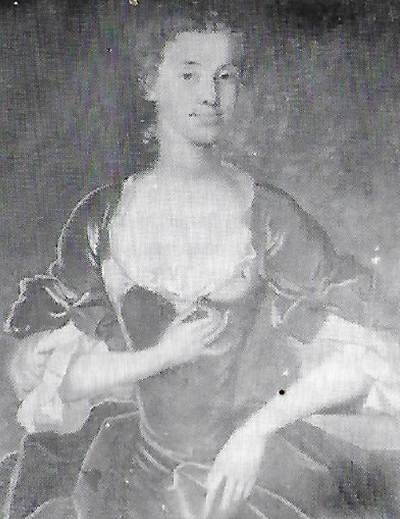
Jane Baker, nee Dod (1711
– 1783)
William Baker was one of the foremost architects
in the north Midlands during the mid eighteenth century. That so much of his
work is known is largely due to the survival of an account book kept by him
during the years 1748 to 1759, illustrating the nature of his professional
work. Over a period of twelve years one can follow in
detail the day-to-day life of an eighteenth century
provincial architect who was often in the saddle, riding from one job to
another, for his practise took him all over the north west
Midlands and occasionally into Wales. Perhaps his best known
building is the Market Cross or Butter Market at Ludlow which he designed in
1743-4, four years before the commencement of the account book. Montgomery
Market Hall and St John’s Church, Wolverhampton among his other works. He was
born in 1705, the son of Richard Baker a surgeon of London and Leominster and
died in 1771. When his father died on 24th May 1749, he recorded the fact in
the account book, adding the information that “he married Mary Smith and
both she and my father were born in London as was myself in St Brides parish.”
His grand father and great grand
father were merchants of Norwich and London, the latter being the
youngest son of Sir Richard Baker MP of Middle Aston, Oxford and St Brides,
London, the historian. He married Margaret, the daughter of Sir George Mainwaring
of Ightfield, Salop and died in Fleets debtors prison,
1644. He was buried at Saint brides in St Brides.
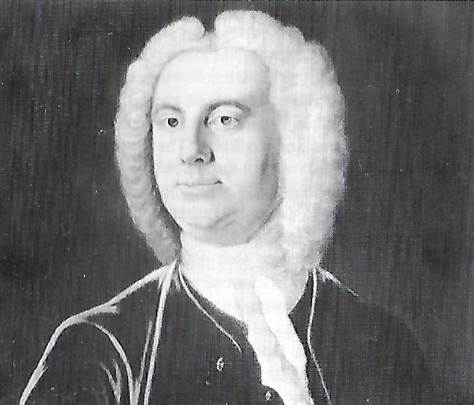
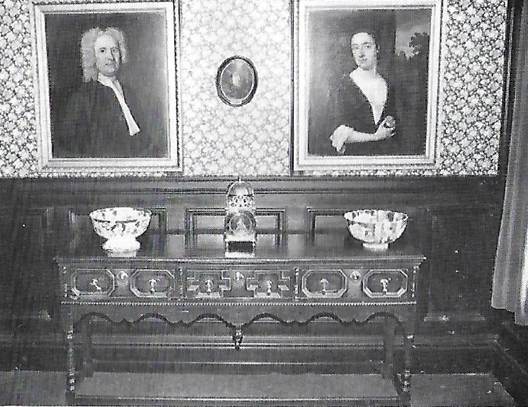
Jane Baker’s husband William
(1705-1771), Jane Baker’s father in law Richard and his wife Mary. Beneath them
Whose architectural designs
included the Crown
is a 17th century dresser
And the Phoenix in Audlem
Many items of personal memoranda
are entered in the account book. The arrival of Captain Dod “for a visit of
13 weeks” is recorded. Some weeks later, scrolled across the page, “Captain
Dod went away today”. In 1749 William served as High
Constable and a summary of his receipts and expenditure whilst holding office
is set down. On the back cover he gives the dates and hours of birth of his
four children, Charity,
Mary, Richard
and William.
Richard, who
followed him in the profession of architect, was sent to school at Repton,
where the Reverend William Astley was then headmaster. A few months before eleven year old Dick was taken there for his first term, his
father had begun to build for Mr Astley a house at Wood Eaton, and the school
fees for the first two years (£15 12s 2d and £15 7s 7d) were paid by simple subtraction
from the sums which the headmaster owed his architect. Pocket money for Dick is
a recurring item and occasionally there was a present for the headmaster's
wife: “Paid ½ pound tea for Mrs Astley 9s”.
Baker had a kiln at
Highfields and sold bricks. There are many payments to the brick maker, Plant
and his successor, Barber; also memoranda of the number
of bricks made. Receipts and payments in connection with his professional work occur
cheek by jowl with entries concerning household and farming matters. At the end
of the book there is a summary of the accounts received each year for the sale
of cheeses made it Highfields.
In addition to the memoranda about
his family and relations he often noted down events of local interest, the
deaths, and occasionally the marriages, in the families of his employers:
1751 - March 30. At Bath was
married Earl Powis to Miss Herbert; he was 48 and she but 16 years old.
1756 - May 25. On the 25th Miss
Cotton of Bellaport being at Derby with her G:mother cotton, at about 8 in the evening she and Mr Wood a
grocer in Derby went in a Post Chaise, where at Chester at 4 in the afternoon
next day and went to Dublin and married.
1756 - August. Died Mr Prince
Astley (only son of Sr John Astley), at Boloon in
France, he being obliged to fly from England for wishing ill to His Majesty
King George, he died by the effect of drinking, was brought over and buried at
Kensington.
10 Sept. Sr John told me he will
leave me a legacy in his will which he must now make.
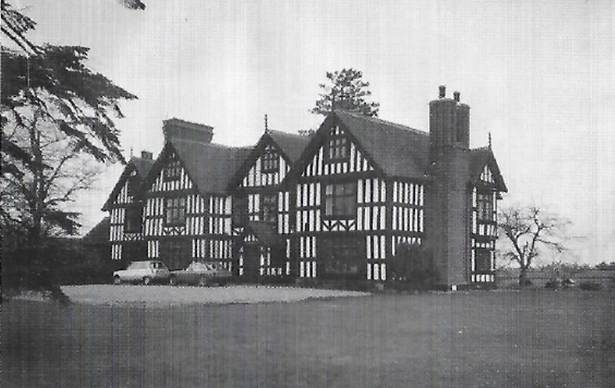
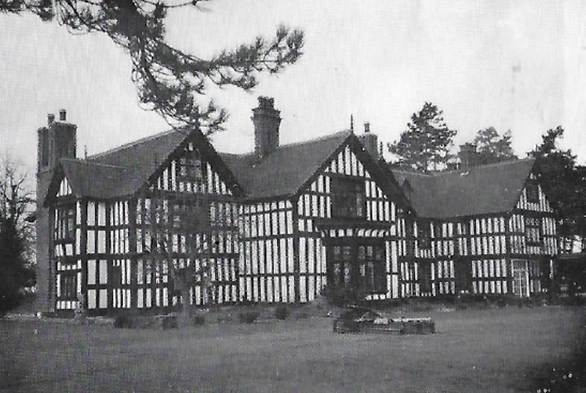
Highfields in the 1970s and 80s is
depicted in this The rear elevation
photograph of the front elevation
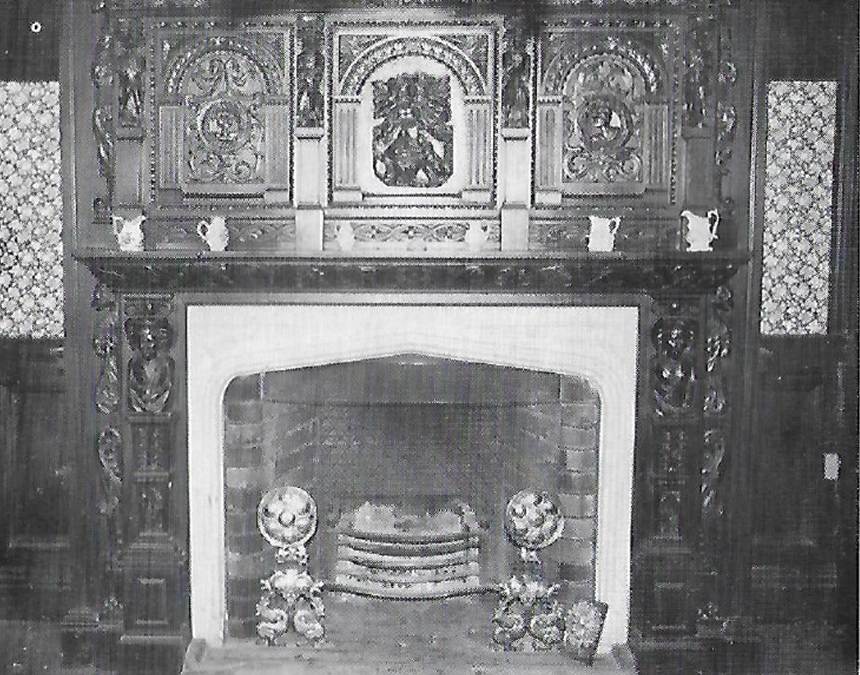
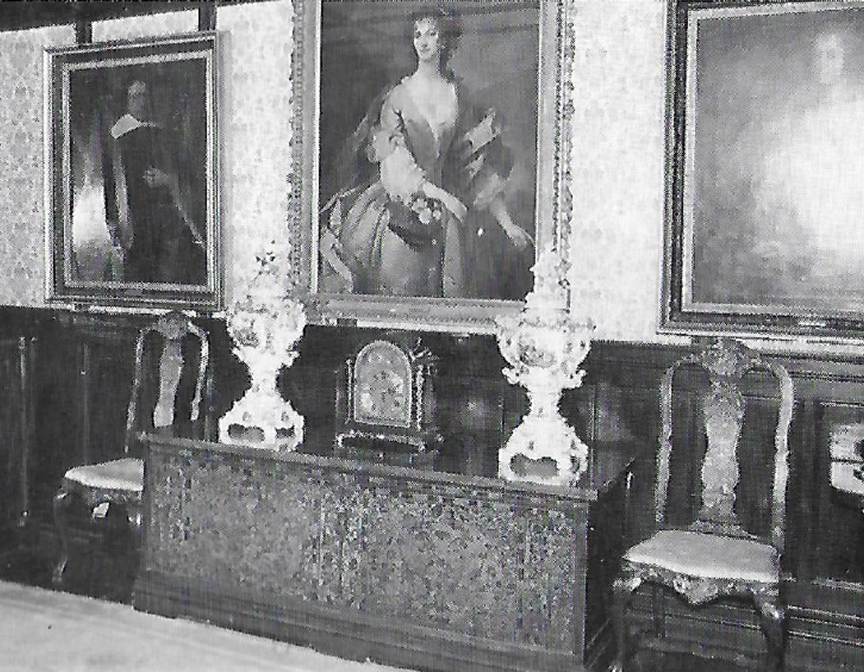
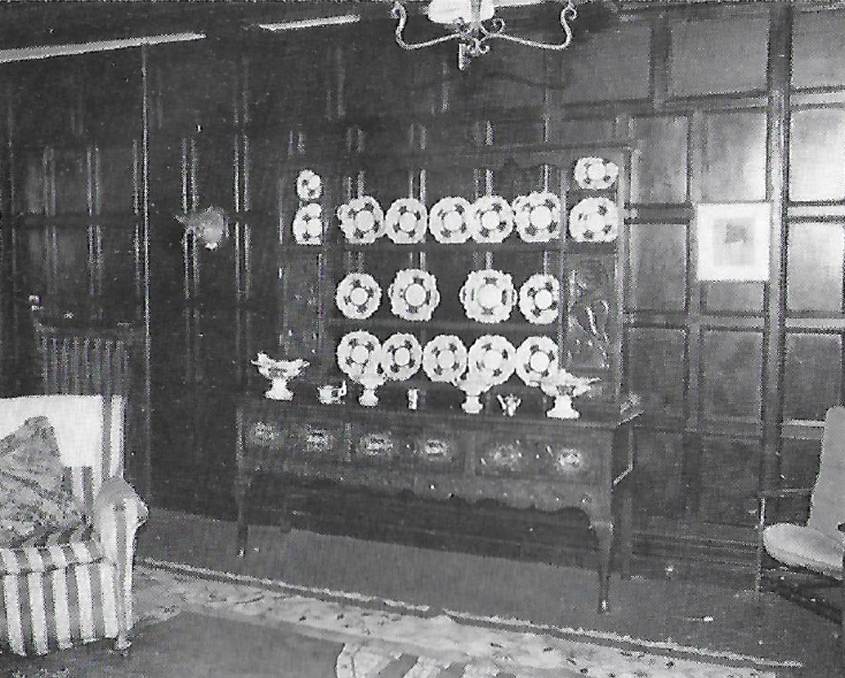
The fine carved fireplace in the
hall, believed to date from circa 1660 Part of the
drawing room, with a beautiful inlaid coffer
The Welsh dresser in the oak room
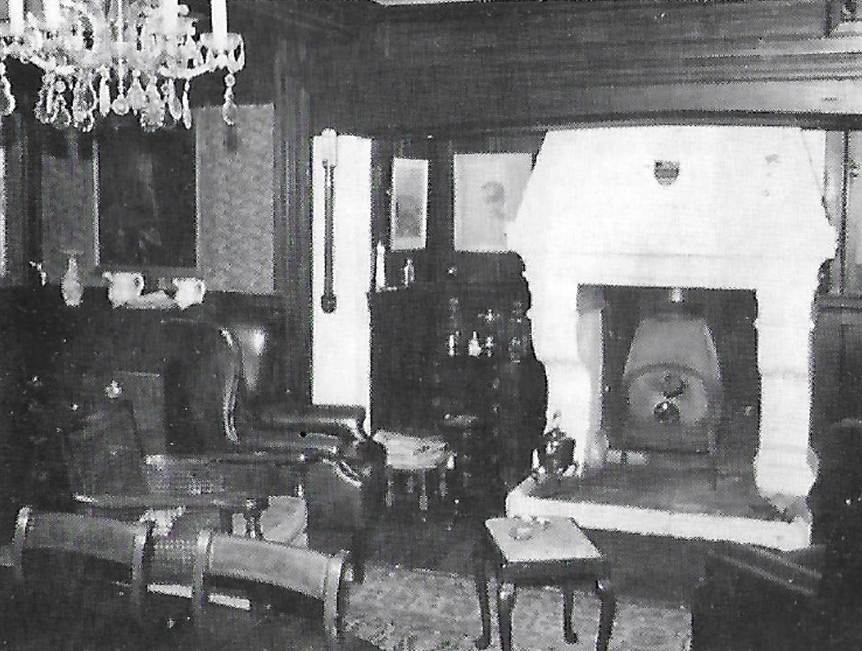
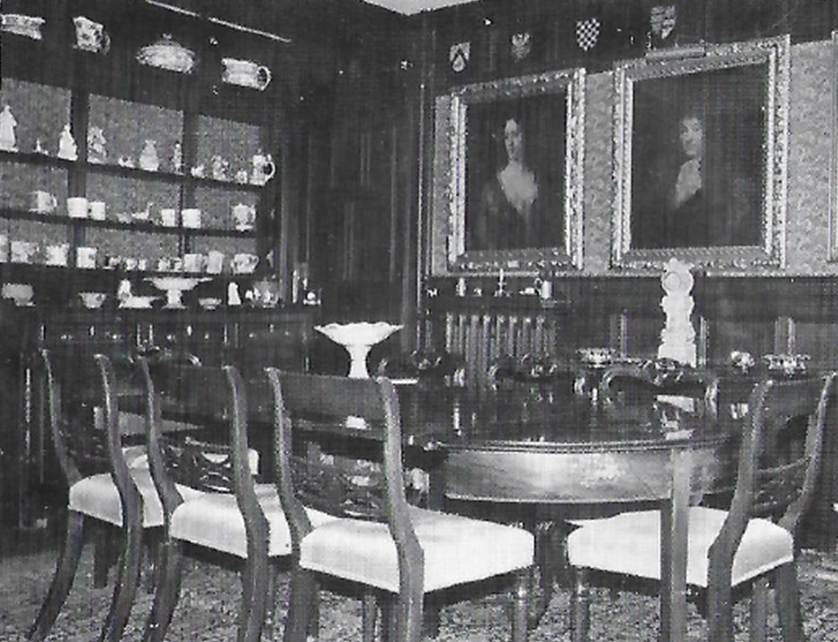
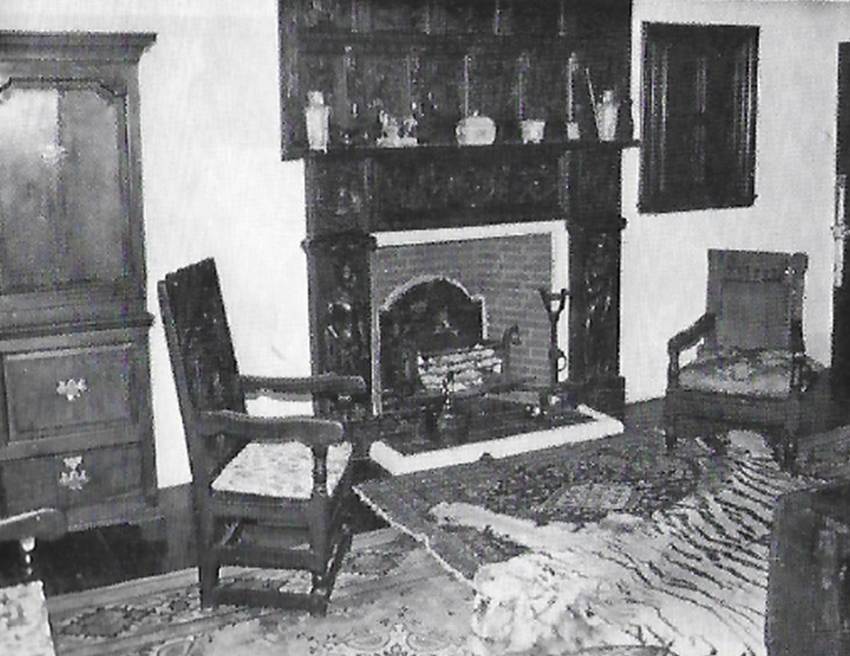
Part of the dining room
Part of the dining room
One of the bedrooms
Sir John Astley of Patshull was a client of long standing. The accounts show
Baker making frequent visits and receiving payments from Sir John for plans for
Pattingham House and in connection with the new library
and parlour added to Patshull in 1754.
On 15th March 1757 there was a
great gale “which blew down abundance of trees, unthatch houses &, threw
down a number of barns and overturned the top of Acton steeple up on the roof
of the church which fell in upon the pews in a ruinous condition.” It is an
ill wind that blows nobody good. Under 26th March can be read: “Paid expense to
Acton and Nantwich where I was agreed with to inspect the repairs of the Church
of Acton (ruined by the wind on the 15th instant) for 42 pound:
3s”.
The years covered by the diary
were eventful ones for England. In May 1756 appears “Note the 18th Warr was
proclaimed at London against France.” Later that year the loss of Minorca
is recorded with the observation: “Admiral Bing is disgract
for running away 13 men of war from 12 French - he is brought to England and
tried and shot to death for his cowardice.” The next year Frederick the Great's
victory over the Austrians at Leuthen is noted: “May 6. A victory gaind by the King of Prussia over the Austrian army near
Prague, and Prague taken sword in hand.” The last year of the account book
was our annus mirabilis. Two brief memoranda in the autumn stand out
from the sober record of receipts and expenses: (October) “Port of Quebec
taken”; (November) “French fleet beat by Admiral Hawke.” Abruptly as
the record ends with the end of the book 31st December 1759, it was at a time of
national triumph which makes a happy finale.
Following the death of William in
1771, Highfields passed to his elder son, Richard Dod Baker.
To his younger son William,
he left the estate and manor of Fenton Culvert, Staffordshire and a pottery works at Fenton. William was born in 1744, he married Sarah,
the daughter of Thomas Bagnall of Fenton with whom he went into partnership as
Baker and Bagnall, Potters. His grandson purchased the manor under state of Hasfield and founded the family of Baker of Hasfield Court.
Richard Dod
Baker, born in 1743, married Hannah, the daughter of John Hassall of
Nantwich. He practised as an architect at Stratford upon Avon where his
children were, for some reason, baptised in the name of Hassall. This was done,
he explained in his will, “for peace and quietness”. On the face of it,
it would seem to have been an excellent way of preventing it. His sister, Charity,
having married Lawrence Barrow, a banker who died young, returned to
Highfields. She managed the estate for her father and later brother, freeing
them for their architectural work. She was, in her later years, and she lived
to be seventy eight, an extremely forceful lady,
always known in Audlem as “Madam Barrow”.
At about this time a new doctor
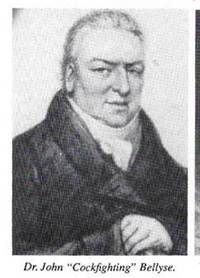
came to the village, Dr John Bellyse, better known as “Cockfighting Bellyse”.
So much has been written about this colourful, if rather questionable,
character that it will suffice to say that he was Cheshire 's most successful
cockfighter at a time when it was, along with horse racing and fox hunting,
England’s national sport.
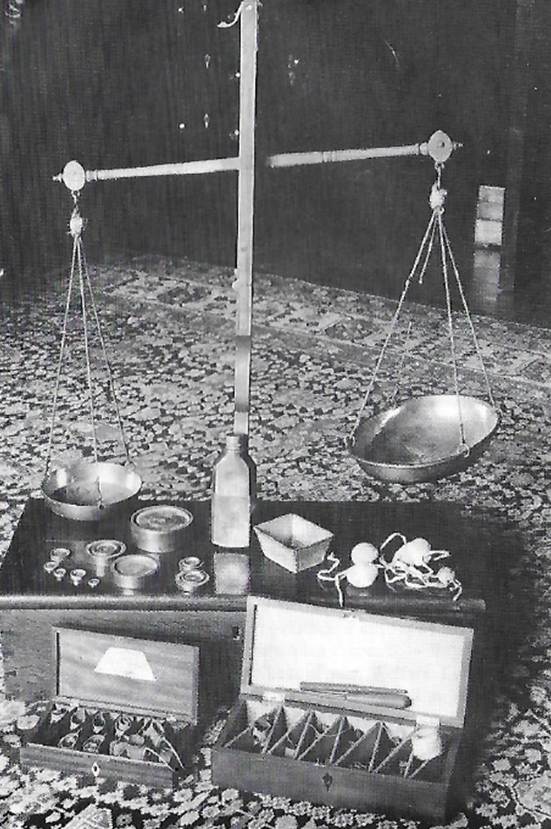
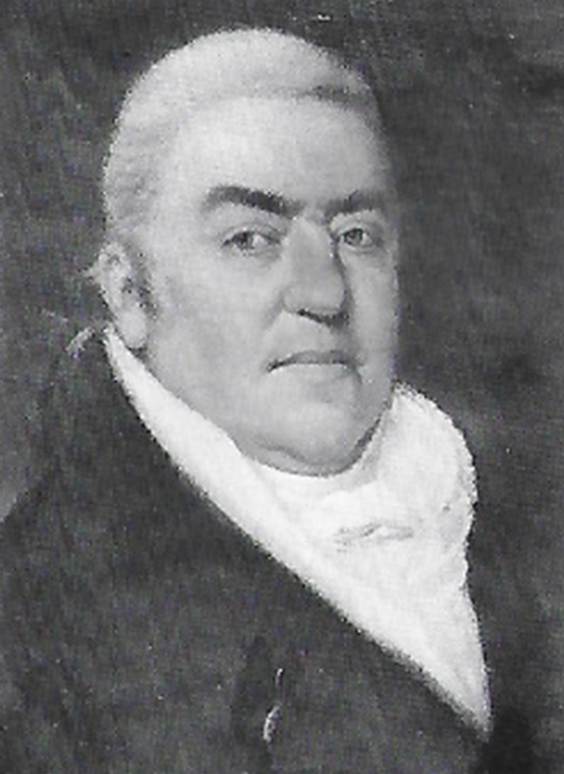
Dr John Bellyse’s scales and other
cockfighting impedimenta The flamboyant Dr John Bellyse of Audlem (1738-1828), last
of Cheshire’s cockfighters and greatest of them all, whose son eloped with
Hannah Baker
Preserved at Highfields
His son's entry into the Baker
family was not without colour. He eloped with Richard's daughter, Hannah, in
the time approved manner. She climbed from the bedroom window
and they departed by post chaise. The following morning, having read her
farewell letter, Richard set forth to the doctor’s abode, the house now
occupied by Dr Thornton. He came upon Bellyse sitting reading by his open
window and, not unnaturally, expressed himself with some force on the subject of the good doctor's son, John. Bellyse
waited for a period of silence before observing, “The ganders as good as the
goose, Sir”, and returned to his book. Peace was restored, Richard giving
the newlyweds a rather fine inlaid coffer. When Canon Bellyse retired as vicar
of Audlem, he very kindly returned it to Highfields! John followed his father
in the practise; his son, Richard Baker Bellyse, remembered on the monument in
Audlem Square, was the third and last Dr Bellyse of Audlem. John also inherited
his father's love of sport. He was one of the founders of the Waterloo Cup and
is depicted in the well known
print of the first meeting.
Richard's eldest son, Richard Dod Baker, went to Brasenose college,
Oxford, from where he wrote a number of rather
interesting letters to his cousins Elizabeth and Arabella Thorley, of Chetwynd
Rectory, Newport, daughters of his father's younger sister Mary. On getting
there in 1801 he said “After a very pleasant journey we arrived at this celebrated
seat of learning on Thursday last, and although the college rules did not exact
our attention till the 17th, I found everything very comfortable. At Stafford
we waited on Mr Whalley. He showed us a grand piano, which my father purchased
for 65 Guineas, it appeared to me a good toned one, but when Bessy comes to
finger it, we can form a better judgement. On Friday my father introduced me to
a Mrs. Smith, a lady of considerable property in the neighbourhood, such an
acquaintance will be very pleasant, at least very different from the noisy riot
of a college evening; without company of some sort, Oxford, I assure you, would
be quite intolerable, and the man who pens himself up in his attice pouring everlastingly over his books, can be
compared to nothing better than “Owl in a Desert”. Study, however, affords many
an hour's rational amusement, but like anything else there can be too much of
it...” Not ideal academic material, the reader may think. In his next
letter dated 14th October 1801, he described his rooms and life at Oxford; “I
took possession of my rooms on Saturday, and I assure you they are much more
comfortable than I expected, my sitting room is as large as, if not larger
than, your little Parlour and to appearance, much more comfortable a Bureau, 5
chairs and a table in it, my drawing room (for so I please to call it) is
smaller but neater, a glass door out of my sitting room to it, with two chairs
and two tables, my bedroom is a little larger than the sitting room with a very
comfortable bed, bureau etc, altogether, as if it were our 3 Parlours at
Highfields, but a door to each room out of my S.R. I have been this morning with
one of the tutors to buy myself a set of tea things, candle sticks, silver
teaspoons, sheets, towels etc, and though Oxford is the most imposing place in
the world could not, I think, offer us much in such small articles. Figure to
yourselves a venerable elderly man and myself with our caps and gowns, choosing
and buying the best China, good judges, I'm sure I could not tell China from
common ware.
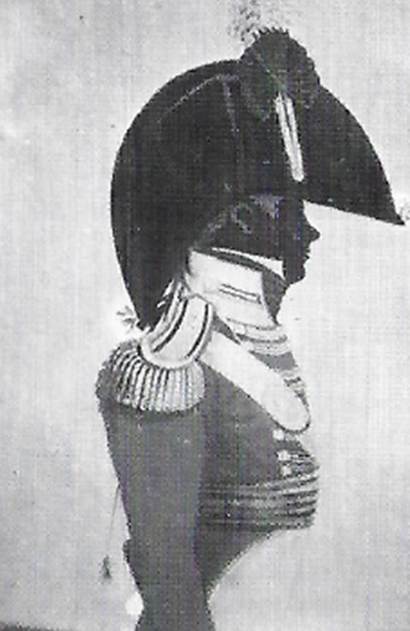
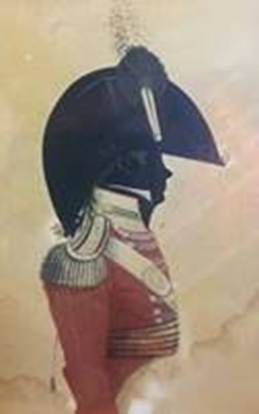
Coloured silhouette of Lt
Richard Dod Baker (1784-1806) by J Buncombe, who specialised in painting
military and naval officers before they went overseas to serve in the
Napoleonic wars
We had a grand
illumination on Monday night last; High Street (the most beautiful in the
Kingdom) cut an elegant appearance and the different Emblems of Peace etc in
transparencies greatly aided add it to the splendour of it. At 7 o’clock in the
evening the Oxford Royal Volunteers attended by their band and two cannons
fired a Fene de Joye on the occasion. The people seem’d mad, and even now cannons
are firing. The Proctors (whose office I dare say you have heard of) were very
busy that night, most of the Oxonians went without their caps and gowns, but I
did not, though I was afraid of being distinguished, that is, if any of the Mob
discovered you to be an Oxonian or a Collegian, they will often throw a squib
into one’s Gown, which makes great fun for them, and we are often insulted by
some of them, I am told, though I have never experienced any of it.”
In a letter dated 10th
December 1801, he talks of examinations; “I dare say, little as you know of
this seat of learning, you have heard that our examinations for degrees has
always hitherto being laughed at as trifling and a mere matter of form, but
they have now assumed a very serious aspect, and as your cousin is to take one,
you will not deem the following short account of the new examinations and which
I must undergo at all improper. There is now a large room fitted up for the
purpose, which will contain, I should imagine 300 persons. There are benches
for the vice chancellor, proctors, doctors, heads of colleges and halls etc,
who are all required to attend at this most solemn occasion and about 200
students (word missing?) there are perhaps 6 examined at a time, and
this occupies from 9 in the morning till 3 in the afternoon; so that whoever
thinks of taking the a degree must fag.”
Richard was commissioned in the
17th Leicestershire Regiment. It was the year before
Trafalgar. He wrote again to his cousin;
“Highfields
Wednesday 18th Ap 1804
Dear Elizabeth
The necessity of joining the
Regt. immediately prevents me coming over to Chetwynd before my departure. I
suppose you have heard from Montague (her brother, an officer
in the same regiment) or will soon, to inform you of our destination. I
received a letter from him on Monday desiring me to hasten my journey to Dublin
in consequence of orders from England. He adds “When you take leave off them at
Chetwynd assured them all of the trust I ever have in the protection of that Providence
which has kindly watched over them and myself through life and that I in
nothing doubt a happy return among them.” For my own part I think myself
fortunate as I am in the surest road to promotion and all my friends will, I
trust, be reconciled to the present separation in the prospect of my return to
England hereafter with the consciousness of having acquitted myself in the
duties of my profession. As you may not have yet heard from my good friend I must inform you the 17th has received orders from
England to hold men in immediate readiness to embark for the East Indies, place
of destination Bombay. For me to offer you any consolation would be only an
insult to your better sense which will tend to teach you how necessary it is
for our well being to acquiescence in the will of an
unerring Providence. I am happy to add my mother is much better reconciled to
it than I would have expected. Be assured it will be a very great addition to
my happiness to hear of your welfare. I am now going to Drayton and on the
evening shall place myself in the mail at Woore.
Being so hurried you will excuse this scroll. Give my best duty to my good
Aunts and love to all my Cousins when you write, and wishing you all the happiness in this world can
bestow believe me my dear Betsey.
Your affectionate friend
and cousin
Richard Dodd Baker
I hope to reach Dublin
this week. Adieu.”
They set sail for India in
July, when he wrote; “We embarked on board our respective ships last
Wednesday and it is the Admiral's intention should the wind be all favourable
to sail this Evening. I am just arrived on shore with
Captain Whittey and others in an open Boat thoroughly drenched and I lament my
time will not allow me to express my sentiments in the manner I would wish,”
a rather ambiguous observation! The names of the ships in the convoy were he tells us; “the Lord Hawkesbury, the Worcester (on
which I am on board), the Duke of Montrose and the Airey Castle under convoy of
the Culloden 74 guns Sir Edward Pellew Commander.”
Although this letter was
written from Portsmouth, the ship sailed from the Isle of Wight, where he sat
for his silhouette portrait, by the Newport artist, J Buncombe. The picture
hangs at Highfields with his dress sword. During the voyage he kept his own log book, a Journal of a Voyage to the East Indies 1804,
in which one can follow the day-to-day happenings on board, followed by the
course and the number of knots covered from noon to noon. The greatest distance
covered was 215 knots “strong breezes, cloudy with small rain”. 150 to
170 was more usual, about seven or eight knots an hour. Most of the days were
comparatively uneventful; however on September 8th we
read: “fresh breezes and pleasant. At 10 AM a strange sail seen to the
westward. Signal made by the Admiral for the United Kingdom and Alexander to
chase her. Suppose her an American. At 2 PM inquire for the Fleet to change
their course to east I/I South. At 5 PM the Lord Hawkesbury and Baring
reprimanded by the Commodore for not paying more attention to the signals.”
The United Kingdom, Alexander and Baring had joined the
convoy at Cowes. The voyage ended on Wednesday, December 12th. “At 10 AM
anchored off Fort William. At 2 PM disembarked with the detachment and marched
into barracks at Fort William.” In
1806 he was taken ill. He died on the voyage home.
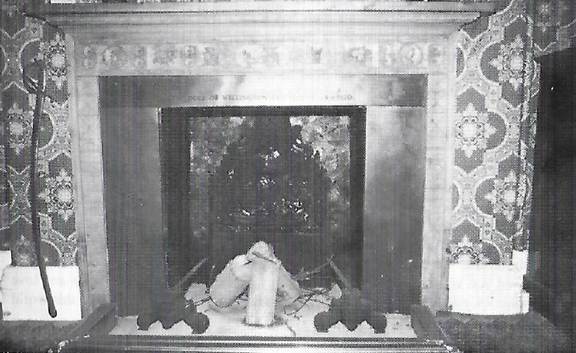
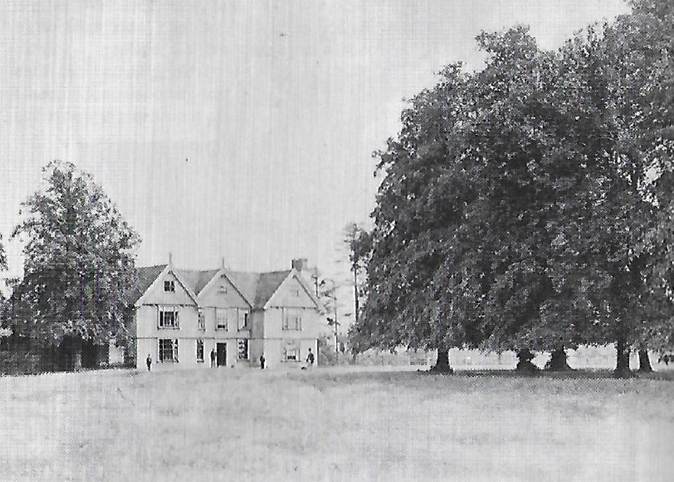
In one of the bedrooms is this
fireplace, taken from the
One of the earliest known photographs of Highfields, dated about 1860,
when the exterior
17th century vicarage
at Audlem when it was demolished had a stucco finish so
popular with Victorians and had not been marred by the heavy
in the 1970s. The carved legend
above the opening
chimney extensions of the mid 1880s
commemorates the Duke of Wellington’s
visit to
the vicarage on Christmas Eve 1820
Highfields passed to the
younger son, William Baker. William knew his priorities;
They were fox hunting, shooting and running the estate, and in that order. To
do him justice, he would have experienced great difficulty in taking over from
his formidable aunt, “Madam Barrow”. He hunted with the local packs, Highfields
being in those days within hacking distance of four different hunts. He also
kept a private pack, jointly with his friend and neighbour, Richard Corbett, of
Adderley hall. A memorable day was Christmas Eve,
1820. The Duke of Wellington was staying with his old cavalry commander, Field
Marshall Viscount Combermere who, as Harry Stapleton
Cotton, had attended Audlem grammar school with William. On Christmas Eve he
and the Duke visited Combermere
's brother, William Cotton, who was vicar of Audlem, from where they later
drove on to Highfields. The Cotton’s sister, Hester, commemorated the occasion
by carving a fire piece, which remained in a bedroom at the 17th century
Vicarage until this beautiful old house was, I think very foolishly, demolished
by the church commissioners some years ago. The fireplace was acquired by the
writer, and is now in a bedroom at Highfields
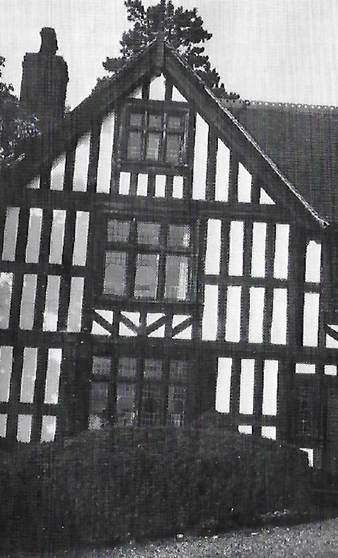
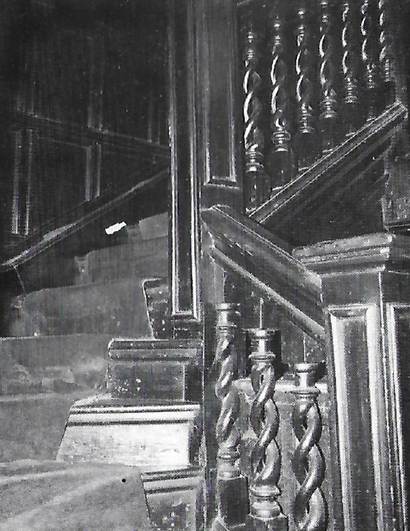
North wing built in the mid 1880s
One of the main staircases of oak, with its double twist banisters
William Baker died in 1863 to be succeeded by
his eldest surviving son, also William. William married Prudence, the widow of a
distant cousin John Baker, Lord of the Manor of Fenton
Culvert, a wealthy Potter. Tradition has it that John had left her a
considerable fortune “on condition that she did not change her name.” By
marrying William, she satisfied all parties. They were both keen riders to
hounds, no doubt often hunting with William’s younger brother, John, who at different times was
Master of the Wickland, Shropshire, Albrighton and North Warwickshire. They had
only been married a few months when her horse fell, breaking her neck. William
later married his cousin, Louisa Bellyse, daughter of Dr John Bellyse and his
wife Hannah Baker. Shortly after their marriage
they built Kynsal lodge, the architect being William’s younger brother, Thomas. They had nine children, three
boys and six girls With the coming of the railway an
annual holiday to the seaside became possible and the family often spent some
weeks winding down through central Wales on the old Cambrian railways. The eldest son, John, usually stayed at home to manage
the estate, receiving regular instructions from his father by letter. Jack, as
he was always called, headhunted from an early age and rode with some success
over the sticks. He broke his collarbone for the last time in 1931 at the age
of 81 when exercising a horse over fences for his nephew. His father died in
1876.
Three children's Diaries,
written by the younger daughters, Charity, 15, and Charlotte, 12, and Emily, 10, exist. From them one can see
how very different were the lives of the boys from those of
the girls. The former were usually playing cricket, skating at Adderley
and, very regularly, “Jack has been out hunting”. We also hear “Tuesday
February 18th 1879 Jack has gone to the Waterloo
coursing with Mr Boote, of Corbrook, he is coming
back tomorrow night; we used to keep some greyhounds, but they were all sold
except one, and that died not long ago.” In comparison the girls
led very quiet and sheltered life; one reads; “Jack has returned from
Shrewsbury. There really does not seem anything to be put, for day after day
passes with scarcely any change, but yet I think that is wrong, for if I have
nothing else, I ought to write my thoughts.” and a few days earlier “I
am going to try and turn over a new leaf and right to my diary, and learn my
verse out of my strict scripture textbook more regularly, for I forget them
very, very often, when I am sure it is God's will that I should learn my verse.”
later we read; “I did not write yesterday. I do feel so miserable, for Miss
Evans is vexed with me, and I do try to be as good to be good
but I cannot, and I think that she thinks I don't try to be good, but oh! I do,
and I pray too, but I feel as though it is all of no
use, and the more I hear of good children, the more I long to be one.” Miss
Evans was their governess, whose writing can sometimes be seen correcting spelling
mistakes. One suspect that the sentiment's expressed were made more for her
eyes than from any great piety!
It was a time of Great
Depression in farming. In 1884 John Bellyse Baker decided to sell the estate in to
emigrate to New Zealand with his young wife, Richmal Mangnall. For the first
time in recorded history the land was sold, Highfields with the Home Farm was purchased
by a wealthy shipbreaker, Charles Kellock, who added the present kitchen right
wing with the bathrooms the bedrooms above. Fortunately
the pictures, silver and some of the furniture were moved to the Cedars, in
Audlem, where the second son, Richard Dod Baker, a solicitor with his uncle
Joseph Bellyse, lived with his unmarried sisters. John became a sheep farmer in New
Zealand, where his two elder children, Bellyse and Dorothy were born. He returned to Audlem
in about 1890, and died in 1932. Eventually, in 1944, his elder
son, Bellyse
Baker, bought Highfields back into the family, since when most of the pictures
and other contents have returned. Bellyse Baker
died in 1947, when the property passed to his only son John
Bellyse Baker.
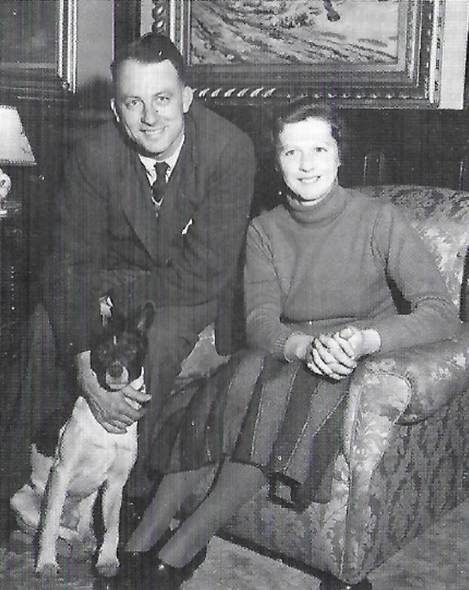
The Author
and his wife, photographed in the drawing room of Highfields in 1955
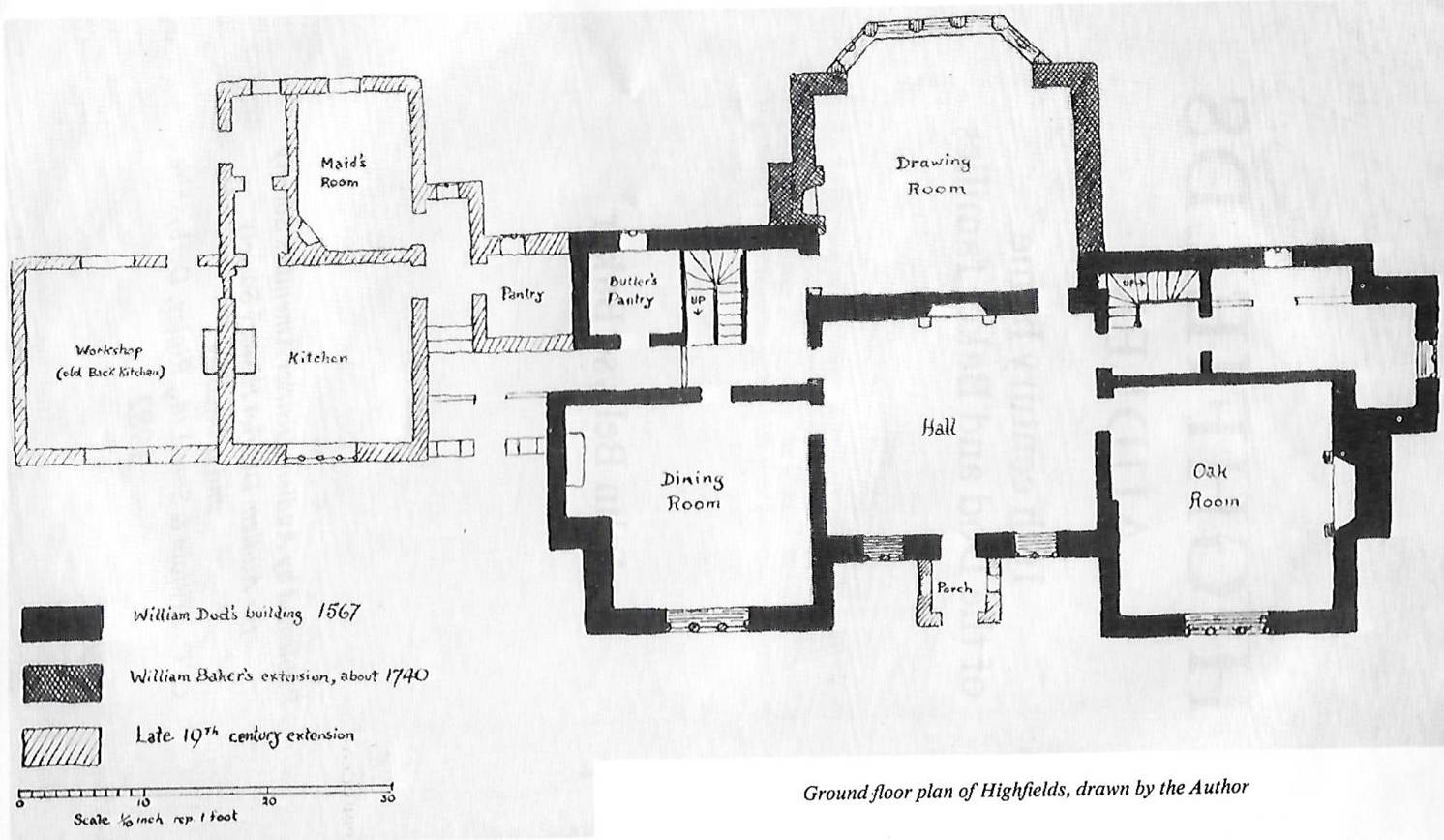
The original house consisted of two
gabled blocks joined by a hall, the roof of which ran at right angles to the
gables, forming the well known
H shape of the period. The house faced due west and was entered by front door
into the hall. The south wing contains what was known as the “best parlour”,
fully panelled in oak and containing a very fine fireplace, largely original,
with the initials of William Dodd and the date, 1615. Two bearded heads, on
plinths, on either side of the opening are said to be the to be two Dods, but
there would seem to be no reason for supposing this to be so. The panelling of
the south (fireplace) wall and east wall is original. It is possible to see
that there was a door at some time in the latter wall. The panelling of the
other two walls is of a later date, the original having presumably been
damaged. The 17th century coffer and Georgian oak dresser are original
Highfields pieces. The blue and white dessert service on the latter is Baker
and Bourne and was probably brought by Prudence Baker in the 1840s. Behind this
room is a very fine staircase with double twist bannisters. Near the bottom of
the staircase is a small window which, if it was not blocked up, would look into the drawing room, proving, if any proof was
necessary, that this room was a later addition to the house.
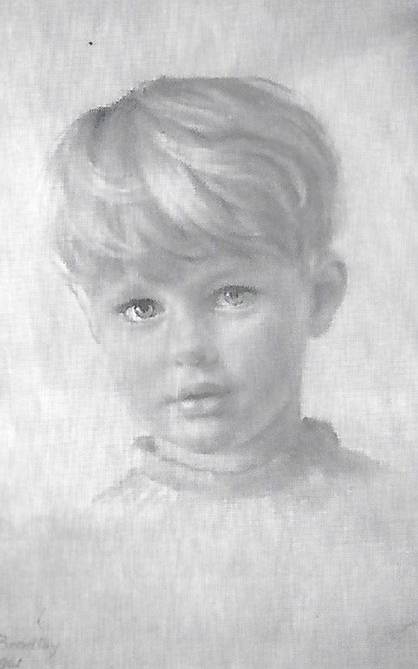
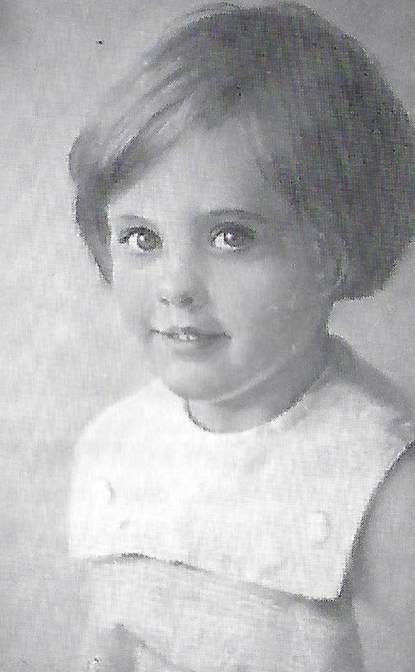
The new generation. John Bellyse, born
1956, and Josephine
Charity, born 1960, from pastels by Thomas Bradley
In the original north wing is what
was originally the kitchen with a heavy, canopied Yorkshire stone fireplace.
For many years it has been half panelled in oak and used as a library; more
recently as the dining room. The room was still a kitchen in 1771, when the
first William Baker
refers, in his will, to his daughter Charity’s
bedroom as “above the kitchen”. In an early photograph of Highfields taken
about 1680, the kitchen extension is single storage. Behind what is now the
dining room is a second oak staircase, originally almost as fine as the first
with ‘barley sugar’ bannisters. Above both these staircases are second flights
leading up into attics, the two sides being unconnected. This arrangement would
seem to suggest that the hall had originally an open timber roof, dividing the
house into two parts. However it would be unusual for
a house built in the late 16th century to be constructed in this manner.
Half panelled in oak, the hall has
a very fine carved fireplace thought to date from about 1660. Behind the hall
is the drawing room, a later addition to the house. It seems probable that it
was added by the first William Baker
in about 1740; certainly it was there in 1801, when
his grandson, Richard,
mentions it when writing from Oxford. The room, loftier than those in the
oldest part of the house, is half panelled in oak with a large bay window and a
carved oak fireplace, not as fine as the others in the house and almost
certainly of Welsh origin. It carries the name and date John Gwyn 1674. William Baker
made many alterations to country houses in Wales; it seems probable that it was
one that had been replaced during modernisation. In about 1885 the Kellocks demolished the old single storey kitchens, brew
and wash houses, and built the present north wing. They also added some very
ugly extensions to the chimneys in red Ruabon brick, although, no doubt, they
looked very fine to Victorian eyes.
Today an upstairs room has been
turned into a natural history museum to house the many cabinets of exhibits
collected by the writer’s father and himself.
An attic room contains an extensive 00 gauge model
railway system, with many scenic effects, depicting the old Great Western,
which once used to be the main means of transport to and from Audlem. Its green
engines with their highly polished brass work and high
sounding names were great favourites in their day. Lord Mildmay of
Fleet was one of those locomotives which regularly visited Audlem in the
1920s.
A red letter
day for Highfields and for Audlem was Thursday, 24th July 1969, when the
Women's Institute organised a “Pageant of Audlem”, using the house and
grounds as its setting. It was written and produced by John Burton, whose
family for many years owned Kingbur Mill on Audlem
canal wharf, now converted into an attractive canal shop. Many local residents took part in the various scenes, which
traced the history of the town from its early days when a charter to hold a
weekly market was granted by the then squire, Sir Thomas Audelyme. The writer
played this part, on a grand little hunter named Felix. A chorus of Combermere Abbey monks was followed by the arrival of
Prince Rupert, who is supposed to have visited Highfields in 1644 with a
detachment of royalist cavalry. Light relief was provided in a scene depicting
the elopement of John Bellyse and Hannah Baker.
The former, played by the son of the then vicar of Wybunbury,
arrived with a ladder, two assistants, and a sedan chair. The scene ended when
the father, played by the Audlem police constable, Stan Smith, sped the loving
couple on their way with both barrels of his blunderbuss! The commentary for
this stirring pageant was delivered by Judith Chalmers of the BBC. Members of
the North Staffordshire Hunt performed noble work as mounted Cavaliers.
Hounds have met at Highfields at
regular intervals over the years, and the Cheshire Beagles hold an annual meet
with the cooperation of the local farmers. The most recent notable event in the
life of Highfields was an emulation of the BBC Antiques Roadshow, when a panel
of experts valued antiques brought along by visitors.
A new chapter will soon be opened.
The Ministry of Works has agreed to help towards essential restoration,
the house being scheduled as a Grade 1 property. Highfields, which is now
jointly owned by the author
and his son,
will then be opened to the public on certain days and should be safe for the
foreseeable future.
The Author is indebted to George
Dow, for his assistance and valuable experience without which this book would
never have been produced, and to Howard Edwards, who took most of the
photographs.