King of the Smugglers
1759 to 1835
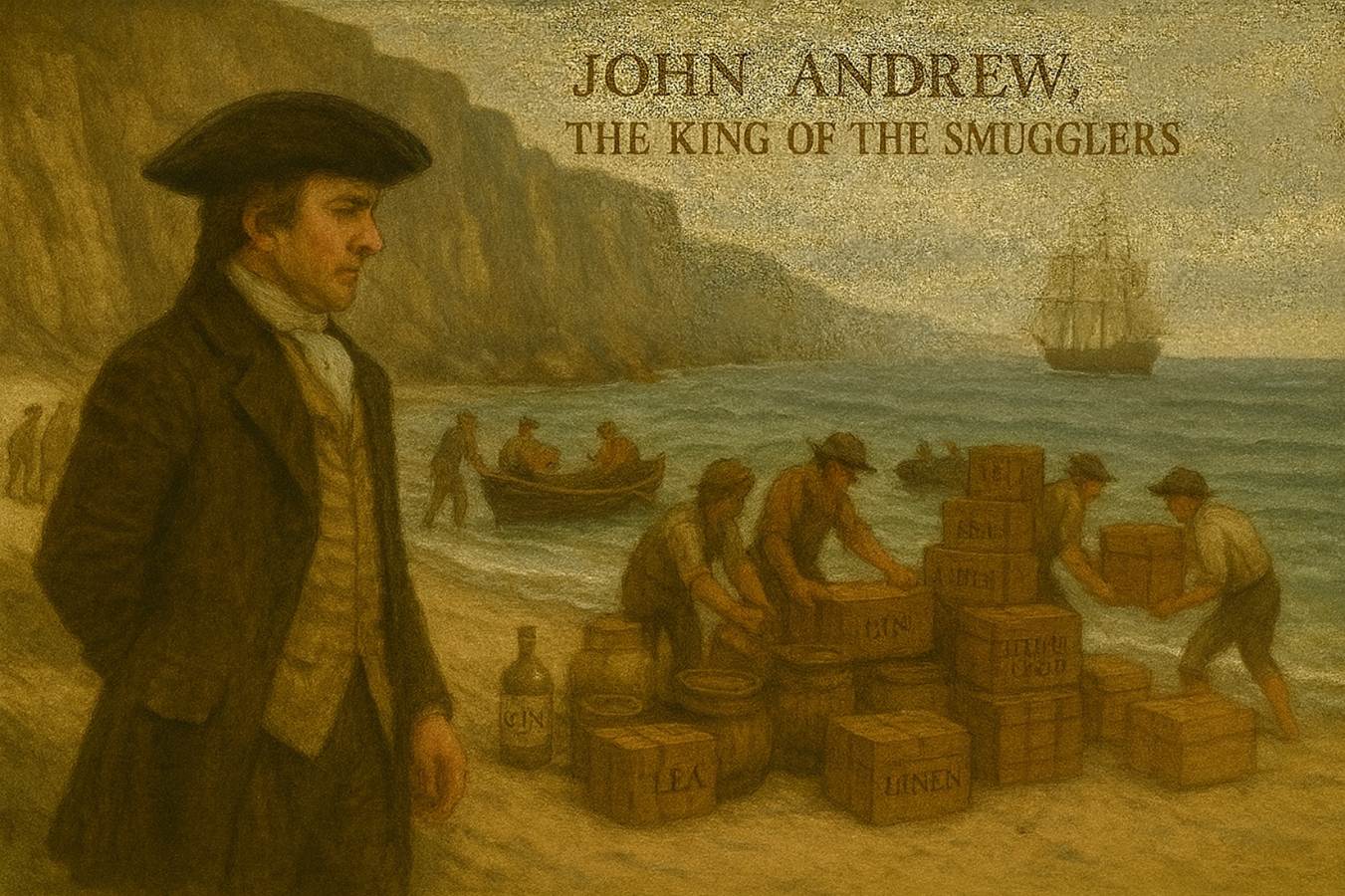
The
grandfather of Martin Farndale’s
wife Elizabeth Taylor, no doubt in league with the seventeenth century
Farndales. When the local folk whispered Andrew’s Cow has calved,
everyone knew that the goods had arrived. The wealthy John Andrew later became
master of the Cleveland Hunt.
AND00001
|
Return to the Home Page of the Farndale Family
Website |
The story of one family’s journey through two
thousand years of British History |
The 83 family lines into which the family is divided.
Meet the whole family and how the wider family is related |
Members of the historical family ordered by date of
birth |
Links to other pages with historical research and
related material |
The story of the Bakers of Highfields, the Chapmans,
and other related families |
The King of Smugglers
Dates are in red.
Hyperlinks to
other pages are in dark
blue.
Headlines of John
Andrew’s life are in brown.
References and
citations are in turquoise.
Context and local
history are in purple.
If you wake at midnight, and hear a horse's
feet,
Don't go drawing back the blind, or looking in
the street;
Them that ask no questions isn't told a lie.
Watch the wall, my darling, while the
Gentlemen go by!
Five and twenty ponies,
Trotting through the dark.
Brandy for the Parson,
Baccy for the Clerk;
Laces for a lady, letters for a spy,
And watch the wall, my darling,
While the Gentlemen go by.
The Smuggler’s Song, Rudyard Kipling, 1906
1759
John Andrew, the son
of James Andrew (1726 to 1797) and Jean Kemloe (1721 to 1814) was born in or
about 1759 in Foudoun, Kincardineshire, Scotland.
There is a suggestion in the burial record of All Saints Church at Skelton that
he was born in 1761, but the date of his qualifying as a master mason (see
below) verifies the earlier date. There is a separate genealogical table showing his
ancestry and immediate descendants.
John Andrew’s
Scottish family were wealthy.
From The
Cleveland Hounds, by A E Pease, 1887,
he was Born in Scotland, of an old and respectable Scotch family bearing the
name of the patron saint of that country, he came in early life to Cleveland
and settled there. As far as I can gather, the family were natives of
Kincardine, and lived at Bridge of Leppie, near Bervie, on the coast. There is little to be discovered of
their history, but the following entry, unearthed out of an old pocketbook for
the year 1790, of John Andrew, is interesting
Directions
/or My Father : To Mr. Jas. Andrew, att Bridge of Leppie by Bervie, N. Britain. for
my brother Joseph : To Mr. Joseph Andrew, Surgeon's Mate of His Majesty's
Frigate the Rose, att Spithead or Elsewhere. for my
brother in Law Wm. Boss : To Mr. Wm. Ross, att Cheapelfeild, Vintner, Montrose, N. Britain.'
Immediately
following these notes is the following prescription, which may prove useful to
some agriculturist: 6d. worth of Best Castile Soap, 1/4 lb., 1/4 lb. of
Gunpowder, 2d worth of Spirits Turpentine, A Quart of Ale, for the Red water.'
He seems
to have kept up his connection with his old home, for in this year we find an
item in ' A State of J. Andrews Affairs, May 12th,' 'A House att Beme in Scotland cost 100l.'
John
Andrew was born in 1761 ; he had not settled many years at Saltburn before he
married Ann Harrison, Saltburn was then but a fishing hamlet and colony of
smugglers on the seashore, and not the large and fashionable watering-place it
has since developed into. On the top of the cliffs, with a wooded ravine
running inland, stood then, and still stands, the home of the Andrew family, a
farmhouse known as the White House. Up this secluded ravine many a string of
pack-horses wended their way with the contraband goods, which found a ready
market at Guisbrough, Stokesley, and in all the
country-side, this illicit trade being encouraged both by the gentry and
clergy, as well as by the farmers. At the head of this smuggling fraternity was
Mr. King, a brewer at Kirkleatham, and Mr. John Andrew, and many a good cargo
was run ashore at Saltburn and stored in the White House, and in the clay holes
of Hob Hill, in the ravine beyond the house. The most celebrated craft in the
trade was the 'Morgan Rattler,' an extraordinary fast cutter, which eluded for
years the coastguard, and was a terror to the Preventive men. You may now see
in the last stall of the stables at the White House a large flagstone, which,
when removed, discloses the entrance to a spacious cellar. In this stall John
Andrew had always a celebrated mare who would kick like mad when any but her
master approached that stall. Upstairs in the house is a room which had a
secret hiding-place, where, in case of a search, the men might hide or lie in
ambuscade. Later on we shall see how John Andrew's trade interfered with one or
two seasons' sport in Cleveland.
In the
beck at the bottom of the ravine were otters, that provided sport during the
summer months, with a few couples of the old hounds. Badgers were also
plentiful in the woods, especially at Kilton,
and hunting them with an old hound or two helped to put away the weary months
that elapse between the last day of one season and the first day of the next.
During
the Napoleonic wars John Andrew, like many others of his fellow-countrymen,
considered it his duty to place himself in readiness to serve his country. We
find the following commissions which he held, signed by the Duke of Leeds : —
1.
October 24, 1801, to be Ensign in the corps of Cleveland Volunteer Infantry,
Thomas Napper, Esq., being Captain of that company.
2. June
29, 1807, to be Lieutenant in the corps of Cleveland Volunteer Infantry.
3.
September 24, 1808, to be Lieutenant in the 3rd Regiment of local Militia of
North Riding.
4. May
16, 1809, to be Captain in the same regiment.
On March
27, 1813, he entered his son, John Andrew, junior, as an ensign in the same Militia
regiment.
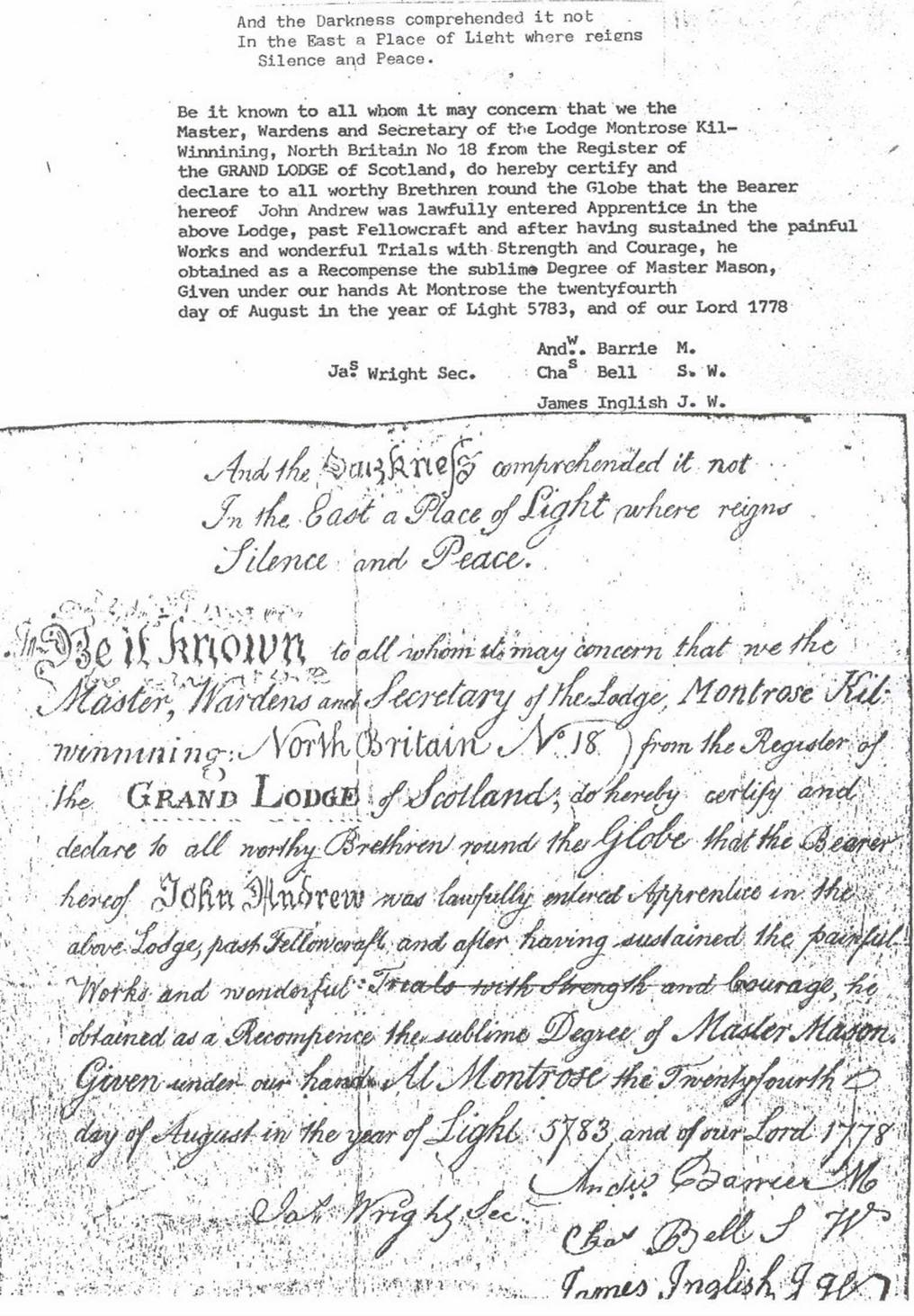
1778
John Andrew
achieved the degree of Master Mason of Kilwinnie
Lodge, Montrose.
1779
Sometime before
1780, John Andrew moved to Yorkshire.
1780
The Smuggler
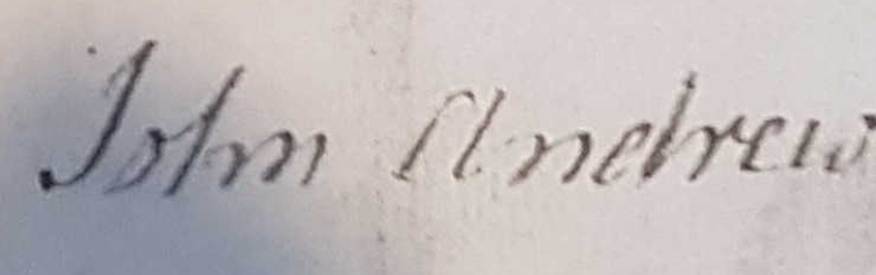
By 1780, John
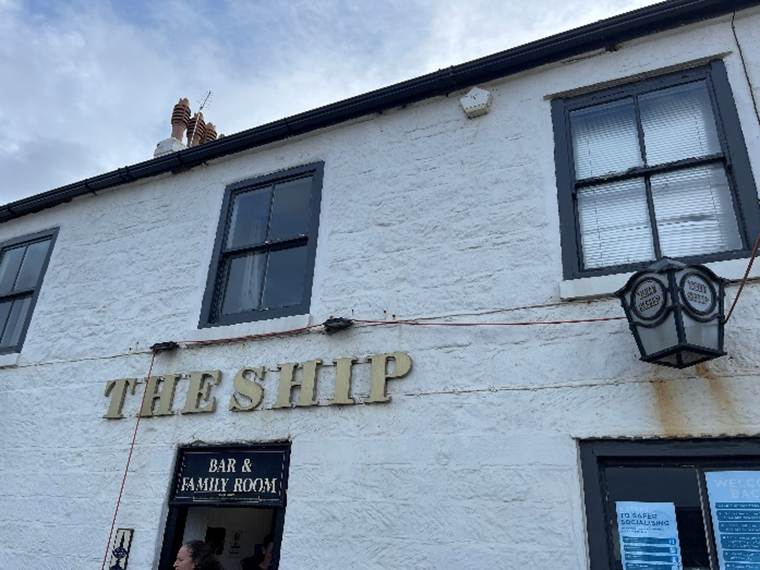
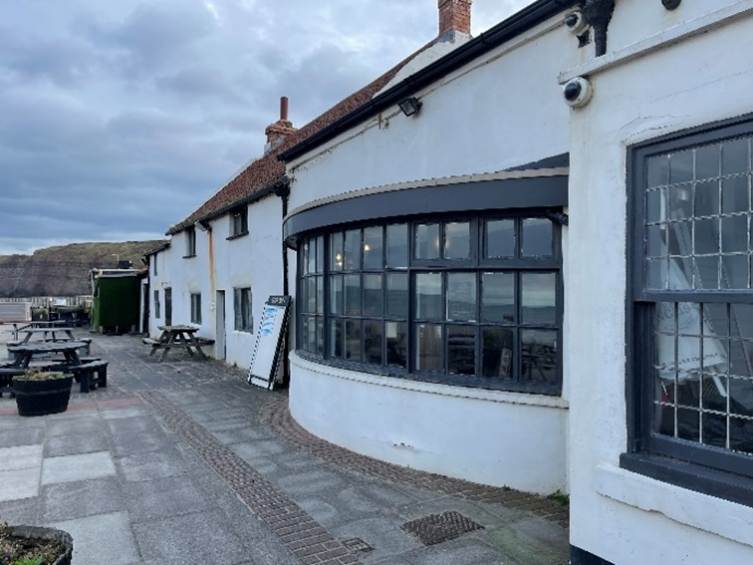
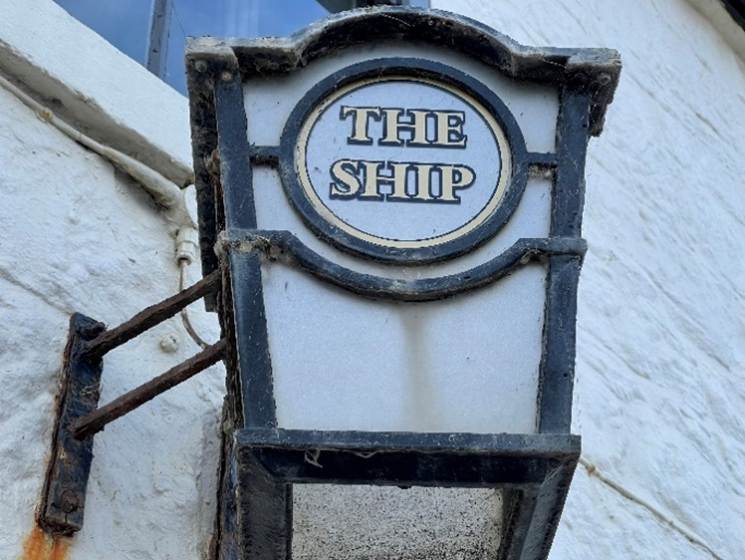
Andrew became the landlord of the Ship Inn, in the village of Old
Saltburn when he married the niece of Will Harrison, the Ship Inn’s landlord.
When John Andrew arrived in Saltburn, the Ship was not the only pub in the
small hamlet, other pubs included the Seagull and the Nimrod.
Until 1881, the pub also doubled up as a mortuary for the village, and later
the expanded town. The bodies of those who had drowned and washed up on the
beach were stored in the pub pending a post-mortem
The
Victorian town of Saltburn by
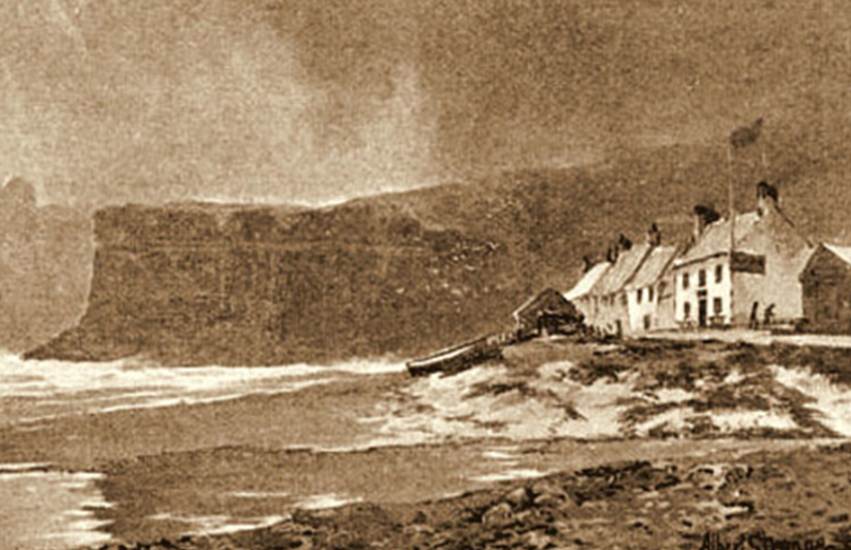
the Sea did not yet exist, and Old Saltburn was a small fishing village.
John Andrew, aged
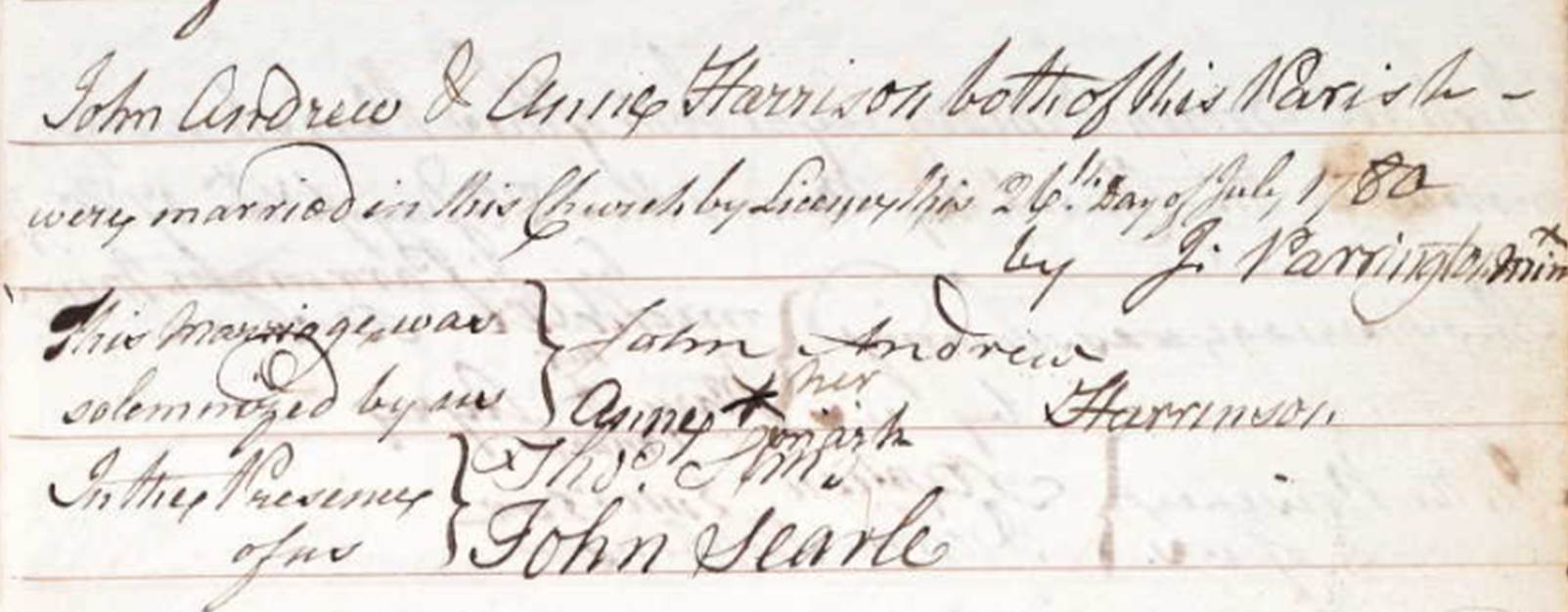
21, married Anne (“Anny”) Harrison (1756 to 1827) on 26 July 1780 at Skelton. Both John and Anne were of Skelton
Parish by that time. The witnesses to the marriage were John Searle and Thomas
King. (Skelton PR).

Their daughter
Mary Andrew (1781 to 1835) was born soon afterwards and baptised at Skelton on
13 May 1781.
As the new
landlord of the Ship Inn, John was quickly accepted into the smuggling
community.
1783
Their daughter
Jane Andrew (1783 to 1861) was born on 7 November 1783 (Skelton PR).

1785
John Andrew, with
his family wealth, and his landlordship of Old
Saltburn’s Inn, became a respected member of the community.
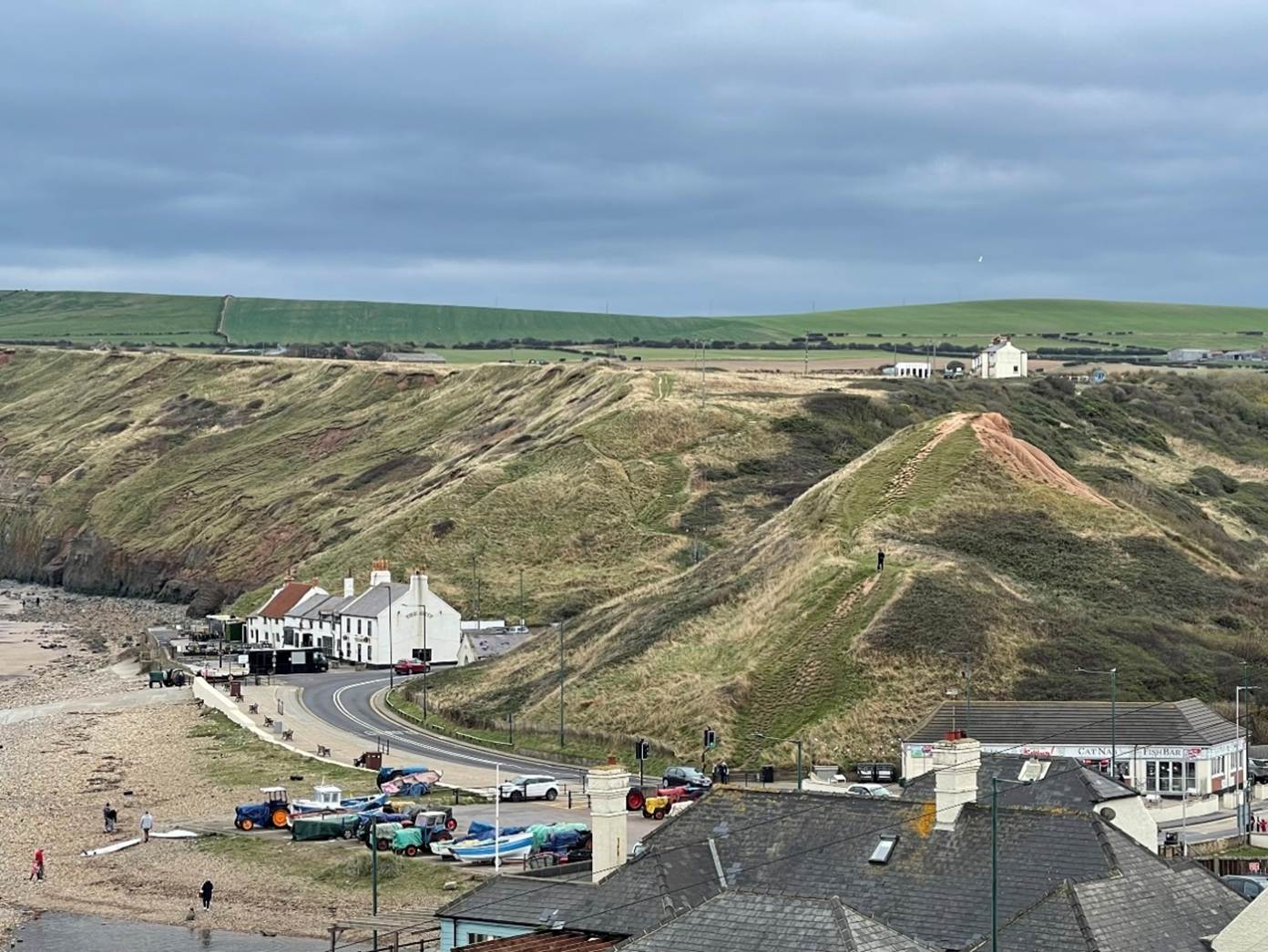
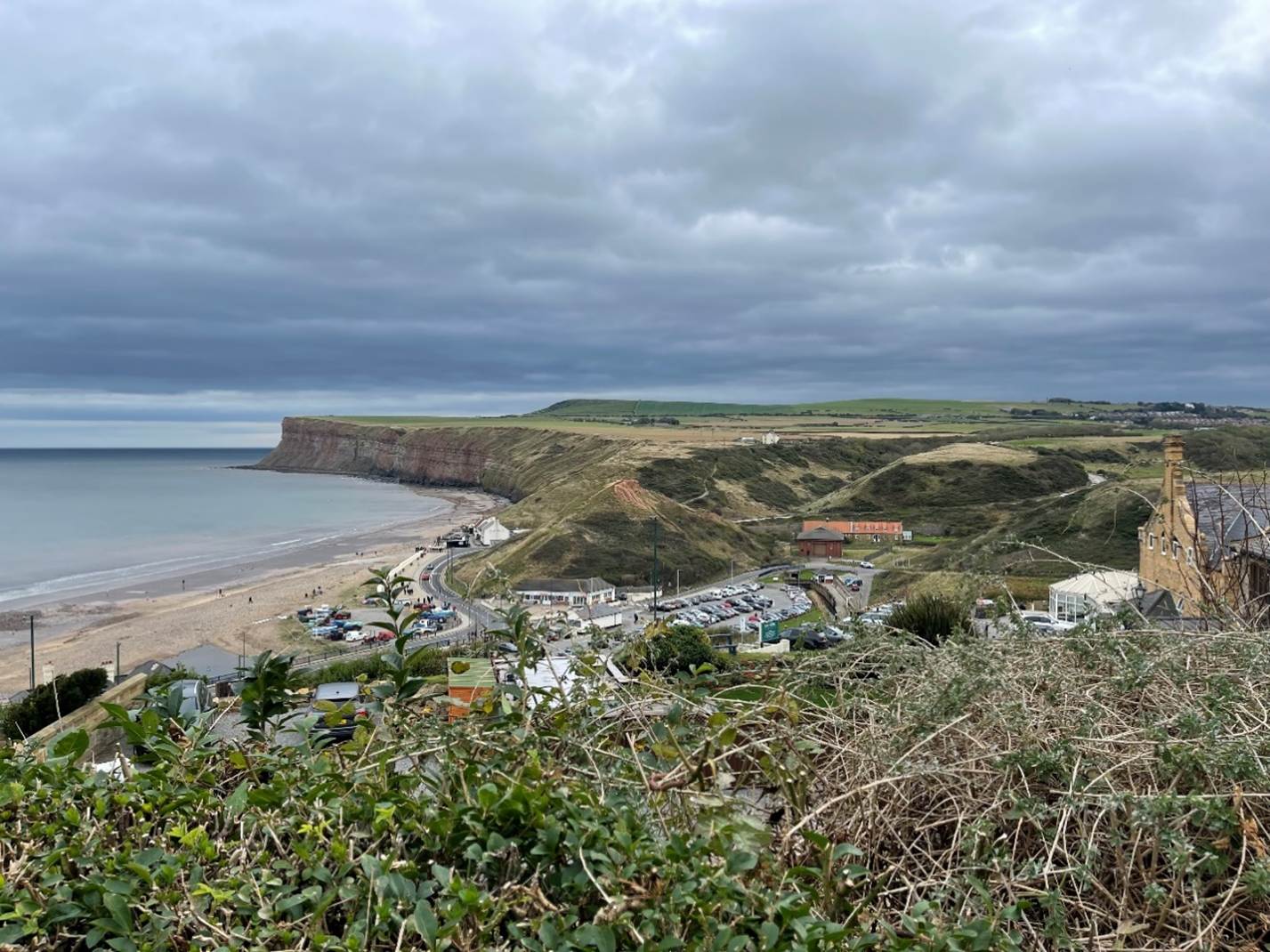
The Ship Inn,
with the white coastguard station (which emerged after John Andrew’s time) on
top of the hill (October 2021, RMF) The Old
Saltburn coastline (October 2021, RMF)
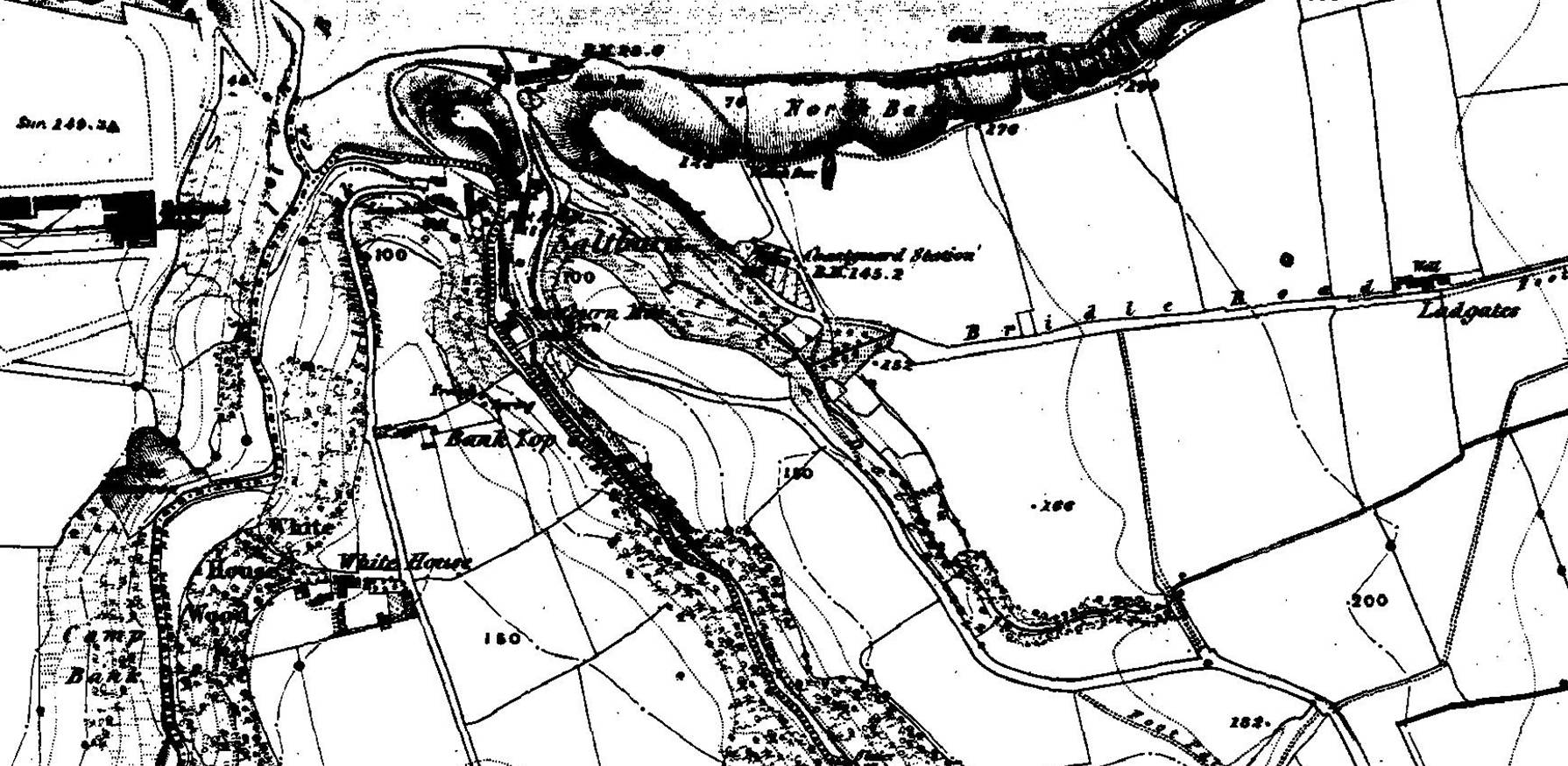
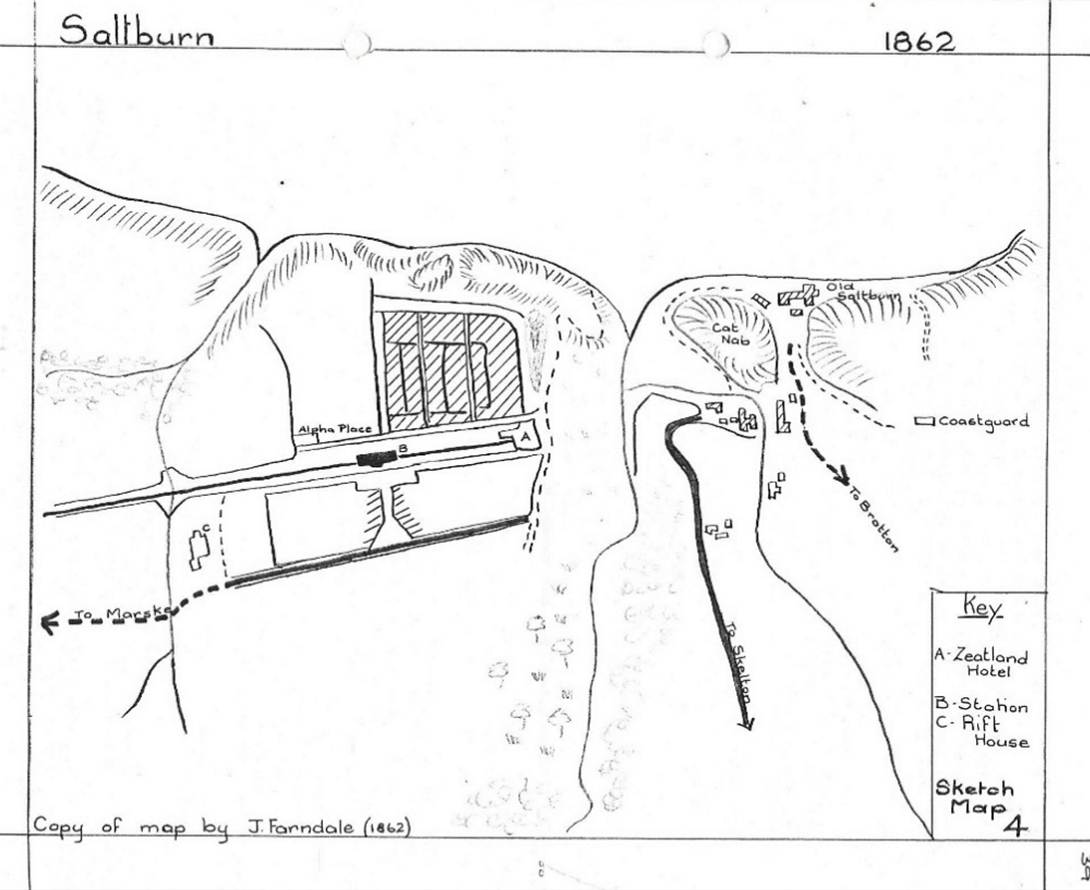
Map showing the location of the White House, Saltburn mill, the
Ship Inn and the later coastguard station (from 1848 map) John Farndale’s 1862 map
showing Old Saltburn
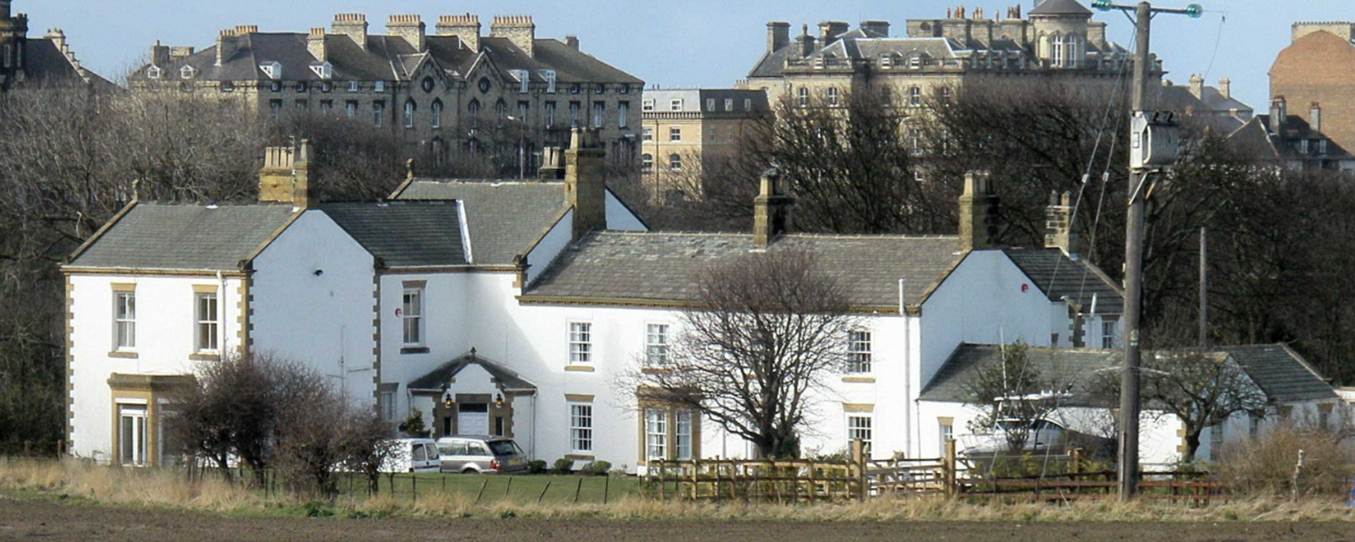
The White House,
Saltburn
John Andrew
entered into a partnership with a local brewer, Thomas King and co-ordinated
the local smuggling trade from the Ship Inn and the White House.
There were
stories of an underground passage between the White House and the Ship Inn
with its entrance below the stable of a horse that kicked out at anyone it did
not know. This secret passage is said to have led from halfway up Huntcliff to the Ship Inn, and then continued through to
the White House on top of the cliff. The geology puts some question to these
stories, but perhaps they were determined enough.
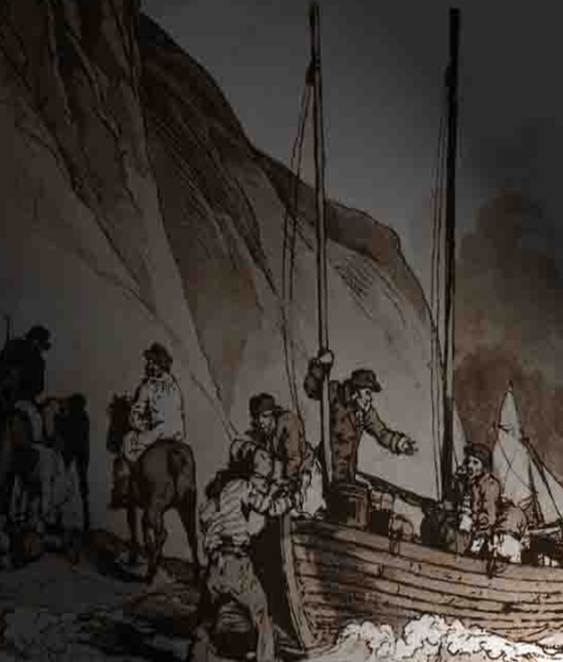
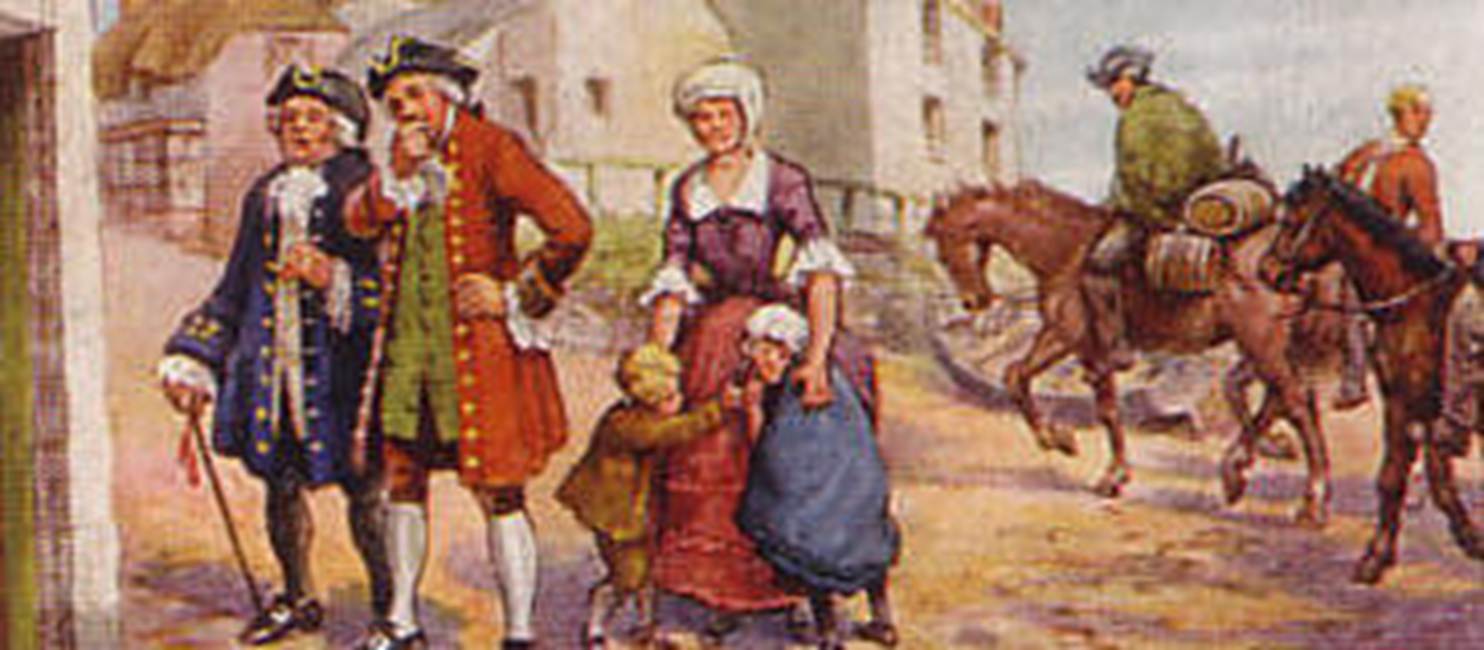
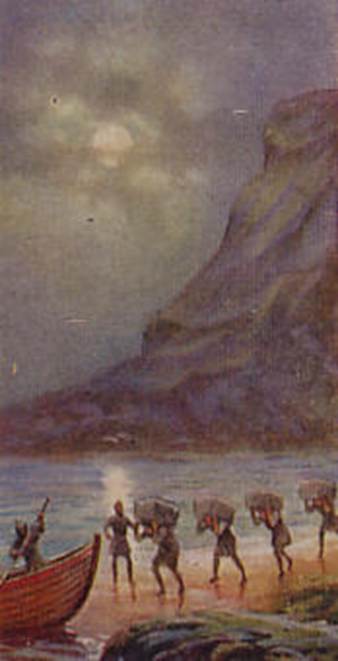
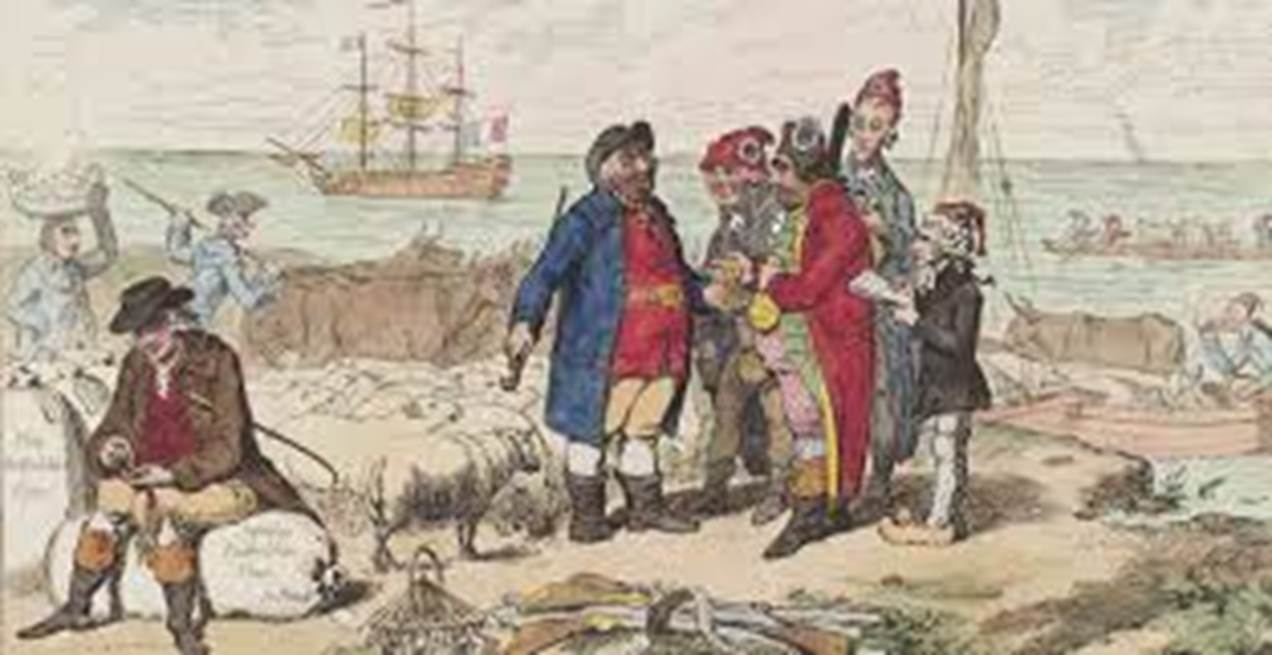
His grand daughter later christened him 'King of the Smugglers'
and he came close to being arrested on a number of occasions.
The saying Andrew’s
cow has calved was part of the Saltburn smugglers’ code. When this code
word was spread, it meant that a smugglers’ boat was offshore and ready to be
unloaded. The community would then assist in unloading the illegal contraband,
which would be transported to safe hiding places using pack horses. John
Andrew’s tactics included hiding some of the goods in a chamber under one of
his stable stalls. He placed a vicious mare in that stall, ensuring that anyone
attempting to find his stash would be met with a swift kick. Further inland, at
Osmotherly, near Northallerton, the codeword Jennie’s
coming, was used to herald the arrival of contraband goods.
He managed to
combine being one of the area’s most prolific criminals with a position in the
branch of the local militia (the Cleveland Volunteers) which was occasionally
called upon to help the customs officers in their pursuit of the smugglers.
John Farndale (FAR00217) later
wrote: Some years ago Old Saltburn imported lime, lime stones, and coal, and
also exported oak timber, prop wood, corf rods,
alum and corn. It had a coal yard and lime kilns, and there was a large alum
house near Cat Nab. My grandfather,
who was a Kiltonian, employed many men at this alum house, and many a merry
tale I have heard him tell of smugglers and their daring adventures and hair
breadth escapes. The lime kilns and coal yard were kept by old Mr William
Cooper, whose sloop, “The Two Brothers”, was continually employed in the
coasting trade. Behind the alum house, Thomas Hutchinson, Esq.,
late of Brotton House, made an easy carriage road from Saltburn to that place,
which road will always be a lasting monument to his memory.
In former days, there were frequently seen
lying before Old Saltburn three luggers at a time, all laden with contraband
goods, and the song of the crews used to be:- “If we should to the Scottish
coast hie, We’ll make Captain Ogleby, the king’s cutter, fly”
The government, however, being determined to
put a stop to this nefarious traffic, a party of coast guards, with their cullasses, swords, spy glasses, and dark lanterns, were
sent to the Blue House, at Old Saltburn. This came like a thunderbolt upon the
astonished Saltburnians. They made, however, two more
efforts to continue the trade – one proved successful, the other not.
The last lugger but one bound to Saltburn was
chased by the King’s cutter, and running aground at Marske, she was taken by
the coast guard, and all the crew were made prisoners, and put into the lock
up. While the coast guard were busy enjoying their prize, all the prisoners
escaped except one, who was found in Hazlegrip, and
whom the King’s officers sadly cut up. Lord Dundas, of Marske Hall, threatened
to bring them to justice if the man died.
The last luggar that
appeared on the coast was successful in delivering her cargo. Two of the crew,
fierce lion-looking fellows, landed, and they succeeded in capturing two of the
coast guard, whom they marched to the other wide of Cat Nab, where they stood
guard over them till the vessel got delivered. While these jolly smugglers had
the two men in custody, they sent to the lugger for a keg of real Geneva, and
at the point of the sword they compelled the poor fellows to drink of that
which was not the King’s portion. After releasing their prisoners, and then
telling them to go home, the smugglers returned to their vessel, setting sail,
they left the beach with light hearts and a fair breeze.
Since the merry days alluded to the glory of
Old Saltburn has departed – its smuggling days have passed away – its gin
vaults have disappeared – and the gay roysterers who
were wont to make Cat Neb and the adjacent rocks resound with laughter, now
rest in peace beneath the green hillocks in the retired grave yards of Brotton
and Skelton.
… Of late years many buildings of Old Saltburn have fallen
beneath the ruthless hand of Time, and all that remain now are two or three
humble looking cottages, with a respectable inn, possessing good accommodation,
the fair hostess being a grand daughter of the well known and worthy huntsman, Mr John Andrews, sen, one of the most ardent admirers of the sports of
the field in that fox hunting locality. In old Mrs Johnson’s days this inn was
noted for furnishing visitors with what were termed “fat rascals” and tea, a
delicious kind of cake stuffed with currants, and which the present obliging
hostess, Mrs Temple, who is an adept ion the culinary art, can make so as to
satisfy the most fastidious palate.
The smuggler’s road from Loftus to Bilsdale
It was about 1820 when William Garbutt of Loftus Mill first became
involved in smuggling. John King, a brewer of Kirkleatham, and John Andrew of
the White House at Saltburn, were joint owners of a cutter, the Morgan Rattler,
a very fast vessel. She was used to run cargoes of wine, gin, brandy, silk and
Flemish lace to various places along the coast from Runswick Bay to Marske.
Some of the cargoes were hidden at Loftus Mill and delivered round
Loftus in a miller’s waggon. The rest were carried away by packhorse. The
horses used were Cleveland Bays because, if need be, they could cover 100 miles
in a day, and so could get from the mill at Loftus to the sign of the Withered
Tree at Ladhill Gill under cover of darkness.
The road they travelled was from the mill to Gate House in Danby
Dale, a farm opposite the road up to Lumley House, where the farmer, John
Garbutt, hid some of the stuff. Then onto Rosedale, where Thomas Garbutt was
the landlord of the White Horse. Next over the more to High Mill in Farndale,
where the goods were hidden by the Miller, Leonard Hardwick. From Farndale they
went along the moor causeway, across Bransdale Moor and Cockayne Ridge to Todd
Intake and down by the Black Intake to William Beck in Bilsdale.
From there, deliveries were made to Robert Med at the Shoulder of
Mutton Inn, Michael Johnson at the Buck Inn at Chop Gate, and Thomas Medd at
the Fox and Hounds at Urra. The rest of the cargo was taken via William Ainsley
at Spout House to the sign of the Withered Tree, at this time a drover’s inn,
where John Garbutt was landlord. He was the last, last landlord as it soon
ceased to be an inn. It was here that the bolts of lace and silk were hidden
and later taken to York, to a seamstress who had a shop in Stonegate. It is
believed that the wedding trousseau of the bride of the 5th Earl Fitzwilliam
was made of some smuggled silk, but who delivered it is not known.
Jack Sample, who was landlord of the Feversham Arms, Helmsley
about 1936, was born at Saltburn, where his father was a Coast Guard and his
forbears Preventative Men, who knew about these smuggling activities. John
Andrew, part owner of the cutter, was caught at Hornsey and spent two years in
prison at York Castle, He was a descendant of John Andrew of Kincardine. The
last of that family to live in Saltburn was Miss ‘Tipp’ Andrew. None of the
other people involved in the smuggling runs were caught, although they were
chased by the Riding Officers several times.
I have written this from the account given to me by John Garbutt
of Landhill Gill and Robert Garbutt of Seave Green, Chop Gate, who were the grandsons of William
Garbutt of Loftus Mill.
Editor's note. The sign of the Withered Tree is the ruined
farmstead at Grid Reference SE 555943, marked as Weather House on the ordnance
map but still pronounced ‘Witheris’ locally. It
stands at or near the old sheep farm named in the 12th century as ‘Widheris’.
(J R Garbutt, The Ryedale Historian,
Vol 16, 1992)
Respectability
1786
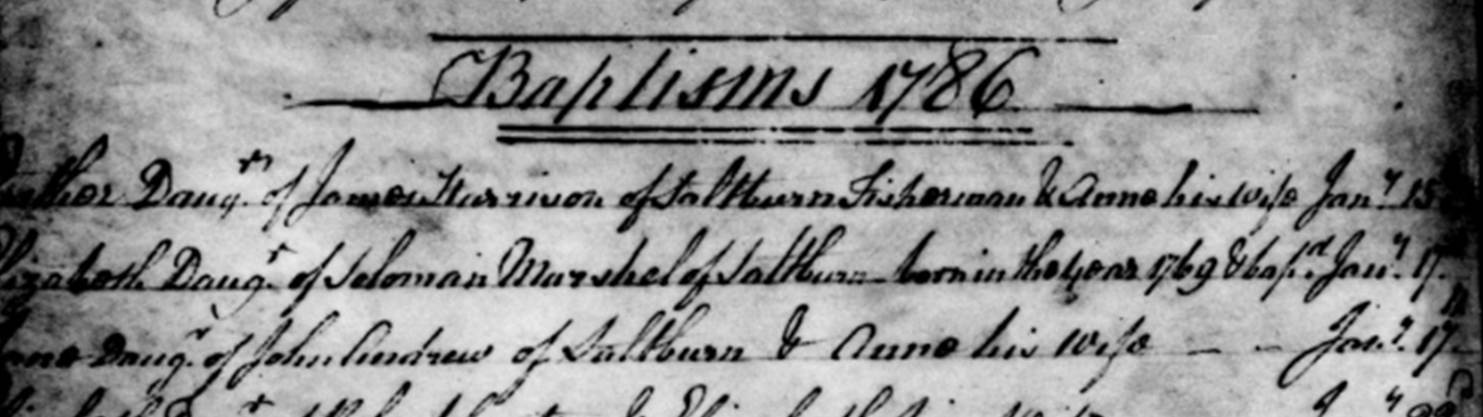
Their daughter,
Elizabeth Andrew (1786 to 1855) was born at Skelton on 8 January 1786 (Skelton PR).
1788
Their daughter Ann
Andrew (1788 to 1835) was born at Skelton on 19 April 1788 (Skelton PR).

1791
Their daughter Margaret
Andrew (1791 to 1868) was born at Saltburn in 1791 (Skelton
PR).

1794
Their son, John
Andrew (1794 to 1855) (Farmer and Smuggler) was born in Skelton in or about
1794 (Skelton PR).

1796
Their son, James
Andrew (1796 to 1875)(farmer) was born in Skelton on 9 August 1796.
1798
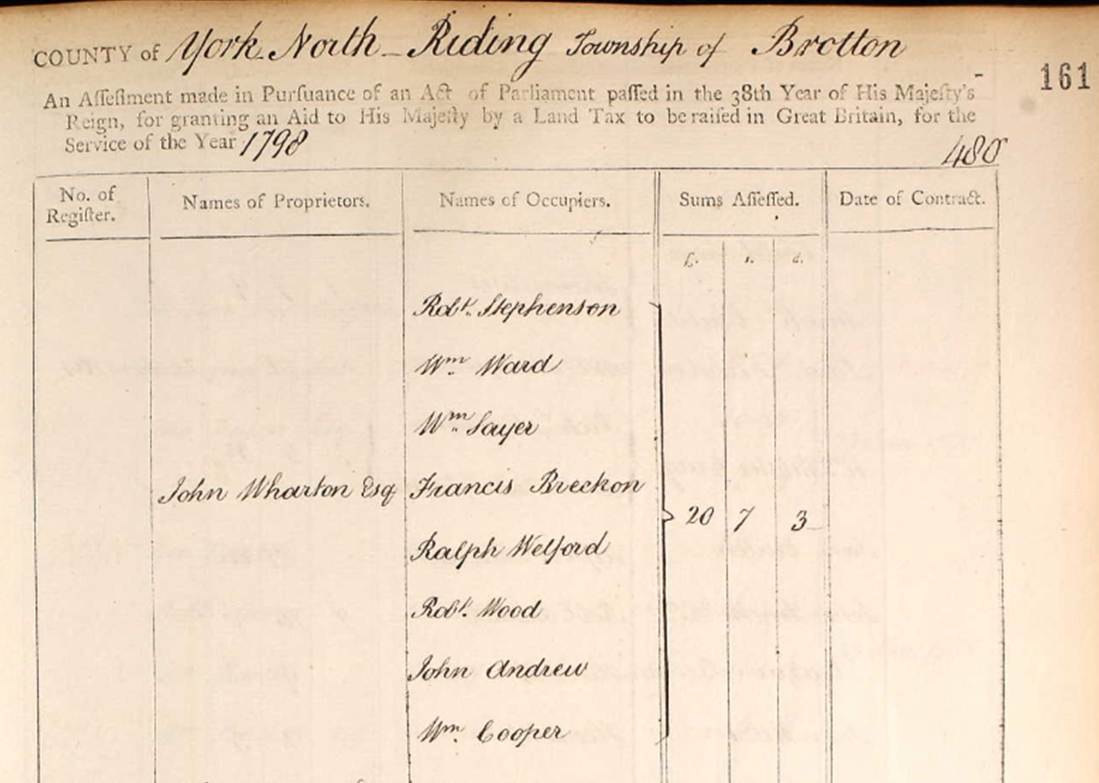
A Land Tax Assessment for the Township of Brotton shows
that his landlord was paying tax: An Assessment made in pursuance of Parliament
passed in the 38th Year of His Majesty’s Reign, for granting Aid to
his Majesty by Land Tax to be raised in Great Britain, for the Service of the
Year 1798 … Proprietor John Wharton Esq … Occupiers … John Andrew … £20 7s 3d.
1799
Their daughter,
Charlotte Andrew (1799 to 1803) was born in Saltburn in or about 1799 (Skelton PR).

1801
Their daughter Harriet
Andrew was born in Saltburn in about 1801 (Skelton
PR).

1804
John Andrew saw
no conflict of interest in pursuing his smuggling interests with a respectable
façade. On 24 October 1804, he was commissioned as an Ensign in the Cleveland
Volunteer Infantry, while continuing to engage in smuggling.
By 1807, John Andrew was a Lieutenant in the Cleveland Volunteers.
John’s daughter, Ann Andrew married James Taylor of Stockton, at
Skelton in 1807 (Skelton PR).

1808
John Andrew became a Lieutenant in the Third Regiment of the Local
Militia of North Riding.
1809
On 16 May 1809, John Andrew was promoted to Captain in the Third
Regiment of the Local Militia of North Riding. His circle was widening and the
gentry and landowners were eager to invest in hyis
smuggling enterprise.
1810
One night in 1810, apparently working on a hot tip, an armed naval
cutter appeared suddenly to blockade a lugger riding anchor at Saltburn bay
while Revenue men swarmed onto the beach to surround Andrews’ men who were
about to begin unloading. The lugger’s captain immediately cut his anchor and
sheered away to the north, hoisting all sail in a bid to outrun the pursuing
cutter which had opened fire. Either the lugger was more manoeuvrable or the
captain a more astute mariner, for after suffering some casualties, he got her
clean away.
Concealed on the beach, Andrew watched the Riding Officers close
in to capture his men who, heavily outnumbered, were attempting to fight their
way off the sands and slip away inland. Andrew soft footed back to the Ship Inn
to send for reinforcements. These soon arrived and after a desperate fight, the
Excise men were beaten off empty handed.
The failure to capture Andrew continually rankled the King’s men
and they frequently searched the Ship Inn, finding nothing. Often angry and
frustrated, they would brawl with the taunting locals on the flagstone floors
of the inn while John Andrew looked on, amused.
(Chris Scott Wilson, The
History of Saltburn, 2021)
At about this time, John Andrew have up his landlordship
of the Ship Inn and moved up to the White House and was soon described as a
sound agriculturalist. (Chris Scott Wilson, The
History of Saltburn, 2021)
John’s
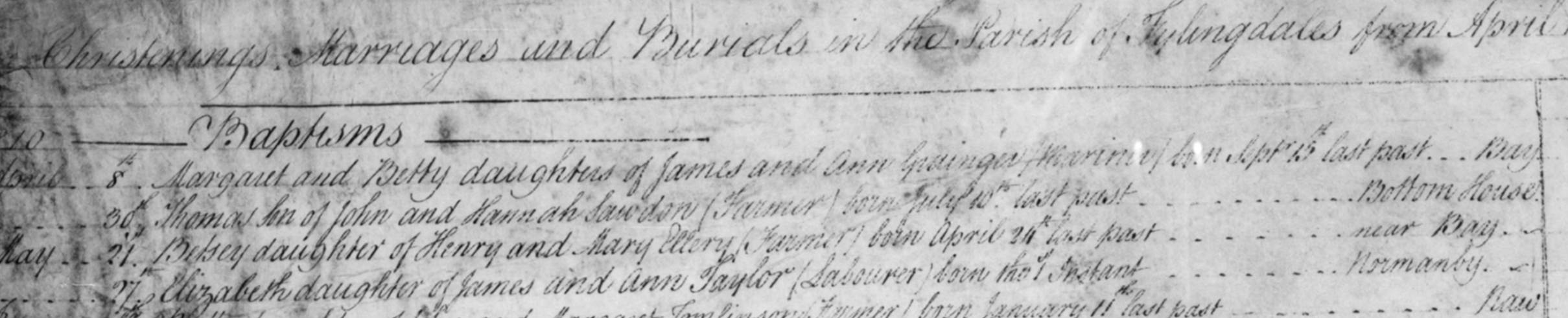
granddaughter, Elizabeth Taylor (1810 to about 1835), was born on 1 May 1810 at
Fylingdales and baptised there on 27 May 1810 (Flylingdales PR).
Elizabeth Taylor
would marry Martin Farndale (FAR00264)
at Skelton in 1842, seven years after John Andrew’s death. Martin Farndale is the
website author’s second great grandfather, and so John Andrew is his fourth
great grandfather.
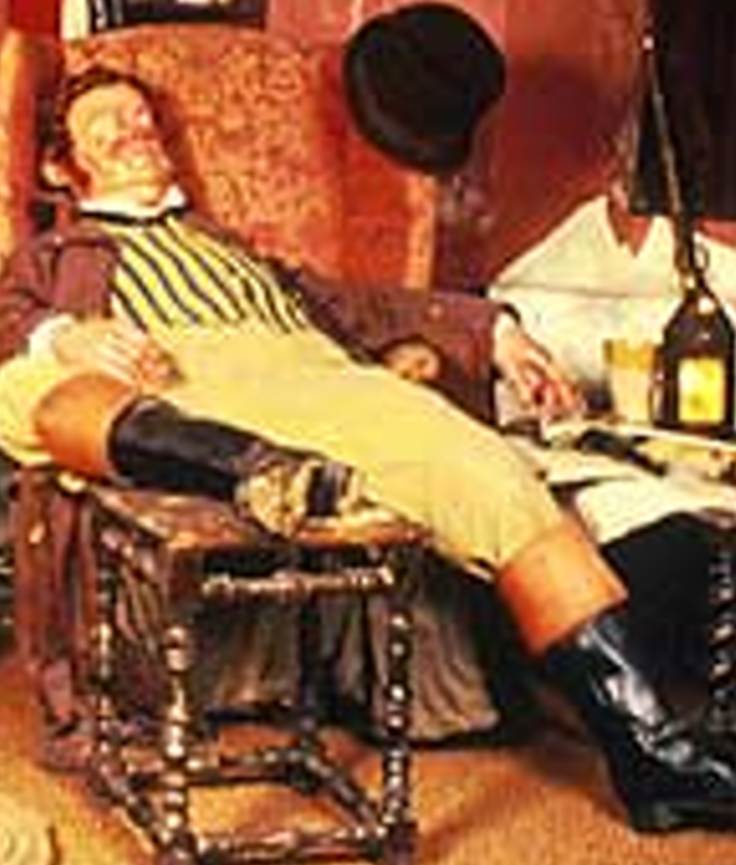
John Andrew
sleeping in his parlour
1817
Despite the end
of the Napoleonic Wars, smuggling continued. George Young wrote in 1817, This
place (Staithes), with Robin Hood’s Bay and the small village of Saltburn
beyond Huntcliff are noted for smuggling, Every
friend of mankind will desire the complete suppression of a traffic, as
precarious to the morals of all concerned in it, as to the public revenue and
the fair trader. (quoted by Chris Scott Wilson, The History of Saltburn, 2021).
Before the end of
the Napoleonic Wars, there was little hunting in Cleeland. William Chaloner
held the Cleveland Hounds at Guisborough in 1785 and Sir Charles Turner had
another pack at Kirkleatham in 1790. On 5 June 1817, at a meeting in the
Angel Inn, Loftus John Andrew was elected as the first Master of the newly
formed 'Roxby and Cleveland Hounds'. His salary was £50 per annum and he was
also elected to be the first President.
From 'The Cleveland Hounds', by A E Pease: At the
Angel Inn at Loftus, on a summer's afternoon, we may picture John Andrew Snr,
Isaac Scarth, Henry Clarke, Henry Vansittart Esq, Thomas Chaloner Esq and the
other signatories to the rules then drawn up, sitting with their tumblers of
punch, making a treaty. The Hounds were taken to Saltburn, then but a fishing
hamlet on the sea-shore, where, for more than fifty years, the management was
in the hands of the Andrew family. They hunted foxes in the winter and, with a
few of the old Hounds, otters in the summer. A few years after this the Roxby
was dropped from the name of the pack, and they became the 'Cleveland'.
Subscription was
set at £1 11s 6d and a list of rules were drawn up. The members included
solicitors, farmers, a doctor and a brewer, and John Andrew’s social network
was thus expanded amongst respectable folk.
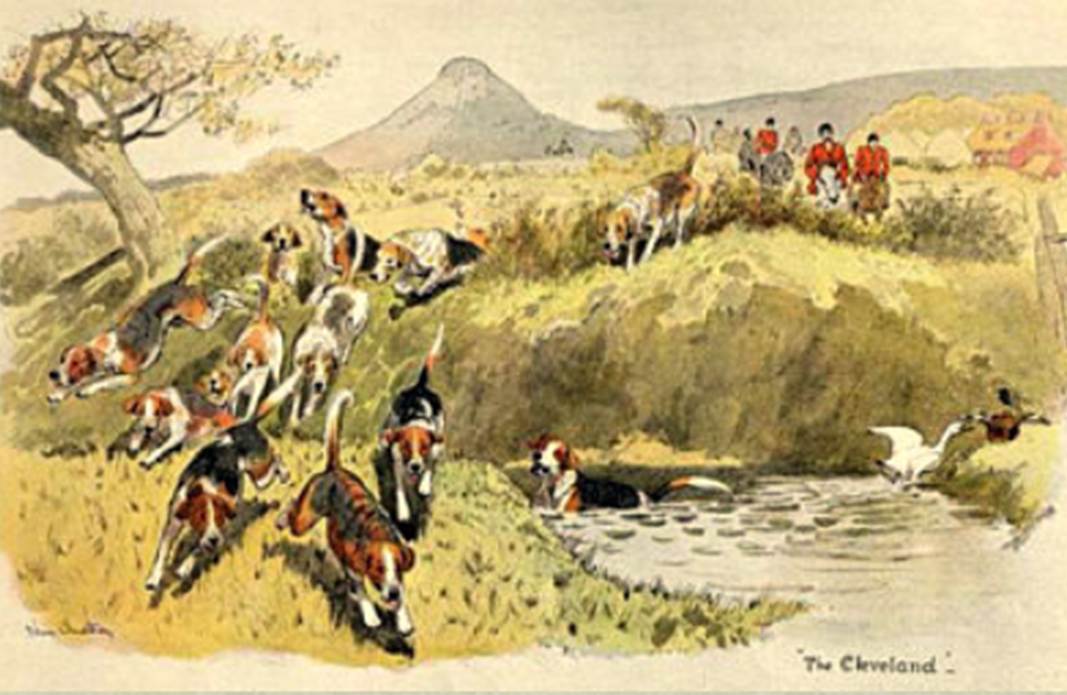
John Andrew
hunted with the Cleveland Hounds until his death in 1835, assisted by his son,
John Andrew Junior, who took over the hunt when his father died.
The slow end of smuggling
After Trafalgar
in 1805, the navy were able to release some sailors and in 1809 the
Preventative Waterguard was formed. There was some
patrolling by boats and HM Customs patrols on shore. A detachment of coastguard
were stationed on Huntcliff above the Ship Inn before
later government buildings were established at a place which John Farndale
called the Blue House.
Yet by 1827 the
price of Geneva had reached 25s per gallon and John Andrew continued to conduct
his smuggling business, if increasingly needing to evade the preventative
forces.
1826
The wrecking of the Esk
The wrecking of the Esk.
The 350 to Whitby Waler, the Esk, was returning
home after a whaling expedition north of Shetland, during which four whales had
been caught. In 1816 the same ship had survived being trapped in ice on a
voyage to Greenland. Her Captain Dunbar passed Hartlepool as a gale started to
drive her towards the shore. The morning of 6 September 1826 was marked by
strong winds, mist and crashing surf. The Esk’s sails
were soon shredded and she became grounded at the low water mark off Marske on
Sea. The crew fired guns and burnt a distress light, but at dawn, she went to
pieces. Within seventeen hours she was a total wreck and her riggings, timbers
and cargo came ashore along miles of coastland. Only three members of the
twenty seven strong crew survived. A memorial service was later held at St
Mary’s Church, Whitby and 3,000 folk attended and took a collection for the
bereaved families.
1827
Later life
Ann (nee
Harrison) Andrew, John’s wife died on 22 March 1827, aged 70, and was buried at
Brotton on 26 March 1827.
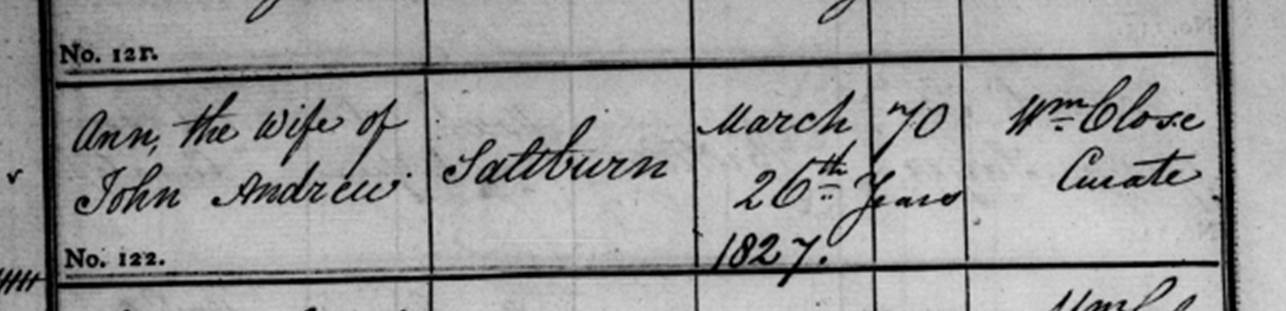
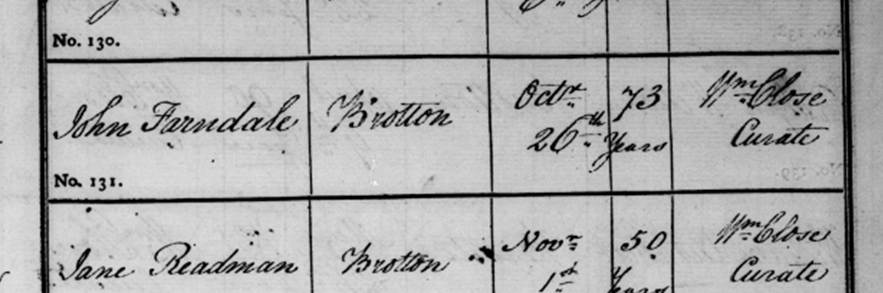
In the same list
appeared John Farndale of Kilton.
The recently made
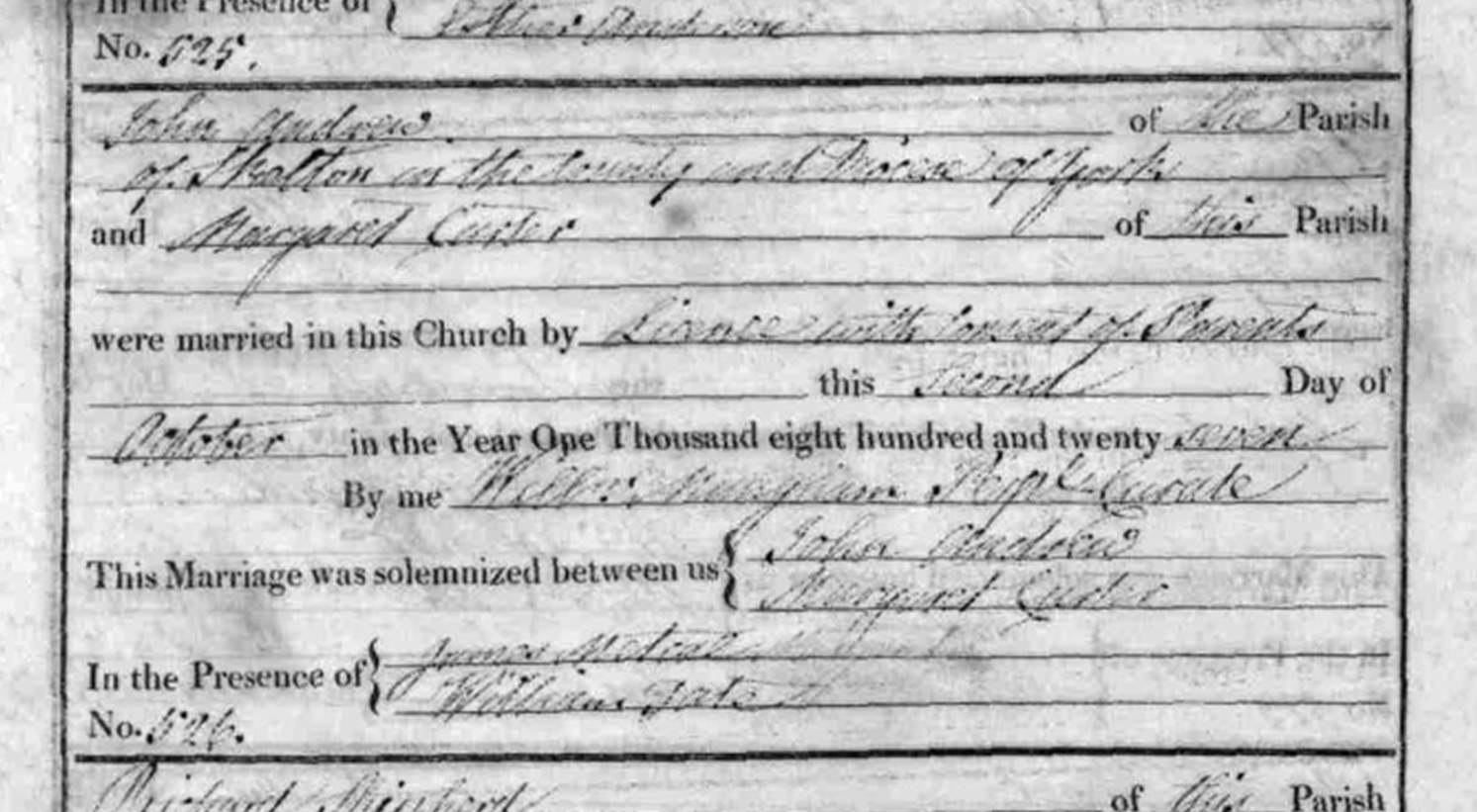
widower, John Andrew married Margaret Carter, a spinster in South Shields on 2
October 1827 (South Shields PR).
It has long been
believed that, after a lifetime of dodging the Excise men, John Andrew, Senior,
was eventually caught in 1827 at Hornsea while off-loading an illicit cargo.
Alan Ward of Saltburn is a direct descendant of Andrew and had commented that
John would have been 70 by this time and it was likely that it was, in fact,
his son, also called John (1794 to 1855) who was caught in this act of
Smuggling. Alan feels that the following confirms this:
· A letter from the Customs House, London, dated 20 January
1825, asking the Customs Collector to enquire into the ability of two
men to meet the bail amount of £95 for John Andrew.
· A letter asking the Collector to take the necessary
measures for the release of John Andrew, "Junior" from York Castle.
The Cleveland Family History journal by John
Warwick Andrew, b 1925, of Oxford, did the original research.
· An article in the Northern Echo, dated 28 November 1935, dealing
with Sir Alfred Pease's 'Memories of Saltburn': John Andrew, Junior, had the
bad luck to be caught running a cargo ashore at Hornsea and was fined an
enormous sum of £100.000, I believe about 1827, and, of course, unable to pay a
fraction of the fine, was imprisoned in York castle. After two years of durance
there, Henry Vansittart, of Kirkleatham, who had carried on the hounds during
John's absence, was able to secure his release through the influence of his
relative Lord Bexley, who was in the Government. In those days the discipline
for debt was not strict, and Tom Parrington told me that John Andrew carried on
his smuggling by correspondence through agents all the time he was a prisoner.
From his release until his father died in 1835, he seemed to have been reduced
to poverty, for he lived in a small cottage at Boosbeck and only had a grey
pony, 15 hands high on which he hunted hounds twice a week. The pony was
"as hard as iron" but had a temper and would always run away with his
Master and was not particular as to the direction in which he bolted. It was
not uncommon to see the gallant grey tearing across country in quite another
direction to that which the hounds were running. The pony never got a summer
rest for then his owner yoked him to a cart and he carted stones, seaweed, or
anything else at a job which earned John a few shillings. After his father's
death, Andrews was Master of the hounds, and his circumstances improved a
little as the hunt paid him a small salary. John Andrew, Junior, died in 1855
and was also buried in Skelton Church yard.
In the 1827
incident, John Andrew, which I take to be a reference to John Andrew Junior,
was caught running a cargo at Hornsea. There is a note in the margin of
Cleveland Hounds that suggests the fine may have been as high as £100,000, but
it was too much for John to pay, and he was sent to York Castle prison.
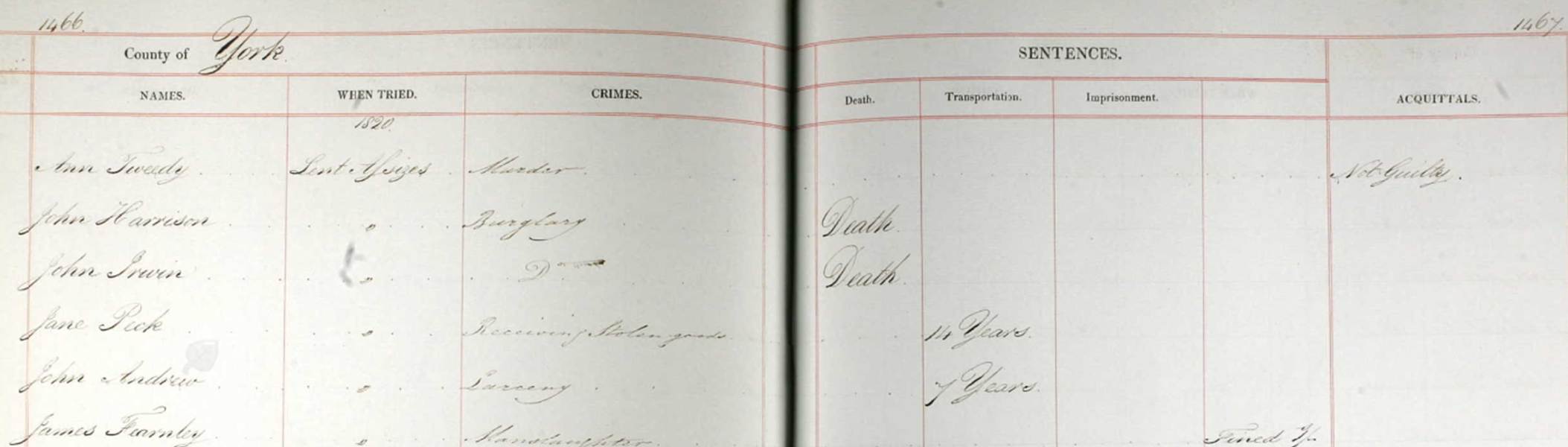
(Criminal Register, York, 1820)
Some speculate
that John Andrew’s hoard may still be hidden somewhere in Saltburn.
1835
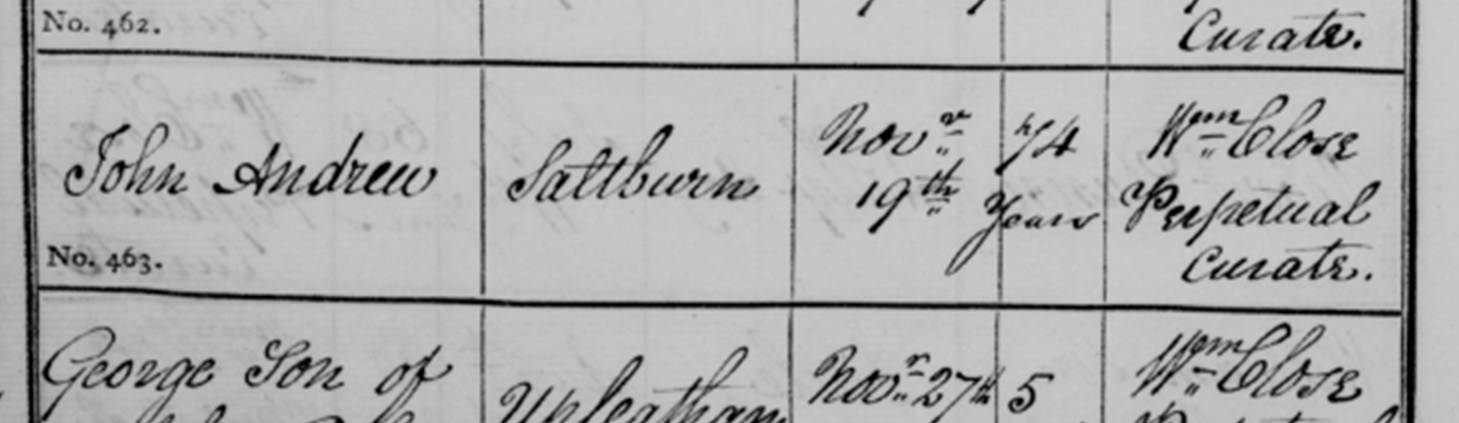
John Andrew died
in Saltburn on 14 November 1835. He is buried at All Saints Old Churchyard,
Skelton, in the south corner of the churchyard on 19 November 1835 (Mon R, Prerogative & Exchequer Courts Of York Probate
Index, 1688-1858, Skelton PR). He left £800 (at least that’s what was
declared!).
There was a large
turnout at his funeral.
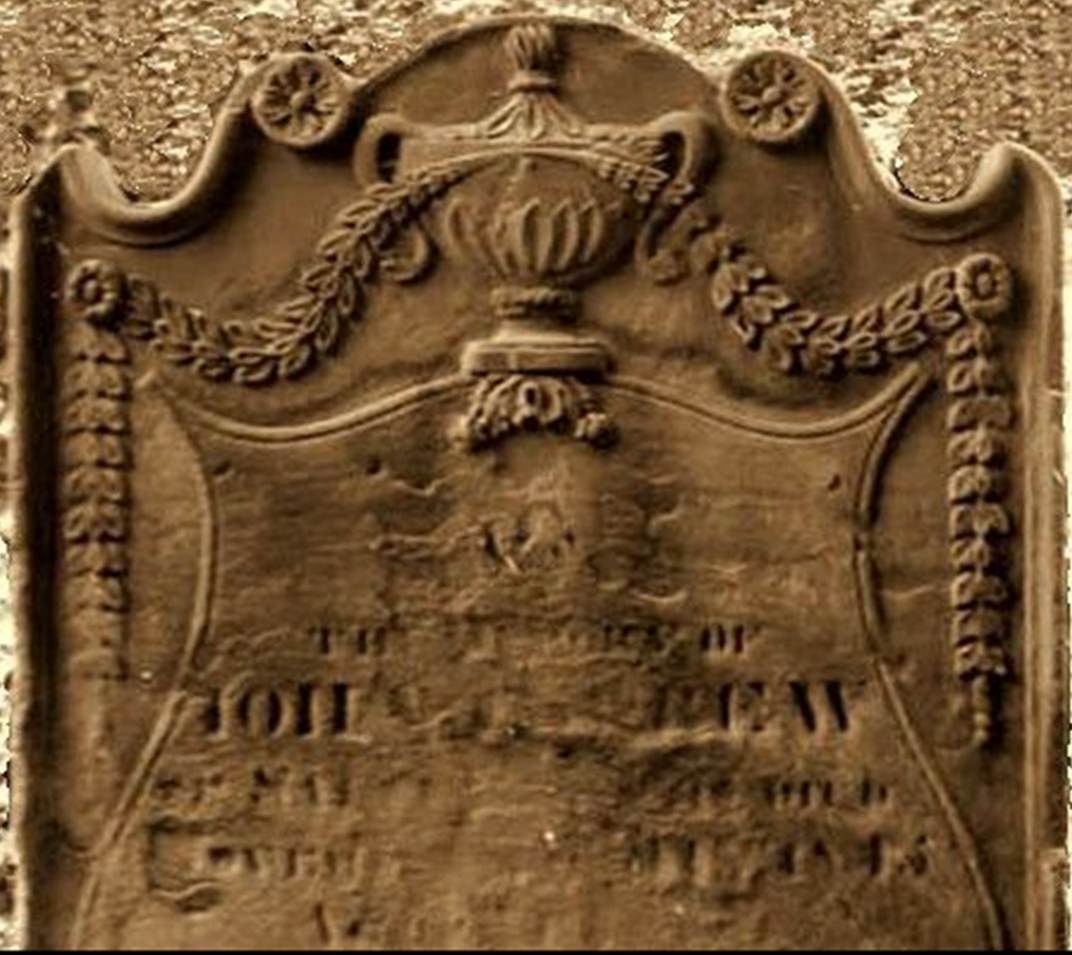

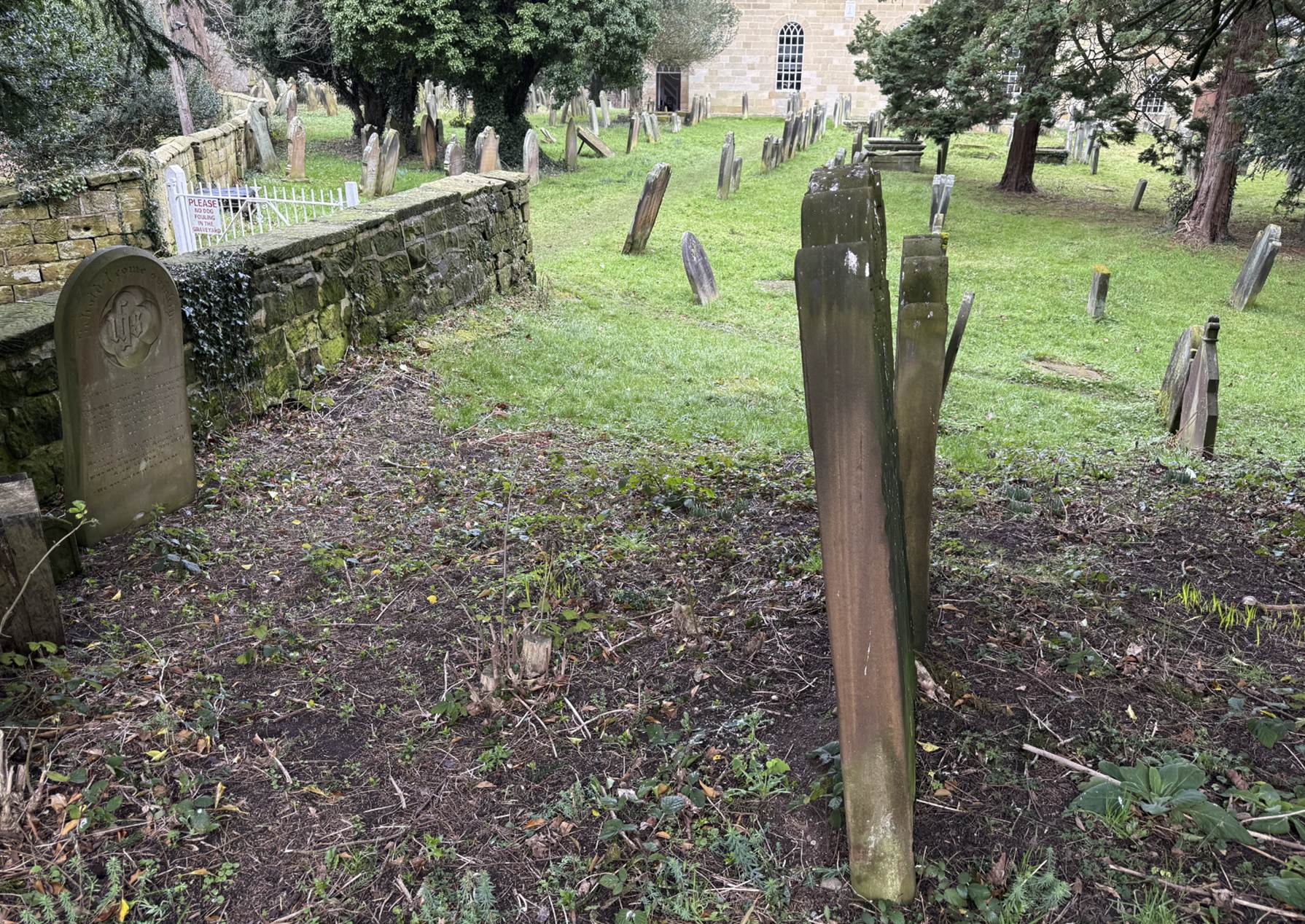
The group of
gravestones near the entrance to Old Skelton Church including the Andrews
graves adjacent to Martin and Elizabeth Farndale
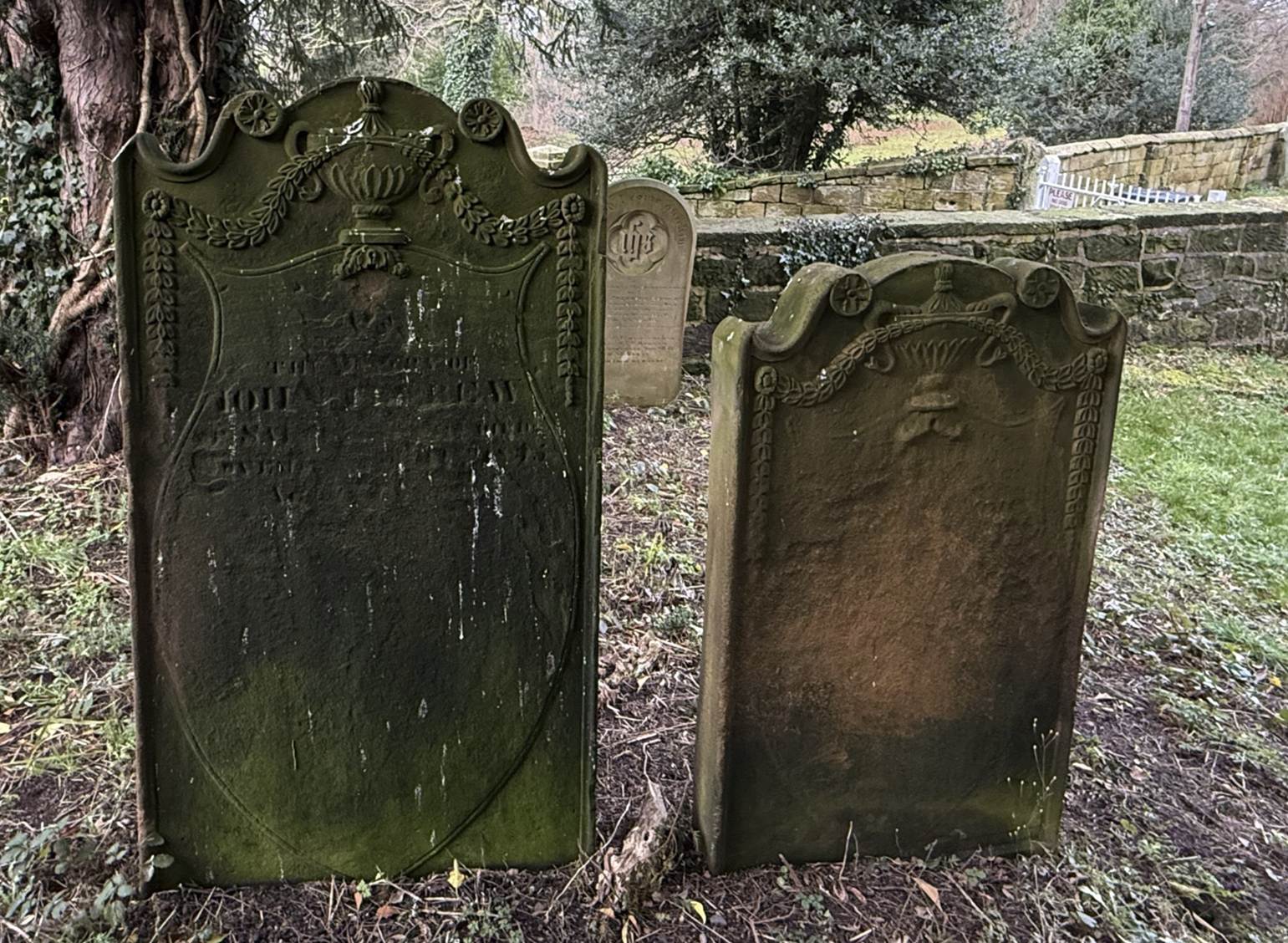
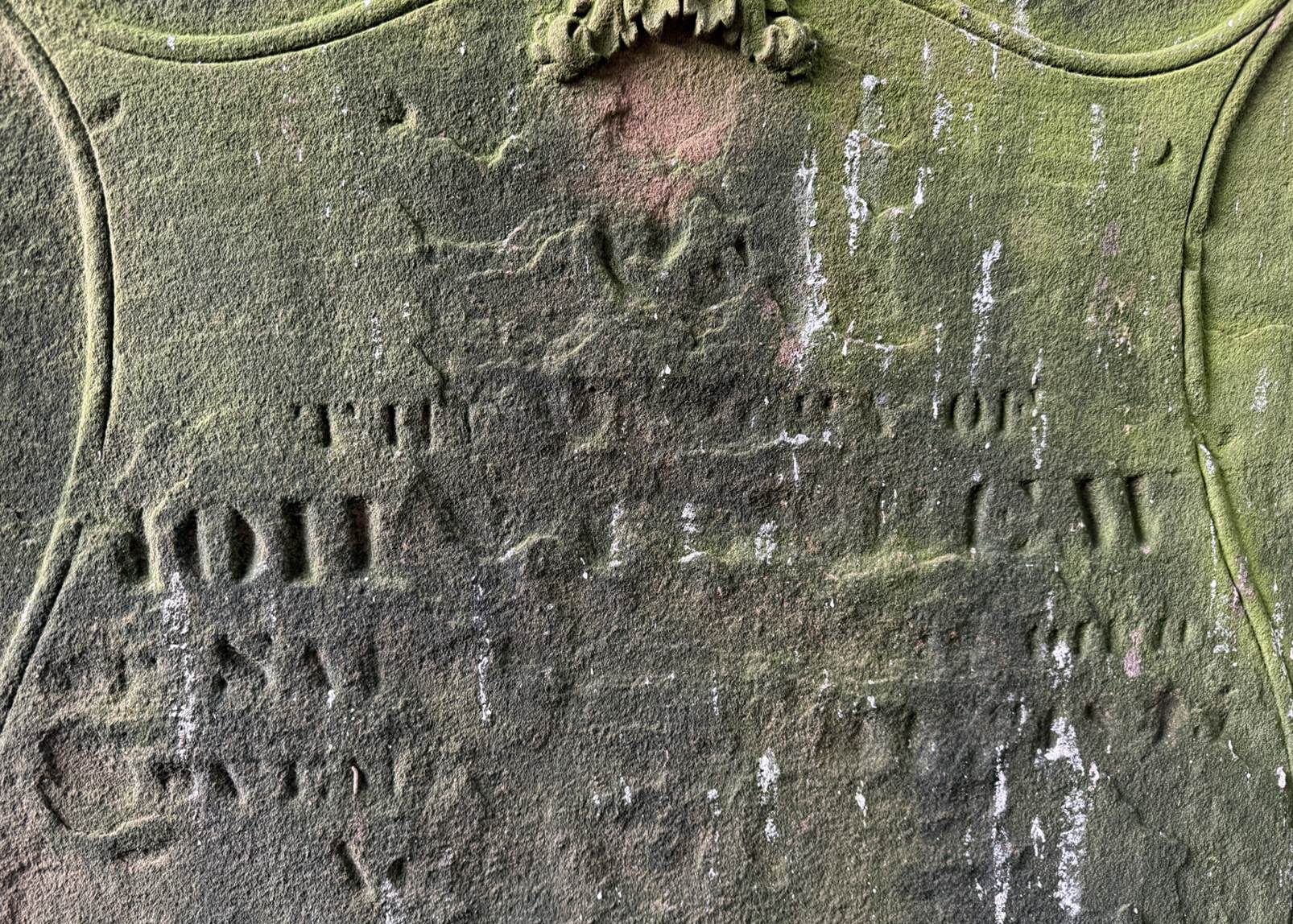
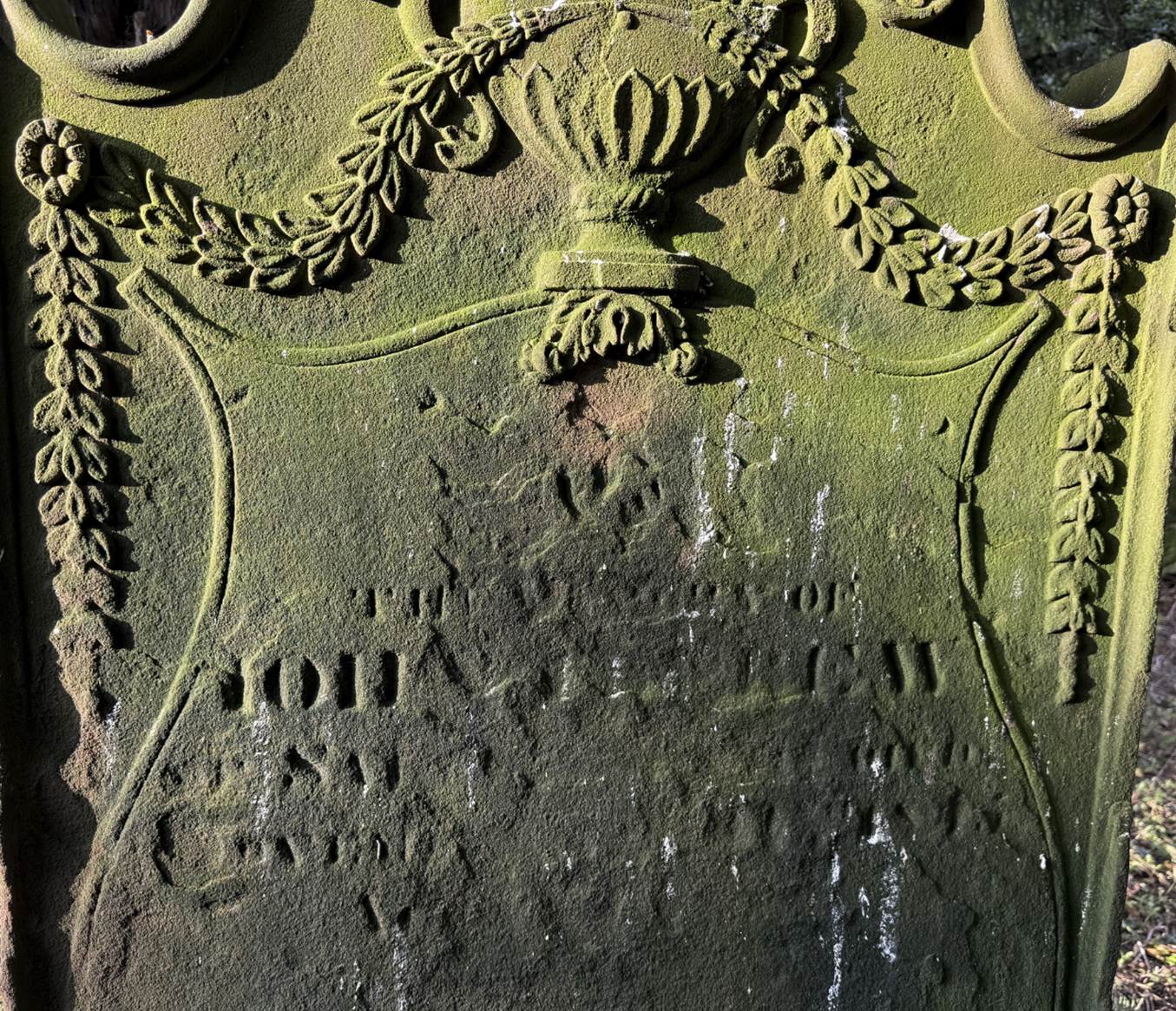
John Andrew’s
gravestone, next to an unreadable gravestone
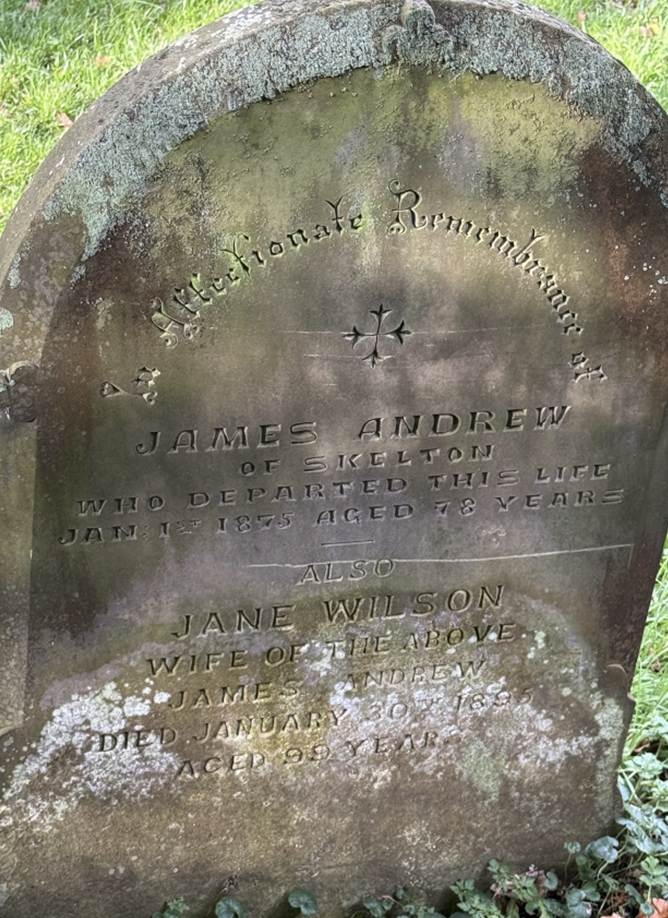
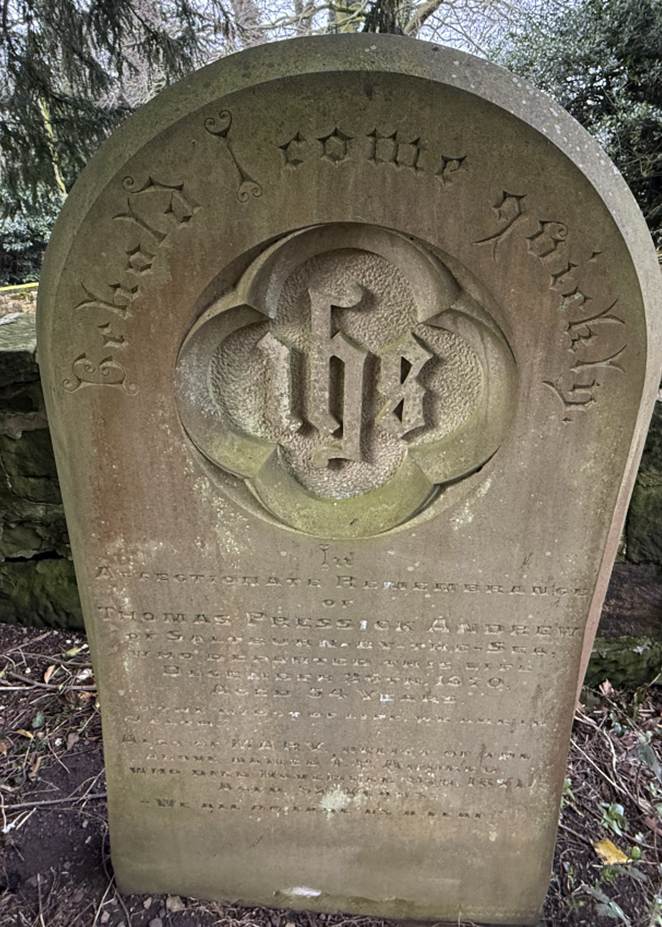
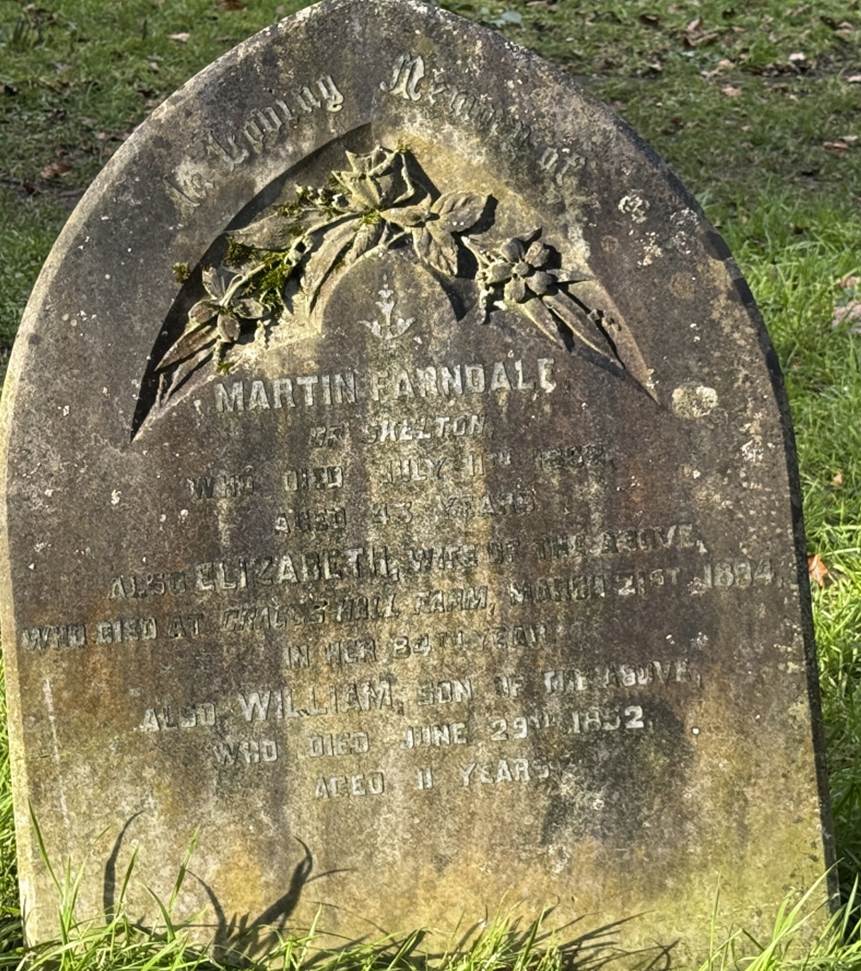
John’s son, James
Andrew Thomas Pressick Andrew,
John’s grandson The gravestone in the
same group of Martin Farndale and Elizabeth (nee Taylor) Farndale (John
Andrew’s granddaughter)
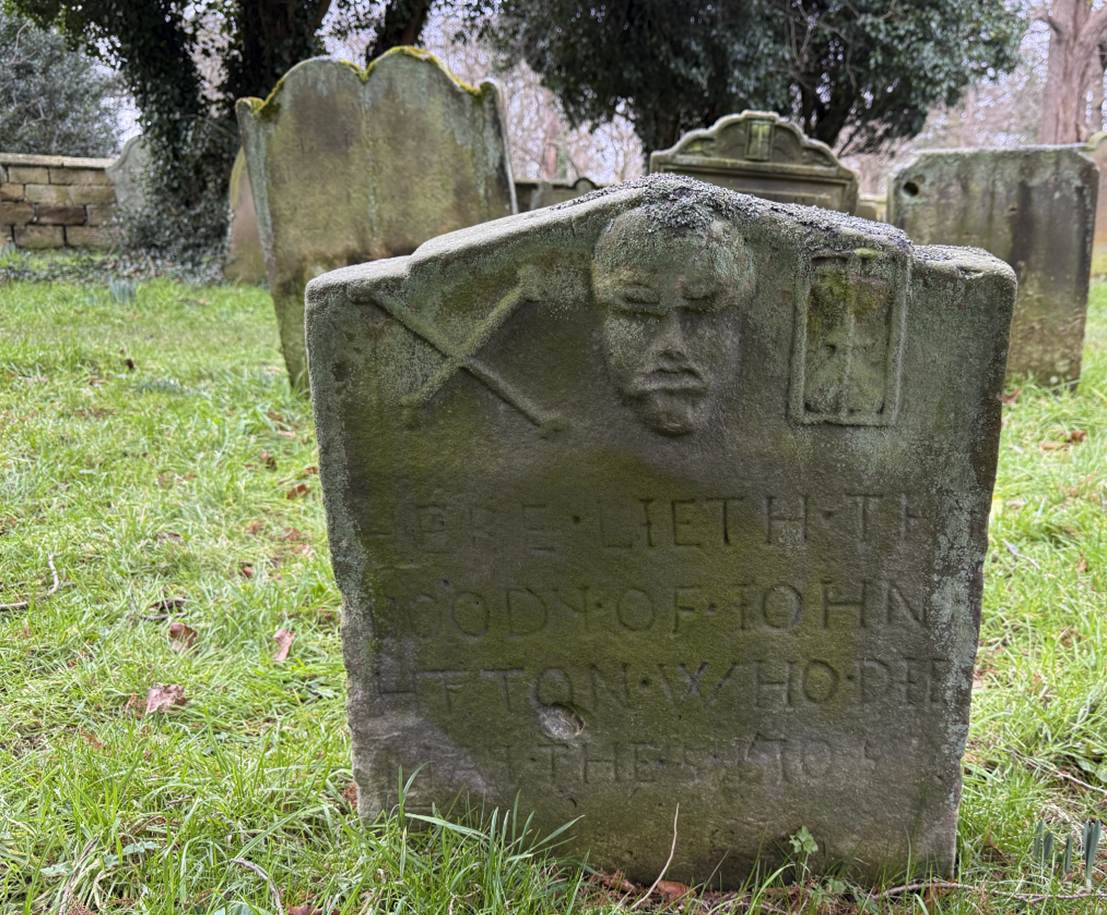
A gravestone in
the proximity whi9ch suggests piratical activity
The Andrew family
at the White House continued to prosper under John Andrew, junior's sons, Tom
and George, into the late nineteenth Century. In 1886 their finances allowed
them to make a large loan to John Thomas Wharton of Skelton Castle. The family
fortune seems to have been dissipated by being shared out between George's 11
children and ended in the suicide of one of them in Ruby St, Saltburn.
He left six
children, Thomas Pressick, Ann, James, George and Mary.
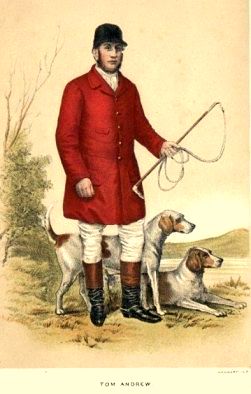
John Andrew
Junior became the new Master of the Cleveland Hunt at the age of 40 and remained so until 1870 and became agent
for the Skelton estates.
Word in the Wind, Sea Shanty
by J G Songs about John Andrew.
Watch
the Wall my Darling: The Story of the Smuggler King by Richard Swale is a
story is based loosely on the lives of the author’s great, great, great,
grandfathers, John Andrew and James Law.
|
How does John Andrew relate to the modern
Farndale family? John Andrew’s granddaughter, Elizabeth Taylor
(1811 to about 1835), was born in 1811. Elizabeth Taylor married Martin Farndale at Skelton in 1842, seven years
after John Andrew’s death. Martin and Elizabeth Farndale are the website
author’s great x3 grandfather, and so John Andrew is his fourth great
grandfather. Those who trace their ancestry through the Kilton 1 Line are likely to
be closely related to John Andrew the smuggler, and many well be directly
descended from him. |
A book about John Andrew called Watch the Wall my Darling, 2009, has been written by Richard Swale.
The webpage
of John Andrew includes research notes, a chronology
and reference to sources.