Forest Law
1128 to 1400
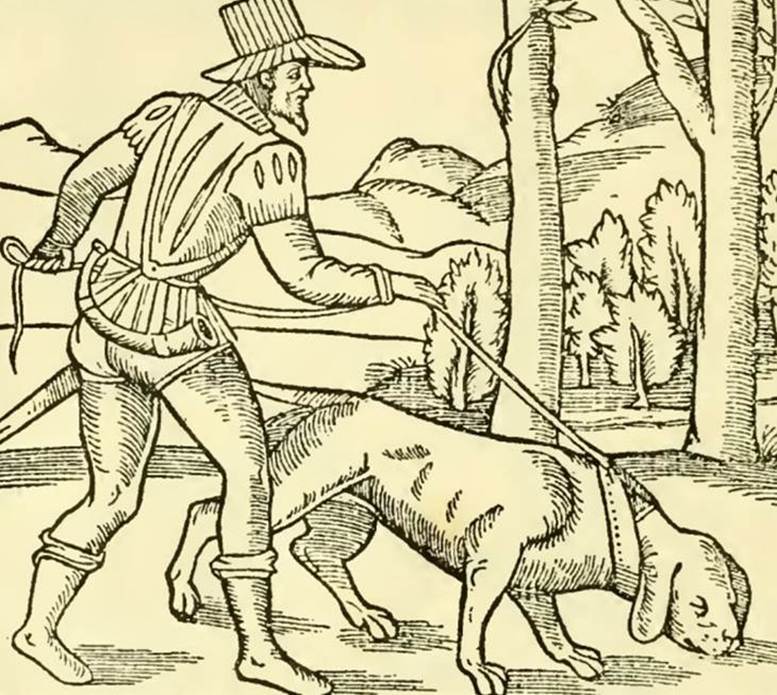
FAR00004A
|
Return to the Home Page of the Farndale Family
Website |
The story of one family’s journey through two
thousand years of British History |
The 83 family lines into which the family is divided.
Meet the whole family and how the wider family is related |
Members of the historical family ordered by date of
birth |
Links to other pages with historical research and
related material |
The story of the Bakers of Highfields, the Chapmans,
and other related families |
Dates are in red.
Hyperlinks to other pages are in dark blue.
Headlines are in brown.
References and citations are in turquoise.
Context and local history are in purple.
William the
Conqueror made some very just and conquering laws about the Forests. One of
these laws said that all the forests and places which were not already
Possessions belonged to the King and that anyone found in them should have his
ears and legs cut off (these belonged to someone else under the Feutile System anyway) and (if this had not already been
done) should have his eyes put out with red hot irons. After this the offender
was allowed to fly the country (1066 and all
that, Walter Sellar and Robert Yeatman,
1930).
Terminology of the Forest
The Foresters
in Fee were the senior officers of the forest (The
Duchy of Lancaster Records, from the North Riding Record Society, The Honour
and Forest of Pickering, Edited by Robert Bell Turton, Volume IV, 1897,
page xiv).
Each
Forester in Fee appointed two foresters called Chief Foresters and there
were Under Foresters (The Duchy of Lancaster Records, from
the North Riding Record Society, The Honour and Forest of Pickering,
Edited by Robert Bell Turton, Volume IV, 1897, page xxiv).
Pleas of the vert
were pleas concerning any aspect of maintaining the plant life and include the
protection of venison. Verderers were therefore the king’s officials responsible
for maintaining the vert. They were forestry officials in England
who deal with common land in certain former royal hunting areas which are the
property of the Crown. The office was developed in the Middle Ages to
administer forest law on behalf of the King. Verderers investigated and
recorded minor offences such as the taking of venison and the illegal cutting
of woodland, and dealt with the day-to-day forest administration. Verderers are
still to be found in the New Forest, the Forest of Dean, and Epping Forest,
where they serve to protect commoning practices, and
conserve the traditional landscape and wildlife. Verderers were originally part
of the ancient judicial and administrative hierarchy of the vast areas of
English forests and Royal Forests set aside by William the Conqueror for
hunting. The title Verderer comes from the Norman word ‘vert’ meaning
green and referring to woodland. These forests were divided into provinces each
having a Chief Justice who travelled around on circuit dealing with the more
serious offences. Verderers investigated and recorded minor offences and dealt
with the day to day forest administration. They were officers appointed in
the County Court. Their principal duty appears to have been to attend the Swainmote and Attachment Courts and to keep the rolls of
such courts. They were also supposed to be especially conversant with the
customs of the forest and were always a component part of any jury whose duty
it was to try any questions arising out of the forest (The Duchy of Lancaster
Records, from the North Riding Record Society, The Honour and Forest of
Pickering, Edited by Robert Bell Turton, Volume IV, 1897, page xxi).
Regarders were generally
knights sworn to carry out the regard of the Forest, which preceded the eyre. In old English law, they were
ancient officers of the forest whose task was to take a view of the forest
hunts. The regarders may be described as the jury who had to determine the
bounds of the forest (The Duchy of Lancaster
Records, from the North Riding Record Society, The Honour and Forest of
Pickering, Edited by Robert Bell Turton, Volume IV, 1897, page xxiii).

The Constable
of the Castle was also the Steward of the Manor and the Keeper of
the Forest (The Duchy of Lancaster Records,
from the North Riding Record Society, The Honour and Forest of Pickering,
Edited by Robert Bell Turton, Volume IV, 1897, page xxix).
Agistment was the putting of animals,
especially swine, into the woods to feed. Agist is
pasturage, the right to grazing. Pannage is similar, but refers
specifically to the right to take pigs into the forest to feed and dig up
truffles, eat acorns, etc. Not the least of the
profits derived from the possession of a forest was that arising from the
agistment of cattle in waste grounds.
Rights over the common moors of Pickering varied. Some pasturages were reserved
for the use of the King where there was no right in common and here, cattle
were agisted at a fixed price, to be paid to the
bailiff. Agistments were also made on the High Moor. These sums were collected
by the agisters, of whom there were two in each ward, men of substance
by their assessments in the Law Subsidies.
(The Duchy of Lancaster Records, from
the North Riding Record Society, The Honour and Forest of Pickering,
Edited by Robert Bell Turton, Volume IV, 1897, page xxvii).
Attachment was the restraint either
of the person or of his property, to assure his appearance in court.
Scotale
referred to the keeping by officers of the forest of an alehouse, which they
forced the locals to come and use, on the understanding that if they didn’t
he’d find a way to make trouble for them. This was a practice restricted by the
1225 charter.
Venatio, meant either game or
hunting rights. Venison then referred to the meat of any game, including
deer and boar. The term also referred in forest law to the region adjoining the
forest, technically known as the purlieu, where hunting was
restricted.
A hart is
a male red deer and contrasts with a female hind. The word comes from
the Middle English word hert meaning deer.
A soar is to
a sow or female pig or boar.
Mastiffs is the mutilation of the
dogs' feet so that they could not chase game.
The process called lawing meant that the dog would
be incapable of hunting the King’s game.
Vert also referred to green
wood, or growing timber. Customary rights to timber were to be overseen by the
supervision of forest officers. These rights came to be written as forest
organisation became more elaborate. The right to wood was referred to as bote.
Pickering folk could use green or dray wood for housebote, dry wood for firebote, or haybote
for fencing. (John Rushton, The History of Ryedale,
2003, 80).
Assarts were clearings made for
cultivation or some other purpose.
A swanimote was a forest court. The king had been given to
sending out his foresters to take courts, to raise revenue for the crown as
much as bringing truth, light and justice. These were given some control after
1225.
Purprestures were unauthorised uses
of royal land.
The value of a mark
was 13s 4d. There is a webpage about the value of medieval money.
Forest Law
Under the Norman and
Plantagenet kings, the royal forest grew steadily, probably reaching its
greatest extent under Henry II when around 30 per cent of the country was set
aside for royal sport. The object of the forest laws was the protection of the
beasts of the forest (red, roe, and fallow deer, and wild boar) and the
trees and undergrowth which afforded them shelter, though perhaps the
underlying advantage to the Crown was the plethora of fines, grazing payments
and other penalties that could be imposed to fund foreign wars.
Forest offences were
numerous. Many saw poaching as a pastime. The nobility took to hunting for
sport, whilst more ordinary folk included parties from Farndale. Officials of
Pickering forest used offences to raise income, or raised funds from such as
pannage payments for pigs taken into the woods. (John Rushton, The History of Ryedale, 2003, 125).
1128
Henry I decreed that
a huge area from York to the coast, including Ryedale and Pickering,
should be reserved as Royal
Forest, where hart, hind, wild boar and hawk were preserved solely for the
King. Officers were appointed to guard the royal forests and new administrators
were appointed such as the fee foresters and serjeantes.
Some of these officers were able to hold their land rent free in return for the
service as a forester. When Henry I established the Forest of Pickering as a
deer preserve he gave Guy the Hunter half the Aislaby
estate, in return for training a royal hound. There is a legend that two
brothers were given a falcon’s flight of land, for repelling a Scots invasion.
Perhaps the other brother was William of Aislaby, who
had the other half.
Serious
punishments were dealt to those who committed hunting offences, including the
removal of body parts for taking of deer.
Roger de Stuteville was licensed to have hounds
for taking wolf and hare throughout Yorkshire and Northumberland. The Mowbrays at Kirkbymoorside had similar
privileges.
Walter Aspec in Ryedale forest gave three deer a year as a tithe
to Kirkham Priory.
1184
The most onerous
form of forest law occurred during Henry II's reign, codified in the Assize
of the Forest in 1184, also known as the Assize of Woodstock. Old forest customs were
made into a code of law under the Assize of the Forest in 1184. From now on,
oaths promising good behaviour were to be sworn by all over the age of twelve
who lived in a royal forest. Inquests were to be held for any dead deer. Officers
called regarders and agisters were appointed to guard the venison and the
woods, and to control pasturing wherever the deer might go. The taking in oif fresh land was to be more tightly controlled. Customary
rights to timber were to be exercised under the supervision of foresters.
Ownership of large dogs was restricted or the claws of their forefeet had to be
struck off,. The better off bought exemption from this clause by paying fines,
which were equivalent to early dog licences. This would become a trend, whereby
controls to defend the deer and the wood, steasdily gacve way to the licensing of exemptions to raise money. (John Rushton, The History of Ryedale, 2003, 78).
This is the assize of the
lord king Henry, son of Matilda, with regard to his forest and venison in
England, proclaimed at Woodstock by the counsel and assent of the archbishops,
bishops, and barons — earls and nobles — of England.
1. In the first place, he
has forbidden that any one shall commit any sort of offence touching his
venison and his forests, and he wills that no one shall take confidence from
the fact that hitherto those who have committed offences touching his venison
and his forests have been declared in mercy [only] as concerned their chattels.
For henceforth, if any one commits any [such] offence against him and is
convicted of it, he wills that full justice shall be had of that man as was had
in the time of King Henry, his grandfather.
2. Item, he has commanded
that no one shall have bows, arrows, dogs, or hounds in his forests, unless
[such person] has the warrant of the king or of some other man who can
[lawfully] be his warrantor.
3. Item, he forbids all
persons to give or sell anything to the destruction or waste of their woods,
which are within the forest of King Henry; while fully conceding that, without
waste, they may take from their woods whatever may be necessary for them, and
this by view of the king's forester.
4. Item, he has commanded
that all those who have woods within the bounds of the king's forest may put
proper foresters in their woods; for which foresters those to whom the woods
belong are to be sureties, or they are to provide such proper sureties as can
pay compensation, should the foresters commit any offence touching what
pertains to the lord king. And those who, outside the bounds of the forest
visitation, have woods in which the venison enjoys the peace of the lord king
are to have no forester unless they will swear to respect the king's assize,
the peace of his venison, and whatever custodian is put in charge of his woods.
5. Item, the lord king
has commanded that his foresters shall exercise care over the forest of knights
and others who have woods within the bounds of the king's forest, to see that
the woods are not destroyed. For if on this account the woods are destroyed,
let it be well known to those whose woods are destroyed that compensation will
be exacted from those men themselves or from their lands, and from none other.
6. Item, the lord king
has commanded that all his foresters shall swear to the best of their ability
to enforce the assize that he has established for his forests, and that they
will not disturb knights or other good men in the enjoyment of what the king
has granted them with regard to their woods.
7. Item, the king has
commanded that, in each county where he has venison, twelve knights shall be
appointed to guard his vert and venison together with the forest; and four
knights shall be appointed to have charge of agistment in his woods, and to
receive and keep his pannage. And the king forbids that any one shall provide
agistment for his own woods within the bounds of the forest before agistment is
provided for the king's woods. And provision for the lord king's agistment
begins fifteen days before Michaelmas and lasts until fifteen days after
Michaelmas.
8. And the lord king has
commanded that, when a forester has the lord king's own woods in his charge, if
those woods are destroyed and he can by no means show good cause for the
destruction of the woods, vengeance shall be taken on the forester's own body
and not otherwise.
9. Item, the king forbids
all clergymen to commit any offences touching his venison or his forests. He
strictly orders his foresters that, if they find such men committing offences,
they shall not hesitate to lay hands on those men in order to hold them and put
them under attachment; he himself will give full warranty.
10. Item, the king has
ordered that his assarts, both new and old, are to be
inspected; likewise his purprestures and wastes of
forests, and that each class of offences is to be recorded by itself.
11. Item, the king has
commanded that, on summons of his master forester, archbishops, bishops, earls,
barons, knights, freeholders, and all men, as they wish to be protected and not
to be declared in the king's mercy, shall come to try the pleas of the lord
king touching his forests, and to attend to his other business in the county
court.
12. At Woodstock the king
has also commanded that, if any man commits a first offence touching the
forest, good pledges shall be accepted from him, and so likewise if he commits
a second offense. But if he does wrong a third time, for the third offence no
further pledges shall be accepted from him, nor anything other than the body of
the misdoer.
13. Item, the king has
commanded that every man who is at least twelve years of age, and who dwells
within the peace of the venison, shall swear that peace; and clergy holding lay
fees shall do the same.
14. Item, he has
commanded that the lawing of mastiffs shall be carried out wherever his wild
beasts enjoy his peace and have been accustomed to enjoy it.
15. Item, he has
commanded that no tanner or bleacher of hides shall dwell in his forests
outside a borough.
16. Item, the king has
commanded that henceforth no one, either within or without a forest, shall
engage in any kind of chase at night for the taking of wild beasts wherever his
wild beasts live or enjoy his peace or have been accustomed to enjoy it, on
pain of imprisonment for one year and of redeeming themselves by fine at his
pleasure; and that no one, under the same penalty, shall raise against his wild
beasts any obstruction, either living or dead, between his forest and the woods
or other regions disafforested by him or his ancestors.
None could carry
bows and arrows in the royal forest, and dogs had to have their toes clipped to
prevent them pursuing game. Savage penalties for any infringements were often
imposed.
The forest was a game
preserve which might include all kinds of land, either inhabited or
uninhabited. Within it might lie extensive woods that were the property of lay
and clerical nobles. Such persons, under royal supervision, were entitled to
any reasonable use of their own woods.
1210
King John needed
funds to pay for his wars in France. He sold off many of the royal forests and
there was significant disafforestation in Ryedale.
Discontent with
the laws ensured that the forest became a major political issue in John's
reign. It culminated in the Charter
of the Forest in 1217.
Only in the
fourteenth century, when large areas were disafforested, did the political
issue subside.
Regarders and
agisters were appointed to guard the royal deer.
Customary rights to timber were to be overseen by the supervision
of forest officers. These rights came to be written as forest organisation
became more elaborate. The right to wood was referred to as bote.
Pickering folk could use green or dray wood for housebote, dry wood for firebote, or haybote
for fencing. (John Rushton,
The History of Ryedale, 2003, 80).
Ownership of
large dogs was controlled.
Forest offences
were numerous. Many saw poaching as a pastime. The nobility took to hunting for
sport, whilst more ordinary folk included parties from Farndale. Officials of
Pickering forest used offences to raise income, or raised funds from such as
pannage payments for pigs taken into the woods. (John Rushton, The History of Ryedale, 2003, 125).
The remaining
forests were Galtres Forest, though reduced in size; Pickering Forest and the small forest of Farndale. Even within Pickering Forest
parks were allowed for leading nobility.
(John
Rushton, The History of Ryedale, 2003, 78).
1217
The Charter of the
Forest 1217 was a companion document to Magna Carta, focusing on the management
and use of royal forests in England. It addressed grievances related to the
harsh forest laws established by William the Conqueror and his successors,
which had restricted commoners' access to resources like wood, grazing land,
and hunting grounds. The Charter reaffirmed and extended certain rights to
"free men" regarding their use of the royal forests. An image of the
Charter can be seen at the
National Archives.
1225
John reneged on
Magna Carta, but it was reconfirmed in 1225 during the minority of Henry III
(1216 to 1272).
Henry, by the grace of God, king of England,
lord of Ireland, duke of Normandy, Aquitaine, and count of Anjou, to the
archbishops, bishops, abbots, priors, earls, barons, justices, foresters,
sheriffs, stewards, servants, and to all his bailiffs and faithful subjects,
greeting. Know that out of reverence for God and for the salvation of our soul
and the souls of our ancestors and successors, for the exaltation of holy
church and the reform of our realm, we have granted and by this present charter
confirmed for us and our heirs for ever, on the advice of our venerable father,
the lord Gualo, cardinal priest of St Martin and
legate of the apostolic see, of the lord Walter archbishop of York, William
bishop of London and the other bishops of England and of William Marshal earl
of Pembroke, ruler of us and of our kingdom, and our other faithful earls and
barons of England, these liberties written below to be held in our kingdom of
England for ever.
1. In
the first place, all the forests which king Henry our grandfather made forest
shall be viewed by good and law-worthy men, and if he made forest any wood that
was not his demesne to the injury of him whose wood it was, it shall be
disafforested. And if he made his own wood forest, it shall remain forest,
saving common of pasture and other things in that forest to those who were
accustomed to have them previously.
2. Men
who live outside the forest need not henceforth come before our justices of the
forest upon a general summons, unless they are impleaded or are sureties for
any person or persons who are attached for forest offences.
3. All
woods made forest by king Richard our uncle, or by king John our father, up to
the time of our first coronation shall be immediately disafforested unless it
be our demesne wood.
4. Archbishops,
bishops, abbots, priors, earls, barons, knights and freeholders who have woods
within forests shall have them as they had them at the time of the first
coronation of the aforesaid king Henry our grandfather, so that they shall be
quit forever in respect of all purprestures [the
unlawful seizure of the king’s land], wastes and assarts
[new fields created from previously waste land, with the agreement of the lord]
made in those woods between that time and the beginning of the second year of
our coronation. And those who in future make waste, purpresture or assart in them without licence from us shall answer for
wastes, purprestures and assarts.
5. Our
regarders shall go through the forests making the regard as it used to be made
at the time of the first coronation of the aforesaid king Henry our
grandfather, and not otherwise.
6. The
inquest or view of the expediting of dogs in the forest shall henceforth be
made when the regard ought to be made, namely every third year, and then made
by the view and testimony of law-worthy men and not otherwise. And he whose dog
is then found not expedited shall give as amercement three shillings, and in
future no ox shall be seized for failure to expedite. The manner, moreover, of
expediting by the assize shall generally be that three claws of the forefoot
are to be cut off, but not the ball. Nor shall dogs henceforth be expedited
except in places where it was customary to expedite them at the time of the
first coronation of king Henry our grandfather.
7. No
forester or beadle shall henceforth make scotale or
levy sheaves of corn, or oats or other grain or lambs or piglets or make any
other levy. And by the view and oath of twelve regarders when they make the
regard as many foresters are to be set to keep the forests as shall seem to
them reasonably sufficient for keeping them.
8. No swanimote
shall henceforth be held in our kingdom except three times a year, namely a
fortnight before the feast of St Michael, when the agisters meet to agist our demesne woods, and about the feast of St Martin,
when our agisters ought to receive our pannage-dues; and at these two
swanimotes foresters, verderers and agisters shall appear but no one else shall
be compelled to do so; and the third swanimote shall be held a fortnight before
the feast of St John the Baptist for the fawning of our beasts, and for holding
this swanimote foresters and verderers shall come but no others shall be
compelled to do so. And in addition every forty days throughout the year the
verderers and foresters shall meet to view attachments of the forest both of
the vert and of the venison on the presentment of those foresters and with the
attached present. The aforesaid swanimotes however shall only be held in
counties in which they were wont to be held.
9. Every free man
shall agist his wood in the forest as he wishes and
have his pannage. We grant also that every free man can conduct his pigs
through our demesne wood freely and without impediment to agist
them in his own woods or anywhere else he wishes. And if the pigs of any free
man shall spend one night in our forest he shall not on that account be so
prosecuted that he loses anything of his own.
10. No
one shall henceforth lose life or limb because of our venison, but if anyone
has been arrested and convicted of taking venison he shall be fined heavily if
he has the means; and if he has not the means, he shall lie in our prison for a
year and a day; and if after a year and a day he can find pledges he may leave
prison; but if not, he shall abjure the realm of England.
11. Any
archbishop, bishop, earl or baron whatever who passes through our forest shall
be allowed to take one or two beasts under the supervision of the forester, if
he is to hand; but if not, let him have the horn blown, lest he seem to be
doing it furtively.
12. Every
free man may henceforth without being prosecuted make in his wood or in land he
has in the forest a mill, a preserve, a pond, a marl-pit, a ditch, or arable
outside the covert in arable land, on condition that it does not harm any
neighbour.
13. Every
free man shall have the eyries of hawks, sparrowhawks, falcons, eagles and
herons in his woods, and likewise honey found in his woods.
14. No
forester henceforth who is not a forester-in-fee rendering us a farm for his
bailiwick may exact any chiminage [this is a toll
levied on transport] in his bailiwick; but a forester-in-fee rendering us a
farm for his bailiwick may exact chiminage, namely
for a cart for half a year 2d and for the other half year 2d, and for a horse
with a load for half a year 1/2d and for the other half year 1/2d, and only
from those who come from outside his bailiwick as merchants with his permission
into his bailiwick to buy wood, timber, bark, or charcoal and take them
elsewhere to sell where they wish; and from no other cart or load shall any chiminage be exacted, and chiminage
shall only be exacted in places where it used to be exacted of old and ought to
have been exacted. Those, on the other hand, who carry wood, bark, or charcoal
on their backs for sale, although they get their living by it, shall not in
future pay chiminage. In respect of the woods of
others no chiminage shall be given to our foresters
beyond [that given] in respect of our own woods.
15. All who from the
time of king Henry our grandfather up to our first coronation have been
outlawed for a forest offence only shall be released from their outlawry
without legal proceedings and shall find reliable pledges that they will not do
wrong to us in the future in respect of our forest.
16. No
castellan or other person may hold forest pleas either of the vert or the
venison but each forester-in-fee shall attach forest pleas of both the vert and
the venison and present them to the verderers of the districts and when they
have been enrolled and closed under the seals of the verderers they shall be
presented to the head forester when he arrives in those parts to hold forest
pleas and be determined before him.
17. These liberties
concerning the forests we have granted to everybody, saving to archbishops,
bishops, abbots, priors, earls, barons, knights, and other persons,
ecclesiastical and secular, Templars and Hospitallers, the liberties and free
customs, in forests and outside, in warrens and other things, which they had
previously. All these aforesaid customs and liberties which we have granted to
be observed in our kingdom as far as it pertains to us towards our men, all of
our kingdom, clerks as well as laymen, shall observe as far as it pertains to
them towards their men. Because we have not yet a seal we have had the present
charter sealed with the seals of our venerable father the lord Gualo cardinal priest of St Martin, legate of the apostolic
see, and William Marshal earl of Pembroke, ruler of us and of our kingdom.
Witness the
aforenamed and many others. Given by the hands of the aforesaid lord, the
legate, and of William Marshal at St Paul’s, London, on the sixth day of
November in the second year of our reign (i.e. John’s son, Henry III).
1267
On 30 June 1267 the Honour and Forest of Pickering became part of
the Duchy of Lancaster (see FAR00015A).
1282
Forest Law was separate, with its own
hierarchy of courts and some summary justice. On the ninth of May 1282, a
shepherd told Pickering foresters of two robbers in the Dale at Bickley. They
ran there, to find John of Coxwold, who had stolen two horses, oxen, cows,
sheep and goats. He refused to surrender and shot an arrow towards them. They
pursued him, wounded him and caused his companion to behead him. They sent the
head to Pickering caste ‘according to the custom of Blachoumoor’. (The History of Ryedale, John Rushton, 2003, page 104).
1285
It will be seen at that Edward, in the year
1285, granted to his brother Edmund the right of having, upon request made in
Chancery, Justices of the Forest wherever the King appointed such for his own
forests, and granted to him also the fines and ransoms paid in respect of the
offences tried by them.
“Know ye that we have granted for ourselves
and our heirs to our brother Edmund, that he and his heirs may for ever have
upon request made in chancery, Justices to be appointed by us and our heirs to
hold, according to the Assize of the Forest, pleas of the forests, which our
brother holds of the gift of our father King Henry, as oft as it may happen
that we and our heirs send our Justices to hold such like pleas in accordance
with the custom of our realm ; and that they may for ever have Justices, to be
appointed by us and our heirs as oft as need shall require, to hear and
determine according to the law and custom of our realm all offences committed
against them in chaces and parks, so that our brother
and his heirs may have the ransoms, fines, amercements, and all other profits
arising from the said pleas and offences in the same manner as we and our heirs
would, if the said forests, chaces, and parks had
been in our hand. Westminster, 25 May, 1285.”
The first Forest Eyre, mention of which is
made in the following pages, took place under a commission to Alexander de
Kirketon and Ralph de Dacre, dated the 10th of June 1280.
1334
It does not appear that another Eyre took place
until the commencement of the reign of Edward III. Between the 26th and 30th of
May, 1334, the King was residing at Pickering Castle, probably as the guest of
Henry Earl of Derby. It may have been on this occasion that the
project of sending Justices to hold Pleas of the Forest was mooted, for on the
following 12th of June, 1334 [Rot. Pat. 8 Ed. III., pt. i,
m. 2] a commission is directed amongst others to Robert de Aston and Robert de
Sadington to hold the pleas. This was evidently withdrawn, and the commission
under which the pleas were eventually held is dated 17th August, enrolled on
Rot. Pat. 8 Ed. III., pt. 2, m. 17 and corresponds with that printed on p. 50.
On Rot. Pat. 8 Ed. III., pt. 2, m. 20, we find a commission, dated 8 Oct., to
Henry de Hambury and Robert de Sadington, which, after reciting that Robert de
Hungerford is prevented by the King's business from attending, appoints one of
them to act in his place.
The President of the Court appears to have
been Richard Willoughby. His name appears first, and he was in addition the
most important of the Judges, having been a Justice of the Common Pleas, and
also either Chief Justice of the King's Bench or acting Chief Justice under Scrope. Unfortunately his record is not clean. In 1340 he
was arraigned before Parning, Sadington (who was at
one time to have been his colleague at Pickering) and Scot, Justices, on the
charge of corruption.
(North Riding Records Yorks, The
Honour and Forest of Pickering, 1894, Volume
II at page xxxiii and 226).
Besides these confirmations, Edmund received
by a grant in fee in the same year 1285 an important privilege, rarely given,
in being allowed to have his own justices to hold pleas according to the assize
of the forest in the forest of Pickering and those in Lancashire which Henry
III had given him. From the time that Edmund had these forests it was intended
that they should be held as free chases, and not as forests, so that the forest
laws would not operate in them to their full extent. But after the grant of the
privilege in 1285 they were subject to the whole body of the forest laws, like
royal forests. With the grant of this privilege went also the fines and
amercements arising from its exercise. Henceforth, from time to time and at the
request of the earls of Lancaster, justices were appointed for the forest eyre
in their forests.
(R F Somerville, History of the Duchy of
Lancaster, 1953-1970, page 14)
Justices of the Common Pleas were a
later judicial position within the Court of Common Pleas of
England and Wales, under the Chief Justice. The Common Pleas was the
primary court of common law within England and Wales, dealing with
common pleas (civil matters between subject and subject).
Sir Richard Willoughby (c.1290-1362) was
the son of Sir Richard Willoughby of Willoughby-on-the-Wolds, a lawyer, who
served as Chief Justice of the Bench in Ireland from 1323-1325. Richard
attended Parliament in 1324 and inherited the estate from his father the
following year. Richard was a successful lawyer and increased his wealth
greatly by his legal career. He was appointed one of the justices of Common
Pleas in 1328 and served between 6 March 1328 to 22 December 1330; 9 October
1340 to November 1341; and 20 November 1343 to 1357. He was one of the justices
of King's Bench in 1330. He was briefly Chief Justice between 1338-1340, but
was demoted and charged with corruption. He threw himself on the King's mercy
and was pardoned on payment of 1200 marks. In 1343 he was re-appointed as a
justice, and served until 1357. Sir Richard was buried at
Willoughby-on-the-Wolds, where there is a monumental effigy.
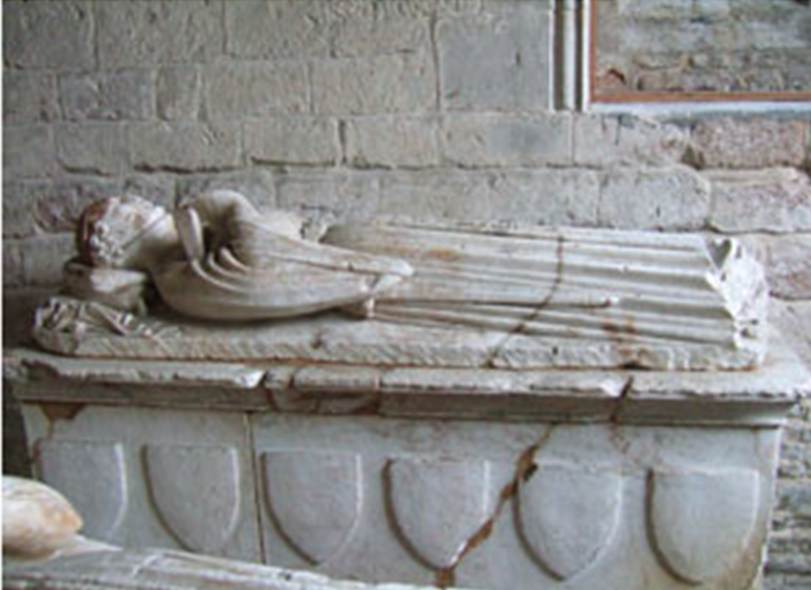
The monument to Sir Richard Willoughby
The Duchy of Lancaster Records, from the North Riding
Record Society, The Honour and
Forest of Pickering, Edited by Robert Bell Turton
·
Volume I,
1894, pages xix to xiv.
·
Volume II,
1895, pages xxxiii to xl.
·
Volume III,
1896, pages xi to xxvii.
·
Volume IV,
1897, pages xi to xliv.
Medieval Forests
in North-East Yorkshire, David Counsell, the
Ryedale Historian, Volume 14, 1988, page 9.
The Poachers of
Pickering Forest 1282—1338,
Derek Rivard, Medieval Prosopography,
Vol. 17, No. 2, Autumn 1996, pp. 97-144.
Elizabeth C. Wright, Common Law in the Thirteenth Century English Royal Forests,
Philadelphia, 1928.
Charles R. Young, The Royal Forests of Medieval England,
Philadelphia, 1979.
The Forest Eyre in England during the Thirteenth Century,
Charles Young, American Journal of Legal History Volume 18, 1974, pages 321-31.
Raymond Grant, The Royal Forests of England,
Wolfeboro Falls, 1991.
Jean Birrell, Forest Law and the Peasantry in the
Thirteenth Century, Thirteenth Century England II: Proceeding of the
Newcastle upon Tyne Conference 1987 , edited by Peter R Coss and Simon D Lloyd,
Woodbridge, Suffolk, 1988, pages 149 to 164.
Who Poached the King's Deer? A Study in Thirteenth
Century Crime,
Midland History, 1982, pages 9 to 25.
Hunters and Poachers: A
Social and Cultural History of Unlawful Hunting in England 1485-1640, Roger B. Manning, August 1993.
Forest Laws from Anglo-Saxon England to the Early Thirteenth
Century, chapter 19 of The Oxford History of the Laws of
England: 871-1216, John Hudson.
Hunters and Poachers: A Social and Cultural History of Unlawful
Hunting in England 1485-1640, Roger B. Manning, August 1993.
Forest Laws from Anglo-Saxon England to the Early Thirteenth
Century, chapter 19 of The Oxford History of the Laws of
England: 871-1216, John Hudson.
A website about Robin Hood provides its own summary of Forest Law.