“Newcastle
Johnny”
5
March 1919 to 1986
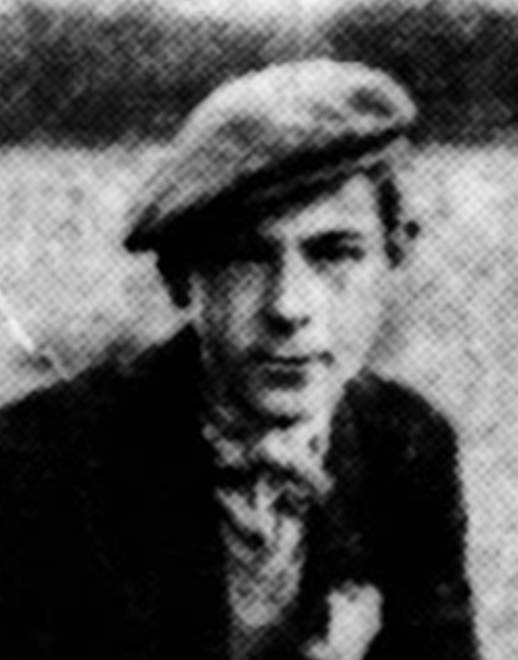
The Youngest Jarrow Marcher
FAR00854
|
Return to the Home Page of the Farndale Family
Website |
The story of one family’s journey through two
thousand years of British History |
The 83 family lines into which the family is divided.
Meet the whole family and how the wider family is related |
Members of the historical family ordered by date of
birth |
Links to other pages with historical research and
related material |
The story of the Bakers of Highfields, the Chapmans,
and other related families |
The youngest member of the Jarrow Marches in 1936
Headlines of John Farndale’s life are in brown.
Dates are in red.
Hyperlinks to other pages are in dark blue.
References and citations are in turquoise.
Context and local history are in purple.
Geographical
context is in green.
With many thanks to Donna, Johnny’s granddaughter,
who has helped me tell Johnny’s story and provided some photographs.
Jarrow
1919
John William Farndale, son of John Willie and Elizabeth (nee Todd) Farndale (FAR00591), was born in Jarrow on Tyne (census) on 5 March 1919 (1939 Register). His birth was registered in South
Shields District in the second quarter of 1919 (GRO
Vol 10A Page 1318).
1921
He was living with his parents and six
siblings in Jarrow in 1921.
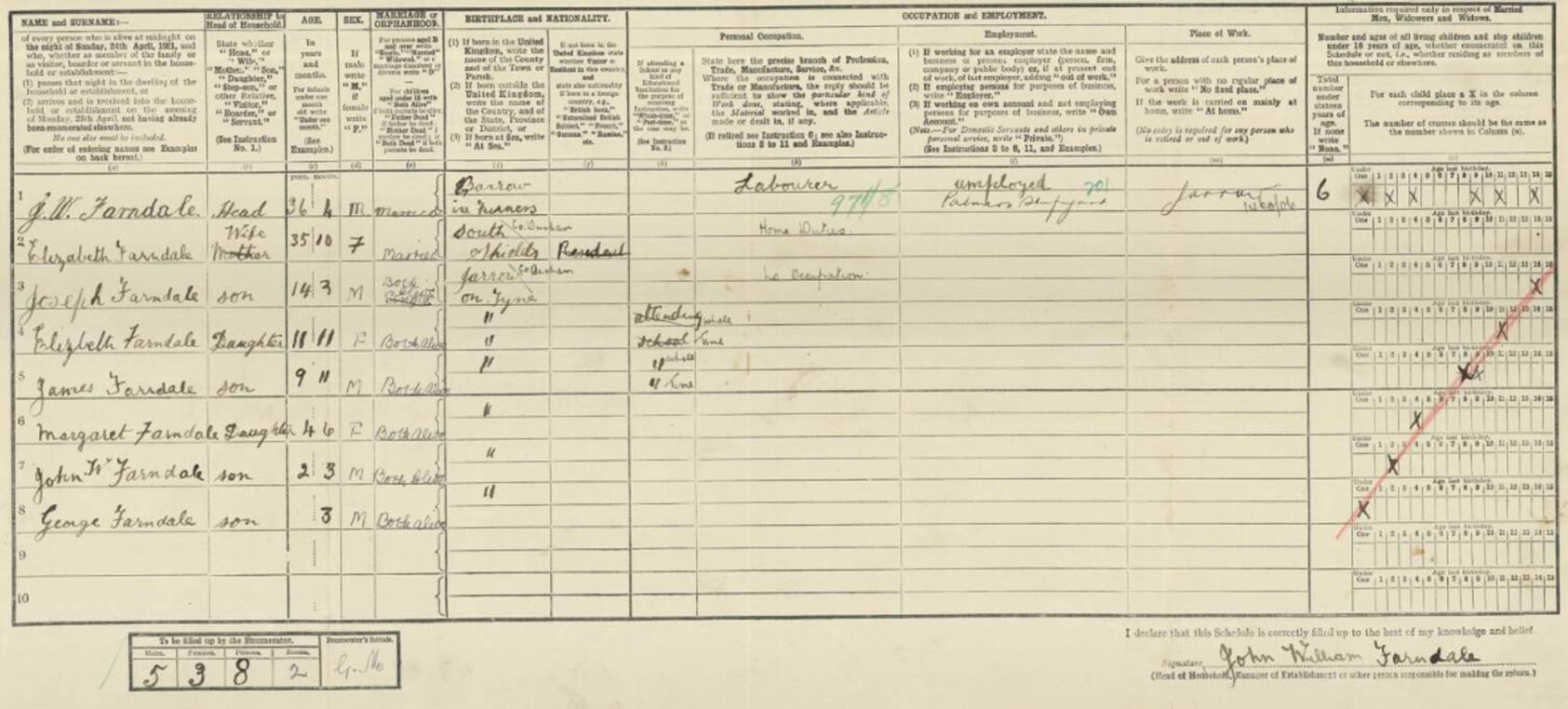
1921
census – Jarrow
John
Farndale, 36, born Barrow in Furness in 1883, labourer
Elizabeth
Farndale, 35, born South Shields
Joseph
Farndale, 14, no occupation, born Jarrow in 1907
Elizabeth
Farndale, 11, born Jarrow in 1910, at school
James
Farndale, 9, born Jarrow in about 1912
Margaret
Farndale, 4, born Jarrow on Tyne in about 1917
John
W Farndale, 2, born Jarrow on Tyne in about 1919
George
Farndale, 3 months, born Jarrow on Tyne in 1921
1936
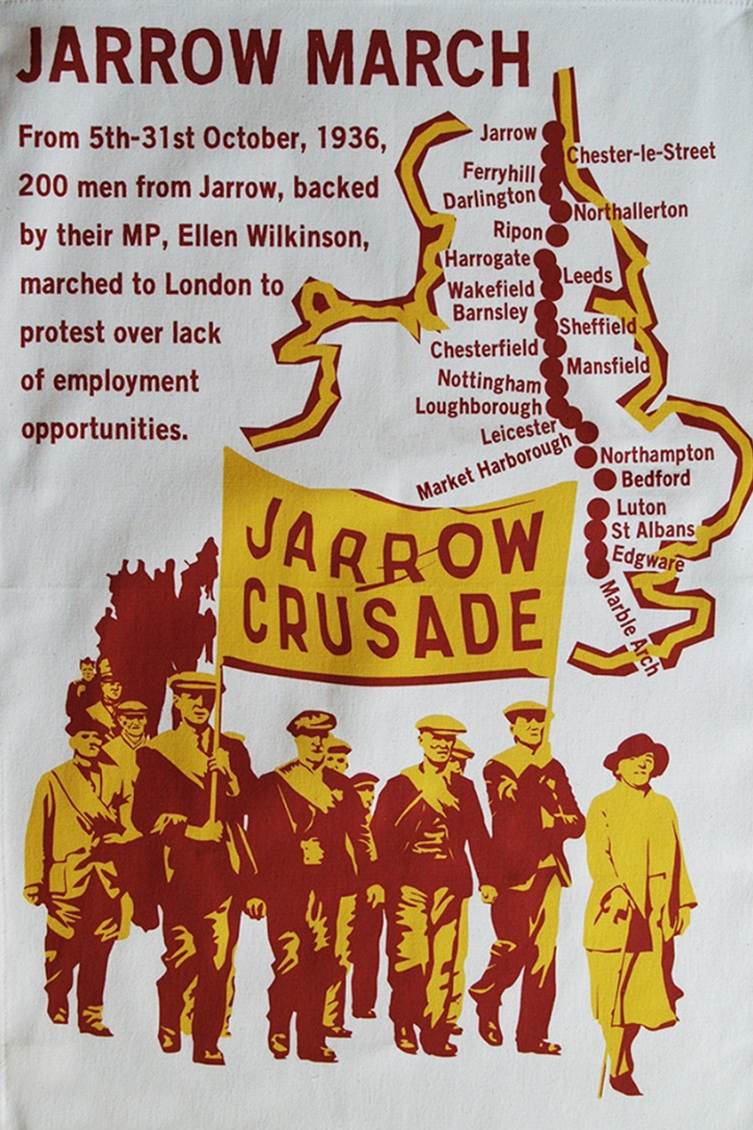
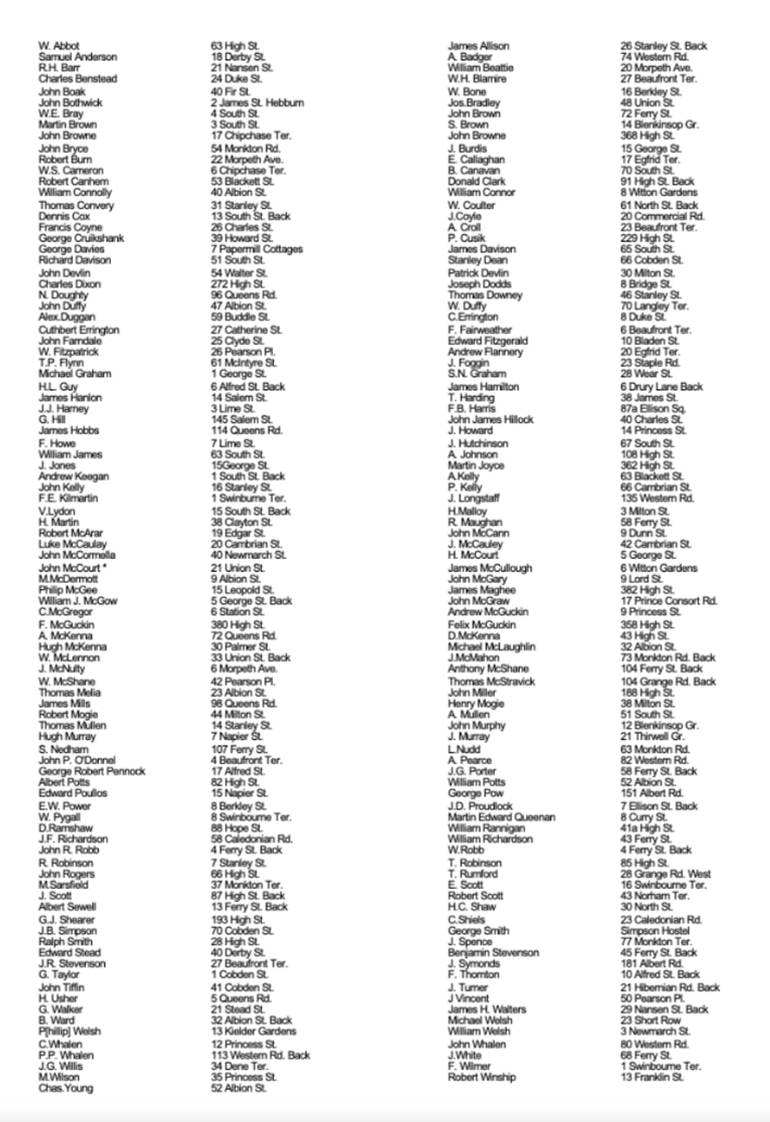
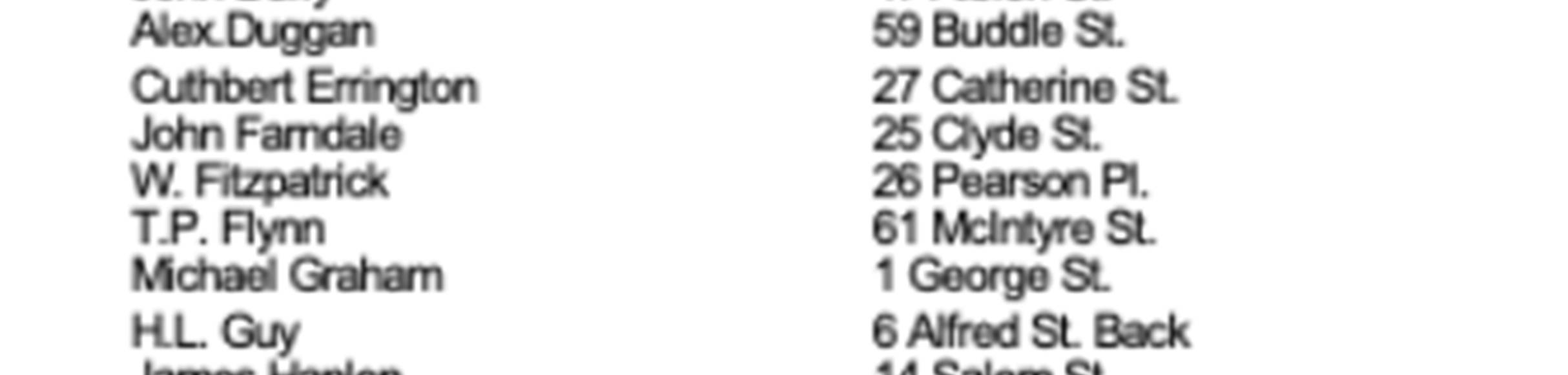
The Jarrow Marches, 5 to 31 October 1936
John
was the youngest member of
the 185 men who set off on the Jarrow marches in October 1936.
Although
the First World War caused an economic boom in Britain, it masked a slow
industrial decline from the country's Victorian heyday. As wartime demands
gradually fell away, these failings again came to the fore and during 1920
Britain was plunged into an economic slump accompanied by high levels of
unemployment and poverty. The situation was made far worse by the world-wide
recession of 1929 and, having remained relatively constant, though high, at 10%
throughout the 1920's, unemployment peaked at 22% in 1932.
Britain's
traditional industries were particularly hard hit meaning that the North of
England, Wales and Scotland, which had economies heavily dependent upon manufacturing,
were disproportionately affected by the slump. This meant that these regions
actually suffered far higher levels of unemployment than those suggested by the
national average. And the effects were long-lasting, rather than following a
regular economic cycle of prosperity and recession.
During
the 1920's, the National Unemployed Workers' Movement (“NUWM”) organised
a serious of 'hunger marches' to London in the hope that these would force the
Government to radically rethink its economic policies. The term 'hunger march'
was a recent one, first coined to describe a march by London's poor in 1908.
The marches achieved nothing, however, the official view being that they were
being high-jacked to serve the aims of their 'Communist' organisers.
The
end of the world-wide recession in 1932 allowed Britain to begin a slow path to
recovery. By 1936, economic growth had reached 4% and mini-booms were being
seen in housing and consumer spending. The recovery was badly uneven, however,
with those areas which had seen their traditional employers devastated during
the slump slow to see any improvement.
The
town of Jarrow, lying on the southern bank of the River Tyne, had undergone a
massive period of expansion during the Victorian era. However its economy was
based on precisely those industries - iron, steel, shipbuilding - which were so
badly hit by the recent depression. Charles Mark Palmer, the so-called 'King of
Jarrow', had created an industrial empire in the town but gradually each of
these businesses failed in turn. Unemployment stood at 3,300 in 1930 (75% of
the working population) and at 6,793 in 1932 (80% of the insured population).
When Palmer's Shipyard failed in 1934, the town lost its last purpose for
existing. As the town's newly elected MP, the firebrand 'Red Ellen' Wilkinson,
so forcefully pointed out in the Commons in December,1935: "The years
go on and nothing is done ... this is a desperately urgent matter and something
should be done to get work to these areas which, heaven knows, want work."
The
hunger-march had become an accepted form of protest and in July 1936 the town's
political leaders set in progress plans to mount a march from Jarrow to deliver
a petition to Parliament calling for the opportunity to work. Over 1,200 men
came forward to take part, but it was decided to limit numbers to the 200
fittest and hardiest to make the logistics manageable. A fund was started to
pay for supplies and equipment and this would continue to collect donations as
the men marched south. Rallies were scheduled for the march's overnight stops
to spread the word of what it was trying to achieve. As one marcher put it:
"We were more or less missionaries of the distressed areas, [not just]
Jarrow."
On
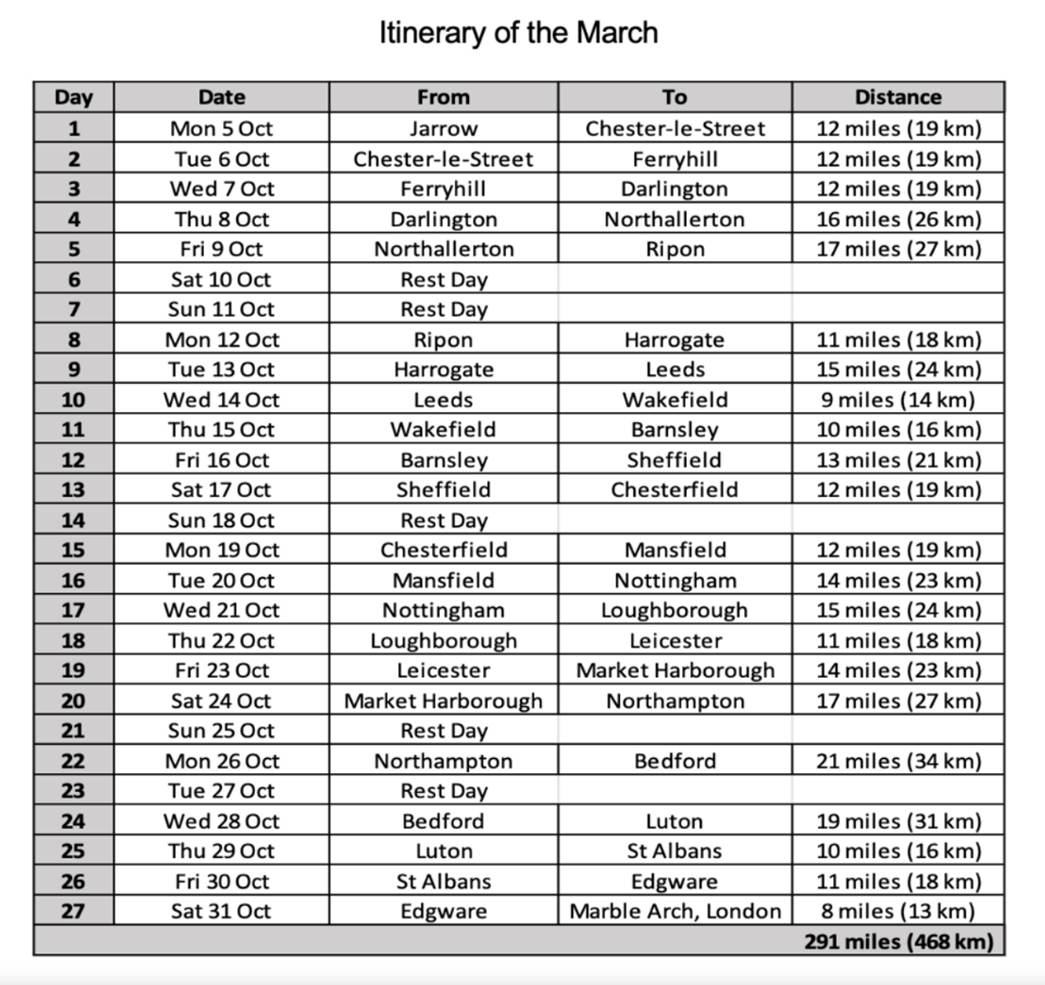
Monday 5 October 1936, the date set for the start of the March, the Marchers
received the blessing of the Bishop of Jarrow at a dedication service in Christ
Church. This gained the venture a boost in credibility, but the service was
condemned by Hensley Henson, the Bishop of Durham, who was unflinchingly
opposed to the Trades Union movement and Socialism. Henson condemned the hunger
marches as a whole as nothing but a vehicle for the Labour Party and his
colleague in Jarrow, James Gordon, was later obliged to state that the service
was not intended to condone the March. To add injury to insult, the Marchers
later discovered that their dole had been stopped as the March had made them
unavailable for work!
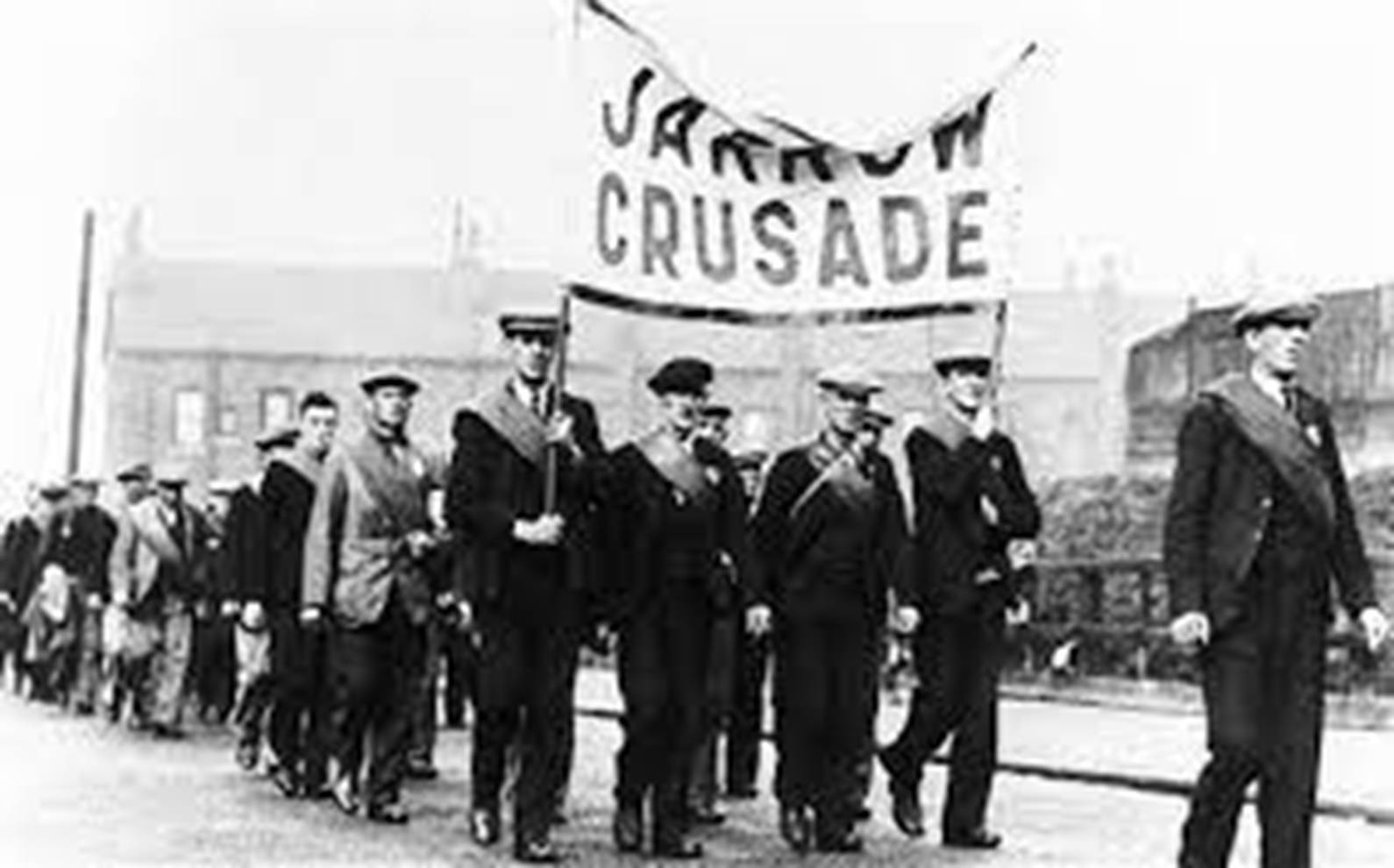
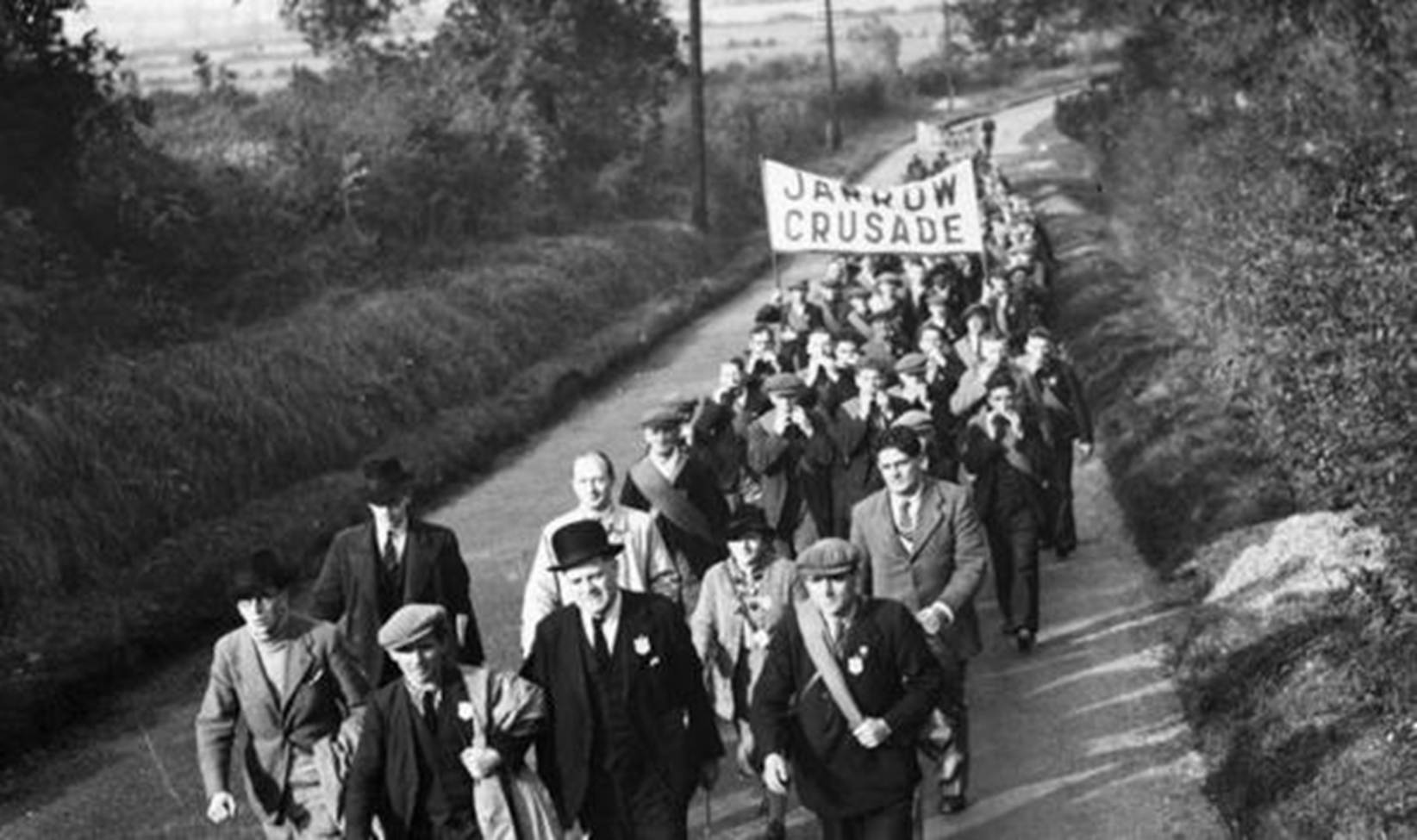
Immediately
after the service, the Marchers assembled at Jarrow Town Hall and made their
last preparations before setting off. Although 200 men had been accepted for
the venture, only 185 made it to the start-line due to sickness, changes in
personal circumstance, etc. Around half of those taking part were veterans of
the First World War and the Marchers walked in step and in military ranks to
show their discipline and proclaim their past service. They took a 10-minute
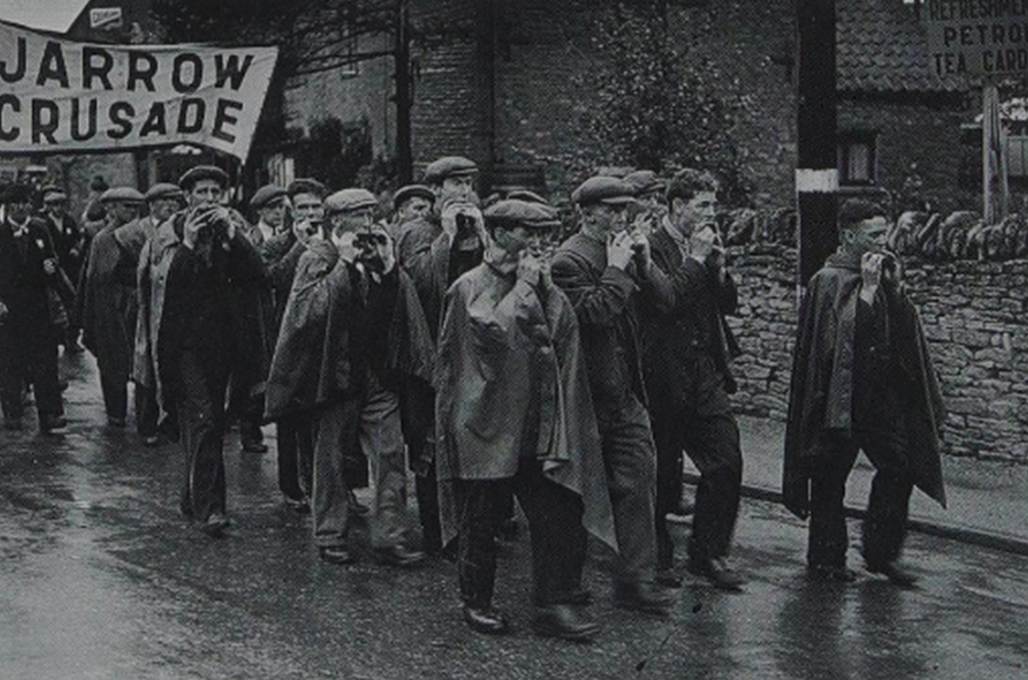
break every hour, in the military manner, and a harmonica band encouraged the
singing of popular songs of the day to keep their spirits up. Before them they
carried a blue-and-white banner proclaiming the ‘Jarrow Crusade’ though in
Jarrow it was never known as anything other than ‘The March’. Again in the
military tradition, behind them followed a bus with a field kitchen, a medical
facility, and camping equipment for when beds were not available.
It
would be a mistake to think that the Jarrow March took place in isolation. The
sixth National Hunger March was setting off from 6 regional centres and these
were due to unite in London a week after the arrival of the Jarrow men.
Meanwhile, a group of blind veterans were marching in protest at the treatment
of the nation’s 67,000 registered blind persons. The National Marches were seen
as hostile and confrontational, and this undoubtedly aided the high level of
publicity given to the Jarrow March which, by contrast, was recognised for its
moderation and quiet dignity.
Ellen
Wilkinson temporarily left the march at its first stopping point, in Chester-le-Street, to attend the Labour Party's annual
conference in Edinburgh. Although it was proclaimed to be non-political, the
Jarrow March was very much a product of the town’s Labour Council and she may
have hoped to gain some support from her colleagues. In this she was to be
disappointed, however. The Parliamentary Labour Party (PLP) was a minority part
of the National Government of the time and anxious to distance itself from any
accusations of ‘Communism’. So, neither this nor the Trade Union Congress (TUC)
would offer its endorsement. David Riley, the Chairman of Jarrow Borough
Council and a leading light in the organisation of the March, later complained
that they felt that they had been "stabbed in the back".
As
they moved south, the reception extended to the Marchers varied from
indifferent to warm and welcoming. Local accommodation was secured in a series
of Schools, Church Halls or other spacious buildings, and often gifts were made
of food and clean clothing. What soon became clear was that the reception
received bore no link to the political affiliation of the local Councils and
the organisers of the March were at pains to avoid any action that might
alienate any political body. Often the weather was bad, cold with driving rain.
Very
quickly the March began attracting wide publicity and the Government in London,
afraid that it was gaining Royal attention, acted to limit sympathy for it,
claiming that such Marches only resulted in “unnecessary hardship for those
taking part in them”. Wilkinson continued to push for an official reception for
the Marchers, but received no encouragement from Prime Minister Stanley Baldwin
during heated exchanges in the Commons. In truth Baldwin was in an impossible
position, for opening Parliament’s doors to the Jarrow Marchers would have set
a dangerous precedent.
The
March reached Edgware in northern London on Friday, 30 October, leaving a
relatively short 8-mile walk to Marble Arch the following day. It had been
denied permission to deliver its petition to Parliament and so Ellen Wilkinson
had to make the last stage of the journey alone. The original petition, calling
for Government aid for the Town, had 11,000 signatures and was carried in an
oak box. An additional petition had been made available to those who had wanted
to sign on the way.
A
new session in the House of Commons was convened on 3 November – the March had
been timetabled to take advantage of this – and next day the Petition was
presented. A (very) brief discussion followed after which the House returned to
its normal business.
The
March garnered a lot of publicity, a lot of soft words, but achieved little
real change. This was not lost on the marchers themselves and the return
journey home by train was a sombre affair.
Not
until the outbreak of the Second World War in 1939 did the Town start to
recover from its long period of depression. When ‘Red Ellen’ published her
history of Jarrow that same year she titled it: "The Town that was
Murdered.
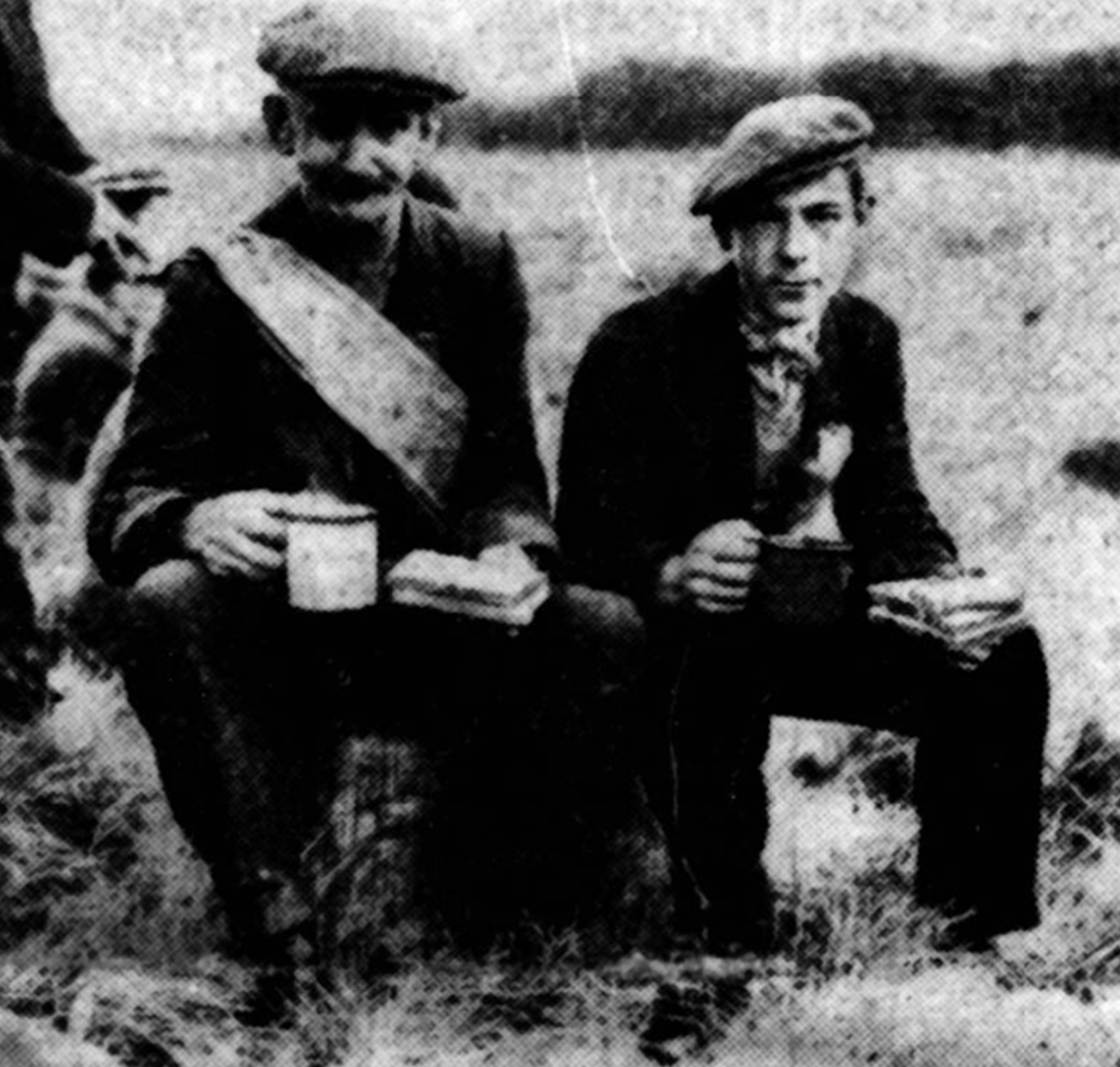
Leicester Evening Mail 21 October 1936: AGE AND YOUTH. Boer War veteran George Smith,
aged 61, and 18 year old John Farndale, the oldest and youngest member of the
Jarrow band of workers.
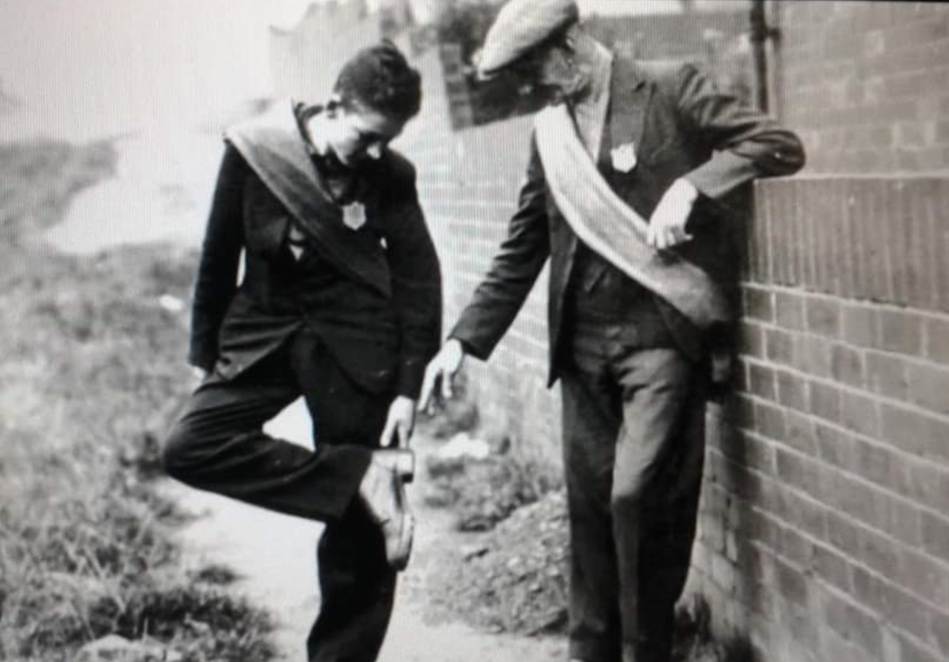
George Smith, the oldest marcher, examines the boots
of the youngest marcher, John Farndale.
Hartlepool
Northern Daily Mail, 5 November 1936: JARROW MARCHERS RETURN IN
SPECIAL TRAIN FROM LONDON. Hundreds of people watched the departure of the
special train containing the Jarrow Marchers from Kings Cross station
today. Mr P Malcolm Stewart, formerly Commissioner for Distressed Areas, said
goodbye to them, and also on the platform was Miss Ellen Wilkinson MP, who had
been with the men during their crusade, and who presented the petition in the
House of Commons. The men expressed disappointment at the reception of their
petition, but were gratified at the general attitude of people in London
towards them. Alderman J W Thompson, Mayor of Jarrow, who returned with the
men, said to a Press Association reporter: “It was as I expected. I cannot say
that I am disappointed at the way the petition was received, but I feel now
that the people in the South have a more intimate knowledge of our plight in
Jarrow, and from that I expect some result.” One of the marches, John
Farndale, of Clyde Rd, Jared, has taken a job as a baker's assistant in London,
and another, Thomas Dobson, of Stanley Street, Jarrow, is staying at Hendon
Cottage Hospital for a few days for treatment before returning.
Long Road from Jarrow: a journey through Britain then and
now, 2017, Stuart Maconie: “[In the
South Shields Museum] There is a sweet picture of the oldest and
youngest marchers: John Farndale who at 18 had worked two weeks since leaving
school at 14 and Geordie Smith, 62, a veteran of the Boer War.” (p41) and
“The
youngest marcher never came back. John Farndale stayed in London to work as a
baker’s assistant.” (p349) In fact this is not quite right, as although Johnny did stay
as a while as a baker’s assistant, he soon returned to Newcastle.
Then
and Now Jarrow, Paul Perry, 1999 is a pictorial history of Jarrow.
The
novels The Jarrow Lass by Janet Macleod Trotter, 2001, Return to Jarrow, Janet Macleod Trotter, 2004, and
A Child of Jarrow, Janet MacLeod Trotter, 2011,
tell of Catherine Cookson’s grandmother in Jarrow at that time.
See
also The Town that was Murdered, the Life Story of Jarrow,
Ellen Wilkinson, 1939, especially pages 191 to 213.
J’Accuse, the Autobiography of a headteacher in Jarrow 1934 to
1963, Claude Robinson, 1986, especially p60 to p66.
London
John
worked as a baker’s assistant in
London for a period of time (see above).
Gateshead
However
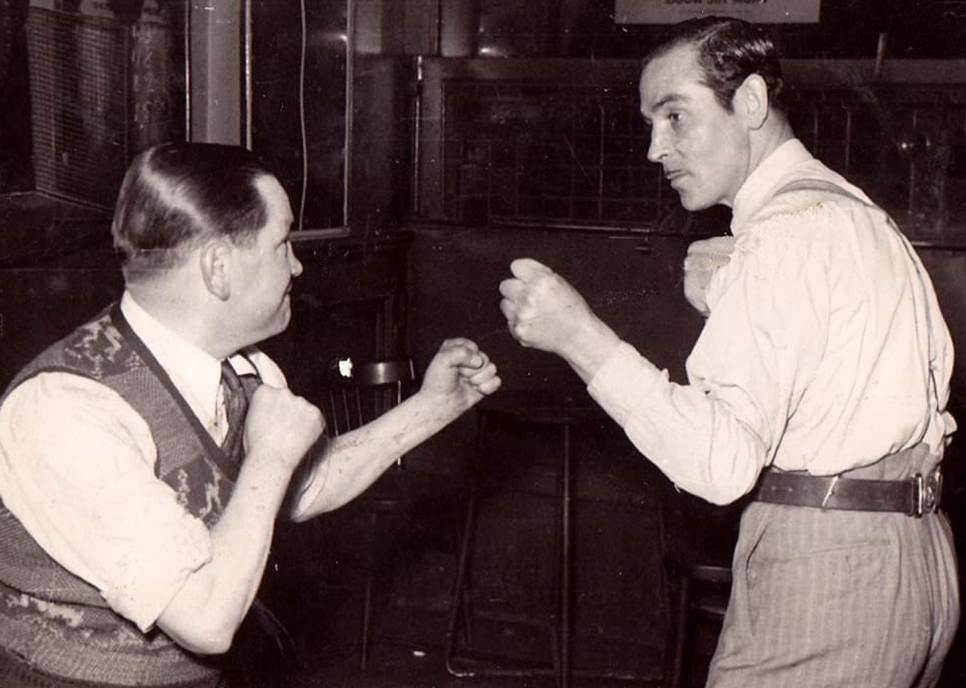
he returned to Gateshead. He was a successful bare knuckle fighter and came to
be known as Newcastle Johnny.
1939
1939 Register – 9 Ross Avenue, Gateshead
John Farndale, born 5 March 1919,
single, public works
labourer
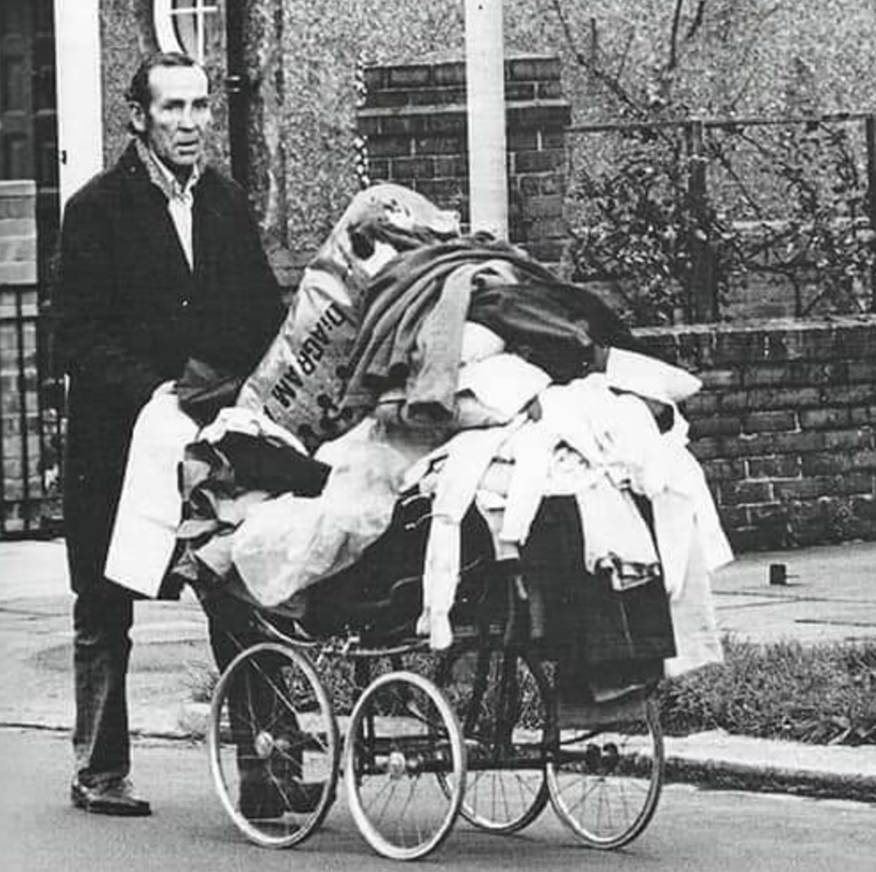
Johnny was a rag and bone man for a
time.
1961
There is an article about him in the Gateshead Post, 4 August 1961 when he lived at
Westmorland Road, Newcastle. There are other articles in the 60s.
Newcastle upon Tyne
1947
John William Farndale, married Catherine Slater in 1947 and their marriage was registered in
the third quarter of 1947 in Newcastle Upon Tyne (GRO Vol 1b page 366).
When he married Catherine she already
had 2 children to previous marriages which Johnny took on as his own.
1951
Raymond Farndale (FAR01050)
was born in 1951.
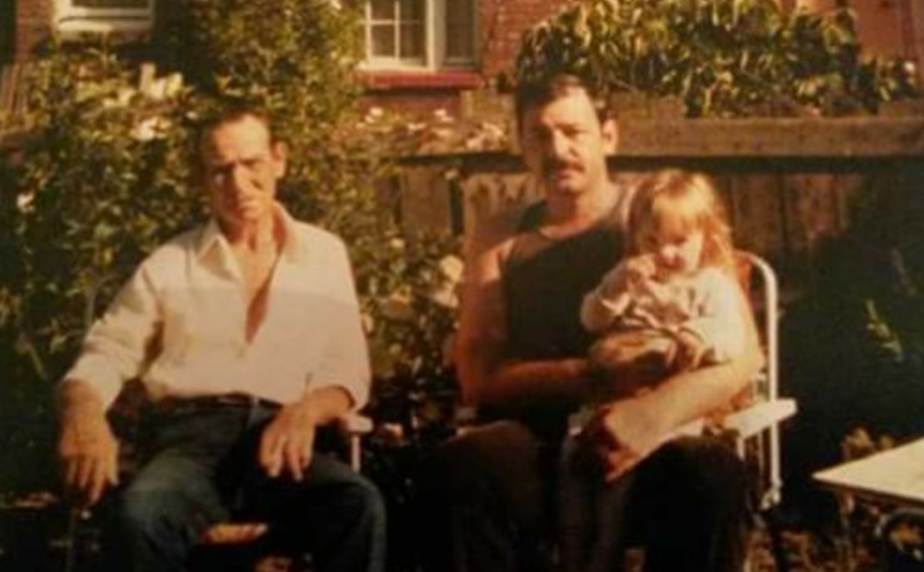
He always had a little something for
his grandchildren when they visited.
1966
Catherine Slater died at the age of 45
in 1966 and her death was registered in Newcastle upon Tyne in the first
quarter if 1966 (GRO Vol 1b page 211).
1968
John W Farndale married Jennie Burgess
in 1968 and their marriage was registered in Newcastle upon Tyne in the third
quarter of 1968 (GRO Vol 1b page 304).
Jennie (nee Burke) Burgess had married Edward Burgess in 1941.
1986
John William Farndale, born 5 March
1919, died Newcastle in
1986 aged 67 and his death was registered
in April 1986 in Newcastle upon Tyne (GRO Vol 2
page 853).
2003
Jennie Farndale, born on 15 December
1919, died at the age of 84 in 2003 and her death was registered in December
2003 in Gateshead (GRO District 51/1C Register
Number C79F entry 118).