Colonel Arthur John Hall
6 April 1868 to 21 October 1934
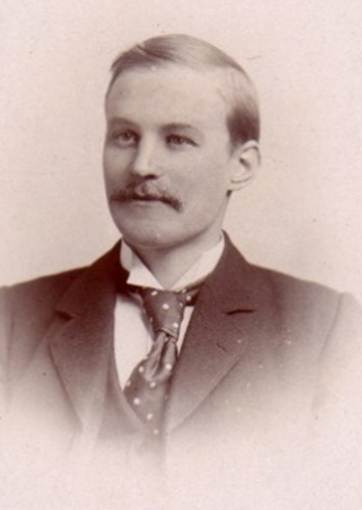
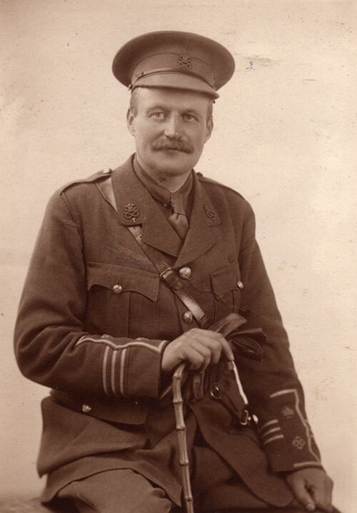
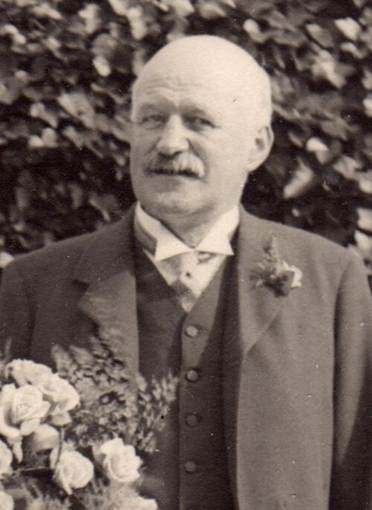
HAL00102
|
Return to the Home Page of the Bakers
Family part of the website |
The Bakers of Highfields Story
The Story of the Dods
and Bakers and of Highfields, Fenton House and Hasfield Court. A journey
through the history of Cheshire and Staffordshire, an Anglo-Saxon nobleman
who retained his lands after the Conquest, pottery at Stoke on Trent, an
encounter with Elgar, and the history of an Elizabethan manor house at Audlem |
The family tree of
the Bakers of Highfields |
The Family Tree of
the Dods, predecessors to the Bakers of Highfields |
The
Bakers of Fenton House and Hasfield Court
The Family Tree of the pottery Bakers
of Stoke on Trent |
The Family Tree of the Bellyse Family |
The main part of this website tells the
story of the Farndale family from Yorkshire Descendants of Arthur
Baker, the story of the Farndale ancestry is told through the main part of
this website You can also return
to the Farndale website
home page |
The genealogy of the
family of James Hall, linked to the Baker family through marriage to Arthur
Baker |
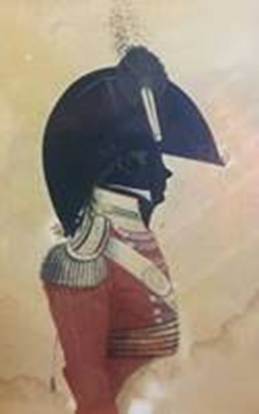
Newcastle under Lyme
1868
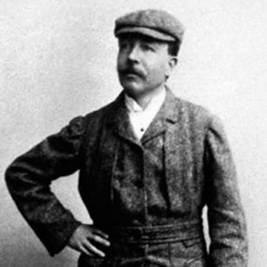
Arthur John Hall, son of
James and Mary (nee Twigg) Hall (HAL00093), was born on 6 April 1868 at
Newcastle under Lyme, Staffordshire and baptised there on 24 May 1868 (St George’s, Newcastle
under Lyme Parish Records). His birth was registered in the
second quarter of 1868 (GRO Staffordshire Vol 6B Page 62).

1871
1871 Census – Queen Street, Newcastle
under Lyme
James Hall, 33, timber
merchant
Mary Hall, 32
Catherine Alice Hall, 5
James Henry Hall, 4
Arthur John Hall, 2
Marianne Hall, 1
Robert Hugh Hall, 0
A servant and nurse
Stoke on Trent
1881
1881 Census – Seabridge, Stoke on
Trent, Staffordshire
James Hall, 43, timber
merchant
Mary Hall, 42
Catherine Alice Hall, 15
Arthur John Hall, 12
Marianne Hall, 11
Robert H Hall, 10
Elizabeth Twigg, Mary’s
sister, a ‘companion’, 35
A cook and a housemaid
1890
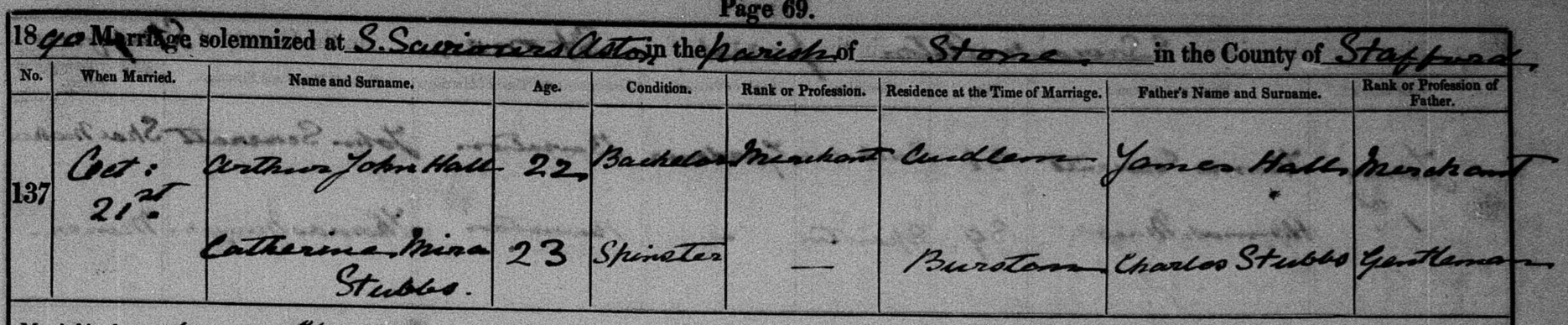
Arthur Hall, a merchant,
married Catherine Mira Stubbs, daughter of Charles Stubbs, on 21 October 1890
at the Anglican church of St Saviour, Aston with Burston, Staffordshire (St Saviour, Aston with
Burston Parish Records).
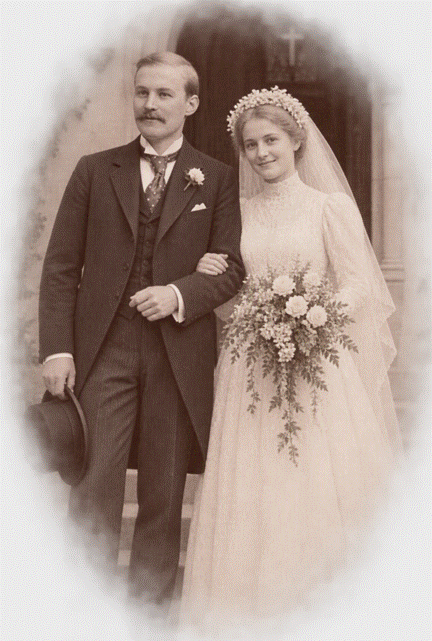
Their wedding reimagined
by artificial intelligence
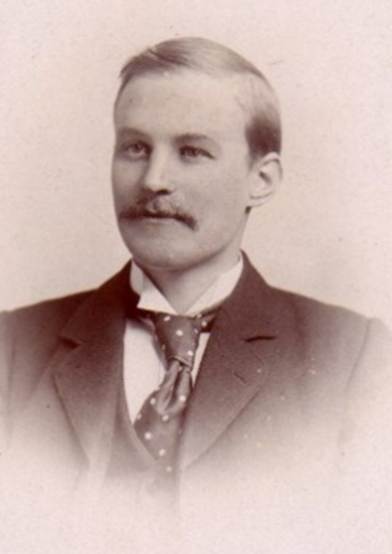
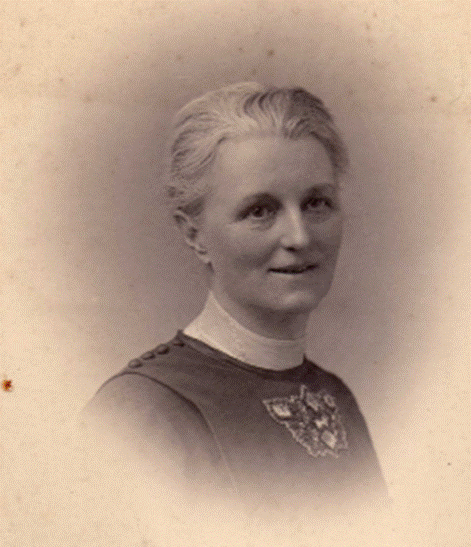
Arthur Hall Catherine (nee
Stubbs) Hall
1892
Arthur Hall joined the
North Staffordshire Volunteer Regiment.
1895
Their daughter, Mary
Catherine Hall (1894 to 1970) (HAL00110) who later married Edgar
Banfield, was born on 1 July 1894.
1897
Their son, Henry Hall
(1897 to 1977) (HAL00111) who later married Kathleen
Murphy, was born on 24 May 1897.
1898
Their daughter, Kathleen
Mira Hall (1898 to 1899) (HAL00112), was born on 20 September 1898,
but died on 27 February 1899.
1901 Census – Brampton, Newcastle under Lyme
Arthur John Hall, 32, timber
merchant
Catherine Mira Hall, 34
Mary C Hall, 6
Henry Hall, 3
Three servants
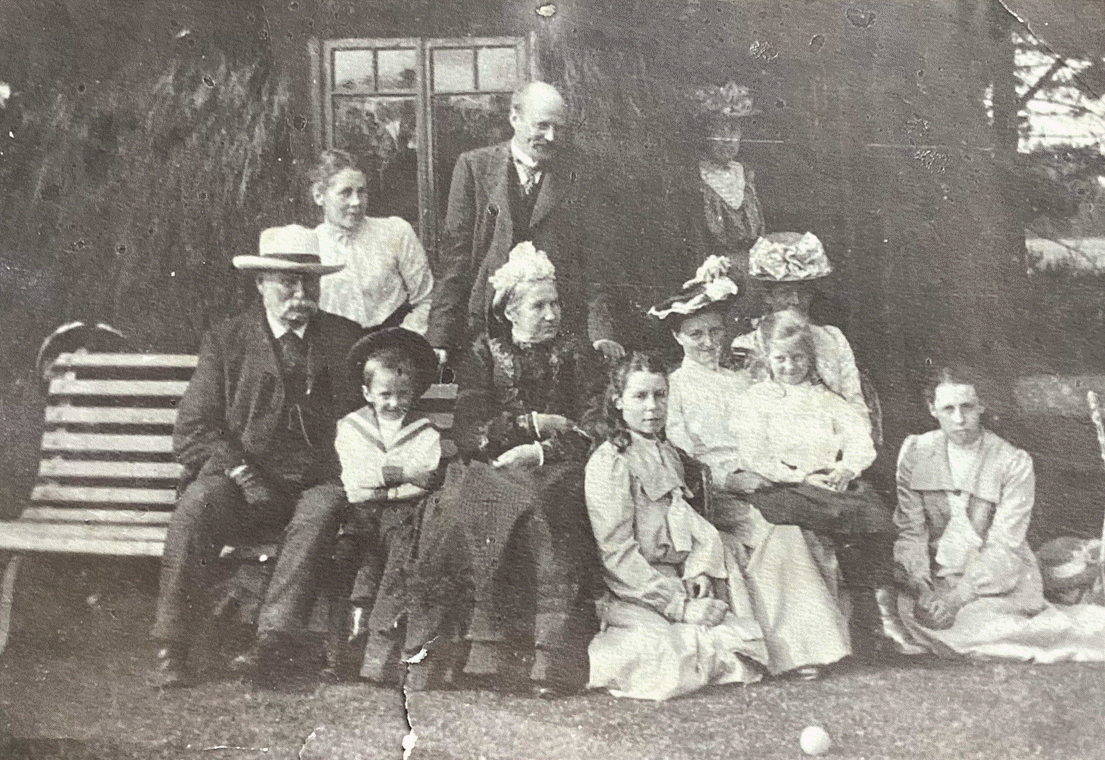
Arthur John Hall in back row,
Marianne Baker neé Hall in doorway,
James Hall of Kynsal Lodge, Henry
Hall born 1897, Mary Hall neé Twigg, Catherine Mira
Hall neé Stubbs with Mary Catherine Hall on her knee
(Ann Dalgleish records)
1903
Their daughter, Margaret
(“Peggy”) Hall (1903 to 1988) (HAL000113) who later married Christopher
Chernocke Bullock, was born on 27 August 1903.
1911
1911 Census – Brampton, Newcastle
under Lyme
Arthur John Hall, 42,
timber merchant
Catherine Mira Hall, 44
Henry Hall, 13
Margaret Hall, 7
Carles John Stubbs, 42,
was a visitor
Three servants
1914
Following the outbreak of
the First World War, Colonel Arthur John Hall was officially appointed to
command the newly formed 2/5th South Staffordshire Regiment when it was established
as a second-line unit in late 1914 and he commanded the 2/5th Staffordshire
Regiment in the Easter Rising in Ireland during the First World War. Colonel Hall was
responsible for the initial recruitment, organisation, and training of these
young Territorial Force soldiers. He oversaw their movements through early
training camps in England, including stints at Harpenden, Luton, and St Albans.
When the 59th Division was
unexpectedly mobilized and deployed to Dublin in April 1916 to quell the rebellion,
Colonel Hall was technically the overall commanding officer of the 2/5th
Battalion.
While Colonel Hall held
the overarching administrative command of the unit, the fierce, localised
tactical deployment into the North King Street area was spear-headed on the
ground by Lieutenant-Colonel Henry Taylor. It was Lieutenant-Colonel Taylor who
directed the grinding, 150-yard house-to-house advance against the rebel
barricades. Consequently, historical accounts of the subsequent North King Street
Massacre and the military inquiry that followed focus heavily on Taylor's
immediate tactical leadership and the specific orders filtering through his
field officers.
During the 1916 Easter
Rising in Dublin, the 2/5th Battalion of the South Staffordshire Regiment,
alongside its sister second-line territorial battalion, the 2/6th
was thrust into heavy, close-quarters urban combat.
The 2/5th South Staffords was a "second line" Territorial Force unit
formed in Walsall in September 1914. They were initially designated for home
service and training in England (The Long, Long Trail). Initially the Regiment was
intended to provide drafts for the 1/5th Battalion in France, but this role was
later taken over by the 3/5th Battalion. The battalion formed part of 2nd Staffordshire
Brigade in 2nd North Midland Division. These were later numbered 176th (2/1st
Staffordshire) Brigade and 59th (2nd North Midland) Division respectively.
Training was at Luton and later St Albans.
When the Easter Rising
broke out in Dublin on Easter Monday on 24 April 1916, the battalion was rushed
from its base in St Albans as part of the 176th Brigade of the 59th (2nd North
Midland) Division. Many of these young, inexperienced soldiers initially believed
they were embarking for France. Instead, they landed at Kingstown, now Dún
Laoghaire, on 26 April 1916 to reinforce the British garrison suppressing the
republican uprising. (Easter Rising, In the Dark).
The Staffordshire
battalions were moved from Trinity College toward the Republican strongpoint at
the Four Courts, commanded by republican leader Edward Ned Daly. Entering the North King Street
area, the 2/5th and 2/6th Battalions encountered fierce, highly effective
sniper and barricade fire from the Irish Volunteers. The Republicans used
windows, roofs, and heavily fortified buildings to hold off the British
advance. Faced with crippling frontal
casualties, the troops used makeshift armoured trucks and adopted a tactic
called mouse-holing, crowbarring and blasting through the inside walls
of terraced homes to bypass the barricaded streets. By the time of the republican
surrender on Saturday, 29 April, the Regiment had suffered 11 dead and 28
wounded, advancing a mere 150 yards down the street. (see Main Sites of Activity during the
Easter Rising 1916; 1916 Easter Rising in The Irish War). The intense pressure and
high casualties suffered during the house-to-house fighting led to a
controversy referred to as the North King Street Massacre. A military court of
inquiry and a subsequent coroner's inquest concluded in favour of the military,
though the incident remained controversial and damaged public support in
Ireland.
Following the
suppression of the Easter Rising, the 2/5th Battalion was stationed at The
Curragh camp in County Kildare for the remainder of 1916. Following the suppression of
the Easter Rising, Colonel Hall remained with the battalion during its
prolonged keeping of the peace at The Curragh camp in County Kildare through
the remainder of 1916.
In January 1917, the
Regiment returned to England to begin final battle training at Fovant, where there was a large purpose-built camp on the
edge of the Salisbury Plain training area. They embarked for France on 17
February 1917. The 59th Division took part in following the German Retreat to the
Hindenburg Line in March and April 1917, but it was not until September that it
was engaged in its first full scale action, the phase of the 3rd Ypres
Offensive known as the Battle of the Menin Road Ridge. This was a carefully
prepared assault with massive artillery preparation, and most of the objectives
were taken easily. The next phase, the Battle of Polygon Wood (26 September
1917), fought mainly by Australian divisions, was equally successful, with
176th Brigade advancing steadily behind its barrage onto the final objectives.
The 2/5th Battalion was eventually disbanded in France on 30 January 1918.
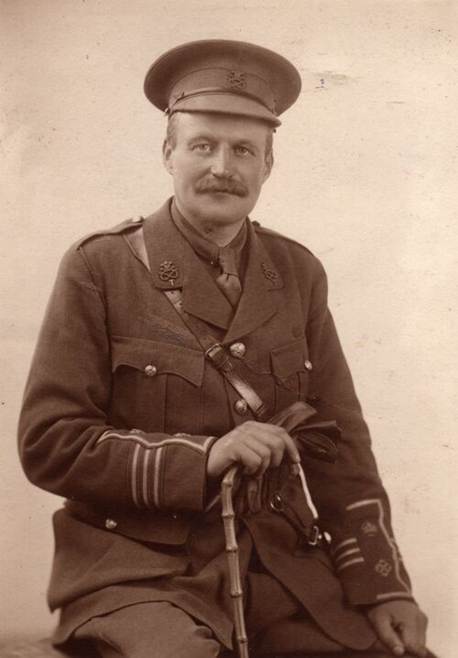
For his decades of
military dedication and volunteer training, he was awarded the Territorial
Decoration (TD).
1920
Arthur was a timber
merchant (Henry Hall & Sons) outside his military career until he retired.
1921
1921 Census – Parkpilds
House, Barlaston, Staffordshire
Arthur John Hall, 53,
retired timber work, retired Colonel
Catherine Nora Hall, 54,
born Penkridge, Staffordshire
Mary Catherine Hall, 26
Henry Hall, 24
Two servants
1927
Arthur was a keen
sportsman.
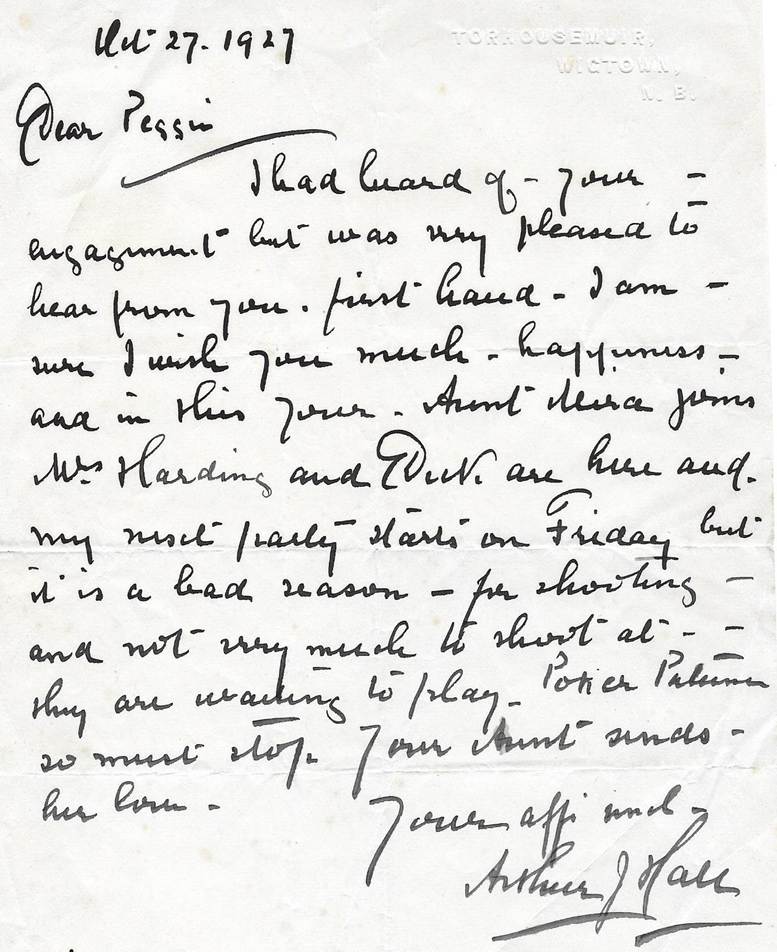
We have a letter from
Arthur in 1927 to Peggy Baker, his niece, congratulating her on her engagement
and reporting on the season’s shooting:
Newcastle under Lyme,
Staffordshire. Parkfields, Tittensor. Torhousemuir.
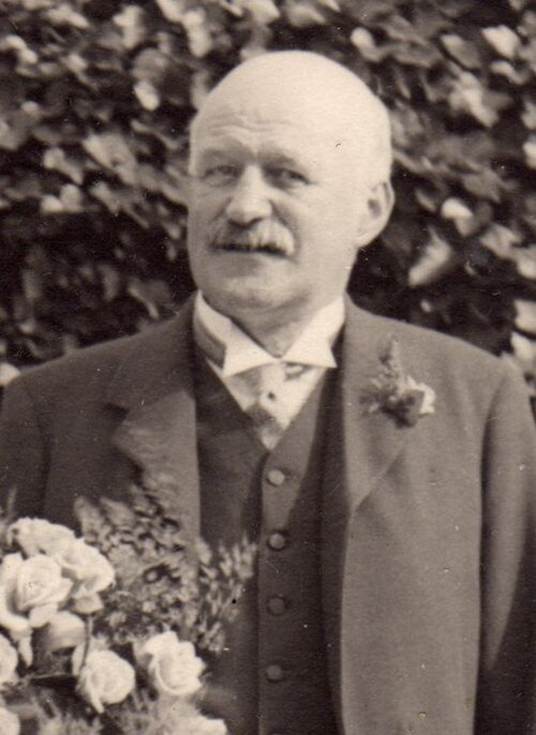
Arthur Hall
1934
Arthur Hall died on 21 October
1934. Hall Arthur John of Parkfields Tittensor Staffordshire
died 21 October 1934 Probate London 13 December to Henry Hall of no occupation
Margaret Bullock (wife of Christopher Chrnocke Bullock) and Roberyt
Sydnenham Marshall solicitor. Effects £112952 18s 8d (Probate Record).