Elizabeth Hall
6 October 1778 to 1838 or 1854
HAL00072
|
Return to the Home Page of the Bakers Family part of the website |
The Bakers of Highfields Story
The Story of the Dods and Bakers and of Highfields,
Fenton House and Hasfield Court. A journey through the history of Cheshire and
Staffordshire, an Anglo-Saxon nobleman who retained his lands after the
Conquest, pottery at Stoke on Trent, an encounter with Elgar, and the history
of an Elizabethan manor house at Audlem |
The family tree of the Bakers of Highfields |
The Family Tree of the Dods, predecessors to the
Bakers of Highfields |
The Bakers of
Fenton House and Hasfield Court
The Family Tree of the pottery Bakers of Stoke on Trent |
The Family Tree of the Bellyse Family |
The main part
of this website tells the story of the Farndale family from Yorkshire Descendants of Arthur Baker, the story of the Farndale
ancestry is told through the main part of this website You can also return to the Farndale
website home page |
The genealogy of the family of James Hall, linked to
the Baker family through marriage to Arthur Baker |
Newcastle
under Lyme, Staffordshire
1778
Elizabeth Hall was the
daughter of James and Elizabeth (nee Astley) Hall (HAL00060) was born in 1778 and baptised at
the Anglican church of St Giles at Newcastle under Lyme on 6 October 1778 (St Giles, Newcastle
under Lyme Parish Records). She was baptised shortly after
her father, a hatter, had died.

1798
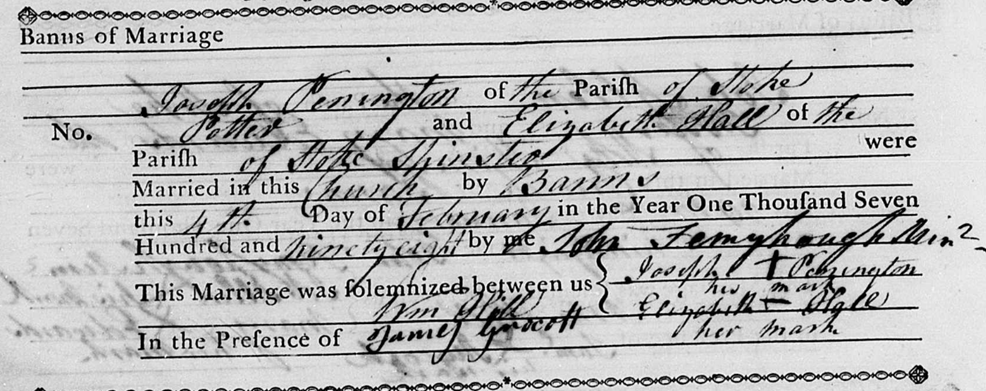
Elizabeth Hall married
Joseph Pennington, a potter, on 4 February 1798 at Newcastle-under-Lyme (St Giles, Newcastle
under Lyme Parish Records), but he must have died shortly
afterwards since Elizabeth, as a widow, remarried later the same year.
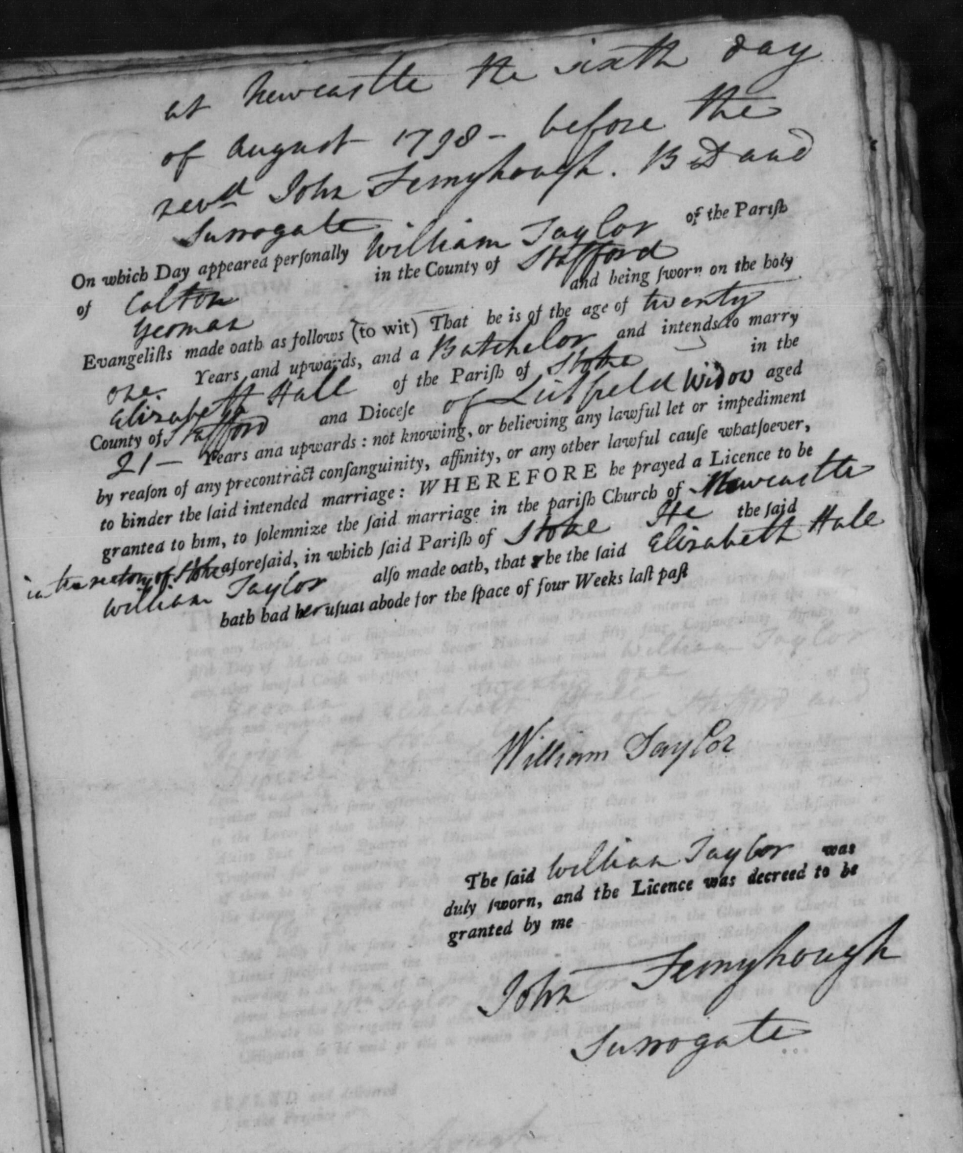
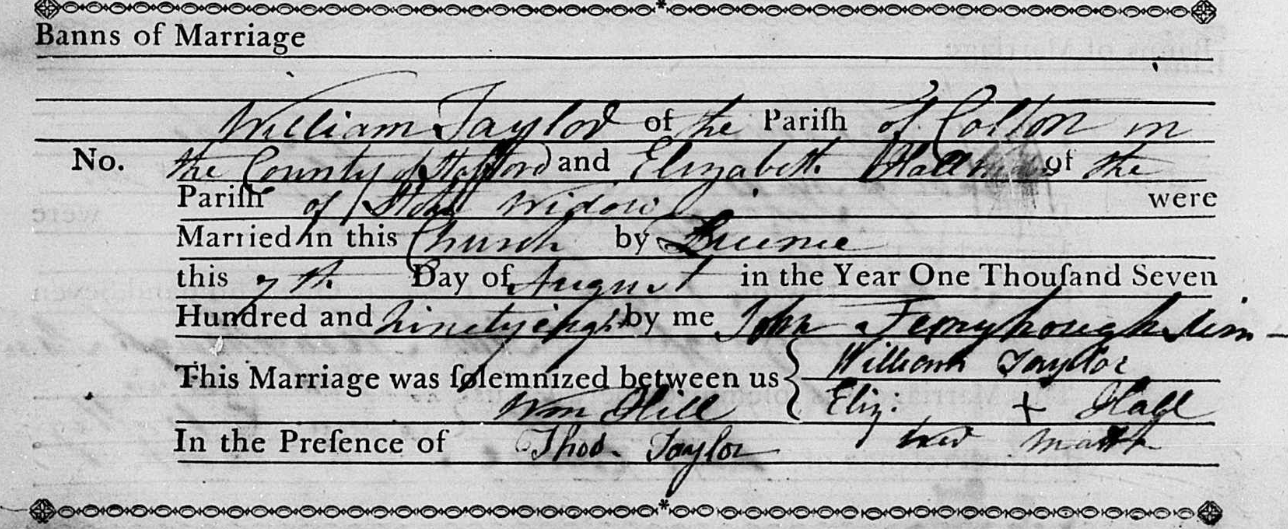
Elizabeth Hall, 21,
married William Taylor, a yeoman of Calton, Staffordshire, on 6 August 1798 at
Newcastle-under-Lyme (St Giles, Newcastle under Lyme
Parish Records). Although only 21, she was
already a widow.
1838 or 1854
Elizabeth Taylor died in
the third quarter of 1838 in Newcastle-under-Lyme (GRO Volume 17 page 55).
or
Elizabeth Taylor died in the second
quarter of 1854 in Newcastle-under-Lyme (GRO
Volume 6B page 33).