Robert Hall
7 December 1709 to 3 March 1773 (buried)
HAL00049
|
Return to the Home Page of the Bakers
Family part of the website |
The Bakers of Highfields Story
The Story of the Dods
and Bakers and of Highfields, Fenton House and Hasfield Court. A journey
through the history of Cheshire and Staffordshire, an Anglo-Saxon nobleman who
retained his lands after the Conquest, pottery at Stoke on Trent, an
encounter with Elgar, and the history of an Elizabethan manor house at Audlem |
The family tree of
the Bakers of Highfields |
The Family Tree of
the Dods, predecessors to the Bakers of Highfields |
The
Bakers of Fenton House and Hasfield Court
The Family Tree of the pottery Bakers
of Stoke on Trent |
The Family Tree of the Bellyse Family |
The main part of this website tells the
story of the Farndale family from Yorkshire Descendants of Arthur
Baker, the story of the Farndale ancestry is told through the main part of
this website You can also return
to the Farndale website
home page |
The genealogy of the
family of James Hall, linked to the Baker family through marriage to Arthur
Baker |
Barlaston,
Staffordshire
1709
Robert Hall, the son of
Thomas and Elizabeth (nee Tavernor) Hall (HAL00041), was baptised on 7 December 1709
at St John the Baptist, Barlaston, Staffordshire (immediately to the south of
Newcastle under Lyme and Stoke on Trent and north of Stone) (St Giles, Newcastle
under Lyme Parish Records).

1730
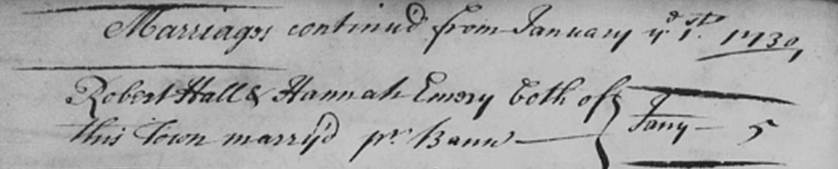
Robert Hall married Hannah
Emery on 5 January 1730 at St Giles, Newcastle under Lyme (St Giles, Newcastle
under Lyme Parish Records), if this was James’
father.
Robert became a felt maker.
In the mid eighteenth
century, the life of a feltmaker in
Newcastle-under-Lyme was involved in the town's most dominant and flourishing
trade, felt hat manufacturing. During this period, the town was a vital hub for
the industry In a 1734 borough election roll, out of
436 burgesses, 159 were registered hatters. A feltmaker's
daily life during this period was characterized by gruelling manual labour,
toxic working conditions, and a distinct place within the town's socioeconomic
hierarchy.
Unlike the highly mechanised
factories of the later Industrial Revolution, eighteenth century feltmaking was a pre-industrial craft carried out in small
workshops or master-led homes. A typical feltmaker
was either a master craftsman employing a small team, or a journeyman working
for one of the town’s numerous master hat-makers.
The first stage was sorting
and blending the animal fur, predominantly rabbit, hare, or expensive beaver
imported for luxury hats, which were separated and cleaned. In the bowing
stage, the feltmaker used a large, heavy wooden bow
with a catgut string, vibrating it into the loose fur to interlace the fibres
into a loose, cloud-like mat. Then in the planking phase, the loose fibres were
taken to a plank, a lead-lined boiling kettle filled with water,
sulfuric acid, and sometimes wine lees or urine. The feltmaker
continuously dipped, rolled, and pressed the hot, wet fur to shrink and harden
it into dense felt.
The life of a mid eighteenth century feltmaker
was notoriously hazardous. Planking rooms were constantly damp, suffocatingly
hot, and filled with acidic steam. The period also marked the widespread use of
mercuric nitrate in a process called carrotting,
which softened coarse animal hairs. Constantly inhaling mercury vapours and
absorbing the chemical through the skin led to chronic mercury poisoning. Feltmakers frequently suffered from the hatter's shakes
or tremors, severe anxiety, confusion, and emotional instability, giving rise
to the expression mad as a hatter.
Because the hat trade was
a cornerstone of the local economy, many feltmakers
and hatters were recognised as Burgesses, granting them valuable voting rights
and a say in running the borough.
Newcastle-under-Lyme was a
major eighteenth century coaching town positioned on the primary trade route
connecting Manchester and Liverpool to Birmingham and London. Local feltmakers benefited immensely from this traffic, though
many of their raw felt hoods were packed up and sent down the road to be
finished by London milliners.
On market days, feltmakers would ply their trades or purchase goods along
the historic High Street market, known as The Stones, which served as
the social and commercial heart of the town.
A feltmaker
in 1750s Newcastle-under-Lyme lived a life of contradiction, enjoying solid
economic demand and political enfranchisement in a bustling trade town, while
enduring a physically punishing and toxic daily routine at their workbench.
1743
Robert and Hannah’s son, William
Hall (HAL00061) was baptised on 25 March 1743.
1744
Robert and Hannah’s son,
James Hall (HAL00060), was baptised on 25 July 1744.
1773
Robert Hall died in 1773
and was buried at St Giles, Newcastle under Lyme on 3 March 1773 (St
Giles, Newcastle under Lyme Parish Records).
