8 September 1900
to 22 October 1974
HAL00121
|
Return to the Home Page of the Bakers Family part of the website |
The Bakers of Highfields Story
The Story of the Dods and Bakers and of Highfields,
Fenton House and Hasfield Court. A journey through the history of Cheshire and
Staffordshire, an Anglo-Saxon nobleman who retained his lands after the
Conquest, pottery at Stoke on Trent, an encounter with Elgar, and the history
of an Elizabethan manor house at Audlem |
The family tree of the Bakers of Highfields |
The Family Tree of the Dods, predecessors to the
Bakers of Highfields |
The Bakers of
Fenton House and Hasfield Court
The Family Tree of the pottery Bakers of Stoke on Trent |
The Family Tree of the Bellyse Family |
The main part
of this website tells the story of the Farndale family from Yorkshire Descendants of Arthur Baker, the story of the Farndale
ancestry is told through the main part of this website You can also return to the Farndale
website home page |
The genealogy of the family of James Hall, linked to
the Baker family through marriage to Arthur Baker |
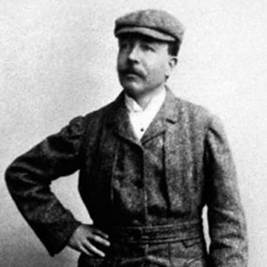
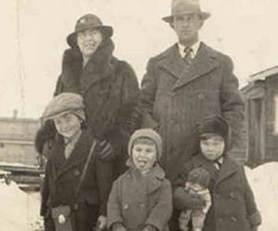
John Hugh Hall, the son of
Robert Hugh and Alice (nee Nunnerley) Hall (HAL00104), was born on 8 September 1900 (1939 Register) at Newcastle under Lyme.
1901
1901 Census – Brampton, Newcastle
Robert H Hall, 30, timber
merchant
Alice Hall, 25
James Hall, 2
John H Hall, 0
A cook, housemaid and
nurse
1911
1911 Census – Cliftonville, Margate
Robert Hall, 40, Timber
Merchant, employer
Alice Hall, 35
Hugh Hall, 10
Noel Hall, 9
Marjorie Hall, 7
Rosemary Hall, 1
Catherine Lynham, sister,
45
Mary Nunnerley, sister in law
Florence Jackson,
governess, 30
Cook, housemaid and nurse
1918
He served in the new Royal Air
Force in the First World War with an attestation date of 6 August 1918, aged 17.
His service number was 181489.
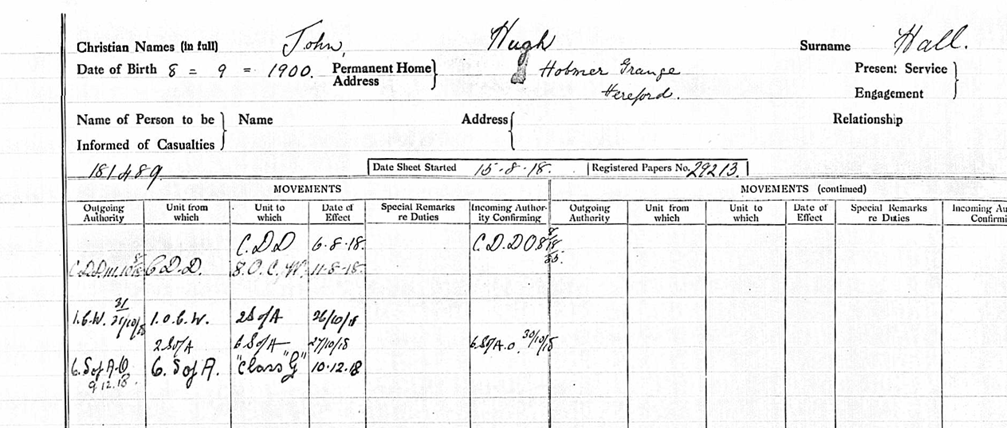

(RAF Officer Service Records, 6 and 15 August 1918)
1936
John H Hall married Winifred M
Lewis in the fourth quarter of 1936 at Hereford (GRO Volume 6A page 1292).
1939
The Hall family operated the
Holmer Cider Works out of Holmer Grange, located in the Holmer area just north
of Hereford city centre. The business was a prominent local fixture in
Herefordshire's thriving commercial cider landscape during this period, running
alongside the rapid industrialisation of the regional trade. Captain John Hugh
"Hughie" Hall (1900–1974) was the most well-recorded commercial cider
manufacturer of the family during the early-to-mid 20th century. The son of
Robert and Alice Hall, he was a World War I RAF veteran who managed the
operations from Holmer Grange. Based at their family residence, the facility
processed regional orchard apples using early twentieth-century machinery and
technique transitions typical of the era. Aside from cider production, Holmer
Grange famously served as a training ground for the Hereford Auxiliary Units
(the British Resistance) led by Captain Hall during World War II.
Local land, probate, and business
records from the early 1900s through the mid-century frequently associate the
enterprise with generations of the Hall family, including Robert Hugh Hall and
legal ties to local executors.
The company operated during the
golden age of Hereford factory cider, a time when the sector transitioned from
small farmstead operations into highly mechanised, world-renowned regional
brands.
(A Bodbury Man leads the Ledbury Home Guard Auxiliary Unit, Bosbury
History Resource)

1939 Register – Holmer Grange, South View,
Wilts, Hereford
Robert H Hall, born 8 August 1870,
widowed, retired cider man
John H Hall, born 8 September 1900, Cider
Manufacturer, married
Winifred M Hall, born 19 May 1906,
married
Richard H Hall, born 19 May 1939
5 others
Hughie Hall became a key figure in
the county's secret wartime resistance organisation, the Auxiliary Units,
during the Second World War. He lived at Holmer Grange, near Hereford, where
his family's cider business was based. The Auxiliary Units were Britain's
highly secret stay-behind force. If Germany had successfully invaded Britain,
these men were expected to disappear into concealed underground bases and then
emerge to conduct sabotage, intelligence gathering, and guerrilla attacks
behind enemy lines. Their life expectancy after an invasion was often reckoned
in weeks. Hughie Hall was not merely a local volunteer. He served as a Group
Leader or Assistant Group Commander for Auxiliary Unit patrols in Herefordshire
and was responsible for overseeing several patrols in the county. Sources identify
him as leader of the group covering the Adam, Jacob and Meshach patrols.
Holmer Grange, his home and cider works near Hereford, became an important local training
centre for these secret units. Herefordshire patrols trained on the estate,
where exercises were designed to prepare them for covert warfare. Recollections
from former members describe a large lake crossed by a pontoon bridge, where
trainees had to run across carrying full equipment. Sections of the bridge
rigged to collapse, deliberately dropping men into the water. Instructors
sometimes pushing trainees in even when they succeeded. A stuffed dummy mounted
in a doorway for practising silent killing techniques. Competitive infiltration
exercises in which patrols attempted to enter a farmyard, place identifying
markers on equipment, and escape without detection. These activities were very
different from ordinary Home Guard drill. The training focused on stealth,
sabotage, movement at night, and close-quarters combat, reflecting the
Auxiliary Units' intended role as an underground resistance force.
The cider factory was not openly
advertised as a military camp. Rather, Hall's Holmer Grange estate and cider
business provided a discreet rural location where secret training could be
conducted away from public attention. The cider manufacturer himself was one of
the county's senior Auxiliary Unit officers, and his property became a
recognised training venue for Herefordshire's resistance patrols.
The secrecy was so great that many
participants' families never knew of their role during the war. Information on
the Auxiliary Units did not become widely known until decades afterwards.
1975
John Hugh Hall died in Hereford on
22 October 1974. Hall, John Hugh of Mout Skippett Kingsthorne Hereford
died on 22 October 1974 Probate Oxford 1 May £5194 (Probate Records, GRO Volume 29
page 267).