Daniel Baker
c
1552 (estimated) to 1641
BAK000010C
|
Return to the Home Page of the Bakers Family part of the website |
The Bakers of Highfields Story
The Story of the Dods and Bakers and of Highfields,
Fenton House and Hasfield Court. A journey through the history of Cheshire
and Staffordshire, an Anglo-Saxon nobleman who retained his lands after the Conquest,
pottery at Stoke on Trent, an encounter with Elgar, and the history of an
Elizabethan manor house at Audlem |
The family tree of the Bakers of Highfields |
The Family Tree of the Dods, predecessors to the
Bakers of Highfields |
The Bakers of Fenton House and Hasfield Court
The Family Tree of the pottery Bakers of Stoke on Trent |
The Family Tree of the Bellyse Family |
The main part
of this website tells the story of the Farndale family from Yorkshire Descendants of Arthur Baker, the story of the
Farndale ancestry is told through the main part of this website You can also return to the Farndale
website home page |
The genealogy of the family of James Hall, linked to
the Baker family through marriage to Arthur Baker |
Headlines are in brown.
Dates are in red.
Hyperlinks to
other pages are in dark
blue.
References and
citations are in turquoise.
Context and local
history are in purple.
c 1552
We know from William Baker’s Will in 1615 that William Baker (BAK00010) had a brother,
Daniel Baker of Stratford upon Avon.

We know that
William Baker was a mercer in Coventry. It is of course possible that this was
a Stratford family, and William moved to Coventry, but the association of the
Christian name Sampson with William’s descendants makes it more probable that
this was a Coventry family and Daniel Baker moved to Stratford. Daniel Baker may
therefore have been born in Coventry, though I have not found evidence of that.
In early modern
England, the appearance in a Will of a person of the same business and surname
in a different, but proximate town is strong evidence of a close fraternal or
filial bond. We know that Daniel Baker was a mercer in Stratford by the 1580s (The
Stratfire Project, Documentary History).
1586
It therefore
seems probable that this was the Daniel Baker (who died in 1641) who was a
prominent Puritan mercer, alderman, and bailiff of Stratford-upon-Avon who
lived during the Elizabethan and Jacobean eras. He belonged to the immediate
social and governing circle of William Shakespeare and was closely connected to
the famous Quiney family. Through marriage, he became part of Stratford's most
influential municipal families.
In 1586, he
married Joan Taylor, making him the step-grandson-in-law of the wealthy Stratford
merchant Richard Hill.
1598
He was also the
nephew by marriage of Richard Quiney, the Stratford alderman famously known for
writing the only surviving letter addressed to William Shakespeare. Daniel
Baker features in the historical Quiney letters, a collection of
correspondence between Stratford contemporaries regarding local governance and
financial aid. In a notable letter from November 1598 sent to Richard Quiney in
London, Baker discussed personal debts and mentioned an expected sum of money
being handled by Aunt Quiney, which scholars believe structurally
connects to the financial loans and business transactions Quiney was attempting
to secure with the assistance of William Shakespeare. (Letter
from Daniel Baker to Richard Quiney including a possible reference to the money
with which William Shakespeare’s help might be procured, 24 November 1598, Shakespeare Documented).
Baker is
historically significant for his aggressive opposition to the theatre. In the
early 1600s, while serving on the Corporation, he was instrumental in passing a
highly controversial local ordinance that banned travelling players and
theatrical performances from the town’s Guildhall, punishing defying companies
with heavy municipal fines. (Edmondson, Dr Paul, Shakespeare's
Stratford-upon-Avon: friends, neighbours, places).
Daniel Baker was
a zealous Puritan. As a leading member of the Stratford Corporation, he
enforced religious discipline and strict moral order across the town through
local church courts.
(MacDonald, Lindsay and Sandra (2021), Exploring
Shakespeare’s Church, Pages 62, 71).
1610
Daniel Baker rose
rapidly through Stratford's corporate governance structure. He became a Capital
Burgess, then an Alderman, and ultimately served as the town's Bailiff (the
equivalent of Mayor) during the crucial years of 1602–1603.
In April 1610,
the Stratford Corporation sent Baker and fellow Alderman Abraham Sturley to London
to negotiate a new royal charter for the borough. They were successful,
securing a more expansive governing charter from King James I that summer,
which established Quarter Sessions and a Recorder for the town. Finally in
April 1610 two of the aldermen, Daniel Baker and Abraham Sturley, were sent to
London and concluded the matter successfully (The
borough of Stratford-upon-Avon in A
History of the County of Warwick: Volume 3, Barlichway
Hundred, ed. Philip Styles (London, 1945), British
History Online).
1633
Reflecting his
high standing, Daniel Baker's initials are among those encircled on the
historic Great Bell at the Guild Chapel, cast in 1633 (Ring out
the old, ring in the new, Stratford
Town Trust).
1641
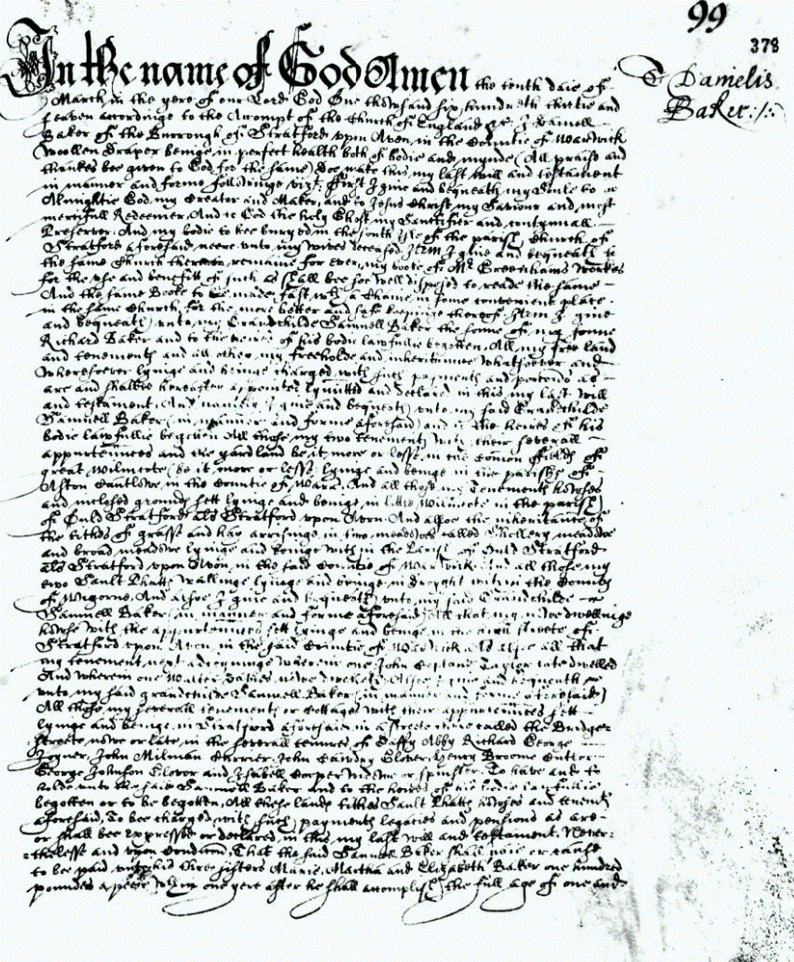
Danielis Baker
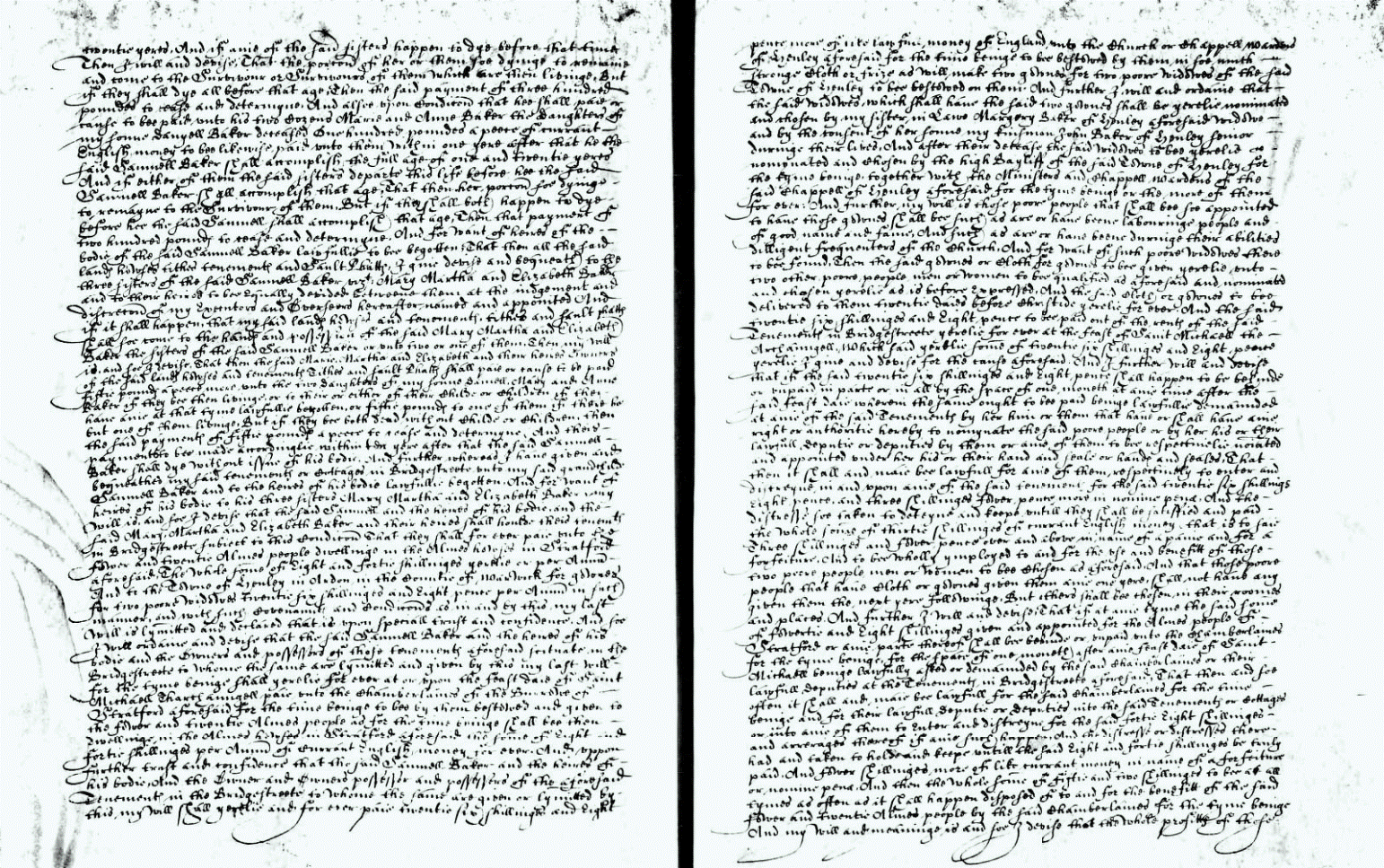
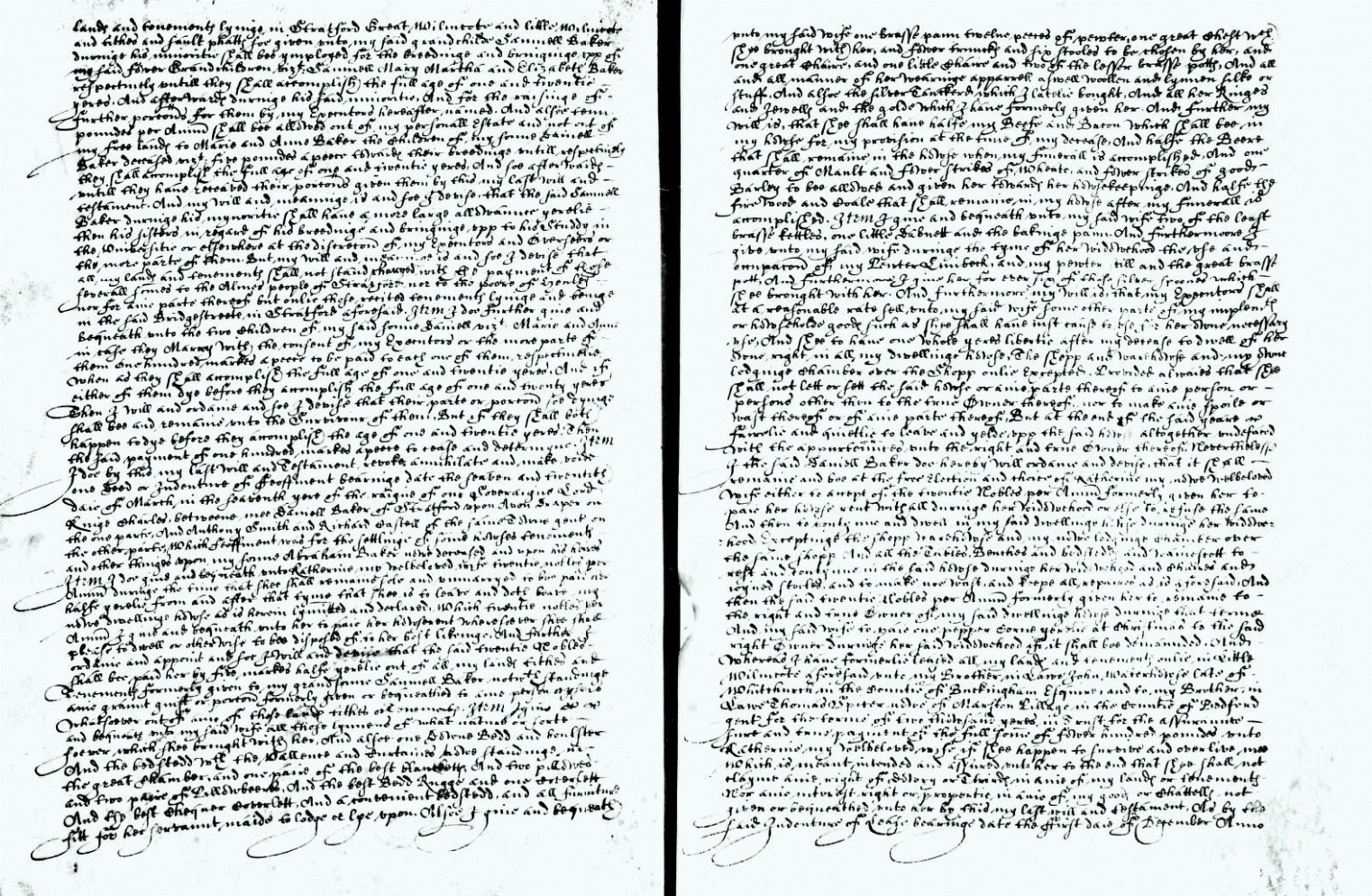
died in 1641, with probate at Stratford upon Avon on 22 July 1641 (Prerogative Court of Canterbury Wills).