The Baker Line
BAK00001
|
Return to the Home Page of the Bakers Family part of the website |
The Bakers of Highfields Story
The Story of the Dods and Bakers and of Highfields,
Fenton House and Hasfield Court. A journey through the history of Cheshire
and Staffordshire, an Anglo-Saxon nobleman who retained his lands after the
Conquest, pottery at Stoke on Trent, an encounter with Elgar, and the history
of an Elizabethan manor house at Audlem |
The family tree of the Bakers of Highfields |
The Family Tree of the Dods, predecessors to the
Bakers of Highfields |
The Bakers of Fenton House and Hasfield
Court
The Family Tree of the pottery Bakers of Stoke on Trent |
The Family Tree of the Bellyse Family |
The main part
of this website tells the story of the Farndale family from Yorkshire Descendants of Arthur Baker, the story of the
Farndale ancestry is told through the main part of this website You can also return to the Farndale
website home page |
The genealogy of the family of James Hall, linked to
the Baker family through marriage to Arthur Baker |
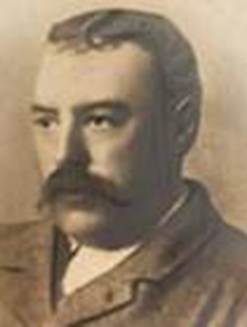
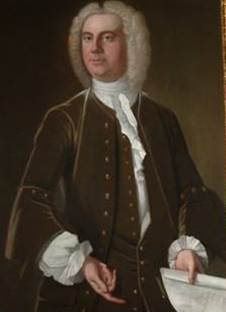
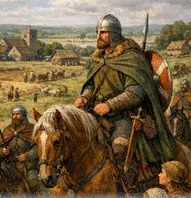
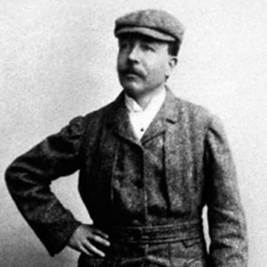
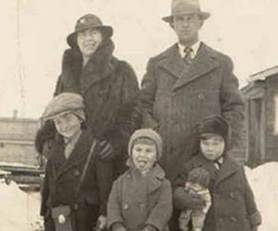
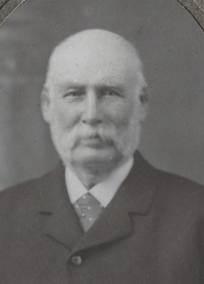
Margaret Louisa
Baker (Peggy) (1901 to 1996) (see more detail at BAK00002)
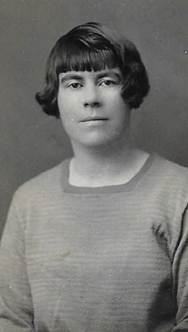
Born
Born on 24
February 1901 at Audlem, Cheshire.
Lived
See BAK00002.
Married
Alfred Farndale,
bachelor, farmer aged 29 son of Martin Farndale (deceased), married Margaret
Louise Baker, spinster of Leeming Bar daughter of Arthur Baker JP (deceased) at
Bedale Parish Church, on 16 Mar 1928.
Lived
See Alfred
Farndale FAR00683 including
their journey to and from Canada and thereafter.
Died
Peggy Farndale
died in Wensleydale in 1996
Arthur Baker
(1860 to 29 April 1916)
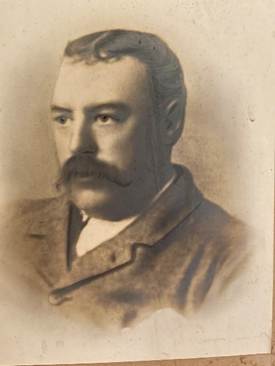
Born
Arthur was born
at Audlem, Near Nantwich, Cheshire in the first quarter of 1860. He was
baptised on 12 February 1860.
Lived
1861 census – 13
Midway Heath, Buerton, Audlem, Cheshire
William Baker,
43, head, landed proprietor
Henrietta Baker,
his wife 36
John B Baker, 10
Arthur Baker, 1
Elizabeth
Daniels, 18, unmarried, governess
Three servants
1871 census –
High Fields, Buerton, Audlem, Cheshire
William Baker,
54, head, land owner
Henrietta Baker,
his wife 46
Henrietta Baker,
22
John Bellyse
Baker, 20
Richard D Baker,
14
Arthur Baker, 11
Charity Baker, 8
Charlotte L
Baker, 4
Emily J Baker, 2
Two visitors,
including John Percy, their agent
Three servants
1881 census –
High Fields, Buerton, Audlem, Cheshire
John Bellyse
Baker, 30, gentleman
Henrietta Baker,
32
Richard D Baker, 24,
solicitor’s general clerk
Arthur Baker, 21
Charlotte L
Baker, 14
Emily J Baker, 12
Two others
1901 census –
Swanbach Villa, Audlem
Arthur Baker, 41, living on
own means
Marianne Baker,
31, his wife
Hilda Marian
Baker, 1
Margaret Louisa
Baker, 1 month
Maude Whiston,
their servant
1911 Census –
Swanbach Villa, Audlem, Chshire
Arthur Baker, 51, private
means
Marianne Baker,
38
Hilda Marian
Baker, 11
Margaret Louisa
Baker, 10
Geoffrey Richard
Baker, 6
Mary Alice Baker,
38, housekeeper
Two servants
Married
Arthur married
Marianne Hall (1869 to 1908) at Nantwich in 1898.
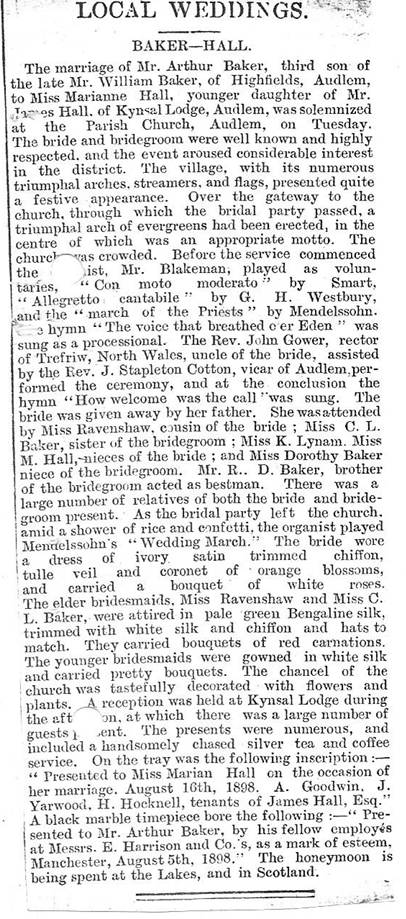
Family
Hilda Marianne
Baker (2 July 1899 to *). Hilda Baker later lived in Sussex.
Margaret Louisa
Baker (Peggy) (24 February 1901 to 1996)
Geoffrey Richard
Baker (1904 to 1974). Geoffrey Baker married Joyce Wright and their children
were Jennifer Baker who married William (Bill) Skelton and Jacqueline Baker who
married HSN Sheardown?
Lived
Extracted from a
booklet about Audlem
Audlem cricket had
its hour of glory. At the end of the last century Market Drayton held an Annual
Cricket Week, when a number of Lancaster County men stayed with their then
captain, AN Hornby, and played for the town, matches being arranged with the
local towns and villages, including Audlem
The captain of
Audlem at this time was Arthur Baker of Hillside, youngest son of William Baker
of Highfields. Some idea of the quality of the Audlem side may be gathered from
the fact that the captain’s 13 years old nephew Bellyse, on holiday from
school, was brought in to complete the team. Indeed, the main purpose of the
game, a single innings match, was to allow the spectators to watch the great
Lancashire stars in action. Audlem, however, possessed a fast bowler. He was
one of the Shuker brothers, the local blacksmiths, whose cannon ball deliveries
were only exceeded in speed by their usual inaccuracy.
Audlem went in first
and were dismissed, with little difficulty, for 13 runs. The spectators settled
down to watch the great men perform. Shuker opened the bowling, and with his
lighting delivery removed the batsman’s middle stump. This success inspired him
to hitherto unknown heights, and helped no doubt by the un-Old Trafford like
ground, he dismissed Market Drayton for 11 runs.
The captain then
came over to Arthur Baker and said, “Well, Arthur, it’s been great fun. I
suppose we’d better make it a two innings match?”
“We’ll both go in
again by all means,” was the reply, “but as far as the match is concerned, it’s
all over and we’ve won.”
“If that’s
Audlem’s idea of good sportsmanship”, said their captain, “Market Drayton will
never play them again.” And for all I know to the contrary they never did until
the middle of the 1960s, when the club revised after a lapse of twenty five
years.
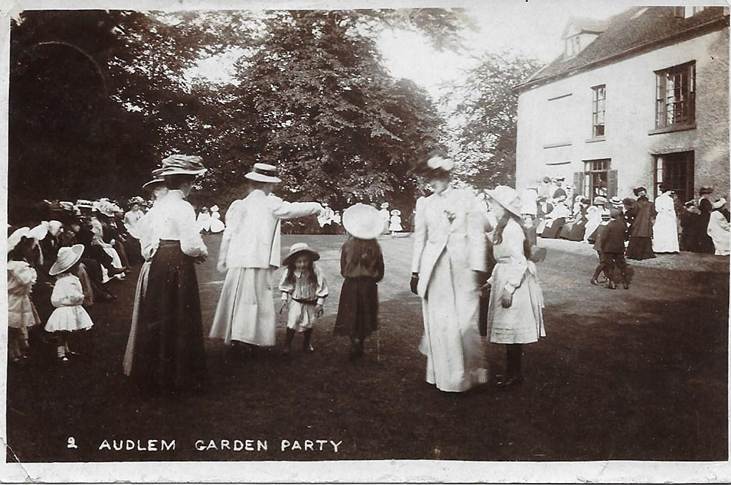
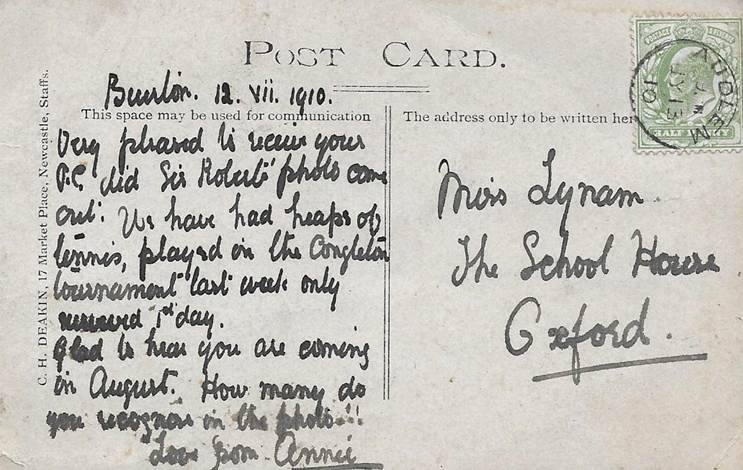
Audlem Garden
Party in 1910 with the message on the back of the postcard. I am still to identify
who Annie is. Miss Lynham must be the daughter of Skipper Lynham (Charles
Cotterill Lynam), Founder headmaster of the Dragon School, at Oxford. See the Hall Line.
Buerton 12 July
1910. Very pleased to receive your PC. Did Sir Robert’s photo come out? We have
had heaps of tennis, played on the Congleton tournament last week only reserved
1st day. Glad to hear you are coming in august. How may do you
recognise in the photo!! Love from Annie.
This was kept in
Marianne Baker’s photo album.
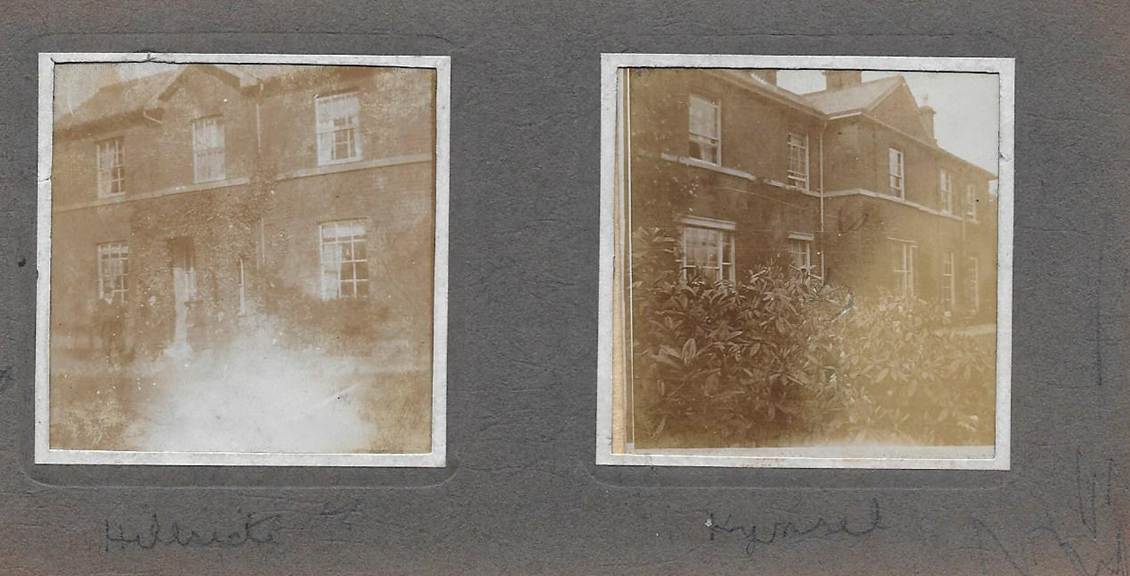
Hillside and
Kynsal (from Marianne Baker’s photo album)
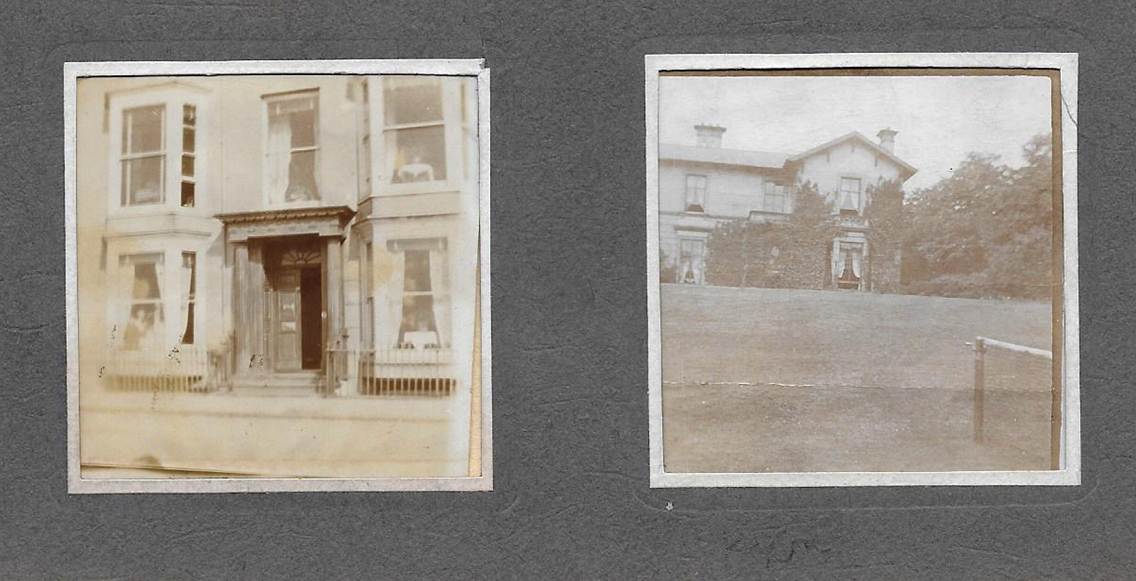
Properties not
yet identified (from Marianne Baker’s photo album)
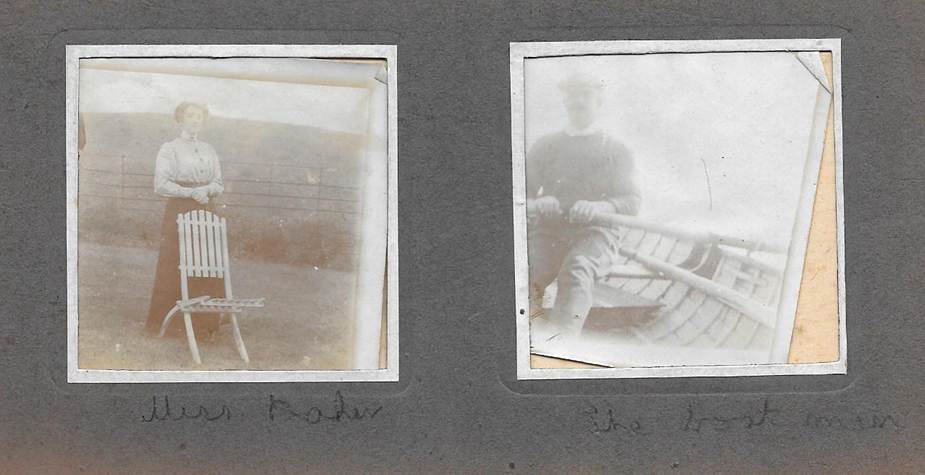
Miss Baker (I’ve
not worked out who this is) and the Boatman (from Marianne Baker’s photo album)
Geoffrey Baker’s
Family who still farm at Little Ponton:
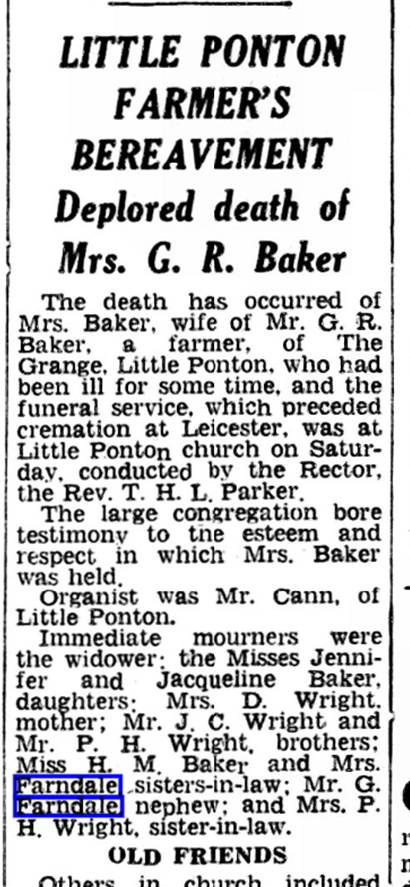
(Grantham
Journal, 2 May 1958)
Died
Marianne Baker
(nee Hall) died on 16 May 1908 at Swanbach Villa,
Audlem
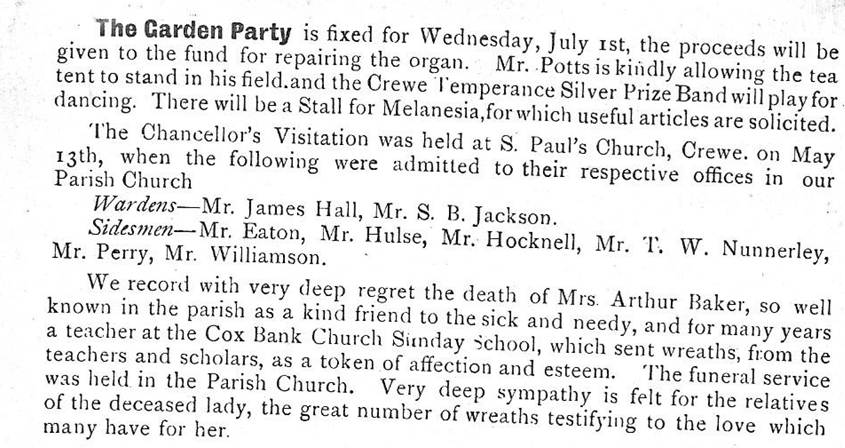
Arthur Baker died
on 29 April 1916.
Probate:
Baker Arthur, of
Hillside Audlem Cheshire gentleman died 29 Aril 1916 Probate Chester 25 May to
Arthur John Hall esquire a lieutenant colonel in His Majesty’s Army. Effects
£10587 15s 3d.
William Baker The
Younger (3 September 1816 to 19 May 1876)
Born
William was born
at Buerton, Cheshire on 3 September 1816 and baptised on 5 December 1816 at
Audlem. His father was William Baker and his mother was Ann nee Hough.
Lived
Research by
Nicholas Kingsley:
William's eldest son,
another William Baker (1816-76), inherited Highfields from his father, and
seems to have been a conventional country gentleman, interested in field sports
and farming; indeed, he may have been primarily interested in field sports
since he was Master of the Albrighton Foxhounds in 1856. By his second wife,
Henrietta Louisa, the daughter of Dr. John Bellyse of Nantwich, surgeon, he
produced nine children.
When he died he
was succeeded by his eldest son, John Bellyse Baker (1850-1932). It was the time
of the great agricultural depression, and there are signs that his father may
have handed over the estate in fairly poor condition. At all events, after a
few years John came to the conclusion that he could not continue to live and
farm at Highfields, and the estate was sold in 1884 to a Liverpool ship-broker,
Charles Walford Kellock (d. 1897), who 'restored' and modernised the house.
John and his family then emigrated to New Zealand where he became a sheep farmer
and grazier, but for reasons which are unclear this was not a success. By 1890
he was back in England and after a few years working as a farm bailiff in
Lancashire, he had recovered sufficient capital to purchase a boarding house at
St Anne's-on-Sea, on the Lancashire coast, which he and his wife ran for many
years. Socially, it was aeons away from the life to which he had been brought
up, but it does seem to have provided a reasonable living. His sons were able to
go to Christ's Hospital School although they did not attend a University. His
elder son, Bellyse Baker (1886-1947) joined the cotton manufacturing industry
as a clerk before the First World War, and war service, worked his way up the
business to be its sales director. The fruits of this career enabled him to
repurchase Highfields when it came on the market at the end of the Second World
War, but he died shortly afterwards, and it was left to his son, John Bellyse
Baker (1915-2010) to restore and reoccupy the house. Although the family had
sold a good deal of the contents of Highfields when they went abroad in 1884,
they had retained many of the more personal family items, and it was possible
to return these to the house when they reacquired it. John Bellyse Baker
developed a deep personal interest in the house and his family, and when
Highfields was opened to the public in the 1980s, he wrote a guidebook for visitors.
The house is no longer open to the public, but remains the home of the present
John Bellyse Baker (b. 1956) and his family.
In 1839, there is
a record that William Baker built Kynsal Lodge, the architect being William’s
younger brother, Thomas.
On 13 March 1849,
when their first daughter Henrietta was born, they were living at Craven
Street, Westminster.
1851 Census –
Woodhouse Lane, Buerton, Nantwich, Cheshire
William Baker, 34, born 1817,
fund holder
Henrietta Louisa
Baker, 26, born 1825
Henrietta Baker,
2, born 1849
John Bellyse
Baker, 0, born 1851
Margaret Green,
28, nurse
Ann Maria Austin,
19, nurse
In 1856, William
was Master of Fox Hounds on the Albrighton Hunt.
In 1859, William
was a JP for Cheshire.
1861 census –
Kinsey Heath, Buerton, Audlem, Cheshire
William Baker, 43, head,
landed proprietor
Henrietta Baker,
his wife 36
John Bellyse
Baker, 10
Arthur Baker, 1
Elizabeth
Daniels, 18, unmarried, governess
Three servants
On 29 October 1863,
the family were still living at Kynsal, Audlem.
1871 census –
High Fields, Buerton, Audlem, Cheshire
William Baker, 54, head, land
owner
Henrietta Baker,
his wife 46
Henrietta Baker,
22
John Bellyse
Baker, 20
Richard Dod
Baker, 14
Arthur Baker, 11
Charity Baker, 8
Charlotte L
Baker, 4
Emily J Baker, 2
Two visitors,
including John Percy, their agent
Three servants
Married 1
William, a
Batchelor married Prudence Cliff, a widow (1813 to 1840) at St Nicholas Church,
Liverpool on 18 June 1838.
Married 2
William married
Henrietta Louisa Bellyse on 8 February 1849 at St James’, Westminster.
Henrietta’s father, John Bellyse, was a surgeon.
St James’s
Piccadilly is also known as St James’s Church, Westminster and St James in the
Fields and is in Piccadilly, designed and built by Sir Christopher Wren.
From a booklet on
Audlem from the late twentieth century
There have been
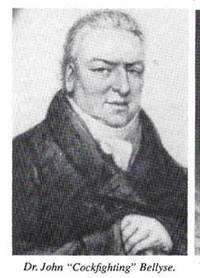
Bellyses of Audlem for nearly two hundred years. Dr Richard Bellyse’s grandfather,
Dr John Bellyse, king of Cheshire’s cock fighting fraternity, was born in 1738
and lived to be ninety. His home was the 16th century house now
known as the Lymes.
Family
Henrietta Louisa
Baker, 9 February 1849 to 1935
John Bellyse
Baker (Jack), 1850 to 1932
Mary Louisa Baker
1852 to 1860
Jane Ellen Baker
1853 to 1865
Richard Dod
Baker, 1856 to 1902
Arthur Baker,
1860 to 1916
Charity Baker,
1862 to 1881
Charlotte Louisa
Baker (Tottie), 29 July 1866 to 1918
Emily Jane Baker,
7 October 1868 to 1941
Extract from a
pamphlet about Audlem
William Baker’s
second son, Richard Dod Baker, was rather unusual for his day and age, insomuch
that not only did he take no interest in field sports, but took great delight
in making fun of those who did.
In the early
1870s the Cheshire Hounds met regularly in Audlem Square, under the mastership
of HR Corbet, father of the late Reggie Corbet of Adderley, a meet which Richard’s
father and eldest brother Jack always attended. Unknown to them there was an
occasion when he ‘borrowed’ a top hat, pink coat and white breeches, also a
penny farthing bicycle from Mt Moseley in the village. When the meet assembled
below the church at eleven, he duly arrived in full hunting kit, riding the
penny farthing and raising his hat to the mounted company. Finally, when
performing a specially deep bow to the master, he fell off at the feet of that
gentleman’s horse.
There is also a birthday
book held by the Noble family which has signatures by Emily Baker, 7 October;
Henrietta Baker, 9 February and Tottie Baker, 29 July. S I take from this that
these are the dates of their birthdays.
Died
William Baker
died on 19 May 1876 at Highfields. He was buried on 24 May 1876 at St James the
Great, Audlem, Cheshire. He was aged 59.
Probate: BAKER
William Esq. Effects under £1500. 21 July. The Will of William Baker late of Highfields
in the Parish of Audlem in the County of Chester Esquire who died 19 May 1876
at Highfields was proved at Chester by Herietta Louisa Baker Widow the Relict
and John Bellyse Baker Gentleman the Son both of Highfields two of the
executors.
William Baker The
Elder (1787 to 8 July 1863)
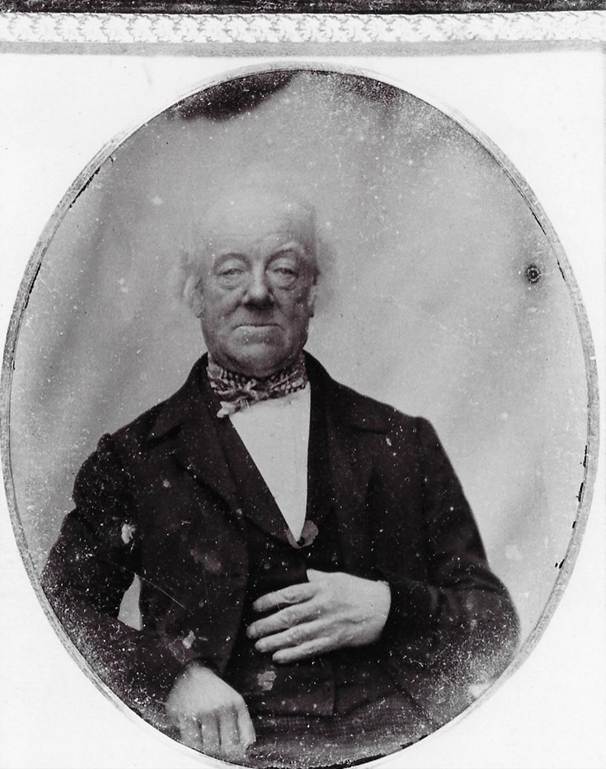
William Baker of
Highfields, from a photograph on glass taken about 1860
Born
William was born
in 1787 at Leominster, Herefordshire and baptised on 17 January 1789. His
mother’s surname was Hassall.
Lived
He was educated
at Shrewsbury School.
Married
William Baker
married Ann Hough (1793 to 1854) at St James the Great, Audlem, Cheshire on 9
August 1813.
Family
Richard Dod
Baker, 1815 to 1843.
William Baker
1816 to 1876
Sarah Baker 1817
to 1907
Ann Baker 1819 -
?
John Hough Baker
1821 to 1842
Mary (or
May) Baker 1823 to ?
Jane Baker 1825
to 1914. She married her first cousin Joseph Haywood Bellyse, the third son of
Sir John Bellyse.
George Baker 1827
to 1877. He married Jane Allman of Audlem. Their children were Richard Dod, May
(married Arthur Schutt) and Anne.
Thomas Dod Baker
1830 to 1880
Charlotte Baker
1832 to ?
Charity Baker
1834 to ?
Richard Dod Baker
of Highfields (1784 to 1807)
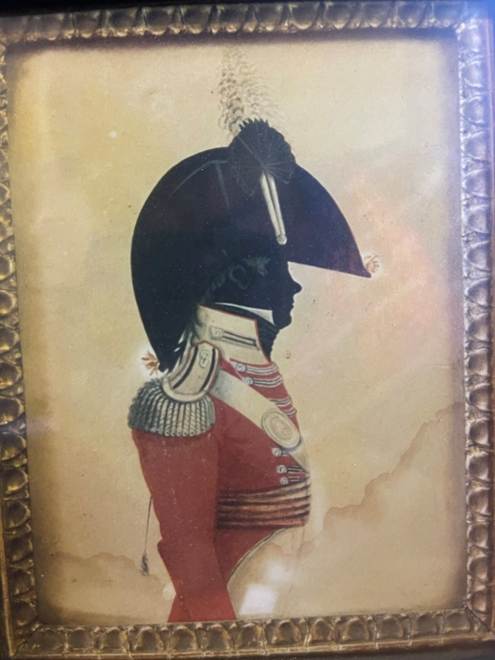
Richard Dod Baker
William’s brother
was Richard Dod Baker. Richard was the heir to Highfields and after he died in
1807, his brother William inherited it.
Richard entered
Brasenose College, Oxford in October 1801. He was commissioned into the 17th
Regiment in 1804. He sailed with his Regiment to India in July 1804 on board
the Worcester. He died on his way home on 12 August 1806.
Lived
Research by
Nicholas Kingsley:
William Baker
(1787-1863), was a pupil at Shrewsbury School. He too seems to have used his
mother's maiden name from time to time, and when he was married in 1813 he was
called William Baker alias Hassall. He is not known to have followed his father
and grandfather into architectural practice or surveying, but one of his five
sons, Thomas Dod Baker (1830-80) took up the profession again and became
Borough Architect of Kidderminster; several of the others became lawyers.
In 1815, when his
first son Richard was born, he was a gentleman.
In 1839, he was a
JP for Cheshire.
1851 Census –
Highfields, Woodhouse Lane, Buerton, Nantwich, Cheshire
William Baker,
63, head, magistrate esquire
Ann Baker,57
Ann Baker, 30
Mary Baker, 27
Jane Baker, 25
George Baker, 23
Thomas Dod Baker,
21
Charlotte Baker,
19
Charity Baker, 17
4 servants
Waggoner
1861 Census –
Kinsey Heath, Nantwich
William Baker,
widower, 73, County Magistrate
An Baker, 38
Jane Baker, 30
George Baker, 28,
solicitor
Charlotte Baker,
25
Henrietta Baker,
11
Jane E Baker, 6
Richard D Baker,
4
Land Agent, Groom
and three servants
Richard Baker
Bellyse 1809 to 1877
There is an
inscription in the square at Audlem which reads “In memory of Richard Baker
Bellyse, who practised as a surgeon in this town for 40 years. Born 17th
May 1809. Died 11th January 1877. In appreciation of a life spent in
relieving the sufferings of his fellow creatures. A man he was to all the
country dear. By medicine life may be prolonged, yet death will seize the
doctor too.”
Died
William the Elder
died at Highfields on 8 July 1863. He was buried on 13 July 1863 at St James
the Great, Audlem, Cheshire.
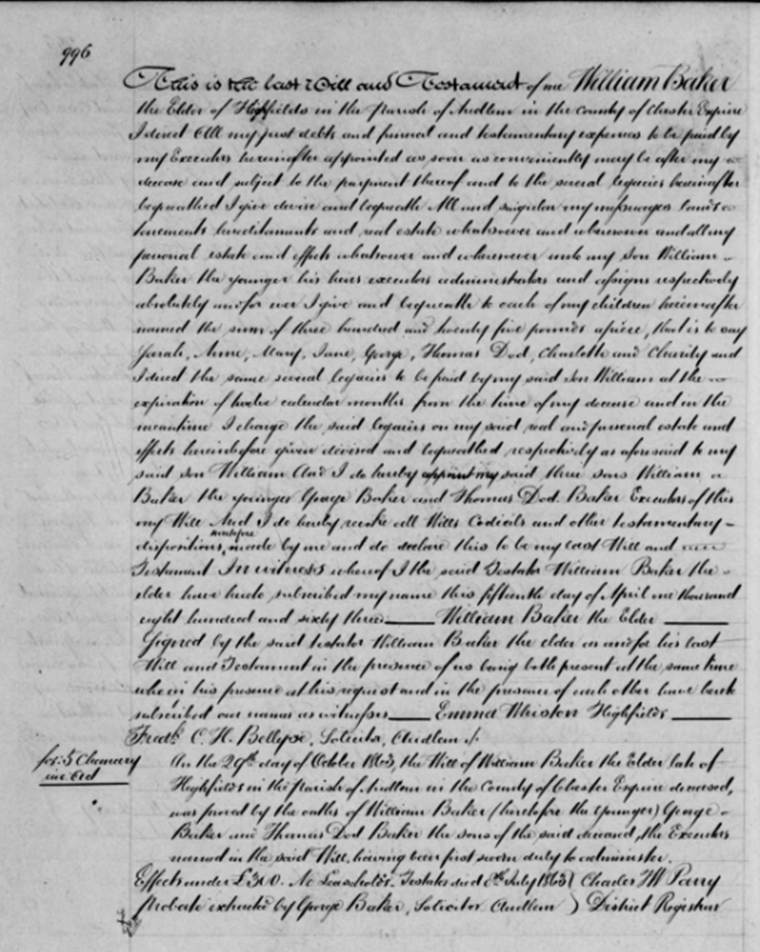
Richard Dod
(“Dick”) Baker (alias Hassall) (1743 to 7 May 1823) The Surveyor
Richard Baker (1743–1803),
continued William Baker’s practice after his father's death in 1771. Richard
seems to have practised mainly as a building surveyor, and there are few
buildings that he designed.
Born
Richard was born
in 1743 in Bridgnorth, Shropshire, later of Stratford upon Avon, Leominster and
‘Highfields’, Audlem. He was christened on 20 July 1743 at St Mary’s
Bridgnorth.
Lived
Research by
Nicholas Kingsley:
When William
Baker, his father died, Richard Dod Baker continued in practice until his death,
when his elder son, Richard Baker (1743-1803) was assisting him. Richard is, by
contrast with his father, a shadowy figure. He was educated at Repton School
but did not attend a University and became assistant to his father in his
architectural and surveying practice. After he succeeded to the business in
1771, its architectural output more or less ceased: he probably did not inherit
his father's creative gifts and he certainly did not share his practical experience
of building. He seems to have spent some of his early years in Leominster, and
it may be that his wife came from that town, as he is said to have used her
maiden surname (Hassall) while living there.
After his mother
died in 1783 he moved to Highfields, and he was probably responsible for the
modernisation of the house which took place around that time. When he died at
the relatively young of sixty in 1803 [this seems to be wrong as he died in 1823 –
see below?], he described himself in his will as 'architect' rather than
'gentleman'. He had left marriage and children rather late in life and his heir
was a teenage son, William Baker (1787-1863), who was a pupil at Shrewsbury
School. He too seems to have used his mother's maiden name from time to time,
and when he was married in 1813 he was called William Baker alias Hassall. He
is not known to have followed his father and grandfather into architectural
practice or surveying, but one of his five sons, Thomas Dod Baker (1830-80)
took up the profession again and became Borough Architect of Kidderminster;
several of the others became lawyers.
He was educated
at Repton, Derbyshire.
On 29 October
1771 he inherited Highfields from his father.
In 1801 the
Oxford University Alumni showed he was a gentleman living at Leominster,
Herefordshire.
He was also an
architect and surveyor and practised as an architect at Stratford upon Avon.
Married
He married Hannah
Hassall (1760 to 1826)
Family
Richard Dod Baker
1784 to 1807 (unmarried)
Hannah Mary Baker
1785 to 23 August 1851
William Baker
1787 to 1863
Jane Baker 1790
to 1849
Mary Baker 1791
to ?
James Baker 1792
to 1818
Died
He died on 7 May
1823 at Stratford upon Avon. He is buried at St George’s at Stratford upon
Avon.
William Baker
(1705 to 1771) The Architect
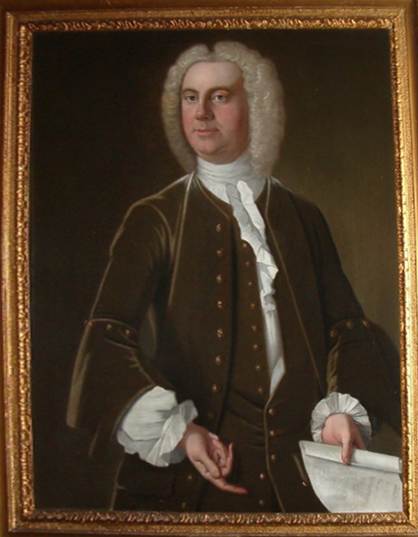
William Baker of
Audlem (1705–1771) was an architect, surveyor and building contractor, working in
Shropshire and the adjacent counties in the middle years of the 18th century.
He was the son of
Richard Baker, who had moved from London to Ludlow. In 1737 he married Jane Dod
of Audlem and for a time lived at Bridgnorth. In the 1740s his wife inherited
Highfields House and they moved to Audlem.
Baker was
employed by the noted architect Francis Smith of Warwick in the 1730s. His
account book for the years 1748–1759 survives, which provides information about
his architectural and surveying practice. The house in which he lived at
Highfields was the subject of an article in Country Life, where a portrait of
the architect survives.
Baker was well
grounded in the fashionable architecture of the early 18th century, having
first worked for Francis Smith of Warwick. He is mentioned as working as a
carpenter for Smith at Ditchley in Oxfordshire in 1727. He set up his own
practice around 1740 and also acted as a building contractor and surveyor.
Initially he developed the practice in eastern Shropshire and Staffordshire and
continued to work for many of clients of Francis Smith after Smith's death in
1738. Houses by Smith which Baker continued to work on included Mawley Hall in
Shropshire, Swynerton Hall in Derbyshire and Wingerworth Hall in Derbyshire. He
always had a close relationship with the innovative Shrewsbury architect Thomas
Farnolls Pritchard. In 1743 at Ludlow, both Prichard and Baker put forward
plans for the Buttercross, but it was Baker who was selected to do the work. In
1746 Baker was paid for the plans and work at the Royal Shrewsbury Infirmary,
but the plans are signed by Thomas Farnolls Pritchard. It is likely that
Pritchard was working under Baker on this project. Again for the building of St
John's Church, Wolverhampton it is likely that Pritchard was the supervising
architect working under Baker. In 1775–1775, after Baker's death, Pritchard
continued Baker's survey work at Powis Castle.
Most notably Baker
gained the patronage of Henry Arthur Herbert (1703–72), who became Earl of
Powis in 1748.
Baker would have
known Henry Herbert from his Ludlow connections. Herbert was the Whig Member of
Parliament and a member of Ludlow Town Council when Baker was awarded the
contract to build the Ludlow Buttercross. Also in 1743 Henry Herbert
relinquished his position as Member of Parliament when he inherited Powis
Castle and became Lord Herbert of Chirbury. In 1735 he had been appointed Custos
Rotulorum of Montgomeryshire and Lord-Lieutenant of Shropshire. and this now
provided him with a power base to dispense patronage in both Montgomeryshire
and Shropshire. Baker's design of the Buttercross (which housed the Ludlow
Council Chamber) is based on James Gibbs "A Book of Architecture"
(1728). Clearly the Buttercross impressed him.
Between 1748 and
1758 he got Baker to alter his house at Oakly Park at Bromfield, just outside Ludlow.
Then, between 1748 and 1754 Baker undertook repairs at Powis Castle, possibly
in preparation for Herbert to move into the castle. Also in 1748, Herbert got
William Baker to design and build Montgomery Town Hall. The new Town Hall was
intended to accommodate the Court of Great Sessions when it met at Montgomery
and over which Herbert presided as Custos Rotulorum. At Bishops Castle Baker
submitted designs for a new Town Hall to Herbert in 1745, but it was slightly
later that the Town Hall was built and to modified designs.
Born
William Baker was
born in 1705 at St Brides, London, later of Bridgnorth, Shropshire and then of
‘Highfields’, Audlem, Cheshire. He was christened on 14 October 1705 at St
Bride, Fleet Street, London.
Lived
After 1714, he
had a kiln at Highfields, and solid bricks.
In 1727, he was a
joiner, working on the instruction of Ditchley Park in Oxfordshire under the direction
of Francis Smith of Warwick, the most successful architect, mason and
contractor in the Midlands.
Highfields
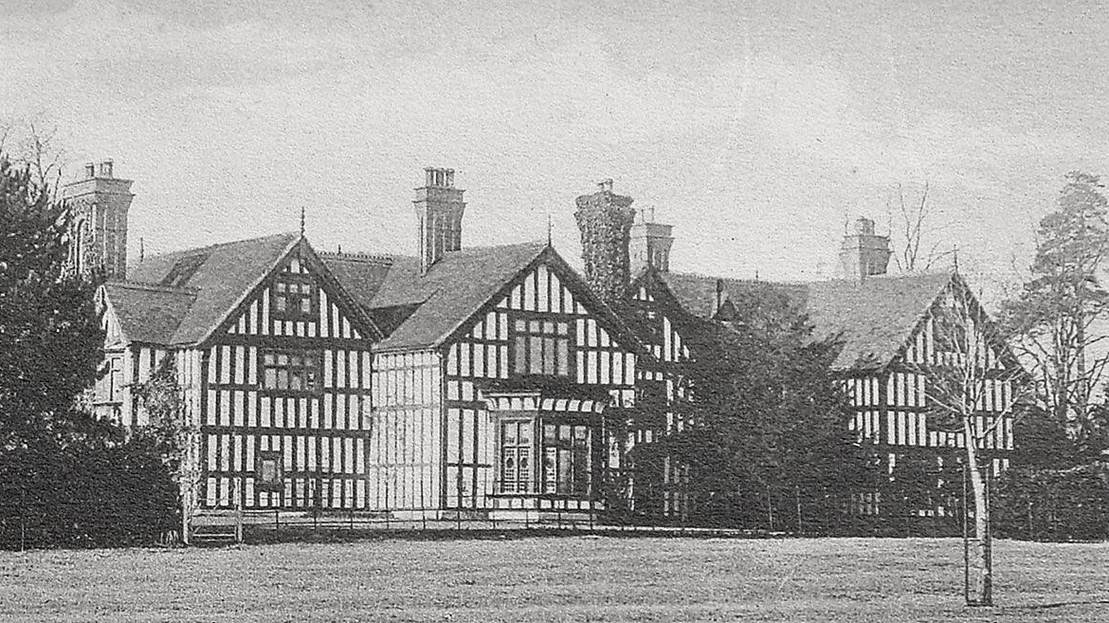
Highfields in
about 1900
Highfields is a
small country house in the civil parish of Buerton, Cheshire, England. It is
recorded in the National Heritage List for England as a designated Grade I
listed building.
The house is
dated 1615. It was built for the Dod family and additions were made in 1750 by
William Baker, and again in 1897. It is timber-framed on an ashlar plinth with rendered
infill and a plain tiled roof. The house consists of two storeys with an attic.
The front elevation has five bays which are symmetrically disposed with
projecting gabled wings on both sides. Both floors have close-studded walling
with a middle rail. The first floor is jettied, as are the gables of the two
lateral wings.
Research by
Nicholas Kingsley:
A fine and
symmetrical but much altered timber-framed house, built for William Dod, with cross-wings
either side of a central hall block. The date of the house is unclear. In 1553
William Dod I acquired a pasture known as 'Highefelds', on which no house yet
stood. His son, William Dod II, is recorded as 'of Highfields' in 1568, and so
presumably a house had been built by then. But was it this house? A
chimneypiece in the Best Parlour in the south wing is dated 1615 and has the
initials of William Dod III (1577-1647), and the whole fabric of the house could
be of this date (a bedroom on the first floor has another original overmantel
with the initials of his wife). Indeed, I would argue strongly for the later
date if it was certain that the symmetry of the front was original, but the
central porch and the gable above it seem to be 19th century, and the present
arrangement by which the single-storey hall is entered in the centre seems to
be 18th century, with some internal evidence that there was at one time a
conventional hall and screens passage arrangement. In the absence of any
dendro-chronological evidence, however, the date of the original building must
remain a matter for speculation.
In the late 17th
century, staircases with twisted balusters were inserted into both the
cross-wings; that in the south range has balusters consisting of two detached
strands twisted together, while that in the north range has clusters of
balusters forming newels. There may have been other changes at the same time, including
perhaps the addition of the drawing room between the wings on the garden front.
Traditionally, this addition is said to have been made by the architect,
William Baker, after he married Jane Dod and gained possession of the house,
but it seems unlikely he would have built in timber when he was operating a
brickworks on the estate, and it is more likely to be a 17th century addition.
Baker, or his son and successor at Highfields, Richard Dod Baker (1743-1803) was,
however, probably responsible for making a central doorway on the entrance
front, and for the dado-height panelling in the hall. Richard was presumably
responsible for inserting the sash windows with thin glazing bars and two
tripartite windows recorded the earliest photograph of the house c.1860. The
same view also shows that the house was then stuccoed and this too is likely to
have been Richard's work.
After John
Bellyse Baker sold the house in 1884 to Charles Walford Kellock, it was given a
rather heavy-handed restoration. He stripped off the stucco to reveal the
timber-frame beneath, replaced the Georgian sashes with leaded casements, added
a new front porch, a timber-framed service wing on the north side, and tall
chimneys of bright red Ruabon brick, which gave the house a more picturesque
and irregular silhouette. In the north range an inglenook fireplace was
created, with a late 19th century Gothic chimneypiece, and several other timber
overmantels were brought in from elsewhere or fabricated from old carved work
that may originally have adorned an overmantel or a bed or a cupboard. One such
piece, labelled 'John Gwyn 1674', was installed in the drawing room, and there
is another in the hall. Also apparently of the 1880s is the large half-timbered
single-storey lodge on Woodhouse Lane. In the 1940s, the Bellyse Baker family
bought the house back and were happily able to return many of the family pictures
and other contents which had been removed from it in 1884.
Married 1
On 5 July 1729
William married Elizabeth Eykyn (1708 to 1736) at St Mary, Blymill,
Staffordshire.
Family
Mary Baker, 1730
to 1730
William Baker,
1731 to 1736
Married 2
On 17 January
1736 or 1737 he married Jane Dod at St Mary’s, Bridgnorth, Shropshire
Family
Judith Baker 1738
to 1738
Charity Baker
1739 to 1817
Mary Baker 1741
to 1809
Richard Dod Baker
1743 to 1823
William Baker 1744
to 25 November 1784. William Baker of Fenton, Culvert, Staffordshire. He was
Lord of the Manor, a partner with Baker & Bagnall of Fenton, potters from
1769.In 1767, he married Sarah, daughter of Thomas Bagnall of Fenton, Lord of
the Manor of Skelton, Staffordshire. Their children were William (Lord of the
Manor) 1771 to 1833 who married Mary Bourne in 1794 and Richard, Jeremiah,
Charity, Mary and Jane.
Lived
Research by
Nicholas Kingsley:
After his baptism,
he first appears in the historical record as a joiner working on the
construction of Ditchley Park in Oxfordshire in 1727 under the direction of
Francis Smith of Warwick, the most successful architect, mason and contractor
in the Midlands. Although Smith put together teams of workmen for each new
project he worked on rather than employing the same men continuously, he used
consistently used a small pool of trusted specialist craftsmen - masons,
bricklayers, joiners, carpenters, plasterers, painters, plumbers, ironworkers
and so on. In the late 1720s and 1730s William Baker was one of this team, and
is recorded working on half a dozen of Smith's commissions, including some of
his most prestigious jobs, such as Ditchley Hall, Mawley Hall and Wingerworth
Hall. By the later 1730s he was not only a craftsmen but also working as a site
foreman, co-ordinating the work of the different building trades. His
circumstances altered greatly with his second marriage, early in 1737, to Jane
Dod, the heiress of a cadet branch of the Cheshire gentry family of that name.
They made their home in the prosperous little town of Bridgnorth (Shropshire),
where their four children (although as not below, William may not have been
their biological father) were all born, and it was probably soon afterwards
that William began to work on his own account, and to design buildings as well
as constructing them. The death of Francis Smith in 1738 may also have been a
factor in his change of role, although Smith's firm continued under his son. A
full list of his known works in architecture can be found in Sir Howard
Colvin's Biographical Dictionary.
In 1744, Jane
Baker inherited her family seat of Highfields at Audlem (Cheshire), and by 1748
she and William had relocated there. William continued to work as an architect,
surveyor and occasional contractor, but he combined this with the role of a gentleman
farmer, as his surviving payments book for 1746-59 makes clear. He also
operated a small brickworks on the Highfields estate. In 1767 he bought the
manor of Fenton Culvert in Stoke-on-Trent for his younger son, and established
a pottery there which was run in partnership between the two men until
William's death. We know less about his architectural output after 1759.
On 20 August
1741, he was an architect.
Between 1743 and
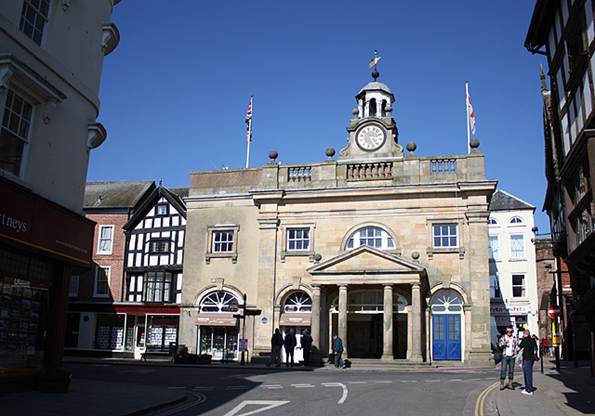
1744, he built the Market Cross at Buttermarket at Ludlow, Shropshire.
In about 1744, he
settled at Highfields, Audlem.
In 1745, he
designed and had built the two coaching inns (the Crown and the Phoenix) in the
Square at Audlem.
In 1748 he worked
at Morville Hall, near Bridgnorth
In 1749 he was
High Constable
In 1767 he
purchased the estate and manor of Fenton Culvert in Staffordshire. He also
purchased pottery works for his younger son, William.
List of
architectural works
Public building
and monuments
· Royal Shropshire
Infirmary. 1747
· Bishops Castle, Shropshire.
Town Hall 1745–1750
· Ludlow,
Shropshire, The Butter Cross 1743–1744. The design is derived from James Gibb's
'Book of Architecture', 1728. Faced with Grinshill stone with a low pedimented
portico and a semi-circular or lunette window above. The parapet has heavy
balustrading, capped with ball pinnacles.
· Shrewsbury. Royal
Shropshire Infirmary 1747. The plans are signed by Thomas Farnolls Pritchard,
but Baker was commissioned and paid for the work.
· Montgomery, The
Town Hall 1748–1751,
· Hereford, College
of the Vicars Choral.1750. Repairs and alterations
Churches
· The Church of St.
John in the Square, Wolverhampton. Baker was the main contractor1756-9.
· St Peter's
Church, Congleton, Cheshire. A church here since the 15th century (The Higher
Chapel). The present church was built by William Baker in 1740–1742 for £2,000.
· Stone,
Staffordshire, Gothic revival 1754–1758 designed by William Robinson, Clerk to
the Board of Works, who produced the first designs for Strawberry Hill for Horace
Walpole
· St John's Church,
Wolverhampton, 1756–1759. A very grand ashlar faced church which is based on
James Gibbs' St Martin-in-the-Fields, London. Built as a chapel of St Peter's
Collegiate Church, Wolverhampton by a private Act of Parliament in 1755. There
is some uncertainty as to whom the architect was, but there is no doubt that
the main contractor was William Baker, who was helped by the local builder and
architect, Roger Eykyn. Traditionally the design of the church has been credited
to the Shrewsbury architect Thomas Farnolls Pritchard, but it could be that he
supervised the construction for Baker.
· Seighford,
Staffordshire. Tower and Nave rebuilt. Metal framed gothic windows. Brick
pilasters with ?mock artillery slits, which also appear on the crenellations of
the tower; which is surmounted by four corner pinnacles. Looks like a very
early attempt to re-create German Brick Gothic
· Acton church
(west view), Cheshire. Rebuilt by Baker 1758
· Ellenhall, Staffordshire
1757. £1023 estimated for the repair of the Church.
· St Mary's Church,
Acton, near Nantwich, Cheshire. Upper part of the tower was blown into Nave,
March 1757. Sandstone. The church must have been extensively re-built and the
Medieval entrance has been altered and embellished. Remarkable ornamented west
gable to Chancel. Ornamentation to tower below parapet, which has ‘gun slits’
in the crenulations (cf Seigford). Four crocketed corner pinnacles with lower mid-ball
pinnacles on tower. Sundial surmounted with Baker's typical ball pinnacle.
· St Chad's Church,
Wybunbury, Cheshire. Tower leaning as the result of subsidence. Baker appears
to have solved the problem, but the Nave and Chancel had to be demolished in
1970.
· Plans for a Kirk
in Gothic style at Kenmore Perthshire 1760.
· Upper Penn
church, nr Wolverhampton.1765. Baker cased the tower in brickwork. Crenulations
to the parapet of tower with four crocketed corner pinnacles. Ornamented gothic
tower window.
Houses
Most of these are
recorded architectural drawings and surveys, and it is not clear to what extent
Baker's work was carried out.
· Ludlow 52 Broad
Street
· Wolverhampton
Penn Hall
· North Claines,
Worcestershire. Bevere House 1748–1749
· Morville Hall,
Shropshire. Addition of two wings.
· Liverpool. Houses
in Hanover Street.1748. Demolished.
· Mawley Hall,
Shropshire. Possible work to stables 1748.
· Ranton Abbey
Staffordshire. Surveyed 1748–1742. Gutted c1940.
· Powis Castle Montgomeryshire
Unspecified work 1748–1754
· Oakly Park,
Bromfield. Alterations 1748–1758
· Wingerworth Hall.
Work undertaken by Baker in 1753–1754.
· Enville
Staffordshire,"Lady Dorothy's Cottage" For the Earl of Stamford
1748-50
· Morville,
Aldenham House, Shropshire. Stable Block 1750–1751
· Tixall Hall
Staffordshire. 1750–1751. Demolished c. 1925.
· Darlaston Hall,
Staffordshire. Plans for a house. Demolished 1953.
· Acton Burnell
Hall, Shropshire 1753–1758
· Wood Eaton,
Staffordshire The Hall Farmhouse. 1753–1756.
· Wingerworth Hall,
Derbyshire. Work undertaken 1753–1754. Demolished c.1930.
· Stoke on Tern,
Shropshire, Woodhouse Farm, 1754–1758. An example of Baker's smaller brick
houses, with central chimney stack. Each face of the house has a forward
central bay, with doorway with a castellated or crenelated, pediment or
parapet.<ref`>Mercer E "English Architecture to 1900: The Shropshire
Experience" Logaston Press, 2003.201</ref>
· Swynnerton Hall,
Staffordshire. Outbuildings. 1754.
· Patshull House,
Staffordshire. 1754–1758. Baker completed the work of James Gibbs, who died in
1754. This included the flanking pavilions, and forecourt, with gateway and
stables.
· Hankelow Hall,
Cheshire Alterations. 1755–1757.
· Egginton Hall,
Derbyshire. Alterations. 1755–1757.
· Terrick Hall,
Whitchurch. Plan 1756.
· Whitmore Hall,
Staffordshire. Survey 1765.
· Astbury Rectory,
Astbury, Cheshire Possibly refronted by Baker 1757-9.
· Brand Hall,
Norton in Hales, Shropshire 1756. Minor Alterations.
· Hanmer Hall,
Wrexham. Additional building. 1756.
· Astbury Rectory,
Cheshire. Alterations 1757–1759. Typical ball pinnacles on parapet.
· Keele Hall,
Staffordshire. Alterations 1757–1759.
· Dorfold Hall,
Cheshire. Alterations 1757–1759.
· Woodhouse or
Wodehouse nr Wombourne, Staffordshire. Stable block. 1758–1759.
· Sidway Hall near
Maer, Staffordshire. Altered or rebuilt 1758–1759.
· Teddesley Hall,
Penkridge, Staffordshire. Possible wings, c1759, demolished 1954.
Houses attributed
on stylistic grounds.
· Burnhill Green
Farm Patshull
· Woore The Swan
Hotel
· Sibdon Carwood,
Shropshire. Sibdon Castle
From an old
booklet on Audlem:
There is a unique
link between the Phoenix and the Crown at Audlem, for they were the
architecture of William Baker in 1745 and were identically alike in exterior
and interior design. William Baker, who did a great deal of important
architectural work in Shropshire, Staffordshire and adjacent counties in the
mid 18th century, was the son of Richard Baker of London and
Leominster. He was born in 1705 and died in 1771.
For more than half
his life William Baker lived at Highfields, a small estate near Audlem,
inherited by his wife, Jane Dod whom he married in 1736. She was the only
surviving daughter and heiress of George Dod of Highfields, a Jacobean manor
house built in 1615 on the site of an earlier structure of the same name. It
still contains much original panelling, a staircase with ‘double twist’
banisters and several carved oak fireplaces. One of the latter, in the ‘best
parlour’, is said by some to be the finest of its period in the country.
A Highfields
William Baker combined the profession and surveyor with that of farer and small
landowner. He also had a small kiln on the estate in which he made bricks used
during the course of his professional work. He was often in the saddle, riding
from one job to another, for his practice took him all over the North West
Midlands and occasionally into Wales.
Perhaps Baker’s most
important work was the Town Hall in Montgomery, the contract for which was
doubtless gained through his friendship and business contacts with the Earl of
Powis. Audlem is fortunate to have two of is buildings in the Square.
The Crown was
known as the Bakers Tenement from 1745 to 1808.
There is a record
of an exchange between John Capper and Joby Buckley at the Crown:
A shoot was held
at Highfields, and Mr Baker asked Joby if he would take a brace of hares to Mr Cartlich
at Woore. On arrival he knocked on the door which was opened by Mr Cartlich.
“Mr Baker’s sent
thee these ‘ere ‘ares” Joby said.
“That’s not the
way you bring a present from ne gentleman to another”, was the reply, “you setp
aside and I’ll show you how it should be dne.”
Mr Cartlich
kocked and Joby thereupon opeed the door.
“With Mr Baker’s
compliments and will Mr Cartlich kindly accept these hares.”
Joby, quick
thinking and not to be outdone, “Oh yes, come inside and sit yersel down, ‘ave
something to eat and drink, and ‘eres two ‘alf crowns for thee”.
Died
William died at
Highfields on 29 October 1771. He was buried on 1 November 1771 at St James the
Great, Audlem.
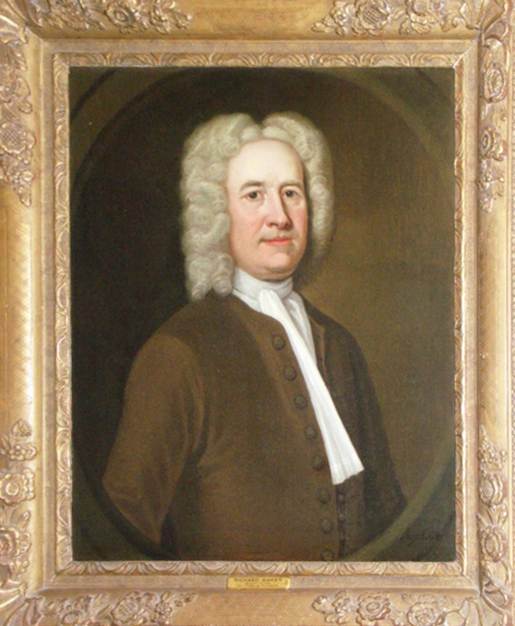
Richard Baker (24
May 1676 to 24 May 1749) The Surgeon
Born
Richard Baker was
born on 24 May 1676 at Stepney, later of St Brides, London and then Leominster,
Herefordshire. He was christened on 28 May 1676 at St Dunstan, Stepney.
Married
On 9 October 1698
he married Mary Smith (? To 1719) at St Bride, Fleet Street, London.
Family
Mary Baker, 1699
to 1790
Elizabeth Baker
1701 to ?
Richard Baker,
1702 to 1750
William Baker,
1705 to 1771
James Baker 1708
to 1744
Anne Baker 1710
to ?
Susanna Baker
1714 to ?
Henry Baker
Lived
Research by
Nicholas Kingsley:
Richard Baker
(1676-1749), was a surgeon who moved from London to Leominster in
Herefordshire. Burke's Landed Gentry says that his father was John Baker, the younger
son of Sampson Baker of Norwich and London, merchant, who was 'believed to be a
younger son of Sir Richard Baker MP of Middle Aston, Oxon and St Bride's,
London, the historian... who died in Fleet debtors' prison 18 February 1644/5'.
As far as the connection with Sir Richard Baker (and thus with the Bakers of
Sissinghurst) is concerned, this seems to be a specious fantasy (Sir Richard
did not marry until c.1621, and his children are all accounted for), and it is
far from clear how much reliance should be put on the rest.
[Note – this
seems right that Sir Richard Baker MP was not in this direct family line – see
below.]
Richard Baker was
baptised at Stepney (Middx) in 1676, his parents were John and Margaret, as
Burke's suggests. But no marriage of a John Baker and Margaret Leighton is to
be found, and nor is a baptism for a John, son of Sampson Baker. It may,
however, be relevant to note that Burke's gives John a brother, Sampson Baker,
gent., of Market Bosworth (Leics) and Rugby (Warks), born about 1643, and it is
possible to find baptisms for both 'Samson', son of William & Susanna Baker
in 1637 and his brother John in 1642 in the parish registers of Market
Bosworth. William Baker of Market Bosworth was born in 1608 and was in turn the
son of Sampson Baker of Market Bosworth and his wife Millicent Gooddale, who
were married in 1605. It seems very possible that they are the true antecedents
of this family.
Very little is
known about Richard Baker (1675-1749) of Leominster, surgeon. He married at St
Bride, Fleet St., London, in 1698, and his older children were born there. He
appears to have moved to Leominster between 1705 and 1708 and he was still
described as 'of Leominster' when his will was proved in 1750. His eldest
surviving son and executor was William Baker (1705-71), about whom much more is
known.
On 6 August 1699,
he was a gilder and lived at King’s Road Court, London.
On 20 March 1700
or 1701 he was a gilder and lived at Maiden Road, King’s Road Court House,
London.
On 20 February
1702 or 1703 he was a button maker in Dorset.
On 14 September
1705 he was a surgeon at Wheatsheaf, ?
On 26 December
1705 he lived at Leominster, Herefordshire.
On 21 September
1736, he was a churchwarden at St James the Great, Audlem, Cheshire.
Died
Richard Baker
died on 24 May 1749
Probate, 7 August
1750.
John Baker (1643
to 1685)
Born
John Baker was
born after 1643.
Married
He married
Margaret Claiton in 1670.
Family
Richard Baker
1676 to 1749
Lived
On 28 May 1676,
he was a wine cooper at Ratcliff, London.
He was the
youngest son, and a merchant in London.
Died
He died in 1685
and was buried on or about 26 October 1685 at St Bride’s, London.
Sampson Baker
(1614 to 1668)
Born
Sampson Baker was
born at Market Bosworth, Leicestershire. He was baptised on 16 October 1614
there.
Married 1
He married
unknown before 1643.
Family
John Baker 1643
to 1685
Sampson Baker
1643 to ?
Married 2
He married
Abigail (? To 1668)
Family
Sampson Baker
1653 to 1659
Elizabeth Baker
1655 to 1656
William Baker
1661 to 1665
William Baker
1666 to ?
Lived
He was a merchant
of Norwich and London.
On 16 October
1659, he was a surgeon living at Ratcliff, London.
On 20 April 1666
he was a surgeon, living at White Horse Street, London.
Died
He died after
1668 at Stepney, London.
Sampson Baker
(1581 to 1647)
Born
Sampson was born
in Coventry in 1581, later of Market Bosworth, Leicestershire. He was
christened at Holy Trinity, Coventry on 29 November 1581.
Married 1
He married
Millicent Gooddale (? to 1634) in 1604 or 1605 in Leicestershire.
Family
George Baker 1606
to 1606
William Baker
1608 to 1671
Dorothy Baker
1610 to ?
Thomas Baker 1611
to ?
Sampson Baker
1614 to 1668
Elizabeth Baker
1617 to 1638
George Baker 1619
to 1619
Walter Baker 1620
to 1645
John Baker 1622
to ?
Nicholas Baker
1624 to 1645
Millicent Baker
1628 to 1645
Lived
In 1638, he was a
Woolman of Baxterley, Warwickshire.
Married 2
On 9 October 1641
he married Esther Martin at St Michael, Lichfield, Staffordshire.
Died
Sampson died
before October 1647, of Baxterley, Warwickshire.
Probate 14
October 1647, London. Proved by his sons William and Thomas Baker.
William Baker (?
to 1615) of Coventry
Born
William was born
on an unknown date in Coventry.
Married 1
On an unknown
date he married Margery ? (? to 1588)
Family
Child Baker 1577
to 1577
Ane Baker 1579 to
?
Sampson Baker
1581 to 1647
Susanna Baker
1583 to ?
Married 2
On 29 September
1588 he married Isabel Bond (? to 1613) at All Saints, Allesley, Warwickshire.
Family
Joan Baker 1592
to ?
William Baker
1594 to ?
Lived
Before 1615 he
was a mercer.
Died
William died at
Coventry in 1615 and was buried on 11 November 1615 at Holy Trinity, Coventry.